Execs and the City Podcast Ep. 1: The Executive's Survival Guide to AI (ft. Justin Parnell)
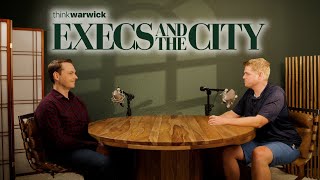
Jacob Warwick and Justin Parnell discuss how executives should build AI skills now. They walk through reducing hallucinations with prompt engineering and human review, building a working Career Labs chatbot for $0.10-$0.15 per report, and why generalists will outcompete specialists as AI handles routine work.
Questions this video answers
Typeform, Make (Integromat), Anthropic Claude, Google Gemini, Perplexity, GitHub, Vercel
$0.10–$0.15 per report
Above 90% ('well north of 90%')
Chapters
Welcome to a special edition of Execs in the City with my podcast guest today, Justin Parnell. Now, Justin has to be one of the top go to market engineers in the country right now, and I'm excited that we all get to learn from him. Today we have a conversation that's going to tell you who's going to get affected by AI, what's going to change with your org charts, how companies are thinking about it, ways to extract 90% margins out of your products, as well as some vibe coding exercises and a lot of technical deep talk that you can use to impress your friends. Without further ado, let's hop right in and get started. So, Justin, welcome to the podcast. It's been a long time coming. Why don't you tell us a little bit about yourself and why you're here today?
Yeah, thanks for having me, Jacob. I'm super excited to be here. Like you said, long time coming. For those of you who don't know me, my name is Justin Parnell. I'm a B2B SaaS marketing executive for the last decade, and prior to that, I was a founder of a social identity verification platform. Probably a little early, if I'm being honest. We were verifying people's identities on Blockchain Ledger via their social media profiles. And nowadays with all the deepfakes that are out There, thank you, VO3 and AI for all of these awesome innovations. It's become more necessary. I would think so. You know, which founder doesn't say timing is the most important thing for any business? But prior to that, I cut my chops in product marketing and sales early in my career. And ever since the ChatGPT revolution, I've been diving deep, deep, deep into AI. Going into all of the developer consoles, I really just had that aha moment of this is a paradigm shift. Everybody needs to be learning this. And I have had a voracious appetite for thought, leadership, consumption and building ever since that moment. I saw the opportunity right out of the gate to enhance my work and my team's work. And we were chatting around that time, Jacob, I think, and we started building some pretty cool systems, some pretty cool products, and what have now become agents and products that your audience is consuming. Some of you may have used some of these already. If so, please be kind in the reviews, but we're gonna talk a lot more about that a little later on. But yeah, it's been a. It's been a whirlwind last couple of years. I'm sure for everybody else that's listening Too.
Yeah. It's funny that you mentioned timing. As you know, we were the first agent experiences for executives in transition with Discover Podium and that's actually back when we met. And one of the things that was terrifying for me as I was playing around and I was a little bit of a skeptic on AI at first I knew I couldn't bury my on it and I just didn't want to believe no one's going to have the uncommon insights I have from my experience. But then I replaced essentially every employee I had in that team that took five years to build and I replaced them in about three hours.
Wow.
Yeah, I think a lot of people are scared about that and I am. I hate using this, but serial entrepreneur type, background, multi time founder and seeing the things that were limitations for me in scale up and just getting ideas from zero to one, having everything taken away, like every limitation you had is gone. At least it feels like that. Especially for someone who lacked the technical side like I did, having those limitations taken away has been extremely liberating and I imagine for many terrifying. And I'm curious, we've been playing around a lot with generic LLMs, giving us mediocre results and getting a little bit of RLHF and specialized training and all this deep learning that we're doing to create outcomes that are uncommon. What to you is the difference between a generic LLM type output versus what you're able to do when you really maximize what our technology can give us today?
Yeah, I think that's a great question. And for most folks that are out there, you really want to think about AI technology and LLMs from a first principle standpoint to really understand what the technology can do and what its limitations might be. Not every job is a perfect fit for an LLM or an AI model. However, you have some very unique uncommon insights that are going to yield some really radical outputs for your users. And the thing that makes your approach to AI and other folks approach to AI different that leverage. This is training a base LLM on your proprietary Uncommon Insights does something unique and special to the technology. It takes what AI researchers call polysementicity and that's a huge buzzword. I'm sorry guys, if you don't know what that means, but it's basically when AI can apply multiple meanings to any given word or concept or string of words which they call a feature. Um, and the AI can produce results in multiple different ways because of that multiple different meaning to that feature. When you overlay your uncommon insights and you Train that feature that that word or concept means a certain thing, you remove the outcomes of polysematicity and then the model will yield a more mono semantic approach or one meaning for that concept. Right. So doing all of that work realigns the model at its neuron and feature level so that it is giving your users outputs that are only aligned to what you've trained it on. And I know we've spent a lot of time collaborating and gathering data, millions of tokens, tens of millions of tokens worth of data on your particular insights to train base models to be more mono semantic and to generate output outputs for our users that are just uncommon to what you would get with a polysematic based model. Right. That could, you know, based on whatever the user is asking it, have a different interpretation of what it might recommend. And for someone in the executive career space, that is not acceptable. Right.
Having an ll, you can't be off a little bit. And especially when we're dealing with high profile negotiations where first of all there's a lot of cultural context.
Yeah.
There are, there are some deep psychology that you need to understand. A friend of ours, Shira Abel, has a framework on heuristics and hormones and history and heritage and all of these different concepts that apply back to an individual that right now in AI, especially a generic wrapper or anything from a generic LLM kind of model right now is not going to pick up on.
Right.
And I'll try to dumb this down a little bit, cause I'm more of the layman here on this, but does that mean that you can kind of program out more of those hallucinations and those things that get a little crazy? Because I've seen some of the stuff, even in our early testing, some of the hallucinations where it just makes up a case study and adds all of this additional context. Is that an example of like the, the poly piece of it kind of getting out of control? Train that out to help help explain that to me like I'm a child.
Right. So those concepts are, are related in, in some capacity. However, they are unrelated too. You could have a monosemantic interpretation of a feature or a concept that does hallucinate. And I think that if you want to think about a hallucination, the re. The reason that hallucinations typically happen is due to a prompting error, some sort of request you've made of a model to output something and it really wants to give you what you've asked for.
Right.
So even in a mono semantic context, if you've asked it to give you something that is unrelated or it doesn't have context for in order to appease you and satisfy its reward function and get that you did a good job, thumbs up feedback, it's going to make something up. Right. It thinks that that is what it needs to do. However, what we've done for removing that from the equation is prompt engineering that out. Right. That's the, the technique that you would use to help the model understand that it's unacceptable for it to generate a output that is not fact checked or that it made up. We, we leverage other agents in our workflows and things like that to help us fact check and do eval scoring. And for those of you that don't know what eval scoring is, it's criteria for an output to pass its evaluation prior to it generating its response. So we have rigorous criteria that we put in place that says, you know, it must adhere to these principles, you must adhere to your alignment, constitution and other things that we've put in place in our agentic form flow before it can yield a response. And we've actually implemented all of those methods in development of our agents before they ever go live. So all of our agents are passing evals well north of 90% before users ever start using them now.
So for the average person, there's the layman who thinks their job is safe. Right. Their job to be done is safe in this context, because solution nations are out there. They don't know the eval scoring, they don't know how to develop an entire agentic flow.
Right.
Or the stack necessary to do that, which I think we can get into a little bit later. But for the naysayers on aai, or let's say the, the optimists who don't think it's going to take 20% unemployment, who does, who think that we're kind of safe for a while. What do you say about their level of understanding about where AI is versus what you think is capable today as we think about multiple agents working for one person instead of a full team?
Yeah. So there's a lot to say here and I think we'll hit on some of these topics as well. I think that for those people that think that AI is not coming for your job, I would encourage you to maybe listen to the Lenny podcast with the co founder from Anthropic who said quite candidly that AI is going to replace him at some point. And if you have folks that are that close to it, that believe that they are replaceable, then I would take heed in, in listening to their advice. Just because AI isn't perfect for every job today doesn't mean that it won't advance and it won't advance rapidly. For folks that think that hallucinations are something that's going to keep their job safe, I would caution you in that thinking. I would say hallucinations can be overcome. In most cases they can be prompted out. And I do believe that in all of the AI safety research that's going on right now, there is a huge impetus and need for these base model companies to do the research to remove hallucinations from, from the frontier models. I, I've listened to folks like Ilias at Scever who is launching Safe AI, you know, his startup where that is, their core function is to create safe AI models that don't hallucinate. Hallucinations can be very, very dangerous. In certain fields like medical or self driving, you can't have errors, you can't have, you know, a car camera see a kid and, and not stop. Right like you, you have to solve those problems. So there's a massive amount of money going into that. And for the mo, the modern knowledge worker, hallucinations can mostly be overcome with simple prompting and evals. Right. It's, it's not necessarily mission critical that it never happen but that it just doesn't happen at a high, high rate. And finally, what I would say is AI is not meant to replace everybody. It's meant more to augment everybody. Especially today if you're, if you're viewing a hallucination as a reason that you don't want to adopt AI into your day to day activities and 10x your productivity then I would say that is probably unadvisable again because other folks are, and the folks that do are going to leapfrog you and out produce you and become more valuable than you. And I think this is extremely relevant for, for your audience.
Yeah, I, I'm pretty vocal on this because and we even wrote a guest article on this as well that a lot of the ways that my audience, specifically executives, don't tend to have as much time to get as hands on as maybe someone that's unemployed. So the unemployed executives, those that are savvy, are diving in and they're getting there. There's a lot of folks that aren't there are those that are just using surface level GPT. Write me a LinkedIn post and do X. Right. We talked about how these models bring you down to the mean, right. The 50th percentile so given that so much, my work is in compensation. Right. I've noticed every executive thinks they're exceptional. Right. Somebody's got to be wrong.
Sure.
And if, if you're using an alum, if you think you're exceptional and would, that would say, let's say you're in the 70th to 90th percentile of compensation and you've had a great career there, if you're using an LLM as practice and you're publishing it live on LinkedIn, it's actually dumbing you down, it's bringing your insights under if you truly are exceptional now, if you're not exceptional, you're in the 20th percentile, it's going to make you look better, you're going to know stronger points, you're going to get this great messy middle and this creating a lot of noise there. And so what do you say for the executive who can't publicly put anything out that they're testing, they can't take a stand on it because they're so, let's say, admired or they have so much influence that what they say really matters when they hit send on it. What should they be doing with AI right now to not put their foot in their mouth when they need to talk about it?
Right. So if we're talking about them producing content and using it as a productivity enhancer and a thought partner, I would advise them to do just that. Right. Leverage AI as a thought partner to help you overcome the blank page problem. If you have a content topic that you really like to write about, go out and start your workflow with a deep research report from Perplexity or Google Gemini. Even OpenAI and Claude offer this now in the console. It's going to come back with some really amazing quality research. Think McKinsey Level, BCG Level reports that can get your juices flowing. Start that thought process. Then, you know, work collaboratively with the model to outline something in your voice, your tone, provide all of that context to it from previous posts that you might have done so that it gets the context of how you speak about things, removing that polysematicity and making the model more mono semantic. And the outputs it's going to give align to your voice and your tone and then collaborate with it. Right. You're not going to just hit send on whatever an AI model gives you. You're going to do what they call human in the loop. You're going to interject yourself at that final point, polish the content so that it is better and come up with A truly unique bespoke piece of content that you could publish in your voice, edited by you as a human in the loop before hitting send.
So I want to get a little more tactical here. Sure. Because we're using a lot of the big words. Yeah, right. And I'm following, but just barely.
Yeah, yeah.
Imagine there's some listeners going, okay, hold on a second. Well, I'm thinking through how I use AI as a thought partner in collaborative. First thing I'm trying to do is replace my jobs to be done. Sure. And then being that I'm an entrepreneur and having hired employees, I can't help but think instead of hiring somebody, how can I get a job to be done with an agent that I'm going to work with? Right. So first step is replace myself and then can I replace others with my knowledge? I hate using the word replace. Maybe I'll say augment.
Sure. I think.
Right. If it's, if it's too hard for some folks to hear that, that's what's going to happen. But look, this is capitalism. It's going to happen like we're going to, we're going to strip it down to its core. So what are some of your favorite questions to ask when collaborating? If you're doing it from a layman, it's like, I need to learn this, I need to replace myself. What are some of your questions? Is it, is it deep prompting or is it simple as, hey, I really meant to sound more assertive here. Can we sound more assertive?
Yeah, I think you probably have some great recommendations. As a content creator yourself, one of the things that is going to be most helpful for, for folks is to collaborate on creating an alignment document with an AI model. What I mean by that is sit down, feed in. You know, if you have to copy and paste, copy and paste a bunch of your top pieces of content, if that's a blog, if that's a LinkedIn, post into Google Docs or just straight into the console. And then ask the AI to perform an analysis of your tone and voice, your common, you know, themes that you come up with, provided some of your thoughtly influential thought leaders that have helped you craft your, your style and then create an alignment document together. Right. Ask it to document all of these things in an alignment document that you can then reuse over and over and over again. If you're single shot prompting, if you're chain of thought prompting, whatever it might be, start out with a clean slate with the terminal, the terminal window for chat, GPT or Claude or Gemini or whatever it might be, upload your document, your alignment document, as the very first thing you're going to do. And this is basic. Anybody can do this. You have this alignment document that's going to align the model to your tone invoice and all of the other requirements it needs to know in order to sound more like you and those who have influenced you. And then provide it with a couple of rules. I've heard this explained in different ways, but provide it the context of what its goal function is. So this is a sample of an output that I want to produce and it can then identify what that goal function will be and then given that goal function, give it specific instructions on how to craft that with a deep research report or whatever other aligning context that you need in order to generate that unique output and then let it do it. I think what you'll find is its first output, or maybe you can ask for three outputs and pick one is going to be a little bit off first from what your desired end state is. What I would do is take that 80% there, 60% there, whatever it is, move it to the side and refine that piece of content until it is a hundred percent where you want it to be. Then go back to the same conversation thread and say, hey chatgpt, Claude, whatever model you're using, this is what I ended up creating that I really loved. How could we have made my prompt to you provide this kind of output from the beginning? And so this is called reverse engineering. You're prompting, right?
I did that on accident. I was just like, no, stupid. I wanted this.
It seems intuitive, right? Like, but it's, it's basically going to allow the AI to then collaborate with you and say, you know, you know, this is the prompt I would recommend to get an output like that. And then you can leverage save that prompt, right? Because you're going to want to use that again in the future. And you can adapt that prompt to other content mediums and other channels too. So you could always say like, you know, we worked together previously to draft a blog using this prompt. I want now want to make a script for a long form podcast, right? Or what have you. How can we adapt that prompt in this constitution, an alignment document to give us a script for a podcast, right? And you start to create better and better aligned prompts from the beginning and you can leverage those then to go create custom GPTs. You can start to create agents that are, you know, triggered off of a form fill or whatever it might be as a trigger and you can reuse these things over and over again. But building these things, reverse engineering these things is not wasted time. Right now, even if a busy executive getting into the console using some of these techniques, I would highly, highly recommend that you build, build, build and build. There's never been a better time to be building. And any time spent building right now is, is going to be an investment in, in yourself and your skill set. So even if you're more advanced than reverse engineering prompts, go out and learn a new skill with AI, you know, vibe, code an app or try to, you know, train a model. Right. If you're, if you're that advanced. But anything you can do to push your knowledge and your boundaries right now, I would recommend doing in your free time, spend multiple hours per week building. If you're an executive, I would set aside time, carve it out wherever you can to go into consoles, go into developer APIs, watch YouTube videos, put in your AirPods and be the crazy person on the street talking to the model. Going up and down the street, just talking to an AI model, you know, you're, you're probably not going to learn any faster than if you just act like the AI is your coach.
Right.
And it can coach you.
Well, be careful, improve yourself. We're not replacing coaches anytime.
Coaching, coaching for, for AIs, that's just.
Okay. Okay, well, we're gonna have to cut.
The pot if the, if the AI is going to replace the anthropic co founder, I think it's going to replace the cell.
I, I'm not long for this world. Like I, you know, I've just been happy doing seven figures and making it work solo premier style.
You're saying please and thank you to the model, right?
I do. I am actually so polite to the model that I cost them a lot of additional good expenditures. Now you mentioned a little bit about your influences and this is something I study quite a bit as I'm working with highly aspirational or affluent executives. They often have handful of mentors or things that they like about them. And I think about that when it comes to prompting as I ask, I say, hey, I want you to think about this through Robert Cialdini's lens of influence and all of the psychological triggers. But specifically these things. How can I augment my writing to do this? Or can you analyze my writing and see which of Aristotle's principles am I triggering or which of these are happening? So I use it as a coach like that. But I'm curious. I have a two Part question for you, which is who are the influences that you're following? So that's one because I think a lot of people are going to be interested in what are the right AI voices to listen to. Probably not, you know, a CMO that's held a job for a year, who's talking about AI for the first time that solve LLM prompted. Be careful with that. So who are some of the top influences? And then specifically what about those folks do you admire and hope to be positioned more? Like if I were to do this exercise with a client and say, do you want to be positioned more assertively or more provocatively or more X or more Y right for you. AI influences. What about them do you like? Like and why?
Yeah, so I think there's a couple of buckets of influencers in, in my categories. There are the deep research AI influencers that I follow and listen to to stay on the frontier of what's happening in AI. And then there's probably more the B2B influencer audience. And I can separate those two things. For those of you that are looking to be on the frontier, listen to the thought leaders that are highly technical, that are providing state of the art insights and content you want to be listening to like Ilya Sitver, you want to be listening anything Ilya says, take it to the bank. I, I that man made gradient descent happen. So we all, Anybody who's ever engaged with AI is engaged with Ilya's innovations and he is one of the godfathers with Jeff Hinton and Demis Hassabas. Anything Demis Hassabas is saying, who's the CEO of Google DeepMind, listen intently to what Demis has to say. The man won a Nobel Prize last year with Jeff Hinton who, who was the teacher to both Ilya and Demis. They all work together. All these, all these insights come out of the same place, right? I mean they, they built AlphaGo. They were the originals at Google DeepMind. They built Transformer models and, and, and found gradient descent that led to all of this. So they are the people that you listen to attentively nowadays. There are more researchers that are coming around that I listen to. I listen to Dwarkesh podcast. He interviews a lot of great researchers at all the leading labs. I listen to Lex Fridman who interviews Ilya many times. I think Ilya has been on his pod two or three times. Um, but those are great places to find long form interviews with these thought leaders. Chris Ola at Anthropic has done great research on how transformer models work. Uh, if you get want to get super, super technical, go listen to Dario Amade's Lex Fridman interview with.
Yeah, you made me listen to that.
Right at the very end, Chris Ola gets on for about an hour and do not listen to that at 1.5 or 1.2 times speed because it is dense, high calorie information. But he does a fantastic job of breaking down the science of transformer models and LLMs in a way that I encourage everyone to try to grok and comprehend. Because if you can understand it in, in this scientific way, it's going to help you understand how to better work with models, how to what problems models can help you solve, where to inject humans in the loop and how to think in systems architectures and which jobs to be done can be enhanced or automated by AI. And if you don't understand the base technology, you're going to make mistakes in anthropomorphizing AI. You're going to make mistakes in thinking that it can do things that it can't. And this is unfortunately why companies are having a hard time getting things out of pilot and into production with AI models. They don't understand the base technology and how it can be applied and to what it can be applied. Now, that being said about deep research people that I listen to and I follow intensely, I also listen to a handful of marketing podcasters and influencers, some of which we're both friends with. Lisa Adams does a great job of developing content for executives that are looking to infuse AI into their teams, educate their teams, add AI teammates into their workforce. Carrie Lou Dietrich, who you and I are both friends with, she has a lot of really great content for marketing executives at large. I would encourage.
She's, she's right at the frontier there.
Right. You know, advising some of the top companies out there today.
The hyperscale. Absolutely. And her hypergrowth is no joke. Like usually you see somebody put hypergrowth in their title and be like, okay, yeah, right, yeah, she's. And then you look at her background. Oh, okay, so this is zero to a hundred million in nine months or whatever. Lovable tit being able to support do some of that.
The OG of PLG at last end. Just amazing Developer first plg. And yeah, I mean those are some great sources. I think Kieran at Zapier has a lot of really good AI playbooks for executives and really good prompts that he shares. Kyle Poyar has a lot of really great stuff, especially with pricing and plg. Go follow Kyle. He's getting into how AI models are priced and how companies are pricing AI features. So if you're interested in learning about that, those are all great people to follow.
I think you missed one of our favorites.
Well, of course, Jacob Warwick and Justin GPT.
Oh, I was going for Lenny.
Okay.
And Lenny's lineup because he teased his lineup a couple days ago and unbelievable cast that he's got coming on there. What I like about this is you shared kind of the deep mind godfathers of AI and what they say is gospel and truth in this kind of real frontier. And then you mentioned a lot of executive leaders that have a brand and a presence who make it more grokable for folks like you and I to actually execute. Because you mentioned one of the problems and I think this is a great segue. We wanted to talk about getting into production.
Right.
And actually launching real products live on the fly. We did that recently and did a three day launch and picked up a thousand users on a free product. Some of you may have used it. Phenomenal learnings from that. Walk us through the process of getting from ideation to launch live for customers and, and what some of the hiccups are that we experienced and some of the things that others can be ready for.
Yeah, I think. Thank you for reminding me about Lenny. Lenny being more.
You're never going on his pod now.
Being more of a product centric podcaster, I think I, you know, he may have slipped my mind at the, at that point, but Lenny is another great person to follow. He interviews a lot of the leading AI researchers and, and AI companies as well. So follow him. I've listened to his podcast for well over two years now, so definitely one to follow as well, especially if you're a product executive. So yeah, I mean going from ideation to a launch is daunting and but it has never been easier than it is today. If you have an idea for a simple app or product or a proof of concept, you can, with LLMs today and free tools that exist out there, build a POC and have it live in hours, some cases minutes. And there's never been a better time to build than now. You and I work together to produce a several agents now that leverage your unique insights to produce content and artifacts that are custom for each user. They go in and they can get Jacob's point of view on your LinkedIn profile for free today. Right. Which is very contrarian to what you would receive if you went to OpenAI and asked it to review your LinkedIn profile. And that's based on your experience optimizing for recruiters and job seekers. Right. OpenAI doesn't have that context and they can't provide that kind of output.
Yeah. I think one of the things you're reminding me of this, one of the things that makes it uncommon is I'm trying to optimize for perception, not keywords. And most of the content out on what people want on the LinkedIn profile as an example, is how can I be better found?
Yeah.
Right. I want to be found. So therefore I use keywords. What keywords are the right keywords? How do I stuff those keywords? When you hire a copywriter, their model is, well, if I add more content, I'm providing more value. So if they want to charge enough, yeah, sure. They flush out the profiles. There's keywords everywhere and it's in the line.
Right.
When you have all that really flat. And that's what most of the media that LLMs are going to pick up on is here's how you keyword optimize for inbound attention to recruiters. At my level, inbound isn't what gets it going anymore.
Right.
It's network and perception. It's not what you know, it's who you know. And so I'm not optimizing for inbound recruitment. In most cases, if somebody sees you're a VP at Meta, you don't have to say a damn thing about what you do. You'll get recruited naturally. So it's not about word count.
Right.
It's about perception. And you can't control the narrative if there's a ton on your profile. So my advice is to search strip it back to its core because all you're trying to do is earn a phone call. You're not going to close the deal there. Sure. That's a totally contrarian point of view from what a traditional LLM is going to get you because it's been trained on the status quo. I don't work with the status quo. I work with the top 1% of the people in the world. We did a target audience, deep research.
Right.
Play. And my audience is less than 10,000 people.
Yeah.
So by definition, I'm going to be e force. I'm going to be. I'm going to be probably offensive to 90% of people out there. And it's kind of okay because that's not your target anyway.
Exactly.
At least on. On my coaching business model, not the AI model that we're doing. And so we've gone to a product Launch here and gone through that process. You mentioned a couple of the steps along the way. You know, what's, what's next for what we're developing and what you think others should build in this context.
Yeah. So I think that you did a good job of explaining some of your uncommon insights and hinting at a principle of LLMs, which is they have massive amounts of training data and tokens that they've been trained on the corpus of the Internet. Right. So what it is going to leverage in order to give you a response is what it has been trained on. So we've leveraged techniques to apply your, your uncommon insights, as in a technique called post training, the model to align to your point of view and your recommendations, which are uncommon, which are only applicable to 1% of the workforce, 10,000 people out of however many million people in the workforce that this is even applicable to. So there is no way for a user to go to an LLM and obtain the same kind of insights repeatedly. And even if they were to try to work to get those kinds of insights, it would take a long time and it would take, you know, a ton of effort. So what we did is, you know, leveraging the techniques that we've talked about before with regards to prompt engineering post training and making the model more mono semantic in what it outputs. We've created agents that pass evaluations for your criteria on a plus 90% basis and provide your uncommon insights that are unique to each user that comes to you. It's unique based on their content that they provide to you. It's unique based on the company that they're interviewing with or would like to interview with. It's unique to the person that they're interviewing with at that company or the committee of folks that they're interviewing with. And you know, this, this took quite a while to develop all of these different agents and multi agentic steps that these agents go through in order to produce these artifacts. And these are th, this, in my opinion, and I know you believe this too, is is the future of content in almost every domain, especially you know, for influencers or that have a rabid following. An audience that loves to voraciously consume your content. There's a reason for that. In order to engage with them more in the future. Producing artifacts that they crave based on your insights is a way to grow your touch points with your audience, create new monetization channels for them to purchase these artifacts from you. And it's a way to leverage AI to not just make you more productive, but to make you more valuable. This in the B2B context will be the death of the gated white paper. It will be the death of the ebook. There's no reason why you can't take the content and insights in an ebook or a white paper and the form criteria that the user is giving you and create on the fly a customized content experience that's relevant to them, that their pain points, where they're at in the buyer's journey, how they can progress the buyer's journey, how mature are they, are they ready to buy your product? Are they the decision maker? Do we want to produce other assets for them on the fly, follow up with unique artifacts later on? But I don't know how many McKinsey studies you've read that say AI is going to be hype result in hyper relevant personalized content for folks in the in the buying experience. But this is what that means, creating these custom artifacts and these custom buying experiences. That is the future of how content will be generated in a B2B or a B2C context, or even in the influencer to audience context.
So we're talking a bit about the future of work, future of business. We're flirting with that quite a bit. And I saw we were talking about in show notes how it's the time for the generalist versus the specialists. And I look back on my career, one of the aha moments for me with AI, it felt like I can finally compete with all these engineers and there's this switch off happening. So I'm curious, you know, for a large team to come in, build, you know, start replacing members of their team or building these workflows on jobs to be done significantly more difficult than the speed that we're seeing from some of these. We're hearing stories of 15 person teams hitting 40 million in revenue in three, four months.
Right.
You know what, how does all this play together and what do I do about it as an executive?
Yeah, it's a great question and you've keyed on some really good points already. But the this is most certainly the age of the generalist. And I think most other thought leaders out there have probably already said this, so we're probably not the first ones. We're probably just parroting what has already been said. However, the playing field is leveled. It's also the age of the entrepreneur. So as a generalist and an entrepreneur, as you and I would know right from our experience, oftentimes you're bottlenecked and limited by your skill set. However, now a lot of those Skill sets have been democratized. So engineering skills, people are vibe coding pocs of products that they can bring to market in hours, weeks, you know, have it out there and get to 40 million in revenue after a few months. That being said, the startups of the world, the lean teams of the world, are best positioned to capitalize on this leverage, in my opinion. Maybe I'm too close to it. Maybe it's from our work, you know, that we've done and the work that I've done recently. But larger companies are going to have a bit of a hard time leveraging le using the same leverage to augment their jobs to be done simply because there are a lot of hoops to jump through with regards to publishing and with regards to brand standards and legal standards and things like that that you have to consider at a large company that they're just going to keep you from being as productive as you want to be, as fast as you want to be.
Yeah, I found that to be true. We've both raised capital as founders before. One of my big limitations raising capital, this was back in 2020, right as the world was ending. But one of my limitations is I didn't have a technical co founder and I didn't know a lick about engineering and we were trying to build a software product and the terms of the sheet where they'll write your $1.2 million seed. But you have to fire your team and we got to put this operating partner in that's a, that's a technical founder to help that gap. I'm not seeing that anymore. And right on the legal components and some of the copyrights and things that we've done, we've been able to apply for some IP protection significantly faster. In my coaching business, not having to go to lawyers to protect the value generated language and things that I'm saving thousands of dollars an hour and work. I'm nervous about it because I look back at my last half dozen clients or so and I've averaged about $2,500 an hour. That doesn't feel long for this world. We're. Well, we're trying to train it into $20 a month insights and $50. In part of me it feels like I'm building my own destruction, but I don't see another path.
Yeah, I mean that level of paranoia is warranted to some degree. I think everyone should have a healthy dose of paranoia about what AI can do that you are currently doing. The best thing to combat that is to build and learn how to get maximum leverage from AI for what it is you do.
So, so let's build.
Right?
Let's, let's really build. So I want to get. I think this is going to be a topic that a lot of people are interested in. Let's talk tech stack. Sure. I'm going to build Soup to Nuts product launch. What do I need at a minimum, do you think, in terms of stack and then what is more optimal?
Okay, well, it depends on what we're building, honestly. But there are single tools that can build POCs. I, you know, some of them that are very popular. Lovable bolt new base 44. I've seen several prototyping tools where you can go in and build a POC of a experience and have it live in the same day.
It was was Base, the solo founder that sold it for what, 40 million.
Or 80 Wix for 88 million in six months, I believe.
So it must be nice.
I mean we're talking about maximizing your leverage. That is maximizing your leverage with AI. That is a great example of it. But yeah, let's, let's go back to the, the tech stack really quick. If you want to vibe code a POC and get it live, you really can do all of the coding in a LLM console. You could go to Claude code, you could go to Vertex from Gemini, you could go to Codex with Chat GPT. Those are all very good options and have a natural language conversation about what it is you want to build. The, the model will actually help you expose gaps in your product and your UI UX that you may not have considered. You can supply that reward function of hey, I really love the way this UI UX looks in this style. I want to try to mimic that for my UI UX and my product. And it can take all the CSS rules from the example that you've you found for it or the Python or whatever it is, and it, you know, mirror that in your build. After you build with a tool, you can upload that to a GitHub repository and then you can push the GitHub repository live via free hosting tools like Vercel or Docker or something like that and have your, your prototype, your POC live in hours for free.
Yeah. So you don't even need to pay for the LLM models to get that level of output.
You could get some base coding done with just chat GPT. You could just go to the straight chat.com and have.
Yeah, it's like the, it feels like the limitless pill for entrepreneurs. Like, I have a story briefly sure, yeah. Which is, I, I tend to work with pretty expensive people. Right. I tend to work mostly with executives that are a little far removed from the startup thing and don't always want to get their hands dirty. And I remember this semi difficult coding challenge for my email for my newsletter that I was trying to solve. And I swear I asked three different people to solve this for me. Just, just code the damn thing. Go find someone on Fiverr to go code generic. Like, here's our brand colors. Here's that. And I asked and I, I thought about different ways to ask. Like the people element of growing a business is the biggest pain in the ass because that's the most difficult variable to handle. For sure.
Yeah.
The human capital is the most expensive part. And you understand why Silicon Valley optimizes away from that. You know, regardless of whether you think it's right to do to the world or not, capitalism is going to tell them to do that. Like strip it down and do that.
Yeah.
And this became so clear to me because this problem is just this nagging thorn problem for probably a year and a half asked many different ways. And I finally got fed up and I just wanted to chat and I said, this is the email that I'm trying to code here my brand colors, here's my logo. What do I do? And it, it was like 10 seconds and I pasted it in and I sent a test email and it was 95% of the way there on the most generic ask.
Yeah.
And I'm over here and I got it. I got an executive Manhattan $10,000 retainer that I've been asking to do this. And I'm what, 40,000 deep in, in these expenses and just in the free GPT replaced it.
Yeah. You don't have one email done.
Right. And I didn't have to deal with any weird negotiation because we're always negotiating with each other. Sure. You know, Ooh, is this a little bit of scope creep on this retainer? No, I just go into an LLM and knock it out. Right. That's pretty damn empowering. And that's where.
Oh, yeah, no, it's true. I think the limitless pill is a, is a great analogy. It's a great way to, you know, explain this to people. I think another said another way, if you're on a team and you're the product marketer on the team and you want to get a piece of user enablement content built for a future launch that's coming out, you know, you have a PRD from your product team, you have screenshots and you have to go to a designer. You may have to shoot the thing yourself, you may have to then generate the email or the KBAs. And all of that can be done now in hours, maybe less. Right. With an LLM, if you have your, your style guides, your constitution, your prd, things like that to align the LLM, there's no reason why that product marketer now can't do that full launch cycle in one day. And for big companies that realize the co working advantages of working with custom AIs, working with AI agents that leverage these things and achieve that maximum leverage, they will be much more productive with much fewer people. Or set a different way. You could take the Nvidia approach, where Jensen Long thinks that every one of his employees, his 30,000 employees that he plans to hire in the next five years, I believe he said, will have 100 AI agents at a minimum working with them. And for the world's first $4 trillion company to be adopting this way of working and, you know, and building the blueprint for other large corporations to follow, take heed. When Anthropic is saying, we use CLAUDE to help us redline our legal documents, we use Claude to develop 95% of our code. Those are companies that are getting the maximum leverage out of AI and their workflows. And everyone should be paying attention. And you should be thinking in terms of systems. If you're an executive, you should be thinking in terms of your current systems that exist with your team, with their jobs to be done. You should be auditing all workflows, looking and asking at every step of a workflow, can AI help me be more productive? Can we 10x this workflow? Can we collapse the time that it takes us to do this workflow? Can we automate these things? And if you do that kind of systematic evaluation of your current work, you're also going to, in that process, uncover new ways of working, working. You're going to uncover new systems that you're going to put in place on your team that will give you leverage that your competitors won't have and will be unique to the way that you guys work. So if you're, if you're, an executive in, you think about things in that way, you build on your own, you learn how to use these tools, reevaluate all your jobs to be done. Those are the things that are going to give you that kind of leverage.
Yeah, I think even if you're not an executive, you should be thinking in some of those terms meaning, like My, I'm, I'm pretty lazy.
Everyone doing this. Yes.
Yeah, I want to be as lazy as possible, which is ideally what makes some of the best businesses work, how simplified their, their systems are. I mean, we've done personal brand funnel breakdowns, but having the AI read the funnel for mistakes that were made. Like, the first thing I would do is I would map out the entire process. Step one, I've done this with you too. Like, hey, step one, when I'm doing an article, I research the article. I have perplexity do this, I have Claude do that. I have OpenAI do this. I, you know, and I, I talk through the process. I got Gemini running this research project here. Then I marry the data together and then I do my manual revisions and I rewrite. I go section by section, I go create a video or picture or whatever. Then I do a script for this and that. So I know all this big old process this that I have. And then I just take that written out process, not even having ever done the process before, but what I think the process is going to be. And then I would feed it into each LLM and say, what do you think I could do to make this process better? Yeah. And ask each one to be my thought partner in that. And it would say, hey, strip it down. Actually, you should use Gemini for most of this and then you should use Claude for this part. Weigh this, the strengths and weaknesses. So I've just seen understand. And I think this is really helpful for consultants because consultants talk a little bit more high level. When you talk high level with an LLM, it's kind of the perfect feedback that you need there.
Right.
You're saying, hey, this is generally what I'm trying to do. And it's like, oh, have you thought of this and this? And here's a gap for you. Oh, let me tell me more about that gap. And it just kind of self builds.
Yeah. I think the more comfortable you become with interfacing with an AI as a thought partner and, and collaborator that's trained on your, you know, your point of view, your influences, the easier it's going to be for you to uncover those optimizations that are going to make you more competitive.
Well, I feel like there's no roadblock. Yeah, there's no roadblock because as soon as you're man, I'm stuck on this, the roadblock, then you just go to the LLM and say, hey, I'm stuck on this. And so, oh yeah, do this.
And it just tells you the roadblock is mental. And the mental roadblock is not being AI native or AI first in. In everything that you're doing. Like you. Just because AI can't do the job that you're trying to, you're trying to accomplish, doesn't mean that it can't help you think through it or get unblocked or unstuck. Right. I think even if, if that base level of being a thought partner to help un. Unblock you in whatever it is you're doing is extremely valuable. Right. How long have you sat with a problem and thought of different.
Yeah.
And to try to solve it and it takes you weeks?
You know, I was furious myself. Back to that old example that it took me a year and a half to have the audacity to ask an LLM just. And the fact that it solved it so fast made me feel inadequate.
Yes. Your aha moment.
Yeah, my aha moment was like, son of a bitch. Like I could have just done that the whole time if I weren't skeptical about it in the first place. Yeah.
And there's so many people that haven't had that aha, aha moment yet.
And to be an entrepreneur to. To supposedly be a high agency person, like to go out and get it done, you need to get it done and roll up your sleeves and do it.
Yeah.
That's where I see the time is now. I think that's a good segue. I wanted to talk to you as we can talk through a little bit more of the tech stack too. We didn't get into too many details there.
Yeah.
Like, let's talk about the tech stack that we've been playing with.
Okay.
Some of the pros and cons of that. You know, we've been able to pull 90% margins out of our products immediately with consumer demand asking, saying feedback like, hey, I'd pay 10 times more for this product.
Right.
And we already have 90% margins. Right. What are. Walk through some of the stack to make that happen in the process.
Yeah. I think the stack is pretty simple. The real value in all of this is unique insight. This is something that LLMs cannot create on their own. They can leverage training data, they can interpret data that's fed into them. However, they cannot create new thoughts and new new insights. Not yet, at least, as we're recording today. So if you can leverage the efficiency gains of an LLM to make quite simple workflows to yield thoughts and insights that are proprietary to you that your audience is looking for, you can then take that leverage and inject it into your pricing Right. And so your margins become massive because you are your, your work to produce. This is so simple. However, it can't be obtained anywhere else. And then it is also massively scalable. Right. So the scaling bound of it is just your tam and the appetite of your audience. So that creates a ton of pricing leverage for you. Right. So people that are, they're wondering, how do you get those margins? That's how to answer that question, I think. And I think most people that have that kind of unique content and unique ideas can begin to leverage that with efficiencies from AI to command. That's like really, really high margin. Services and outputs. Now, our stack is very simple. Our stack is taking some of the frontier models. We only use frontier models here at Think Warwick and Justin GPT. So you are getting premium AI outputs, guys. However, we use those frontier models in a multi agent authentic workflow that is triggered by a user request for an artifact. And in this case, our first POCs have been around use cases that you were manually helping clients with before, which is like, review my LinkedIn profile. Make sure I'm positioned correctly as an executive for the kinds of roles that I'm, you know, looking to position myself for going forward. Which is difficult. Right. People would come to you with that.
Oh yeah. I mean we, we wrote 2,000 LinkedIn profiles of Discover Podium. We did 3,000 resumes in two days. Yeah, well, no, no, I mean now. Yeah, but I mean that took. Which was five years of work.
Right? Five years, two days in.
Yeah, I don't want to talk about that. The Nubias, that pain.
Don't cry if Jacob.
The expertise was necessary to get to that point. I mean, even from our first product launch when we were starting to play with the LinkedIn review tool. Yeah, I think we were playing with that in October last year.
Right.
Earlier we didn't really launch until like May.
Right.
Because with. We had a. Yes, a conversation with Lenny and I had a newsletter go out and we, we shared it with that as kind of a thank you to the community. Yeah, it was incubated, but it was mostly. I didn't know how to move forward with it for like six months. I was sitting on it, I was kind of playing with it. But then last week we bought some ad space with Justin Welsh and we wanted to try a solopreneur type model with it and we built the product in three days. Yeah. So because we know what we're doing now.
Right. I mean there, there was certainly a learning phase in building where we were Contemplating what's the best UI ux, what's appropriate for a poc. How deep do we want to invest in, you know, a POC versus like a fully fledged product? So what we went with out of the gate was simple. It was a Typeform experience to collect information and trigger an agentic workflow that then leverages several different AI models to process the data that we receive from the user, which in the case of LinkedIn is their LinkedIn profile PDF. Right. We leverage anthropic Claude to process the PDF and prepare it for analysis. We leverage Gemini in multi step prompting for different sections of their profile in order to align to the recommendations that you have for that unique individual and how they should be positioning themselves. We leverage Perplexity to do deep research reports on their industry or insights that we can, that we think can help strengthen their position that maybe they aren't yielding today. So we're leveraging several different models in concert to perform agentic work on the fly, on demand, in, you know, in a automated way. Right. Set up through I like make dot com. Right. It's pretty simple.
Yeah. Make was a key call out there. I like that. Some of the proprietary work and the, the copyright stuff that we do helps control the flow. Flow.
Yeah.
Down a specific direction. So that gets us closer to that mono semantic type.
Right.
Background. So that gets us force an uncommon.
Insight without giving away too many details. Yes. I mean we've, we've refined and refined our, our models and, and their post training based on your insights and we incubated this with several of your clients for months where we.
Well, and I think part of it was. I think there's a concern that there's a lot of AI is going off a snapshot of past data, not future data. Right. And part of the training that I thought was the trickiest was how do we take. When you get a market research report from Perplexity, how do you get it to learn from that, to understand where we're headed, not where we've been. Which from a positioning standpoint is important because I don't want clients to be positioned for something they did 10 years ago.
Right.
Yeah. And we need to force the model to forward position them, which is part of the proprietary piece. Not to go into too many details. Someone will pick it apart, someone will be taking notes real quick. I can make that in an hour and a half. These guys ain't nothing.
I'm sure someone will try and I'm sure that it will not be the same as what we're generating anyone's welcome to go use the tools. They're free. You can see how it's working. But I think like again getting back to what, why this is different than a base LLM. It's, it's millions of tokens of post training data that we've built into a refined and iterative process to generate unique experiences that are updated like you said, beyond base model training cutoffs, things like that that are forward thinking, solving for things like that with perplexity that can go out and look at real real time, you know, Internet data versus you know, whatever AI model update is.
Let's see. You have to remind me on this. We, we were trying to measure cost per run which is one reason we moved off of Zapier because It was about 10 times as expensive to run.
All those flows right now.
Make not free either.
Sure.
Hell, there is a way that you build it yourself with some engineering components so you don't need to use Zapier or make as a little bit more advanced. That is if we're optimizing margin at scale at that point, then you take some of your dollars to build a custom implementation and go that route. But what's it running right now? So our free report, was it 15 cents?
Yeah. 10 to 15 cents per report. Which is why it's free, right?
Yeah.
And it's a growth tool.
Yeah. And obviously you ask any marketer if it costs you 10 cents to get someone in your target audience, it's a pretty good deal.
Right.
However, what we found is getting someone in at 10, 15 cents. We're actually profiting about 450 on that. Right.
So the model, the lifetime value of someone who comes to us just to have their LinkedIn profile reviewed for free is like you said, four to five times. I think it's more than that. I think it's more than 10 times.
Yeah, I think it is now. Yeah, it's significantly higher now. Especially as we get some more product surface area which you've been pushing on me for a long time, Jacob. Build more product while you have two babies at home. Yeah, do it.
The more, the more content, the more products that we have that folks can interact with depending on where they're at in their career journey. The obviously the, the higher the LTV becomes a lifetime value becomes. I know this is something we prompt out of all our models. Don't use buzzwords and acronyms, but you're.
You'Re the king of, of three letter. The TLAs. The three letter acronyms. I'm sorry I've if you said POC a bunch of times, I was like proof of concept.
Yes. I've interviewed, I've interviewed too many times with bad advice. Anyway, the, the lifetime value goes up if we have more surface area and more products for folks to purchase. However. Yeah. I mean as a, as a marketer, if you're getting new user acquisition at you know, 10 cents or less in order to acquire a user, I think you buy as much inventory as you can buy until.
Yeah, we're right there on that. You're diminishing returns, you're exploring the roas until you saturate the return on ad spend.
Yes.
I'll throw that out there. I just found myself guilty.
Cardinal sin, Jacob.
Cardinal sin roas. Yeah. Paying attention to your, your customer acquisition cost to LTV ratio, all those.
Yeah.
The numbers are stupidly good. We were right. You were talking about. We pulled reports 500% open rates.
Yeah.
200% click through rates. Because there is so much engagement. We, I mean I worked a little bit through the My fitness pal hypergrowth period 10, 10 plus years ago now I think we went from 0 to 17 million users and a couple months.
Yeah.
And I wasn't seeing engagement like this.
Right. I think that this really speaks to this again, this hyper unique content that's developed for a rabid audience that needs your unique service or point of view to help them with something in their lives. And in this case like employment is something that's hypercritical. So like the, the intersection of all of these things is beneficial for leverage. Right. For, for this product and these services. And I, I know that like. Yeah. You mentioned some, some pretty eye popping numbers. Every time we send someone their LinkedIn profile report they, the open rate on those, on those emails is I think like 500%. Which just means that they've come back and looked at the report several times.
Well, what they're doing is because we also have reports coming in Google we can track.
Yeah.
What they're doing in there and we can see the activity in there.
Right.
And they're copying pieces and they're pasting in their profile and they're refreshing and they're seeing how it works.
And then without sounding too creepy.
Yeah, yeah. No, I mean we're not, we're not watching like all activity or anything but you can see that there is engagement. Yeah. If you happen to be. Because we do reinforce human learning on it. It's not just a dumb robot coming out and, and telling you what to do. Like the RLHF Piece of that. Yeah, we spent hours and hours and hours training that, doing that. And, and hey, Justin, I. This needs to be a boilerplate. This is always going to be the case and we need to optimize around this. And then. Oh, we need to make our emails less transactional. Now that sounds a little crazy. So if you're, if you're getting transactional emails, we're sorry, we're improving that to value based emails. We'll get there right as you build. Really it does feel like that quote of jumping off the cliff and building on the way down while you're doing this. But it's so encouraging to see the numbers. Yeah.
To some degree you will always be doing that. You'll always be polishing and enhancing the product to make it better for your users. I think, just to mention some other interesting facts is for every site visitor that like goes and visits the page, I think they monetize it like a dollar per site visit visitor.
It was a dollar ten right on the interview report. So just if you just happen to land on our page, we make a dollar on average.
Well, that's just how it works out from, yeah, from the map purchase. And if you want to try any of these tools, the, the tools will be linked in the, in the description for the video and you can give a spin yourself or you can go see a free sample of the interview reports that we've generated.
We need to do more of the lifetime value research now that we have subscription models with the newsletter too, because we're getting newsletter subscribers through that at a very reasonable rate. Right. And there's a big LTV on that too, of several hundred dollars.
Yeah. And I think all of this is just a validation of the hypothesis that we had that the leverage from AI, you know, for these kinds of services allows us to create a scaling business. Right. And so that is the, the pivot point now that we're at with Career Labs AI, which is going to be a hub not just for executives, but for anybody who is in the their career life cycle, whether that's a college grad coming into the market, a new MBA who looking to position themselves correctly. If it's people that are transitioning from one, you know, industry to another, you're going to be able to come to Career Labs and leverage Jacob's insights and techniques that are trained, post trained onto frontier AI models to help you navigate that transition or wherever you are in your career journey. We're also going to be investing a good bit into developing services to help people upskill and become AI ready AI native, Learn how to vibe code, learn how to think in a system systems approach to doing work. Think about injecting AI into your jobs to be done. And, and what are some great ways to do that? And Career Labs is basically the post hypothesis validation from our first forays into, you know, a couple of tools.
And I've been thinking about new ways we can do training. Yeah, I, I don't want this to sound like, sounds like we're doing an ad here, but I'm thinking about new ways to frame now. It's, I'm thinking about like there's, there's limitations to my knowledge. Right, Right. So I tend to know quite a bit about go to market executives and product leaders, primarily in tech. Right. I'm not going to be the healthcare expert or any of that, but I've had clients in that space and I can imagine using their specialized training to verticalize out. Right. And support different industries across. So I, I equate it to the early days of local SEO when you would be building landing pages for, you know, like Taco Bell near me when you're in Reno or whatever and you're, you're getting all those out, you're verticalizing in all these different areas. So I can see that playing out. And one thing I'd love to learn more from you on actually is about the learning systems and how we're building compound learning systems with this and the knowledge graphs that have showed up from the user base. And then we didn't prepare any of this in the green room, but you sent me that Lenny podcast with the founder of Anthropic and he was talking about not RLHF and the human feedback, but getting to a position of removing the H and adding AI. So that's why Scary said that to you. R L, A, I F. Yeah. Right. Here's our acronym soup.
Yeah.
And you corrected me a couple times. No RLHF. Yeah, yeah. So I'm curious about the compound learning systems and then how do we get the systems to learn from each other? And is the human part of that actually going to come out sooner than we think?
That's a great question. And Anthropic has a point of view that scaling reinforced learning is the next step, scaling law that is going to lead to quite a bit of revolution in AI models. And so they're investing heavily in that and it makes sense that that would be their point of view. The way that they believe that they're going to accomplish that is by allowing AI to generate evaluations and new criteria to reinforce the model. It's. It's also going to be generating synthetic data and synthetic code. It's. They, they think that recursive self improvement of models, allowing models to improve themselves through coding improvements to themselves. This is, this is Anthropic's roadmap and what they believe now we can adapt some of that into what we're doing as well. However, I think it's, it's something that we will invest in with Career Labs. It's not something that is going to immediately remove Jacob from the equation in person.
Well, I want that escape velocity.
I think that, yeah, the amount of users and data and, and RL that can be done based on what we're, what we're seeing in the artifacts that we're creating will create surface area and space to train models to do rlaif, if you, if you will. Um, however, you know, I, I think that that happens after a certain adoption level. I don't think that you can do it without massive amounts of data and, and very good data models. We're building all of the infrastructure in place to have the knowledge graphs to capture these insights and train models to do rlaif. However, it's. You know, you're putting me on the spot here. I don't have a point in time. Yeah, I'm thinking that transition will happen. It can happen. I just know that with training models, they need massive amounts of data in order to work correctly and provide that and to remove the human from.
Yeah, I can see that happening. The way I'm picturing it right now, or as we're brainstorming kind of on the fly, is that the first perfect iteration of Career Labs in this instance is developed for one use case just graduated your mba. You're going out into the world. You're in a go to market capacity. Like I can own that space. I know that like the back of my hand. I know that journey from the graduation date to your retirement date, that's like where my clients are. And I know every personal thing that's going to come up along the way that's going to interfere with your career. I know how many transitions you're going to make. I know how much you're going to negotiate for along the way. I know that anecdotally you've got great.
Recommendations on how to inject data.
Yeah, I would understand that piece. Right. So after we build the model, like how do we perfect that experience then? I can see now can you train yourself on how to do that for a cto, sure. Or a. I can see that kind of spinning out. And I'm also thinking in terms of. We kind of flirted with this earlier, but I'm seeing product led growth as being just the best possible model that you can have through this. Well, right now, building flywheels that spin up faster and faster and then teach. Hey, look how good that flywheel is. Teach yourself how to build another one like that for us.
Right.
For this market.
I think that with any good PLG flywheel, the, the way that you get the flywheel spinning is delivering value and helping people solve their problem. And as more and more folks come into the, the Career labs ecosystem and start to solve problems and gain employment and realize the outcomes that they're looking for with Career Labs, yes, the flywheel will start spinning. I think the conversation goes something like, hey, you, I. My cousin just graduated with their mba. You should try Career Labs. Right. This is like what helped me when I was, when I graduated and was in your position. And that is the, Those are the. What you call, man. What, what do they call it in VC realm? Sorry, I forgot. It's. They talk about it all the time. Network effects. Network effects? Yeah. These are the network effects that will eventually manifest once you start delivering value to folks that are coming in, looking for advice and navigating their career.
I've always called those growth loops for some reason.
Growth loops, net network effects. They're probably interchangeable to some degree.
One of the things I'm fascinated about, I don't know how to tell this story right yet, but I'm fascinated about how the model builds upon itself by learning from other users and how to do that. Can you explain that to me in real layman's terms?
Yeah, I mean, this is, this is basically just creating a large data set where the AI can start to understand common data points that are leading to outcomes that trigger its reward function. And reward function for our users is, you know, getting a job or a recruiter call or whatnot. Right. If it's the MBA grad, if you will. And once that reward function is triggered, it reinforces the model through human feedback that what you did in this workflow should now be reinforced and layered into the model again to improve the outcomes for other users. I don't like to oversimplify things and say that this is like a silver bullet for everybody. I think reinforcement learning is, is helpful in some capacity, but what works for an MBA may not work for the cto. So you reinforce different things with different Reward functions.
So we've talked a little bit about the death of SaaS. We've talked about because you mentioned all this in the core learnings and understanding. If you want to optimize, hey, these are the client pool, this is our target audience or our ICP. That is they operate 40% faster than other people in the market. We want to optimize for that experience. I can't help but feel like the companies that have the largest data sets are going to win the ones that have the best CRM. So in just all their data. So as an example, we talked a little bit about, or you and I in the past talked about how Google may have an advantage over other platforms simply because of the whole environment, the GCP environment and everything that they have access to data wise. And then I've been seeing some work that you've been putting out about glean and working across systems. My barking up the right tree here on, on AIs that are going to start to get us.
Yeah.
A little bit closer to, I want to say super intelligence, because that was the top of mind now and we got two and a half years for that.
Right.
From my understanding, the predictions are saying from.
Yeah, from anthropics prediction.
Yes.
I think that's been revised outward as well by them.
Please advise outward. I would like a little bit more time.
They, I, I believe they originally thought 2025 or 2026 was going to be AGI or artificial general Intelligence. And that was still the, the way to describe it. But yes. So let's, I think we're into like the let your hair down, like, you know, look into the future of what's coming part of this episode. So I'll, I'll put on my best predictor hat here, but I, I really shudder to predict anything more than six months out. And these days with the, the rate of change you advise that out.
That was three months last time I.
Asked you, I think. Yeah, well, I mean it should probably be three weeks. I think that we are at the elbow of the inflection point where intelligence takes off. And I think most people that are close to it would agree that you're kind of at the elbow of that, that crazy curve that you're going to go up and things are going to happen so fast that unless you are on the frontier and understanding things on the frontier and even so even researchers will admit that AI could start advancing beyond observable means, which is a scary thing to think about in and of itself. Getting back to your question about where Are we close to superintelligence with systems, agentic systems that are coming out today? OpenAI just released last week their agent capabilities. I think I saw humanity's last exam metrics from the new OpenAI model. Passing it like 43% or something like that, which is 44%, which is I think double what 03 or the other Frontier models were doing. Gemini 2.5, things like that. And that's really, you know, the best marker for super intelligence today is, is that benchmark and we're halfway there. So I think it's only, it's getting faster though. It's getting faster. We just had a doubling, feels like.
The toothpaste, toothpaste coming out of the tube and not being able to pull a bag.
We just had a doubling in one model release. And if we're releasing models two or three times a year, I believe that, you know, you get to the 90 percentile, close to the hundred percentile on some of these benchmark reports within the next year or two, which I think is what most researchers are aiming to when they say we're one and a half, two years out. They think that they'll benchmark their hack or hack their way to the benchmarks by that point in time. But it's still anybody's guess as to like what those systems look like. I couldn't necessarily tell you that it's a browser based agent. The way I think things will end up evolving to your point about data is we'll start to see models that can use a computer to complete complex multi step tasks triggered by a user. Right. So we'll request, hey, go order me dinner for tonight and I want to eat whatever I want to eat and deliver it by this point in time and my budget is this. And the model will go out and do that for you and it will use a browser and a machine to do that. What I think will happen next is you will start to have AIs that can manipulate data in different data environments. And I think you'll probably start requesting things and, and instead of logging into Salesforce for example, or HubSpot, you would update a customer record via an AI agent that is going to log in for you or an AI agent that will log into your Gmail or log into any system for you and manipulate data in that system for on your behalf or on a user's behalf. I think you'll pretty soon start having AIs interfacing with AIs agents interfacing with agents on their users behalf. So I think what that will mean in the B2B world is you will have procurement agents, procuring services.
We were talking about that for career labs that he envisioned this future where this will happen. Justin comes and he's looking for a job. Google comes and they're looking for a job. And I have an agent that is working on Justin's behalf and an agent that's working on Google's behalf. And they negotiate the contract.
They will.
Without human intervention.
Likely, yes, likely. That is a market where you will have agents interfacing with agents either to source talent and go to a pool of data.
And I'm worried about that primarily because of bias. Well, not just bias. I. There's one of the topics I talk about quite a bit is that there's information asymmetry between companies and individuals.
For sure.
Yeah.
And this will proliferate.
One of the things is obviously being somebody well known for negotiation. A lot of people think win win when they think negotiation. It's the best negotiation framework. That's what they say at Harvard. It's how we get to yes or start with no or any of these books are all about collaboration and creating win wins. One of my counter arguments to the general narrative there is that it is always a win lose when you talk to a company. And this isn't. It's. It's a leverage misbalance. Right. So like Google's negotiating hundreds of contracts a day. You negotiate four or five times in your life.
Life.
Right. They have an advantage over you. So if their agent is negotiating with your agent, your agent's going to lose because they have so much more data. Yeah. Behind them.
But that's where a career labs comes into place. Right. With a massive amount of user data that it is give them power back. Right. It gives the power back to someone on that platform. Whereas our agent may be negotiating on the behalf of talent for, you know, hundreds, thousands of people every day and using that data to refine its negotiation on behalf of the client. Whereas, you know, yes, Google does negotiate many contracts, but this is a way for, for people to gain leverage through, you know, combining uncommon insights that are combined years to get and combining with folks in a network. Right. And gaining network effect of like insights gleaned through other negotiations with other.
So I'm careful with that too because I, I talk a lot about not following benchmarks. There is no objective truth to your value. Right. Well, because sure. That again, like I don't want to get dragged down by the general network.
Right.
There are exceptional people that can negotiate exceptionally Outside of that. And there are folks that aren't exceptional that can too, if they have the right path. They do want to empower those. I mean, ultimately. And I'm just sharing a little vision exercise on the fly. Like my vision for Career Labs is to take what we learned at the top maybe 10th of a percentile of individuals. If we're talking about an audience of 10,000 people, take the lessons from that. And one popular word is democratize that for others. But I like to say make it more accessible for others. Give them that power and give them that agent to negotiate on their behalf and support them in that. And a rising tide will raise all ships. I can see this as being very good for a large swath of the market. Like my value prop for an individual using Career Labs is that you're going to find a job faster and you're going to make more money doing it and you're going to be able to find roles that are a better fit for you. And if we can marry all that data, then we can make that value prop true. Right.
And if you're also offering skill up and reskilling for full, that's to keep them.
Right.
So that's. I think that this makes them more marketable too and gives them more leverage and negotiation where like they come to Career Labs and then the agent knows like they've been trained on these things, they've received these certifications from these highly accredited whatever platforms. We can now provide more leverage in that negotiation process as well.
Yeah. We were talking about AI fluency and how to test for that and how to reskill for that and guide people through that. Which will we. Because we can see what the companies want.
Mm.
We can make sure you're skilled up to what the companies want to reduce that search time and that's going to ideally increase the GDP for these families. I think that's my dream on that.
I think. Yes. I think that these kinds of workflows have massive efficiency gains for the economy at large. I don't think that it's. Yes, it's helping our users. Yes, it's helping companies source people quicker, but I think that that just makes our economy more efficient. Efficient too. Right.
You, you have really. I mean, I see white collar apocalypse. I'm seeing. Sure. I told my wife. So I. I have a two and a half year old and an eight week old.
Yes.
Right now.
A doomer. Here we go. Doomer. Yeah.
You have a two year old.
Yes.
Yeah. The boomers created the doomers eventually.
Well, here's the AI Doomer.
Yeah, we're the millennials. Right in between.
You had to listen all the way to the end to get the doomer take, guys.
But I, I was, I was talking to my wife and I said, babe, I think, I think our boys are going to need physical skills. Right. And I'm probably not the one to teach them that. My dad taught me quite a bit, but, you know, an electrician, all these physical blue collar jobs, ideally there'll be a resurgence in blue collar from what I've seen, which I think is great for humanity as a whole. I find that work to be. I got to be honest, blue collar work is a lot more fulfilling. I don't want for me that white collar work necessarily.
Yeah, for sure. Yeah.
Yeah, I see that apocalypse happening. So my question for you is for your daughters too.
Yeah.
What conversation do you think you're going to be having with her?
And yeah, I think that the, the skills that are going to be most valuable and most of the most AI researchers will say this too, are curiosity and agency. So folks that are able to just figure it out because of their curiosity and their agency to go build something to solve a problem are going to be people that are well positioned to thrive in the future because they will not be blocked by things other than their mindset. And, and there will be skill democratization. There will be intelligence surplus. Right. Where you'll be able to go and have whatever outcome you want based on the. The abundance of intelligence that will exist. So I think curiosity and agency are the most important things. And, you know, it's going to be very difficult in the future. If there is not need to, you know, produce things in order to have income and whatnot way down the line, then how do you stay agentic? Right. How do you develop the skills in life to be resilient when you don't need to be?
We're getting into soft skills again. That's right. It's half the battle working with executives too. It's. I spend a lot of time on mindset.
Yeah.
Not because it's a fluffy thing to talk about. Like when you see some career coaches, it's all mindset and it gets a little fluffy. But if the mindset's not in the right space, nothing else can work.
Right.
There's no agency to, to get through.
The tough times, which anybody, anybody who is not highly curious and have. Does not possess the ability to go out and solve problems on their own today, who relies on teams of people to do it for you. You need to change your mindset drastically.
So I want to, I want to move into a section to try to get you canceled real quick.
My gosh, I'm gonna get something on take.
So now what job is most at risk right now?
Well, it would seem, based on what I've heard from all of the, you know, influencers that are out there, that software developers seem to be the most at risk. And it's across multiple vectors, it's across the, the fact that software in and of itself is at risk.
Yeah.
In this new paradigm. And then I hate, I hate to.
Feel excited about that, but I, I, I know there's going to be people. Oh, that's my livelihood.
I'm, I think anybody who's, I want to go analog. Anybody who's, anybody who's close to the space would tell you five years ago they would have told their kids to learn how to code and build things with code, but they would now tell them, just be curious and yeah, have.
Engineers work themselves out of a job. Job.
Yeah. And I think there's a reason for that. I think that if you hear people at these labs saying coding is going to go away, then there's a reason. They're saying that they're doing 95% of their coding with their own models and they believe they truly do anthropic with the RL aif, that they're going to enable models to recursively self improve and code themselves and quickly. We don't, and the speed of innovation we don't have. There is no way that people will be able to code in any way that is competitive with an AI. It just won't be possible. The scarier thing there is like, you know, I'll do more here for you a little bit is like, if you start letting AI recursively self improve, when do the researchers not know what it's doing anymore?
You know, some data that I saw.
I don't want to be too scary.
Here, but some interesting data I saw in, in what we were pulling, who were running reports. We've gotten a lot of traffic from India and from areas we're offshoring, so fibers and upworks. And I imagine that if I am on Fiverr right now, I am scrambling to get some sort of purchase in the U.S. economy because I'm, I'm hearing companies, they're reshoring. Yeah, right. So there's going to be pulling dollars out of India and out of Vietnam and out of like, well, as virtual assistants and those that are doing decks for you and all that like those jobs are at high risk if they're not already gone.
Yeah, exactly. I think that companies like Intercom and Sierra who are hot on the trail of, you know, enabling AI models that can do all of offshore customer service at a way higher satisfaction rating than what offshore customer service is delivering without, in, in a flat way, without having to press a bunch of buttons.
And it will delight customers. Right.
Because their answers were getting actually never tired, never unhappy. You know, like it's, it's always, you know, there to, to help you when you need it and in a much faster way than what our current, you know, capabilities are with offshore.
I'm really excited about the implications that could do with insurance and healthcare, everything becomes more efficient. One of the. I selfishly have a, an angle that this is what I fantasize about. It's not even about tech too much, but it's like my son was born with cystic fibrosis. It's a very specialized, rare genetic condition. Literally like winning the lottery, getting that illness. Um, but I, I know when that happened, I got calls from the chief medical officer at Denver and Stanford and, and Boston and all of their information is siloed. It's everywhere on a very rare genetic condition that, you know, 78% of people have a specific gene variant from both parents and that's the good one to get is the one that they both match. There's medication for that. And then there's a bunch of weird variables and these hyper weird genome reactions that have happened with other cases where the medication doesn't work as much. I'm thinking if I can get all of these great researchers, all this knowledge in one place, the speed of medical innovation will be unbelievable. And the life expectancy for these kids, I mean recently it's gone from 20 years, seven years originally. 20 years is what you can expect your child to live to now to 70 with some of these gene modifications that can happen. Right. And there's this new inhalable CRISPR technology that's healing gene defects and things in the DNA. So this is, I'm not going to pretend I know anything about this.
Right.
Actually when my son was born and in the nicu, I was just happened to talk about lung function with a doctor and she asked me where I went to med school. Oh my God. Which is concerning. But it was just because I also had a son that you kind of got to research that with. Yeah, but I can see this, this greater good for humanity and I want to believe that, that that's the future that we're going to get to.
Right. Yeah. I think that there's a lot of work to be done with alignment to mitigate risk. I'm very happy Ilya's hyper concerned with that and working on that. He's probably the best person we could have working on that. So Godspeed, Ilya. And beyond that, though, I think that folks like Demis Hassabis are working on creating technology for digital cells to test medicine and collapse down the approval time for the fda. Right. With a cell that can take a AI created molecule and experiment on that molecule. With a digital cell that would react in a way a human cell would, which would be a revelation for drug approval, drug synthesis. You know, it would reduce risk in bringing new medicines to market. And you know, the reason I love to listen to Demis and all of his takes is Demis is a, is a true scientist and truly looking to like, push the frontier of science. He's less interested, I believe, in developing LLMs and chatbots, more so in like the digital cell and, and solving, you know, curable disease. But yeah, I mean, the future is very bright and, and I think technology like that. I heard someone ask Demis the other day if you can make it, how many more years do you need to survive in order to like live forever or live to 200?
Brian Johnson will figure that one out for you.
Yeah, or something like that. And I think he said 15 to 20 years. Like if you could live 15 to 20 years, he thinks that with the rate of change and whatnot, like you, you may have a.
Well, in the short snow, I mean, I could long your life. Disrupted ram.
Yeah, personal. They would take a digital cell with like your DNA, you know, to create that cell and then test the different molecules on that cell and see how it reacted. Right. So that's how they'll, that's how they'll be making bespoke medicine in the future.
So I, I, I realized was probably too quick on the hot takes. It didn't come back. I want to go kind of functionally across an org chart.
Okay.
And I want you to tell me low risk, medium risk, high risk.
Okay, sure.
Right, so fair enough. All right, so I'm going to start in the sales stack.
Okay. SDR positions, high risk.
All right, so sdr, bdr High risk. All right, Account managers, low risk, low risk.
What's the time horizon on this?
Right.
What's the time horizon that I, Give me four years.
Give me a standard vest. I wanna, I wanna vest out at.
A tech company, I think account Manager. Like are we talking new business sales or are we talking like upselling and managing an existing.
Both.
Okay.
Like there's a relational component to it.
Medium risk.
Medium risk. They'll augment their insights and be better at their job. Ideally.
I, I just think the agents are going to start doing all procurement.
All right, what about executive roles like VP of sales, Chief Revenue Officer.
If there's no one to manage, then high risk.
Well, I mean so is there comp at risk? Like will they still exist? Because they know that once understanding of.
The monthly agents start doing buying and selling on their own, they are at high risk.
Okay, copywriter, high risk. I had to throw that one out there.
There's a reason Anthropic thinks there's going to be 20% unemployment in five years.
I mean, all right, so we got copy designers.
High risk. Right. Any.
Are we talking surface level designers or are we thinking UX product design?
I think anyone doing design without AI is high risk. I think if you're doing design with AI then low risk.
All right. Product managers.
Low risk. Right.
Probably on the right inflection.
So you, I think that they have, they are the generalists that will thrive.
Yeah, we talked a little bit about that how we, we thought product managers might have more agency than product marketers as an example.
Yeah. So my hot take here for Lenny and the Lenny's army in the Lenny verse is that it's low risk. If you're a high agency product manager with good taste, then I think you will thrive as a generalist. I think you will be able to build products and you're probably very fit to be a successful entrepreneur.
All right, what about your demand gen marketers?
It depends on if they're, if they're leveraging AI as more of a go to market engineer than a just a demand gen, you know, marketer. I think if you're leveraging AI and you're able to think systematically as a generalist, you will be empowered and it's probably lower risk. I think that function may be the function that's kind of powering flywheels in some degree for, for businesses.
This is going to take on more responsibility with AI. A lot of the debate too is where does AI live? And I've heard a great debate between at CMO huddles last year at our super huddle, I, we were making the argument that marketing should grab that if they can.
Yeah.
Now I'm hearing from the revenue side Revops is trying to grab it in those systems thinking.
I, I think that Rev Ops can grab it. And I think that Rev Ops, it's whoever has the most agency. A lot of times you see in these org charts you'll see marketing reporting to Rev Ops. You'll see, you know, CRO owns the whole pie or CFO or coo. Right. It's very different. I think the reason for that today is that the executives that roll all of this up or that have the most agents. Yeah, right. They're the ones that can own a P and L. They're the ones that can like, you know, hit the KPIs of the business. They're not the ones like relying on other business functions or siloing themselves into their discipline. And I think that whatever team and go to market is. Has the most agency and that team is going to.
Titles aside, it's going to grab batteries much.
Yeah, whoever.
If IQ is truly commoditized, I think that. Do the titles even matter?
Right. I think things will just collapse down to where you have functions like go to market. We'll just be generalists and go to market. Who are handling. Go to market. And I think like within I first, I'm almost certain to say within three years, agents will be buying from agents and there won't be salespeople involved. It'll just be what a relief.
No offense. I know I'll have a lot of sales price.
It'd be RFPs and RFQs going out via an agent and interfacing with the representative agent of that company. And then they will negotiate pricing and they will. You will have a product and it will just be on. It will just turn on. Right. And your team can use it. And the companies that will win in the future are the ones that create the least amount of friction with agents. Yep. That allow agents to manipulate data in their systems and manipulate the.
We were talking about that. There were some companies that block off.
Yeah.
Access to data or choice. LinkedIn's pretty good at that.
Poor choice.
Several of them that don't they make it difficult to interact with agents or have any control over your data.
Market will change that. Yeah, but yeah, I think. I think that the market will demand different. I mean once. What's the difference now? Like you have people involved that are coming and doing the buying and selling. Like what? That'll go away and there will be, you know, agents buying and agents selling and it will just be. It will collapse down the inefficiency and the value chain to a point where you will. The market will force it. It will just become much more efficient. And I there's any way around that.
I've been seeing that in some business models where they're getting several hundred thousand dollars ahead count million dollar headcount, sometimes more in terms of the efficiency from the the entire stack.
Right.
I'm seeing a messy middle of folks getting ripped out.
It's going to be bad.
Like if you are in the bottom 20th percentile, I'd actually say you're probably safer than if you're in the 60th percentile because of your compensation expectations. Yeah, like keeping somebody on.
It's an interesting counter narrative.
Well, it's like look, if you make $48,000 a year for me, like that's nothing maybe. Yeah, I mean for a lot of companies that's nothing. Like so if you're making 48, fine. But if you're making 200, you're already a relatively tall poppy in the organization. If you're not providing. We already talk about how you have to be a force multiplier around an organization to keep your job. We talked about that at CMO Huddles where a CMO should be hired for their business acumen, not their marketing acumen. Because it doesn't matter how damn good at marketing you are, you're going to lose that job unless the CRO loves you and the CEO loves you and you're making an impact on across that whole function. Right. Because you are paid way too damn much to keep that job if you're not. Right. And so the tall poppies will get cut if they're not showing it. So if you're in relatively high compensation, I think you're at risk lower compensation I think. And maybe I'm biased because this is how I started my career. I didn't go to college, I went straight to $8 an hour jobs, $12 an hour here and there. And I was the kid that did social media. So hey, social media is a new thing. Have the kid figure it out because he's so low cost that they're going to let those kids just go try because they can't damage that much. Right. You send a quarter million dollar executive on something like you're going to measure the roi. You measure the ROI on a kid doing it. So if you're getting into the market for the first time and experimenting, I think that's the sweet spot to pick up the skills that you need. But I think there's just going to be this big carve out where the haves and the have nots are going to be distance even for Just like we're seeing in the economy, the middle class getting, I think, stripped out.
I'll make. The last point I'll make on this really quick is that I think that the rate of change we're at the elbow, like I said, is going to be so rapid that businesses and the economy is. Will not have time to process feedback loops for the rate of change that's going to take place. And I think that it's going to create the messy middle that you're talking about. Just because there's never been a paradigm shift that's going to happen so quickly.
Our politicians aren't going to be able to buy allied like our politicians are so far behind.
I think the market moves massively quicker.
Than politicians, usually about 20 years faster. I've no. So weren't monopolies illegal at one point? Because we're seeing a bit of that.
Yeah, the market's not going to be able to react quickly enough. Then I. We're in completely uncharted territory where we have no historical allegory to draw from. So it's really hard to predict.
Predict these things.
But that's. That's the last point I'll make.
All right, so you came with a special treat today. You want to show us how to vibe code in app, kind of start to finish, as is a good exercise for anyone in the audience to do, right?
Yeah. So I think everybody at this point is probably pretty interested if they're a B2B marketer on how to generate artifacts with their current content so that they're ready for this new paradigm. And guys, we've got a special treat. We're going to show you right now how easy it is to code this kind of app with Claude code. So I'm going to go into Claude, prompt it with our my requirements, my alignment docs, my deep research. And this is integrated with Typeform via webhook to capture your form fill and then it will generate this artifact on the form fly. And for today's example, we're doing an executive assessment of their AI readiness so that you as an executive can assess how ready and how mature you are with your AI skills. So I'm going to give Claude a couple of instructions and let it do its thing here with Claude for opus for with Claude code. Once we have our entire file, I'm then going to take this over to my GitHub repo and publish this to GitHub. Once it's published to GitHub, I'm then going to take one more step and Go over to Vercel and have this code deployed in Vercel which will then give us a link which you can change this link to be on your domain or a subdomain on your site or your, your business's site. And this, this code is live and you guys can play around with it. You can do your self assessments, let us know what you think. We're going to put the link to this app in the description for today's show. If you have questions, feel free to comment. We'll respond to the comments. And if you guys want a more robust set of instructions and walkthrough on this, you can go over to my YouTube channel at Justin GPT and I have a full 30 minute breakdown which will also be linked in the description.
So, Justin, I want to thank you for taking the time today in our Tahoe office and taking time out of your vacation to help us put this podcast together. Before I let you go, I want to get into closing here. What is one thing that I should have asked you that I didn't?
Oh my gosh. The most popular question that most people get asked about AI is when will we hit AGI? And I'm. I'm not sure that I'm. That you should have asked that. I'm kind of glad you didn't ask that. But certainly the most popular one that people get asked. I don't pretend to know the answer to that, but that would have been the one I would have been expecting that I didn't get today.
What's, what's stopping you from just burying your head in the sand, letting it happen? Why? What is driving you knowing that it's just right around the corner wherever AGI is, You know, why invest the next three months and trying to figure this out? You've used this. I want to stand close to the sun while it takes us out. Before I know and I have a pessimistic. I would, I would like to know what is actually maybe keeping you up at night. On the positive side is what you leave with some optimism.
I feel like the Icarus analogy is appropriate when you're trying to be on the frontier of AI, which is. I'm mostly joking when I say I want to stand in front of the sun as it, you know, consumes us all. I, I just find it very exciting and an exciting time in human history to have this much capability and to have this much potential and potential impact and leverage that has never been possible before. Honestly, like anytime I'm. I'm coding vibe coding or in a developer console. I'm having fun doing it, and I just really, really enjoy everything that it lets me do. And I really enjoy helping other people find that level of excitement and, and start leveraging AI to give them this incredible power and this incredible leverage. So that's why I keep doing what I'm doing.
And if somebody, some of the listeners today want to reach out to you and learn more about that, where can they best contact Justin?
Yeah, you guys can check out my website at Justin GPT AI. I have a YouTube channel you can follow along for tutorials and how tos on things like vive coding, which we covered earlier today. You know, tips and tricks for using different models and automation. So go there. I post regularly. If you have, you know, certain content that you'd like to see, feel free to comment and I will prioritize that content future. And then finally, just, you know, connect with me on LinkedIn. I'm pretty approachable. If you connect with me, message me, let me know you, you know, saw me on the pod. I'm happy to connect and, and help you out if I can.
All right, and this will do it for our special edition of the Execs of the City podcast. Thank you for tuning in. Leave any comments below and we'll engage over the next couple of days. And looking forward to your thoughts on this, and we'll see how it sits in the, in the world.
Yeah. Thanks so much, everybody. Thanks, Jacob. Had a lot of fun.
More from Jacob


How to Negotiate Your Salary Like a Fortune 500 Executive (Featuring Jacob Warwick)

Leaving LinkedIn and the Power of Professional Focus with Jacob Warwick - Damns Given 2.02

He's negotiated $1B+ in executive compensation. Here's his playbook. | Jacob Warwick






