How Ken Scaled His Agency To $250k A Month
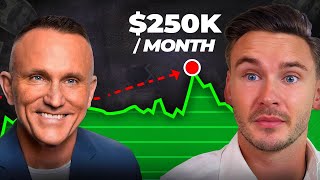
Ken Elzick scaled his recruitment agency from $300-400k to over $250k monthly by building remote teams, automating workflows, and using commission-based contractors. He charges around $16,000 per placement, with one deal hitting $84,000. His system relies on simple repeatable processes and pulse-check tools to keep his 17-person team engaged.
Questions this video answers
2012
2021
About US$300–400k per year (described as 'sub half a million')
Approximately US$16,000 per placement (reported as 'a little over US$16,000')
US$84,000 (for a CTO placement)
I had this idea that I wanted to be in recruiting, but I never sought out a mentor. I just went and was like, I'll just do it myself. Which is not only not smart, it's a little bit arrogant. Big part of my success within your program has been training myself. The biggest challenge in business is employee engagement and retention, in my mind at least as it pertains to our business, is not to create every little system. It's to find the best ones and be the orchestrator or conductor that can kind of put them together for our business. My biggest failure in my career has probably been been staying too long or getting complacent sometimes because maybe the money's good or because something looks good on paper.
Hello, ladies and gentlemen, and welcome to today's podcast. I've got a very special guest, Ken Elzick, out in New York in the US Myself and Ken have known each other for probably, I think almost two and a half, three years maybe. Coming up. Ken's been really in the program from agency blueprint and recruit accelerator. Ken is a seven figure business owner in recruitment. And basically we're going to share Ken's journey that he's built from being a Tony Robbins certified trainer all the way up to scaling his agency to multiple seven figures. So welcome Ken, and thank you for joining us.
Thanks so much. Great to be here, James.
So, Ken, I like to kick this off with like a favorite success quote. So what would you say your favorite success quote is and how you apply that to your everyday life?
I love the quote. It's a Tony Robbins quote. That is success without fulf is the ultimate failure. And I guess the way that I apply that, it appeals to me on many levels because I think early on, James, in my career I was just chasing money and chasing kind of material objects. And I don't think that's like a terrible thing necessarily, like in your 20s, but for me, when I got it, I felt unfulfilled. And there's nothing worse than kind of setting a goal and then when you hit it going, is that all? Like, you know, is that all there is? And so I just try to keep it in mind now that is what I'm pursuing, congruent with the rest of my life, congruent with being fulfilled and being happy. And I think that's something just to keep in mind always to stay grounded and make sure that the target is on track with, you know, having balance in your life.
You know, I think like, I know Tony talks about like growth and contribution being the key pillars of the six phases that are very important and I've resonated with them as well. Yeah, so that's, that's awesome. So for viewers that don't, listeners that don't know who you are. Ken, do you want to give us a little bit of background and bring us up to speed about what your, your agency does and where you're based?
Yeah, for sure. So I'm in New York, married to my wife Shannon. For a long time, we got grown kids. I was in the corporate world. So kind of early on in my career I dropped out of college and frankly, had the right job been there, who knows, maybe I never would have become an entrepreneur. But without a college degree, when I got in the military, job offers weren't pouring in. So I went and started my own company. Shannon and I did. And it was a first aid and safety supply company where we provided other companies, you know, items that they needed to keep their employees safe and on the job. So things like that, like industrial first aid kits and hard hats and hearing protection and things like that. That company got noticed BY A Fortune 500 company called Cintas here in the US and Cintas ended up buying us out when I was in my early 30s and I went to work for them and I spent a lot of years there, climbed up through the ranks, really loved that company and then left about 11 years ago. And I always had it in the back of my mind, I loved the recruiting business. I didn't know much about it, but I mean, I guess as a hire of recruiting agencies, so I was the guy on other side of the. I was the client that we are now trying to land is I looked at it and went, you know, I love meeting people. I love working with leaders in particular, love watching people develop, love recognizing talent and individuals and then putting them into roles and stuff. And so I love that from the other side and I was like, you know, I just had it in the back of my mind that if I ever get out of corporate, and I kind of knew I would at some point because I was an entrepreneur at heart, that I would get into the recruiting game. And so I did in 2012, frankly, James, I just kind of bought myself a job. Like I had a built in client with Cintas, wasn't super hungry, frankly, I was a little bit lost. I think I was a little bit having a bit of a midlife crisis or something where it was like, you know, what do I really do with this thing? You know, it afforded us a pretty good lifestyle. But you know, it wasn't crazy. I wasn't, I was probably that definition of the quote that I said earlier that, you know, success without fulfillment, like I was achieving, I looked pretty good on paper, but I just wasn't excited. I'm pumped up about the business. And Covid for us was truly the great reset where Shannon and I, our kind of got wiped out. And it was like, what do we do from here? And that's when I found you. It was sort of like, look, if I'm going to make a run at this recruiting thing, I want to do it in a way that I did my first business. I wanted to do it in a way that I did in the corporate world, which was with a ton of enthusiasm and fun and being very growth oriented. And so I had to make a decision like, do I want to stay in recruiting? And if I am, it has to be that way. And so that's when we rebranded. We actually got rid of the old company. We created the Leaders Lab in 2021. We decided to be very niche and focus leadership only and within the industries that we serve. And I found you shortly after that. I knew the automation was the way to go, but I hadn't really met someone who had been there and done it to the degree that you have. And so we literally kind of went from nothing. Our prior business was I would say, sub half a million. So we would float around between 3 and 400 grand a year. We didn't really have too many employees to speak of. No employees, a little bit of 10, 99 contractors going out. So we made an okay living, but that's all it was, was a living and a job. Like I had a handful on the screen. I had to, you know, talk to every client. I had to do everything. And sorry, I'm getting a little long winded here. But with the Leaders Lab, it was sort of like, no, we're going to go after this very specific thing, we're going to grow this thing or we're just not going to do it. I literally had it in my head like, if we're not going to go after this in a big way, then we're not going to do it. And so I knew automation was the way to go, James, but I had not met someone until I met you that had been there, kind of done that. And that's what I was looking for. I was looking for a mentor and someone to follow. And that's when you and I hooked up.
So from there then, Ken, so you reframed the business in 2021. And like in terms of your, what would you say in terms of your biggest failure so far in your career personally, like, what would you say that was and what lessons did you learn from that?
I would say my biggest failure in my career has probably been staying too long or getting complacent sometimes because maybe the money's good or because something looks good on paper or because people externally tell you like, you know, that's a great job, you shouldn't leave it or you know, what are you complaining about? Right. Like sometimes I think as an entrepreneur we feel. I don't anymore, but I think at times I've felt guilty for complaining and it's or, or, or challenging something. And I think that the very nature of an entrepreneur is to constantly look at stuff and figure out how you can do it better, how you can make more from it. Not just financially but, you know, substantively, you know, like, how can you make it more? How can you have to make it grow more, how can you make it count more, how can you make an impact more? And yet there's part of that train of thought that also implies that maybe you're not grateful for what you have. Right. And it, there's like a balance between the two. I think I just feel at times I felt complacent in my career. I know that doesn't sound like a one shot failure, like the biggest failure, but that it really has been, it's been like staying too long at different times in my career with certain things. So like I loved corporate, the corporation I was with, but I stayed there too long. I mean, to me it would be like, you know, for most people, college might be a good thing, but you don't want to be there 10 years, right? You want to be there for four at the most. And so to be corporate, being part of a big corporation was a good thing, but I in my mind kind of overstayed the benefit that I was going to get out of.
It makes sense. So with that being said, what would you say, like you transitioned from 2021, you were doing 3,400k? Yeah. What was the transition of thinking? Actually I'm in this vehicle, but I need to change and adapt, maybe systems, automation, whatever. What was the turning point for you of thinking actually? Aha. Like I know I need to do something a little bit different.
It's funny, sometimes you know things from a book perspective and you're not, you get caught up in things. You don't always practice what you're preaching. What I Mean by that is I'm a trainer for Tony Robbins. I teach people at large seminars about how to scale their businesses, how to, you know, one of the, one of our mottos in business mastery is to find a mentor and model them. Right. Like you don't need to reinvent the wheel. I mean if you want to be creative, you can of course tweak the wheel and make it your own. But why do, why do I need to start from scratch? And yet in the recruitment business, as I mentioned earlier, I had this idea that I wanted to be in recruiting, but I never sought out a mentor. I just went and was like, I'll just do it myself. Which is not only not smart, it's a little bit arrogant. Like, oh, I can just figure this out. I can just walk in and do it. And to a certain extent I could. Like, it got me so far but it wasn't going to get me all the way. So the turning point really in that kind of COVID period was I've got to seek someone out. I cannot do this alone. Like I need a group or a mentor or a coach or somebody that's been there and done that before. I know that with my existing skill set, with my connections, with my work ethic, like I know I have all that. So if there's someone that's blazed this path before can help, you know, provide me with some information or tools that are make this faster, there's absolutely no way I could lose.
Yeah, that makes sense. Like in terms of what, what would you say the main thing that is holding people back. So like when you look at business owners, because I know obviously we'll come on to how you involve within the agency blueprint. Now in terms of being a coach and what do you think the number one thing that is holding recruitment agency owners back from becoming successful?
I think lack of execution with their, their own self will and self discipline sometimes along with just committing to things and moving forward. I don't think there's, you know, this goes outside the recruitment business or industry and that I don't think normally if you put a group of entrepreneurs together and you know, let's say we're at a conference for recruiter accelerator and put a bunch of people in the room, I don't think there's any kind of lockstep equation to like IQ points and the results that people have in their agencies. Right. I think sometimes some of the smartest people in the room are not getting the best results and I think sometimes maybe people of average intelligence are Getting great results. And I think the reason why is because, you know, they're. They're again, finding a model, mentoring them, executing, taking action, moving forward. And I think sometimes when we're not in that mode, because I haven't always been in that mode. Right. I've been where I've looked up to people and gone, God, I wish I was doing what that guy's doing. And I think when we're in that mode of feeling like we're not there yet, I think we're wondering, what are they doing that's so special? What's the magic pill that they're taking? What's the secret sales recipe that they have that I don't have? Because we don't want it to be. Oh, it's just me not getting off my own ass and making it happen. Right. But that's usually what it is, in my opinion. If I look back on my own challenges, it's been me not executing. The resources are always there. Another Tony quote is, it's never a lack of resources. It's always a lack of resourcefulness. And so there's always someone you can talk to. There's always someone you can mentor. God, with YouTube and everything else right now. There's always, like, places you can go to, you know, to get directed. But I would say it's just taking action, just committing and taking action, stepping up.
Yeah, I know we see that a lot in the program, and you can see the action takers, as opposed to just the listeners and the Yamcha people. But what would you say the main thing that stops these agency owners from just staying in the same cycle? Because you see a lot of them that are doing maybe 100, 2, 3, 400k a year, and they want to keep going, but they're doing the same thing over and over again. They sort of have, like, I would say, not limited beliefs, but they just have a closed mindset of thinking of how to do things slightly differently. But it does require. It requires effort and implementation.
Well, I think you've been through this a lot, I think, personally, James, and so have I, especially in the last few years. I think for both of us, where our incomes and our net worth have gone up significantly, you know, because of our recruiting business and for you, also because of your coaching business, you know this better than anyone because you've had to deal with it, but this applies to anybody, is that we all operate, I think, within a thermostat. If it gets too cold, meaning, you know, we're not doing well enough, then the heat kicks on. Right? And if we're doing over what we think our blueprint is for, where we should be, we will actually slow down. It's why it's so important to get into bigger rooms as you evolve as an entrepreneur. It's why you should join masterminds. It's why you should surround yourself with people that have maybe taken steps that you haven't taken before. Right. So I think for a lot of people, it's a subconscious self sabotage. In their mind, they think they're worth, let's say someone thinks in their mind they're worth a hundred grand a year. Well, if they get below 85, they're gonna freak out and they're gonna work their ass off to get back to a hundred grand. But unfortunately the other thing's true as well. If they don't get mentoring and coaching and mindset shifts that tell them that they're worth more than 100k, then at 110, 115, they'll slow down. They'll literally stop working. They'll stop, their brain will just kick in and start doing things subconsciously, literally to sabotage their success. And so I think a big part of it is just in. A big part of my success within your program has been training myself to get rid of my self imposed ceilings, if that makes sense. Right. And break through to new heights. And when I get through to a new one, it's like, okay, what do I need to do to get to the next level? To get to the next level. To get to the next level so that we're not encapsulated by what we think our earnings should be.
You know, and you, you did that really well because I know your transformation was, was like you're doing 3, 4K. Yeah. And I don't know if you're willing to share now, but obviously it's in like I think 2 million plus in terms of revenue.
Yeah, I think, I think we'll do a couple million this, this year and at a, and maybe more. I'm not sure. I mean the, the first quarter is shaping up like really nice for us. And so it's, it's hard when you're growing this fast. It's hard to completely predict the growth line. Right. I mean initially my big, very audacious goal was going to be 2 million and now I'm looking at that and going, I think we'll hit it. More importantly because we're doing it through, you know, a lot of outsourced labor and you know, hiring people in other countries and my staff is 100% remote. And so we're treating people extremely well for whatever country they're in, they're at the highest end of their pay scale and we have essentially no turnover on our staff. But at the same time our overhead's pretty low, you know, and so our profitability is growing faster than our top line. So, you know, if our top line is doubling in the course of a year, our profit might triple during the course of the year because our overhead is so low.
Yeah. And that's probably what you see a lot of people inside our elite mastermind is they don't need a bigger team because the highly profitable, because the lean and because we outsource a lot of the sourcing, the marketing sourcing system, the virtual team, it gives you that good margin of balance. Because when you're competing, especially in maybe a recession time with other agencies that have got big overheads, big salaries in the US or uk, you can out compete them because you're paying a third of those wages for a lot of the employees. How would you say best you've managed to implement the remote team culture? Because I know that's a big thing that I think a lot of recruitment agency owners struggle with is how they can build a remote team. Because a lot of people are either stuck, either the typical office environment or they're just stuck solopreneur by themselves, maybe with one VA and automation and the struggle to get like an actual team in place. So what we would, what would you say the biggest transformation you've made in terms of instilling that remote team culture?
I think that's our secret sauce actually, James. Like, I think we've done really, really well in that in order. I think, you know, it's the thing we just talked about is first get your own mindset. Right? Right. Get into that growth mindset, understand it. There aren't these self imposed limits. And then as you start to grow the team, what I started to do is look at, look, turnover throughout the course of history has always been like the number one enemy of a successful business is having too high of turnover. Right. And successful businesses typically have low turnover and have the best people. Right. That are happy and engaged. And so now you add to it this new world of being able to work internationally, being work remotely, being able to work through technology, which is an awesome thing. But it presents an additional challenge to what was already the biggest challenge in business. If the biggest challenge in business is employee engagement and retention, how is that factored now when you add thousands of miles in between you and your team. Right. And so what we're doing all the time, James is just looking at if you're able to from Newcastle, when you're in Newcastle, take your team out to lunch and connect with them that way. How can I stimulate that? Is it on a zoom meeting and we all have lunch virtually? Maybe it is something like that, right. If you're giving timely performance reviews where you sit down twice a year with someone, I mean more often than not in terms of checking in, but then twice a year doing an in depth performance evaluation where you're talking to them about their career goals and everything, then, then how can I assimilate that from a remote culture? Right. And so we brought in, there's one piece of software I'm using called 15 bodies that I love that does these weekly check ins where it's like a pulse check on each person and just kind of scale of 1 to 5, how are they feeling? And it charts trends by department in our company and by employee and how are they feeling over time and it alerts us to issues before they become issues. I'm also very heavy, James, on the supervisor to frontline partner kind of reporting ratio, if that makes sense. So ordinarily I would, you know, in the States I think it's pretty typical for each boss to have maybe eight to 10 direct reports. And I'm like, like half that right now. So I'm like, you know, we have 17 people outside of me and my wife in our company right now. And I'd say, you know, I think I have outside of myself like four supervisors, you know, for only 17 people. And it's so that we can keep that strong bond and that strong connection which I also think lends into this really well. And then finally, I mean, I think we're trying to hire people. You can't always do this overseas, James. But to the degree that we can, we want people to come on and have of a career path and it's going to be limited if your skill set is limited. Right. Or if there's too much in the way from a time difference or something like that. But for the most part I want people to at least have a path into another job or into more income or into incentive based compensation or whatever it might be. And so we're also trying to paint that picture from the beginning and then reinforce it with good behavior once they're on the team.
Yeah, that's really interesting because I, I remember when you first joined the program, I think you showed me your Calendar because I think we've got that as a, as a case study initially calendar was like it gave me anxiety just looking at how many. Because you were doing Canada qualification calls I think still like and doing a lot of the candidate side.
I was doing all. Yeah, I was doing a lot of them. Yeah.
And now you don't pretty much do any candidate side. Like all delivery is handled by your delivery team. Yeah, yeah.
Unless I want to. So. But like I haven't done a candidate call in a few months and that was that for a CTO position which was a huge fee and I sort of wanted to handle it. But yeah, on a day to day I don't do it at all. I mean I think the last candidate call that I took was probably in December. I'll do some stuff and as we record this instead of February. So it's been, you know, whatever a couple of months at least since I've taken any kind of candidate call. I really don't do the first calls now ever with anybody. I will do stuff. As people get closer to like offer stage, I like to do stuff like a pre offer call and those are five or 10 minutes. Just kind of touching base with the candidate. And I do that because frankly it's lucrative and I like talking to people when they're at that stage. They're usually pretty excited, you know.
Yeah. And obviously some of the fees that you're doing are. What's your average fee?
So we're all over the board. I mean that CTO that I did was like $84,000. That was the highest that I've had. I don't want to act like that's above where we're at. We average like at here a little over US$16,000 per placement.
Very nice. And all of your team as well is like fully remote in terms of they're not like actual employees as such. So can you explain a little bit more about that?
Yeah. So in the states and I don't know, you know, someone's watching this from, but you got to check obviously with your local government. But you know, having people as a contractor in the states you have to follow certain rules. Right. Because a lot of companies will try to of dodge paying employment taxes and stuff like that. So to have contractors in the U.S. they have to provide their own equipment, have to be able to set their own schedule. You know, there's got to be a certain amount of stuff around that is, that is part of what qualifies them to be an external contractor. Now if you can do it. And you know, you got to check with your account. And so for us, we met this criteria to make them independent contractors. Right. And so do you have less control? In a way, but in another way you have less liability, you know, should there be an economic downturn or whatever. And so our we hire the kind of people that like being on that are going to kind of bet on themselves. Like because of this structure, because of the no salary structure, we're able to pay them much higher commission. So if you perform, you're going to make more money with us. Right. But if you don't, you're not. And so it kind of depends on what someone's interest interested in. But so we have three people in the States that are paid that way or delivery consultants that are paid that way.
And.
And I have a South African team where our second delivery consultant is getting is starting next week. And then I also have an agency director that has a long history in recruitment also in South Africa. That's the model. It's really no different than how it would work. Paying an overseas contractor.
Yeah, for sure. And it's probably less risk your side. It's more rewarding for them because it gives them freedom, autonomy and to make more commission. The traditional model was360 recruited is in the office big basic. Because especially in the US and I know in the uk, like a lot of these guys or girls get big basics now. So the fact you can do that a lot leaner.
Yeah. And one thing that I would do, James, someone listening to this might say, well, like who can take a job without knowing that they're at least going to make, you know, X amount of dollars per month so that they could pay their rent or their mortgage or whatever. I guess what I would say is like once someone's performing with us, or if they were to have a track record before they started, even if I was paying them as a 1099 contractor, I might go ahead and guarantee them a draw, you know, but it's just gonna be a draw against their commission. You know what I mean? So if someone had a history of making 100k a year and they were like, look, I'm gonna need a 5k draw per month minimum. And if I believe that they would exceed that, then I wouldn't be opposed to doing that necessarily. And I paid draws in the past, but I try to encourage them and even incentivize them to say like, you don't need the training wheels. Right. I want them hungry every month to have new people starting and for that I'll pay a higher percentage on the fees. And so I really kind of encourage them and push them in that direction. And again, good for them, good for me. If we have the right people.
Yeah, I think in terms of like 2023, obviously we're in this scenario where I think it's harder getting clients now because it used to be the other way around. Everyone's challenge was always getting candidates. And I think, think, well, we've pretty much solved that in terms of the program, in terms of like the automation that we build, the marketing sourcing team, the follow up procedure, how you do your nurture campaigns for candidates. What would you say in terms of 2023, what someone could implement in order to get more clients into their agency?
Almost everybody that I speak with, James, that is in the program that is not seeing results due to what they would say is an economic downturn. Right. Or a shift in their, in their vertical, in their industry. If you dig into it, and I know you do too, in our, in our Q&As, they're usually not executing. What's happening Six months ago, a year ago, is with marginal execution. With marginal execution, you could still have really good results because the market was just hot and you didn't have to do that much and maybe you didn't have to send as many emails and maybe you certainly didn't need to do as much video outreach or whatever because it was just hitting. We sometimes, and I say we all of us kid ourselves sometimes when results are good, that I'm good instead of really going, you know, I didn't execute that well. I mean, I did some things that were cool or whatever, but I really got kind of lucky. And so I say right now what people need to do is double down on the basics. You know, there is not room right now to be half fasting execution in most of these verticals. You know, particularly this is a recession that's very, at least in the states to very wonky kind of recession. It affects some industries and not others. But certainly you can't look back on tech and say this is anything other than a recession, maybe even a depression. If you look at the, maybe not the loss of jobs to be a depression, but certainly the loss of stock prices and stuff like that. But speaking of stock prices, that's what it reminds me of. It's almost like when we're investing in a bull market and we go, I'm really good at this. And then things get tough and you go, oh, I'm not that great. At it. You know, everyone was great at crypto when crypto was 60, when Bitcoin was $60,000. Right. Who's good at bitcoin now? Who's good at playing it between 20 and 25,000, you know, and I look at recruiting the same way, like what are you doing to execute on the fundamentals? Because this is the time to get really, really good at that. And then as these economies come back, and I think they will, I don't think this is a super deep recession, then you'll have that muscle to flex into a better economy as it comes back.
Yeah, I agree. And I think a lot of it comes down to execution. It is a thing that we see quite often. A lot of agency owners is like just doing the thing that is proven to be done. But what would you say is the biggest thing holding recruitment agency on his back from going from being a solopreneur? I would I always say glorified recruiter, the golden handcuffs, highly paid, doing 1,200k. Yeah. But they, I think the biggest challenge they have is delegation. They want to do everything themselves. They want to handle all this candidate's important, this client and they can't do this or I can't give someone access to my emails and they worry about all of these things that are probably never going to happen happen. And I'm sure you experienced that in terms of letting go as well, especially when you came inside of the program and we implemented a lot of the systems and the VA team and everything else. Else. What would you say is the biggest hack or trick to be able to as a business owner let go and actually delegate and trust other people's systems to do some of the part of the tasks inside your agency.
Well, honestly you, you helped me a lot with that and I'll explain why in a minute. But this really comes down to fear versus faith. I mean at the end of the day it's sort of like if I delegate and it doesn't work, what happens if I hire a delivery consultant and I guarantee them a $50,000 a year salary or 100,000, whatever they're going to pay up? It doesn't work. Oh no. If I join James's program and it doesn't deliver? Oh no. Like it's always, you know, fear and faith come from the same place. I mean they really do. You're predicting the future. With fear, you're predicting it in a negative way and with faith or excitement, you're supposing the best. Now when I say that you had an impact on that by having someone that had been there and done that before me, it gave me the confidence to go, hey, if he did it, I can do it, right? Like, I don't have to rewrite this whole thing. Like, he's, he's done it. I'm smart, I'll work my ass off. Like, I, I know how to do all those things. I'm very confident in those things. It, to me, it took a lot of that fear out of it. If I had to go in and you just said, hey, Ken, if you know automation is the way to go, then just go figure out the automation by yourself. Like without a group, without a community, without a mentor, that's scary to me. But walking into something where people were already having success and doing it before for people like in your program now that are still in fear mode, that's what it is. They'll call it anything else because no one wants to say I'm scared. But that's what it is. We're scared. And when we're scared, we're assuming the worst is going to happen, not the best.
This is so true. And I think obviously we both come from the same background where we invest in ourselves and we've invested on our own personal development. How important would you say that is for any entrepreneur, business owner, it's probably listening that's on the fence of like, never invested in themselves before and is very apprehensive. Like, what would you give them as advice to doing some personal development?
You know, it's kind of crazy that, that it's even a question in a way, because if you ask. No, because if you ask the same people, how did you ever get better at anything when you were young? Or who are the people that like, you looked up to when you were young? And who's that football coach, who's that baseball coach, or you know, in your country, cricket coach or whoever, right? Like, or that teacher or that boss or whoever. Like somebody always helped you. So why do we get to this point, whenever you got good at something, it's because somebody helped you. And why do we get to this point as entrepreneurs where somehow that sounds selfish or self indulgent to do that? Like, it's just ridiculous. So to me, investing in yourself, investing in mentors, investing in programs is, that's just ongoing, never ending. I mean, I am constantly looking at who can help me next, right? Whether it's a paid service, whether it's a friend, whether it's a business associate. And I try to do the same for other People. But yeah, that's, that's a, that's the mindset thing. And I, and I think the sooner you realize that you're not in this alone, and even if you have some success or have had some success on your own, how much further could you move and how much faster could you move if you've got people around you?
Yeah, I mean, for us now, especially on my side as well, I feel it's just nuts to think that people aren't willing to invest in themselves, but would invest in decorating the front living room or doing an extension or buying a brand new car or do you know what I mean? When they could invest in themselves, that's going to generate multiple streams of income, more money in their business. Especially business owners, like actual recruitment business owners that are probably on the audience now if they're not investing in themselves and investing in the house more than investing themselves. It's such a wrong mindset and it's been trapped in the Matrix style. Get a nice house, two kids, get a mortgage, and that's how you live. And no one, you're not even taught in school about personal development, about getting mentors, you taught whatever you taught in school, that's it. And then your learning stops. But really for me, and I'm sure it is for you, like my learning started after school, school, and I was just non stop hungry on podcasts, YouTube, books, et cetera. And anyone that really does that. There's so much information for free. But you mentioned a good point. There is. The information is one thing, but not having the tools, a way to implement and having a good community and of other people that have done, been there, done it and have got ahead of you and maybe 100k months or 200k months and think, wow, how did they do that? They're not better than me, but they've done it. And actually seeing it makes them believe it as opposed to thinking, oh well, yes, my limited beliefs, I'm not going to be able to do that.
Yeah, you're so right. It's so funny because if you look at that person who has no problem going out, like you're saying, buying a car, we know that cars by nature depreciate and so what you bought will for sure go down in value. Right? And maybe you need it, you need a car and maybe you deserve it, whatever, that's fine. But we know, we just know that I will not make money on that, that I am for sure losing money on that car. Right. That that's happening. Of course, like Yours. And you know, I'm not trying to pitch your. It could be anything, you know, it could be if I go to a Tony Rock Robbins seminar, right? It's like, what do I actually need to do to make the ROI on this worth it? In the case of your business, I needed to make less than one placement in the course of the entire program. Less than one. So it's essentially, if this does anything, it doesn't even have to do everything you promised. It's just if it does anything, then the ROI is there. But again, this comes back to that fear versus fate thing. They're like, but what if it doesn't work? Then I'll be out the money, then I'll look like an idiot, then like, whatever. And it's like, set the bar higher, set your expectations higher, set your standards higher than fear, than constantly walking around assuming things aren't going to work out.
Potential lead. I recognize the name. I never respond emails for a long time. And someone came back, this guy. And he. And I recognize him because he'd been on lots of my free webinars. I think the team had had three sales calls with him over the last two years about joining the program. And he was always wanting to speak down to case studies or success students and stuff. And for us, we don't want to waste other people's time that have already took the risk and went into the program because we share a lot of the amazing results. I just said back to me, he was like, oh, I've still got loads more questions. If I can deal them up, can I send them? Even though I've answered them questions time and time again? I was like, like, with no disrespect, you're just never going to make a decision because as an entrepreneur, you're always going to have an answer questions. And if you don't take the leap and take a leap of faith, you're just never going to get there. Like. And in my experience, from over, I think 5, 600 students we've mentored now, the ones that, that need so much time to make that decision and are just asking every single scenario question on the sun, they're just never going to make it anyway because the mindset, like, it's so much time and energy to get them to adopt, it's just. And I said, look, this program's not for you. We're not going to try and sell you or convince you anymore because I think it's a case of you need to go and address yourself first and improve that mindset because, yeah, like you said, I mean, we only get one knife and. And time is so precious. And as you get more successful, I realized my time is so precious. And if I can pay someone that just figured out one solution and can get me there six months faster than figuring out myself, I would rather pay the 10k or 15k or whatever it is to get there and save that.
Oh, yeah, totally. Someone asked me the other day because I think I put something out about meeting someone on fiverr or upwork to do something, and, you know, it always comes back like, oh, you can do it yourself. Like, here's how to do it. And I'm like, yeah, already in the amount of time that we've been talking about it, the couple hundred bucks would have been well spent to just outsource it. You know what I mean? Like, it's just, I don't care if it takes them five minutes, like, whatever. I just need the problem solved. And I agree with you. I think a lot of times too, there's people in the program, people outside the program. We also sometimes get so vested, a lot of people with the analytical questions, right? What about this? What about this? What about. What about if you dot the I, cross the T, do this and that, put this system together, what they're really doing is, is usually avoiding the things that they want to do by getting analytical around it. Meaning you can build the best system in the world, but if you don't go ask for orders, it's just a good system that's sitting there dormant and no one, you know, even knows it's there, if that makes sense. And so I think a lot of us do that is we look at our. We look at our to do list and we look at it as almost like, what would I like to do instead of what would I. What do I have to do to drive the business? Right? And it's sort of like, let me just pick and choose all the activities that'll make me happy in the moment, but don't necessarily drive the business long term. And so I think a big part of making this or any other program or just being successful as an entrepreneur is actually being a boss of yourself. We had a session in Recruiter Accelerator yesterday where we talked about, I think a lot of people identify being their own boss, starting their own business, being an entrepreneur. They associate it with. With freedom. They associate freedom without really having a tough schedule. Like, why would I want to be booked up? I got into being an entrepreneur so I wouldn't be booked up. And I'M like, you're violating the biggest rule now, which is being your own boss means being your own boss. It means having self discipline to do the things that you may not want to do in a moment. Right. It means getting your ass to the gym. It means making the sales call. It means doing the 20 video outreach per day. It means doing that, you know, all of those things. That's what being your own boss means. It means you can actually be self directed without someone telling you what to do every day. And I think people mistake that for I have the freedom to do whatever I want, which you do have. You're just going to get the results that come with it either way.
You know, what would you say is the best business advice you've ever received?
You know, I'm going back on it, but back to the same thing. But honestly, just finding a mentor in anything, really. Find a mentor in a song. On a big scale, like in our program right now, in a big scale, it could be. Well, James has done automation. He understood the technology better than I did. So let me make James my mentor and I'll model him now, right? And now I'm going to go do it and I'm going to tweak this. So on a big scale, it could be that, but now, I mean, I'll do it on the smallest of things. It's like, who has experience with this individual piece of software? Like, I'm going to do my best to not have to pioneer any, anything James, you know what I mean? Like, I'm gonna do my best to steal shamelessly from anybody that's been down any path that I've been before. My job is, in my mind at least as it pertains to our business, is not to create every little system. It's to find the best ones and be the orchestrator or conductor that can kind of put them together for our business, you know?
Yeah, so true. I think for me always what stands out for me is how I still run businesses today is keep it as simple as possible. Simple, simple skills, fancy skills is always a good quote that sticks with me because I think a lot of people get more complex as they grow the business. When they add more tools in more systems and they think, oh, I want to do this, this, this and this. And it's like complexity kills businesses. So try in your best as you scale, it's harder and harder. Keep it simple and simple means like less and can we do more with less all the time is always my mindset.
Yeah, I agree. I'm Always looking at, like, stages in our recovery recruitment process and going, how can we squeeze it down? Right? How can you take 11 stages to nine or whatever, to seven or whatever it is? Simplicity does win. I think it's funny because I think. I think we're wired to want to make things complex because it makes us feel, like, more valuable or more important somehow, right? Like. Like, oh, look at how, you know, like, if you can't explain your business in like 15 seconds in an elevator, then you're. You're either in the wrong business. You haven't simplified it enough, right? But if it's. I think we almost were at like a badge of honor, like, oh, it's pretty complex. Like, I'm kind of special, you know, and it's like, no, it's just simple, you know, it was. I'll give you a quick example of this because again, this comes usually through the pain of doing it wrong. But when we rebranded to the leaders Lab, part of getting to the leaders, that our previous company was called Summit Careers, and there's a guy named. I don't know if you ever heard of a brand called Story Brand. It's a marketing thing. And the guy's name is Donald. Very good. So I, Chad and I go to Donald Miller's, you know, then it was during COVID So we did it virtually like this weekend branding seminar. And you had to include your website and all of that in the application process so that they could use some websites like before and after and out of like a thousand people that were on there. Our website was brought up for our old recruitment agency about, like, how not to do. Do a website because. And it's really weird to hear someone else. It's not that it looked bad and it's not that the information was bad. Well, the information was bad. It's. It's the clarity. The message was bad. Like, you couldn't even land on that page and figure out exactly what we did because we were like, well, you know, we do this and the algorithm and this and explaining this. And they were like, you know, in our new website, James just says, we place great leaders with great companies, you know, or, finding your next leader is easy. With us, it's simple. What do you do? I mean, someone goes to our website right now, they're like, oh, these guys do leadership recruiting. Done. That's what we do. Someone asked me in an elevator, now, what do you do? I'm a leadership recruiter. That's it. If they have other questions, we can talk about it. But you Know, we have this tendency again to overcomplicate, but to your point, simplicity, sales for sure.
So what would you say is something that is like working brilliantly in your agency right now, Ken? Like whether it's software training, hacks, CRM.
I'd say my, I'm still evolving in my relationship with delegation at this level. Even though I've run like thousand person teams in corporate America. What's running really well right now is me handing off more and more control to the very capable leaders that I have on my team, including my wife. So my wife's heading up like the delivery team now and she's doing fantastic. And I'm truly finding, James, that you know, two heads or five heads or now, you know, we got 19 heads are better than one. You know, for a while there when it came to anything creative or anything process driven or, you know, directionally, I mean I was just making those calls kind of in a silo and then kind of telling everybody what their new thing was. And I'm getting so much more out of the company. Like we're doing better. People are thriving more by getting more people involved in the company. So I think we're, I think we're doing very well at that. And I'm really proud again of what we were talking about earlier with our ability to really unite a remote team and have really high engagement and virtually no turnover from an all remote team, which has been really, I'm really happy and really proud about that.
And what would you say your best business book you've ever read in the last say 612 months?
Last 6 to 12 months. I like the 12 week year I think is what it's called public here. I like that a lot. I'm an efficiency guy, I'm a productivity guy. So anytime someone can like teach me some mindset hacks on how to get more with less, I just, I really gravitate towards those books. So that was a good one. The other thing I would say as a, as a hack is I joined this thing called Blinkist, which is audio book summaries. Yeah, they're like 20 minutes long and I dedicate times a couple times a week. And I just sit there with my iPad and on a note taking program and just block everything else out, turn off notifications and just listen to a book and in, in short form and then just take notes on it. And I wouldn't do that if someone's reading for the purpose of like relaxation or reflection or they're reading a book about spirituality or self improvement. Or something like that. But a lot of times in business books it's like, hey, here's the 12 steps to do blah, blah, blah, right? I don't need to read a 280 page book necessarily to get that. So I really love, love using blankets for that.
I mean I love reading. I, I do differently. So maybe ipod, Kindle, Audible. I've been doing it a lot on my iPad recently where I split a screen between note taking and then I've got the Kindle book there that I'm going through highlighting then writing notes and then listening to it on audible at like 1.5 times speed to you, like learning through parts of the brain that works really well. Blinkness is good because most books are like, there's one or two, three golden nuggets you're going to take from each book and then to fill the book there's a lot of fluff and it's just like trying to sift through it all so much. Get the key points and can we take away. Can I implement yes or no?
Books to me are like most meetings and it was funny, like we've all heard that phrase, like, well, as long as you get one or two things, then it was worth it. And I'm like, that's a low standard, man. Like, like if someone's going to take three days of your time, you should get more than one or two things out of it. And most meetings we go to, you're like, you're like, man, okay, that thing was good that this morning. But I, we don't. Did we need all the apps? I feel the same way as you do with books. I'm like, and I get it. I mean the author's got to stretch it into what sells, you know, which is a certain amount of pages. But to me, a lot of times it's like, just give me the meat and potatoes and let me take it.
You know, what would you say your, what's your, what's your standard day for you? Walk me through what, what's a day for you as a recruitment agency on a.
So I get up, listen, I'm still very much in it right now. You know, I know one of the things that you got into is, is, is a, a pretty flexible lifestyle. I would say I have flexibility now, but I'd say I use that flexibility in a way that because of the hyper growth of the company, I'm still very much, you know, working hard, but on things I want to work on. So I'm not committed to. Again, like you said that screenshot I sent you on my calendar when we first started where it was just candidate, candidate, candidate. I don't do that anymore. It's all me time until at least seven usually. So every now and then I'll do an early meeting because the time change with somebody on like our Philippines team or South African team, you know, because I just need to squeeze that meeting in and so I'll do a little bit of work. I'd say I'm, I'm more productive, James, in the first half of the day in terms of work and then by about three or four in the afternoon I'm done. Like I, I go work out every day at like 4 o', clock. You know, I might do some project oriented stuff later if I feel like it, but you know, generally done by the then. So my kind of routine every morning is get up 5:30, I do agost you which is just like spine alignment, almost like yoga type stuff. I do that and at the same time I actually listen to incantations every day while I'm doing it. And so sometimes that's like a money hypnosis to help break you out of like limiting beliefs around money and stuff like that. Or sometimes it could be meditative music or sometimes could be a Tony Robbins thing. But I'm always doing something while I'm doing that in kind of a natural, no extra time way. I can get them both done at the same time. So that's about 30 minutes. I like doing the blinkist thing that we were talking about early because I like sort of, you know, put your mind in growth mode like straight off. And then like I said, I might have meetings with the team but generally if I don't have an early meeting with the team, I don't like to start like regular work until about 8 or 9, until about 4. Those are kind of the goal posts I have found myself getting. I feel a lot of what we do, James, and say we, I mean like within the recruiter accelerator program, within the Elite Mastermind. I feel like a lot of what we do as agency owners and then you and I as coaches, it is creative to me. And it's not creative in the sense of like you know, painting a painting, but it's creative in the sense of like oh my God, Bing. Like something goes off in my head and like a whole automated process just I can picture it, you know what I mean? Like something that's been weighing on me and I'll wake up sometimes at like midnight or one in the morning or something and Go, okay, I've got this whole thing figured out around client acquisition and I'll just. Anymore, I don't even fight it. I just get up and pencil it all out, you know, that's not a normal part of the day, but. But it's something that seems to happen about once or twice a month and I just go with it at this point, you know.
Yeah, it's awesome. So. So looking back then, Ken, like, since you joined the program around two years ago, what would you say your two or three biggest wins have been in transformations.
The commitment to the program was a win, I mean, and that I could do it and that we had the revenue, I could commit. Commit to it. But you've got to commit. So you've got to come into this, I think, with a plan and you have to go like, I'm going to dedicate X amount of hours and you have to be strict with that time. And, and from that is where I got my wins, right? Which was right away, I think, the hiring of an external, outside of US staff. So hiring VA and then just immediate, like LinkedIn automation along with the other automation tools, because that stuff paid the bills immediately. So like I said when I met you, I was like, okay, someone's been there, someone's done that before. If I just follow in their footsteps and work hard, hard, I'll be successful. What level I'll be successful, who knows? But I'll be successful. Right? So if all of that is true, then what are the things that are going to impact me right away where I can, you know, put some money in the bank and those were the things. So hiring bas so that I could be free to do more things in terms of working on the business instead of in it. And same with LinkedIn. LinkedIn automation was almost immediately putting people on our calendars and that was huge. But that is not something. I mean, I gotta tell you, if people think they can go out and do this stuff on their own without a community, I would have quit 10 times over, which is not possible because you can only quit once. But I would have quit the first time I ran into trouble with my LinkedIn account. The first time the automation didn't work. Right. I wouldn't have known ways around all this technology without the community. So. But anyway, I'd say our two biggest wins in scaling up for those because not only were they mental wins, they were monetary wins. And the monetary wins told me to keep going and keep investing in this.
You know, that's awesome. And for like someone that's like considering, like joining Recruit Accelerator or potentially looking for mentorship inside the program and they're on the fence. What would you, what would you say?
Well, I mean, no doubt I'm going to endorse the program, but I would say if you're, if you think you're going to sign up for this program or any other program, it's stuff will get you to the promised land, then don't join any program. But if you're ready to roll up your sleeves and do the work. I haven't met anyone in the program, James, so I coach now program, and I'm saying that not to you, but obviously anyone watching this. I haven't met anybody in the program that we've coached that applies themselves and works every day and does the things that they need to do to drive the business ahead that hasn't had success, period. So if you think you're that guy or that girl, then absolutely join. You'll, you'll make your money back almost instantly.
So, so true. Okay, Ken, well, where do you see the recruitment industry going? Like, where do you imagine it being in like the next five years? Like, how do you see this developing?
There's a lot of technology that I think we're on the forefront of that. You can either look at it as scary, like, you know, it's this going to replace us or the need for us to where we're at. If you look over time at recruiting outside of the technology piece, it hasn't really changed that much. Like, if you look back on recruiting from like 30 or 40 years ago, probably it was like, I mean, think of the books that we read, James, like, what's that guy's name, that Steve Finkel guy or whatever his name? Yeah, it's not about technology at all. It's all about relationships. Right. So, and you know, I'm sure back in the 1919s in the country clubs, right, it was about who could you trust, who could you believe in, who could deliver. And so I still think it's very much that way. But if you can also leverage technology to give you an edge, to make it bigger, then it absolutely can. I don't see that part changing. I think in the short term, meaning, you know, one to three years, it's going to be cyclical in terms of which industries are hiring and which ones aren't, because I think we're still in that whiplash, like post pandemic kind of whiplash. And I, and I think they will all need people. I just think you might have to Sharpen your saw a little bit more in different industries than in others, you know?
So true. Well, Ken, it's been a pleasure having you on the podcast. Yeah, man, great to see your transformation over the last two years or so and really value you as a. As a friend as well. I think someone that's so genuine, got a good heart and always willing to. To help people. So it's been great to have you and to reach out to Ken. Please do not inundate him. You can maybe find him on LinkedIn, connecting with them for sure. You can message him and say, are you the real deal, Ken? Or whatever. But just, I know a lot of listeners would probably just be hounding you, so don't hound them as such, but you can follow them on LinkedIn, I'm sure. And then if you do join Recruit Accelerator at any point or agency blueprint, you'll see them on the other side inside the Mastermind event and the program.
So I want to thank you. One. One thing I was going to say, you know, early on in the program, what I was expecting was that the modules that you put together, that the training that you put together would be effective and good, and it was. What I wasn't expecting is I could jump on these calls that you and I both host now, and I would just pepper you with questions and you would answer all of them because you knew I would go out and execute. And I do the same thing now for other people. That, to me, is the recipe. The material is there, and then the support is there. And again, all you need to do is actually show up and apply yourself. But you do need to apply yourself. So that's it. And if you are, if you apply yourself, James and I both live for that. Like, we want to see you, we want to do a podcast with you on the other side of this, talking about your $2 million agency. Nothing I'd like better. So thank you for your mentorship and, and, and for building the program, brother. Appreciate it.
Thank you, my friend. Until next time.
All right, bud.
Thank you.










