Making Millions Nearly Cost Me My Soul
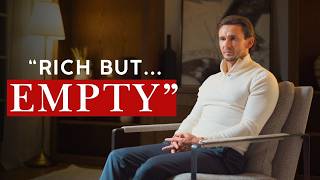
In this interview James Blackwell recounts his evolution from a teenage car‑flipper and coffee‑shop owner to a multi‑million‑dollar recruitment and education entrepreneur. He describes early struggles with credit‑card debt, the pivotal decision to leave a stable job at BMW and Nigel Frank, and the launch of his first recruitment agency on a shoestring budget, which grew to seven‑figure revenues. A five‑year stint in Dubai allowed him to scale the business, develop a mentorship platform (Agency Blueprint) that has coached over 1,400 agencies, and diversify into private‑equity and talent placement for South African professionals. A return to the UK sparked a renewed Christian faith, which he says reshaped his purpose, prompting him to align wealth creation with spiritual values. Throughout, James shares core entrepreneurial principles—sales, marketing, personal development—emphasises "competence before freedom," outlines his hiring philosophy centred on culture and intuition, and explains his "calm business" model of delegating low‑value tasks, protecting Mondays for strategic thinking, and buying back time. The conversation blends personal anecdotes, actionable advice, and reflections on balancing material success with spiritual fulfilment.
Chapters
Hey, guys.
I'm finally back on YouTube after a few months off. For those of you that watched my previous video, I moved back to the uk. So I moved from Dubai after almost five years there and came back to the uk, really rediscovered my faith in our Lord and Savior, Jesus Christ, started attending church regularly and reading the Word.
And since then I'm actually at my.
Place here in sunny Spain, Marbella, because this time of year in the uk, the winter time really gets to you in terms of the weather. Yeah. So, new chapter and we're going to be doing a lot on YouTube over the next few weeks, so really been taking time to think about the direction I wanted to really go with this channel. So talking a lot more about building wealth. So how I scaled from six figures to seven and now eight figures and really creating freedom in your business. So how to do all of that while staying truly aligned and God ascended. So a lot of you have been asking about my story from the start in the comments, how I went from credit card debt all the way to making over 30 million online over the last few years and really what led me back to Christ. So I've actually sat down with a friend of mine to answer some of these questions. And so I hope you enjoy this video and please comment below at the end of the video what you would like to see from me next. And really wanted to share my journey. So hope you enjoy and I'll catch you all soon.
All right. So, James, but for everyone that hasn't heard your story and doesn't know about your journey, just tell us a little bit about yourself. Yeah, sure.
So entrepreneur taught. I always was buying and selling cars when I was like 17, 18 on my mum's drive. And then I had a coffee shop when I was like 20, 21. And that really got me into business, you know, of like learning there's overheads, there's responsibility. And it went well for a while, but I struggled with capital and had no mentors, actually. Then I went on a journey to work at BMW for five years. I was selling cars and I was really good at that. But I mean, you don't really make much money just selling cars, you know, Got into recruitment, started learning my trade in recruitment, worked at a company called Nigel Frank for five years, went up the ladder all the way to a manager there. Then realized to be wealthy and to have freedom was. I didn't want a boss, you know, I was suited and booted. 7am Like Wolf of Wall street bashing on the phones and I realized I wanted My own business then. So I think it was like roundabout. When I was 28, 29 I left there, literally had no money. I just took a mortgage on for this three bedroom house, new build. I only had like 10,000 credit card I remember and I remember applying for a loan as well for £10,000 just before I left, just as like a little bit of a stopgap so I could start the business. And then yes, started my recruitment agency, which is where we're here today, which is one of my companies and started that 10 years ago from scratch, literally on a shoestring and built that up. We did run about a million pounds in revenue. I PIM base revenue which in recruitment is like very high profit margins. By the time end of year two, trained up my brother to learn how to be a recruiter and then expanded the agency. We got to run about a team of 12 to 14 in the office. Yeah. From there I decided to move to Dubai just five years ago and that was once I'd probably just got to making around about probably a net worth of 2,3 million, then decided to really get out of the UK and kick on, you know and moving to a big city like Dubai back in 2020 was hard initially because I miss friends and family and I just started to make good friendships there. I really build out my business. So I started educating other business owners on replicating an agency like mine and how you can build an agency seven figures, it's lean, it's profitable, it's simple and gives you freedom. And yeah like that was like where my journey led me to today where I did just under five years in Dubai and then now moved back to the uk. So now I've got three companies or two recruitment agencies. One of them we specialize in placing South African remote talent across companies. So we've placed over 500 South African professionals into predominantly UK and US based companies. And then my main education company, the agency Blueprint which I've mentored now 1400 agencies to scale to either six or seven figures. So we have like online program, we do things done for you, build ons for customers, an XTM mastermind. So I do in person events and yeah that's been my journey to now and then now I invest in other companies. So I've started my own small private equity part of my business where now I've acquired wealth, it's how to redistribute that and create even what we call like foundational wealth long term for my legacy and my future family generations as well. So generational wealth.
Okay. So there's a lot in that. I want to take it back to the beginning and talk a bit about the mindset because you know, you don't just start multiple businesses. Some people have this feeling, an inclination or a calling towards entrepreneurship. So what was that for you? The first moment? Was there a single moment?
I think I've just always wanted to be successful and be rich. Okay. So ever since I was young, I grew up, I never needed for anything in my family, but it was like lower middle class. So we always were taught that I need to go out and earn my money. So I had paper rounds, worked in supermarkets and I had three jobs. At one point when I was like 19, I used to work as the supermarket in the bakery, doing admin in an office. So I started off just always trying to make money and I realized like the struggle was like everything's on you, you know, and for you to change your family generations, you're going to have to go out and take risks and really got into self development, personal development quite early. So I was reading a lot of books, trying to understand wealthy people, how they got there, you know, and this was pre online marketing. So I always say to the younger generation now that's like between 20, 30, you've got it good. It's never been easier to make 10, 20,000amonth now for most of the younger generation because you can do it all online. Back in my generation everything was still door knocking, cold calling. You know, you didn't have websites and online at the start, so I was doing cold calling a lot of times, door knocking. I've tried all sorts of jobs back when I was younger, but there was just a desire that and hunger that even now when you create an eight figure net worth, it's very hard to now just chill, you know, because it's been ingrained in you that you need to work, you need to keep hustling, it might be taken away from you tomorrow. So there's all these sometimes insecurities that got you to where you are now that still linger because that's what got you there was like survival, you know, and always be fearful. Yeah.
So coming from that and fear being the main driving force, would you say at that point early on, do you have a different source of motivation now?
Neval Ravikan talks about it all of the time. If like for happiness and joy and everything else in life, get the money side first sorted. Okay. So you've got to make sacrifices and do that work on yourself and because if you fix the Money side where you've got financial freedom, then that's when everything else can open up. Because if you don't really solve that, it's always lingering in your back of mind because it's great. You can be Zen and the checks come in the mail. Like it doesn't work like that. So once you fix the money side, then you can start to seek other ways of personal development. And obviously my journey, which we're discussing the faith was led me to like, well, I've acquired the money, but what now I still feel a little bit empty inside. Even though I was always spiritual. That's what led me to Christ and really into God and my faith to keep more aligned. Because the balance skills of just constantly generating money and, and wealth and materialism, things obviously I experienced in Dubai, which was all great and part of the journey, led me to my fai and then that's like my bigger purpose now is to spread that word and the word of God and to be way more aligned in with God's word as opposed to the outside world of materialism and all these things.
What are some of the people you think everybody and every Christian business owner, entrepreneur should be surrounding themselves with?
Yeah, when you read in the Bible that that Jesus, like he wants to save the broken people, you know, the person that's okay and leading the Christian faith but not fully, he would rather save the drunken person, the prostitute and these things. There's so many stories that are clear to that what I would say, like I can only preach what worked for me. You know, I did surround myself with successful people, but they were smart and they had good values. I had good upbringings. Now I would still align people if they were successful but not in faith, then I would just be wary of like what information I'm taking in. Still surround yourself with those people because it's high energy. If you're around positive people that have got a can do attitude. They're not moaners, they haven't got the negativity where they are. They've got pendulums and they're bringing you down all of the time. So that like is the first thing you tune into yourself and you'll see what people are going to be right to surround yourself with. But you definitely need a mix of people that are wealthy more ahead of you. And then some people are aligned with you. So I would say people at the same level as you, as long as they're into the Word and they are into the Christian faith, that's going to be good. And then also people that are below you, that you bring up, that you can see they've got potential, they've got a good attitude, the good listeners. Yeah, you could have that blend just.
To tie it back to the beginning, your first business, you fail. Talk to me about how that felt and what that taught you.
Yeah, I remember obviously the, the coffee shop back then. I think I was 21, 22. It felt I just didn't have mentors, I didn't have guidance, I didn't have support financially and yeah, like, and then went back into employment, you know, and I just realized for that season I needed to learn my trade, I needed to develop more skills and I needed to learn. And I didn't go back into entrepreneurship until 29, you know, so like what, seven, eight years maybe. I was working and employed and developing a skill in sal and they're moving into recruitment. So whereas like different people are starting off their journey young. And the problem with that I see is not all of them are successful because they try and promote success online and they're not really the renting a Lamborghini or whatever. They're trying to look successful, going to Dubai for a couple of weeks, all of these things. But they haven't built the foundations of the discipline, of the struggle and learning your trade in sales and marketing and everything and spending years doing it. Then that's why people try and shortcut that route to success by thinking they can just use a quick hack online. And then all of a sudden they've got the skill set to build a culture, to build a team, to hire the right employees, to know the right systems, to build, to smell for the opportunity to sense when things are potentially going wrong with cash flow or other things. They don't have those fundamentals that are underlining and underpinning them because they sort of just get rich quick online for two or three years or crypto, whatever it is, and they don't have the fundamental skill set of an all round entrepreneur.
What are three of the foundational skills that you think are essential to entrepreneurship that a lot of these guys might be trying to glaze over?
Yeah, number one is sales. Like you have to be good at selling. If you can't sell yourself, the business, the offer the opportunity, then you won't be successful in entrepreneurship. You have to be good at selling because you all start from ground zero, unless you get loads of investment. Even then you need to sell the SaaS product or whatever it is you got investment for. So selling is number one. So that's a people skill. So it's like how to win friends and influence people. Dale Carnegie BOOK all of these different things of like learning psychology, psychology of selling and understanding another human and flip selling and all these different techniques of being able to sell to a prospect or a person. And it comes with likeability as well. Does that other person buy into you and your story and these things? So I would say sales number one. Number two would definitely be marketing. So being able to market your product, service or whatever, it's very important that you know online marketing. So whether it's paid ads, writing copy, which obviously you've got AI to help with now creating your offer, being able to get your brand or your own personality out there is key. So I'd say sales and marketing. And then the third skill set is yourself and personal development. So being able to execute on tasks, so being willing to do the things you know you need to do that you don't want to do, but you still do them anyway to get the result. That's what most people fall down on. You know, I'll do that tomorrow. I just don't want to make that call or don't want to follow up or it's those underlying that passion that you have to be successful like will get you through those things. If you've got sales and marketing, then you've got that hunger, the never say die attitude. You're not going to take no. As you take 99 rejections, you make the 100th call. Those are the things that get the right successful person through that to be able to get to success.
Another thing you said was competence before freedom. So what does that mean? What are some of the core skills again that people need to achieve before they can deserve that?
Yeah, what I mean by that is people have to deserve to get the freedom. So they have to put in the work of like being able to be very competent and world class the skill set that they've developed in the business to be able to then create the right systems that give you the freedom. People always want freedom after year 12 in a business and manage themselves on the business is not going to happen. It's normally happens realistically in year four or five, you know, once you've put enough work into winning enough clients to get enough success to build the team, hire the team, fire the team, hire the time, hire the team again, rebuild, simplify the business because it gets harder and harder as you expand. And then once you're competent at that skill and learning and just being able to get a sense of the business so when you're working on the business, not in it, you can sense what needs more attention. So when you step away, marketing's struggling, we're struggling with leads. Okay, what is it that you as an entrepreneur can spot straight away that no employee can spot that you need to fix something. So we've been able to be a quick firefighter. When you come in and out of the business, when there's a problem, whether it's with the leads, the sales, the delivery, with the clients, all of the freedom side comes with the confidence of knowing you've hired the right team, you put the right systems in place, you've got the right type of offer, the right type of clients, the right delivery and all of it is on point and you've got a good culture. So all of that comes with time. So the 10,000 hour rule to be very good at at something. And I think people just try and get the freedom too early. They don't want to do the work, they don't want to do the tasks they know they need to do. Because if you did that and then you got it to a point, then, then you can get the relaxation of having a bit of freedom. But when I talk about freedom, it means I still think about my businesses all of the time, you know, but it's just you don't have to do the tasks in the business. You can't switch off and think the business is just going to run itself now. Like you're still going to have to be on it. Like the some days I dive back into the business. We're struggling with certain lead quality or the sales just haven't been good the last two, three weeks. I'm looking at why, like what is, what's falling down. Maybe the sales team haven't been doing their daily meetings where they're working on. Objection. Handling. So dive back in sales scripts gone wrong or the delivery of the customer success managers. We haven't took the onboarding form correctly or we haven't set the expectations with the client we needed to improve the onboarding process. All of these little things is the competence. Whereas if you haven't done those departments and haven't run them yourself and set them up, then you're never going to be able to spot that. And that's when you're never going to be able to create the freedom.
What are the key sort of skills and qualities that your guys and your team have that you think everybody else should be looking out for?
Well, it starts with you first is like for you to attract a Player talent. You need to be an A player yourself, you know, and people only work for a good entrepreneur boss that they believe in, that they can learn from, they're inspired by, they've got the energy, they know they're going somewhere and you excite them on the vision, otherwise those people won't join anyway. So a lot of it comes down to not being able to attract, attract the right talent in the first place. I could give you all of the skills and hacks of how you could attract get them, but they might still not join you because you need to work on yourself first. So one of the key things when you're building a team and if that's a remote or in person. Now I've obviously had in person offices. The main company now the agency blueprint is all remote. So we have I think 24 employees all across the world. But the foundation I built was in the office, you know, here in this business hired and fired probably 30 or 40 people now. So you get a sense, you take your intuition, you take your gut, you look them in the eye. My dog's a good test as well, Kobe. So sometimes if the person comes in. Yeah, if he sleeps by your feet, that means he's got a good tune of your energy. Like there's been people I've interviewed and he's barked at, you know, and he wouldn't sit on their feet or whatever. And that was always a good thing because there was, I think there was one person I hired where I don't think you like them and they work down to be an absolute nutcase, you know, after two weeks. So. And you see it all employees sleeping with each other in the office, like there's all sorts that goes on. But because I've came through that and done that in person, making a hire remote is a lot easier because you know what to look for. But I would say that you have. It all comes down to your vision and you inspiring them with the culture and then the people that you hire. Again, I have just a policy of a don't hire dickheads. It's yeah, you can sense like, do I like this person? Like, do I feel like they'd have a good conversation and coffee with them or whatever. People don't like, like having a system of how you hire. I have all of these SOPs. Once you get more and more experienced, then you can put them into buckets of like, I know this person is a bit like this employee we've had or whatever. Like, because what's going on in a personal Life, are they really ambitious? Even people like now when you're hiring remote have had situations where the employee is supposed to be working for me full time, albeit like some of the hires we make are freelancers, but they're fully committed to me. Found out that he had two other companies who was working full time. So he was taking two more full time wages alongside ourselves and doing side projects. But I always had a sense again with that person, person I knew I couldn't trust them, but there was just something underlining, but I couldn't pin it down, you know. And until I fired them, I found out and you see through the emails and the files I had that all these things came out in the wash, you know, but your intuition is always right, you know, if you tune into that, you'll always get nine times out of ten the answer. But to hire A players straight, we can't. Like the main thing is you hire good B players at best C, but you train them up. You, you train on attitude, attitude. So I always look for attitude first. Can do attitude, make it happen. Showing up positive every day, smiling. First two, three, four weeks, are they putting in a holiday, are they sick one day, you know, like these things, like always my experience, as soon as that happens, the first three, four weeks, I know they're not going to work out. It's always the people that are showing up good, making a good impression early. First impressions count.
In your other videos you mentioned having a calm business. So what does that actually look like? What does that mean?
I always had this ethos that I don't work Mondays. So ever since I was employed and then started my business, I hated Mondays because I hated the Sunday feeling. I think it was since being back at school, you know, that just stuck with me. And then yeah, when I started my business I was like, you know what, I want Mondays to myself. I call them blue sky thinking Mondays. I would only go to a coffee shop with my journal notebook, plan on the business and then that freedom seeped into trying to get like a four day work week installed in, in both agencies and then with my online education brand and then obviously as you acquire more money, you just buy back time. So I'm all about delegation. So like I don't do any tasks that's below a certain hourly rate. My hourly rates between 3,000 to 5,000 an hour. So if there's anything below that, that goes to my executive assistant, my assistant, my team to delegate and I free up as much space in my calendar as possible so I can think and Just be very fluid. I hate meeting meetings, I hate, I hate something in the diary that I don't want to do. I commit to Tuesdays and Thursdays where I'll do calls. That's like my work time. Everything else is like, I will work on what I want, when I want, whenever I want. And it's very hard for my team, especially Kara, my executive assistant hits up. Because one minute I'm just silent, the next minute I'm like, right, Kyra, we're doing this, this, this, we're launching this webinar, we're launching this project more. Let's get this design, let's get this out. So that, but that's just how I work. I'm very fluid now. Like I create my businesses so it just works around how best I use my energy. So when my energy is high, I'm fully motivated, I'm on it. And then when I just want my peace time and just to recalibrate and not do the work because I've spent the years doing the things I know I needed to do that I didn't want to do, but I did them anyway. I don't do any of that now, you know, like, because you get to a point where the whole point of business is to give you financial freedom and to be able to pick and choose when and where you want to work. So once you get to that, then obviously that's when the peace comes. You know, like that's when you can just work on the things that can move the needle, but you work on them at your own pace in the right environment. So spend a lot of time in my home in Marbella or London or somewhere sunny. And that's where the biggest inspiration and energy comes from. I think for other people it's managing the calendar. A lot of people do 80% of things that they don't need to do. To Pareto low 8020 rule 80% of the results come from 20% of the directed effort that they're putting in. After mentoring so many business owners now I can see or they're doing things that they don't need to be doing and they stop doing the things. The no is directly attributed to revenue generating tasks. So that's one thing I would say that would drive your pieces. If you just focused on 20 hours a week of revenue generated tasks, not worried about the rest and just delegated and outsourced. That's where it comes to. Hiring an offshore team in South Africa is really good and we place a lot of executive assistance or marketing executives with companies because that can buy back time for the business owner, because it's all about buying back units of time. So then you can free that up so then you can have peace and then be more inspirational. Tired of working on the business, not in the business.
So with that, thank you, James. There's a lot of value in that and I hope some of the guys can pull all of that out. But yeah, thanks for, for joining me. Thanks for having me here. Really enjoy the conversation.
Thank you very much.
See you guys next time.
See you soon.










