Recruitment Agencies: Everything You Need To Know
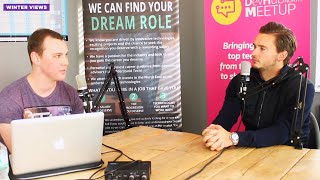
James Blackwell, CEO of Ronald James, talks about building a recruitment firm in digital and tech. He covers bootstrapping the business, managing cash flow, finding a niche, and how mindset shapes success as an entrepreneur.
Hey everybody. Welcome to episode seven of Winter Views. And once again, like every video, this is a special one. You may notice that the background behind me is a little bit different. I'm on site as it is at Ronald James here, joined by James Blackwell, the CEO who is a client of mine. So I've been working with James for five good few months now, basically producing a load of content. The brief was Gary Vee style content. So when I first met James we bonded over having consumed quite a bit of Gary Vee content which we will probably touch on in a little bit. But yeah, so I've been working with James for his personal brand and then also Ronald James which is his recruitment business. And again we'll talk about that in a little bit. But in the meantime James, if you want to introduce yourself a little bit about you.
Yeah.
And then we'll jump on the business side of all that and keep you here for a very, very long time.
Cheers, David. Yeah. So for the viewers or listeners that don't know me, my name is James Blackwell. I'm an entrepreneur based in the northeast of the uk. I run a company, a couple of businesses. Ronald James, a recruitment company. We help specialize in digital and technology recruitment and we work with a lot of big tech companies up here in the northe. Got a big passion for marketing so I started my business just under five years ago, started with like 5 to 10,000 pound credit card and loan and then grew to seven figures plus agency within three years. So it's been an interesting journey and yeah, I'm looking forward to today's episode.
Yeah, so I'm gonna jump straight in with that there because you mentioned a five ten thousand pound credit card and one of the questions a little bit later on was how did Ronald James start? But in terms of like funding it, because on one of the podcast episodes I was editing one for your podcast, you mentioned about bootstrapping the business. I'd never heard the phrase bootstrap before. I actually had to google it to find out what it meant. Which is basically starting from nothing or more or less like your own savings and piling everything together. That was my understanding of it. So yeah, first of all, like the idea of a recruitment company and then if you don't mind touching on that kind of fund inside and in terms of the actual cost of starting a business, I believe it was you. And that's Kobe in the background as well. By the way, James is a dog. We'll get him on the, on the cameras in a little bit. Yeah, it Was just you and Dan. And I actually saw the. Which is James's brother. And I saw the post a couple of days ago, four years ago of just you and him in an office, wherever that was, and then now grew it to. To this. Which is in. In three, four years. Quite impressive. But yeah, starting out. So how did all that come about or how did Ronald James come about?
So prior to that I used to work in recruitment for a big northeast recruitment company and I had a great experience there for I think just under five years as well. So started off as a recruitment consultant. I mean prior to that story, I used to sell cars. So I used to work for BMW for five years again. Learnt my trade. It was great. I used to love cars and I still do. So it was always one of my passions to get involved at cars more. So I learned what we call like sales apprenticeship.
Yeah.
With those guys. Matured and then moved on to recruitment. I didn't even realize recruitment was sales, but it is like really high level sales. So started off at a leading recruitment company and then worked my way up to manager and then left and started my own business. Always been entrepreneurial and then I think always been interpersonal development as well. Like actually learning and evolving as a person. So I wasn't really very academic at school. But since then I realized that it's only down to you to really better yourself and educate yourself and learn and start when you leave school. Yeah. So I've invested a lot of money myself in terms of personal development to grow as a person as well. But yeah, started the business off. It was. I took on like a personal loan, made sure I had limits on credit cards and stuff just to get going. And it was tough at the start because you've got a lot of competition and you needed to really find a niche within the sector as well. So there was a few different areas I toyed around with before settling on being local in the northeast.
Right, okay.
Within the digital and tech sector as well. And then started off, I remember like pretty much that was by myself. So Don hadn't come into the business at that stage. It was literally just me. And then I was like, I was working in like things like coffee shops. Coffee shops. So sorry about that. Come. Maybe you can edit that out. Come here, Coach.
I will leave it in. It's definitely staying.
So he gets away with it. Yeah. So.
So it was just you because I think you referenced it before it was just you as a recruitment consultant. Is that right?
Yeah, it was just. Just me. Started the business off I had opportunities and I had an experience with James Khan from Dragon's Den. He wanted to invest in me.
Right.
But I decided against that, against taking investment and just actually going it alone. Yeah. Because the whole point of like owning my own business is you want, everyone does. You want freedom, flexibility, autonomy, no boss and to make as much money as you can. So.
And then you end up with James as a client and you get none of them.
That's true. Yeah. Tough. So, yeah. So started off like literally just working in a coffee shop with a laptop. And it was tough those days to be fair, because it's hard to win clients that trust you because you're just a startup. So you're starting from the bottom and then obviously just trying to like grind my way up. So it was just like networking and meeting people from day one was the main thing. And then after I think probably a few weeks, my brother Donna got involved in the business because he'd left school and he hadn't really had a job. So this was his first job. So started off, made a few place, got a chance on a few accounts and then just grew it from there. And then we took some office space, serviced office space and started from there.
And then you've just moved into this brand new space. Well, being here a few months, but in Killingworth Northumbria House, which I have done a video on, I think. But then you've also. The idea of this is that you have the other. And this was again something that was going to be touched on later because I this week have jumped on the grand cardone hype and so this time next week I want to be buying the billions upon billions of real estate, as they say. But yeah, so that was the idea with this place. You've got the service officers upstairs. What was the. What gave you the idea to go down that route as well?
I think study. So studied a lot of like millionaires and billionaires and 90 of millionaires are made in real estate. So even as should we let go, we back in. I didn't know. He'll be fine. So yeah, so just had an opportunity like I wanted to have. Create different assets. Yeah. Especially with like the money that we make. So I've invested in this Berlin. The main driving force behind it was again like I'm a big believer in not wasting time. I hate driving and waiting in traffic. So this is literally four minutes from my house.
Yeah.
So it is a little bit on for selfish reasons, but a lot of my staff and employees are local to this area as well, so they don't have to travel into the city center. And then the objective is at the minute we're company renting out space upstairs in the tech hub for startups as well. So yes, that's quite cool. And it's good to diversify and like start the ball rolling with real estate as well.
Yeah, definitely. Is real estate an American thing? Because I don't hear many British people say real estate, but then I've watched, I've watched too much Grant Cardone that I say real estate and I don't know if it's a British thing or not. Yeah, yeah. Because to be fair, something that he talks about, and I'm sure I asked you a question on this a couple of weeks ago about different streams of income and Grant Cardone, literally a video that I watched yesterday, he was talking about passive income, trying to match your earned income at first and then obviously passive income become more than earned income. And I think there's a lot of scams around like passive income and stuff like that, but it makes a lot of sense. So. Yeah, and there's probably one of the questions that was going to be asked a little bit later on, but like what's also next in the pipeline for you in terms of businesses, in terms of even Ronald James? What, what else do you have for, you know, creating or like you say, diversifying those revenue streams?
Still ultra focused on, on growing Ronald James. So very important not to get too distracted, but we've got like a marketing agency that would do, which is, which is launching. So that just complements the business. So it's still in similar sector and doing a lot of the things that we're already doing. So it's very important for me to make sure that we're not, I'm not being distracted too much because as an entrepreneur and my personality is shiny objects syndrome. So there's always something new, a new tool, new technology, new idea. So it's very important to stay laser focused. As Bill Gates and Warren Buffett always says, laser focus is the number one thing to be a success in business. So I still always come back to that to make sure that number one is being built.
Yeah, so you mentioned about the marketing business there as well. And so the idea. Well, in fact, actually I'll let you explain it because you'll probably do a better job. The idea of that marketing business and what service that's going to be providing for clients.
Yeah, so our marketing agency will complement Ronald James as a recruitment agency, so helping a lot of our clients market Their business and their brand to attract talent.
Yeah. The main objective with that marketing is to. Is like you say, to actually attract talent. It's more around employer brand.
Yeah.
Than obviously business.
Yeah.
Results in terms of. In terms of like direct sales.
Yeah, yeah. Because, I mean, there's, there's thousands upon thousands of marketing agencies as there is recruitment agencies. So.
Yeah.
I don't want to just get straight into doing something totally different. It needs to complement our current service.
As well, which makes, which makes sense, I think. And on that, what mistakes in terms of employer branding, in terms of marketing, for the, the objective of employer branding, what mistakes or what is the biggest mistake you think businesses are making?
They just don't know how to. They don't know how to engage an audience that they want to attract because they don't understand that type of sector. So a lot of companies around employer branding, it'll be very broad. So most companies have different departments. Yeah. So they'll have a marketing department, they'll have a tech department, they'll have a sales department, operations, maybe a call center. So, yeah, it's. That's the full piece. We're not interested in helping with that piece because there's better companies that can do that. Ours is just all tech focused.
Yeah.
So how to engage with a tech audience, how to build their brand within that community. Yeah. So we give companies opportunity to leverage our brand and our knowledge and our connections within the community to leverage their.
Brand, which makes sense. And I think one of the questions was going to be why? Not necessarily why digital and tech, but, like, why focus on such a niche? Because, to be honest with you, until I actually started Winter Media and the first three clients that I had were all recruitment companies, I didn't know that recruitment company was even a thing, but genuinely, genuinely didn't know wasn't on LinkedIn all that much, so I didn't see a lot of it. But apart from becoming like, you say, like an expert in the field, what was the. What either was the idea or what has been the benefit of sticking purely in one niche?
Well, in terms of skill, because you can be a jack of all trades and just be average at everything, but you can be like ultra focused and in one area and be a real expert. You can't be seen as an expert if you're not like, working in a micro niche, otherwise you just dilute it and you're the same as everyone else. So it makes things a lot easier as you scale to win bigger and better clients and charge premium prices for services. Because you really understand your avatar and your niche. So I think that's very important for every business because especially with the gig economy now and freelancers like you can pick up anyone to do freelance work online now. I mean I've got a big virtual team as you know in the Philippines.
Yeah.
There's tons of people from around the world that you can get to do generic stuff. So for businesses to survive within certain sectors like marketing agencies or video or whatever, you need to be really focused on a certain area I would say or certain specialists. Like it doesn't necessarily mean a sector but it might be a certain. For you. Like certain types of videos you do.
Yeah, yeah.
Which.
Good, good gateway. Good. Good segue. Which on that. The sort of the main thing that Winter Media provides is like, like content marketing. So like episodes of. For YouTube and podcasts and all that sort of stuff like this. This is the prime example and completely forgot where I was actually going to go with that point there altogether. So now that just became a horrendous sales plug. Move on to the next question. You've already mentioned about kind of the academic side. Learning starts after school. Did you go to university or not?
No.
No. I mean I don't think you would.
My personal opinion on universities is. Is different. Very similar to Gran Cardone etc and a lot of the others aren't there. Like unless you. You're studying a certain skill that you need from university, I. E. Doctors, nurses, scientists, mathematicians. Like a generic degree in my opinion I think is wasted money because you end up getting in 50, 60, 70,000 pounds worth of debt or more.
Yeah.
And just never. You don't learn anything. Every time I interview someone with your degree, what are the top three things you learned? The struggle to like tell you. And I could learn more in a book or do a pay to do a course.
Yeah.
For two, 3,000 pound and learn from the experts. Yeah, yeah. So I'm really against. Depending on what you want to do against university for certain things. Because I think going out and actually learning in day to day business you learn a far lot more.
Yeah.
Quicker because I mean we've hired people that have got degrees and it takes them a lot of time to get up to speed in business because they just don't understand.
Yeah.
And it's a lot of effort and a lot of these people struggle to get jobs. So we get a lot of applications from people that have got degrees and they've a certain industry that they've studied in. They can't get a physical job for A year, two years, three years. And it is disappointing. But it's the. What the government sell in terms of universities and everyone should go to university then get a mortgage.
Yeah. It's so funny. A literary job. Was watching again, Grant Cardo, and this isn't like an intentional thing, anything is sponsored by him. Was watching one of his videos. He made the perfect point that education and housing, because he has the viewpoint of don't buy your own home. Don't own your own home was created by the banks to set as a way to sell money.
Yeah, I pretty much agree with that, I think. But now you're seeing the shift with AirB's and B's and like the different rental society now for the millennials. So like using like an Uber or a car share or rent as a property.
Actually having the responsibility. Yeah. Of ownership.
Yeah. Because there's so much choice out there. Yeah. So people want to move around, people want to travel.
Yeah.
People don't want to be stuck paying off something for years to come.
Yeah.
So, yeah, I think definitely like the. In terms of education, I just self educated myself, but that was. It didn't happen straight away. So when I was 18, 19, 20, I didn't really have the knowledge to read books and do personal development. I think that's been the last five years in my lifetime. But I think, like, it's good. Like, YouTube's a great tool. You can pretty much find up anything on YouTube.
The podcast that I did last week with Tom from Paid, he made the perfect point that you can. When we were talking about degrees, he made the perfect point that you can do a degree on YouTube now.
Yeah.
Like it's all, like it's all out there when you've got, when you've got Gary V and Grant, like all these big, big players that are giving it away for free to build their brand as well, by the way, which is, you know, when you reverse engineer it that way, it's very, very, very clever. But, like, yet the knowledge is all out there.
Yeah. I mean, 99% of everything that you need to know is, is at the touch of a phone, like on Google, YouTube, wherever. But it's. Then it comes down to mindset, because not everyone has got the determination to learn, to put in the hours and to take action. That's the biggest thing. So a lot of it, which I think needs to improve in terms of schools and universities is mindset, understanding the mind. So a lot of kids come out of school now with depression or anxiety, like social anxiety, because they're stuck on the phone all of the time trying to get likes on Instagram and Facebook and all of that, but they just don't understand how the mind works. People should be taught around mindfulness, meditation, happiness, like growth. How to learn how to read.
Yeah.
How to speed read, how to take information in, how to learn about finance, how to learn about, like, incomes and outgoings and.
Absolutely. What's funny is that. Yeah, the, the two. Although the probably. Yeah, the singular. No, not the singular. Business studies in school was one of the worst that I performed in, like, most. Most results were because I thought. I actually thought school was the be all and end all.
Yeah.
And then I did a year of sixth form. Not college, but sixth form, and then. And then sacked that off for. For an apprenticeship, which also turned out to be a waste of time. But the GCSE business studies, I think I got. I think I got a B in that, but I can't remember a single thing that was taught in that. And you would. And you would think and then, and then, and then I went to go do A level and I think I got a C or a D in that, which I think at a level of D is a fail. I can't remember.
Yeah.
And that's business.
And then.
And then you go set one up and it's like totally, totally different to what's taught on a board in front of 30 other people.
No, I remember it's not practical. I think when I studied gcse, one of my best grades was a B in business studies. I loved business studies, but it was like. Because it was the closest thing that related to me.
Yeah, yeah.
And then I actually did go to college for a little bit to study business studies and I literally lasted a few weeks because I knew everything they were trying to teach and it was just so basic and it was so behind times.
Yeah.
That I just didn't learn behind, I.
Think, is a massive one. Because, like, even at. What year would that have been? 2014 or 2015. Yeah, 2014. In sixth form college, it was like. And now we've got this new thing called social media and you really, really need to be pushing social media for your business. It's like that was 2015 and they're still presenting that as a new thing. They've like, yeah, just worked it into the course. Like that year it was like, this is a new module. We're talking about marketing and we're talking about social media.
Because change, change, change is happening all the time. Technology and it's not quick Enough the school.
Yeah, I don't think the school system catch up quick enough. Facebook had been around, YouTube had been around since 2005 and then they were just going to be, they were just talking about that literally a decade later.
Just because processes to sign off courses and put in like takes so much time, takes so long but it shouldn't take too long because it's, it could be all in digital format now and it could be changed within a week. So there's definitely ways to go around that book. Definitely. Like for me like you can just self educate yourself. Like you can learn pretty much 99% of what you need to know. Unless you wanted to be a doctor or a nurse or like and most.
Most of that you can learn for free. But then you, like you already said you've invested a lot of not only time but a lot of money into online courses and like these business master classes or master classes if you're from Newcastle. What? Yeah, well actually so you obviously you keep going back to them so you must see a benefit from them first of all. Yeah, obviously worth the.
If you don't invest in yourself, why should someone else invest time in you? So the more you invest in yourself, the more other people will invest in you. So I've spent best part of quarter of a million pounds over the last five years I would say on masterminds, mentors, courses and I've definitely like got that back in growth and revenue in my business knowledge. Like I feel so equipped now.
Do you think you would have got that revenue? Granted it may have taken a little bit later. Or do you think the, the whole reason for that revenue has came from those business.
I wouldn't say the whole reason, no, I think like in terms of like a lot of the basic skills that I've had in terms of the hunger drive, the determination, like take an action, get up and go. Like that's instilled in me. So whether I've went on those courses or not wouldn't have changed that. But it's just more around my mindset, around growth, around thinking bigger, around strategy. Yeah, around 10x in your business and thinking there's more there because you as a, when you're growing up as a child, like you've got limited beliefs and everything that's been shaped in the first seven years studies have shown like 95% of that is very hard to rewire your brain. So a lot of those things I look to try and do is try and rewire my brain, change my mindset a little bit. Luckily, I have been blessed with that, like I say, entrepreneurial spirit to get up and go, take an action. I want more, I want to be, I want to live the best version of me in my life. Like, I've got all of that and some people don't have that. So I understand, like it's not for everyone. But yeah, I would say it's had an impact, but I wouldn't say it's had 100 impact on going on all of those courses. But yeah, I'm. I know that life is long and hopefully touch what it is. So like investing in myself, like a lot of these things might come into place in 3, 4, 5, 10 years, 20 years time. So I've already got that knowledge, I've already got the connections, I've already surrounded myself with the right people because you are the five people you hang around with. So the people I hung around with are all other millionaires or other people that are successful in business and they've got that mindset where I want to get to and more. So that's probably been the biggest change, is just surrounding myself with those type of people, being in that circle. Because where we're from in the Northeast, yes, there's some great successful businesses, but a lot of people hide here. There's not like you can't just suddenly go to a coffee shop and meet 20 other entrepreneurs. It's very, very hard.
Yeah.
Whereas in London or when I travel la, like it's fully surrounded by positivity. People want more and people growing and it's really inspiring. So we really have to invest to build that community because you can't just walk out the front door and bump into someone. Yes, you can, but the chances are.
Yeah, exactly. It's not gonna happen. Even that. Pretty sure was one of the first videos that I'd done with you, which was how to find millionaire mentors. Yeah. And the point that you made, I think summed up perfectly, which is ask them what you can do for them and actually give them something and provide them some, some sort of value for that initial network and. Yeah, yeah, for sure.
And especially like for say the younger audience listening is like the value you can bring is like technology. So like understanding social media, which a lot of the younger people can. So if you're meeting a potential mentor that's 40, 50, 60 years old in business. Yeah, like they're gonna have a world of wisdom and success, but they probably don't get social media. So you could help them with that. You can help them with email marketing. You could help them with videos, branding, podcasts, like all of that type of stuff you can do as a millennial because they probably just don't get that. So that's a value you could bring back.
Yeah, 100%. One thing that's just remind us. There was a couple of weeks ago I got invited to. I don't know if you've heard of bni.
Yeah.
I was going to ask have you. In terms of creating business or meeting people in that sense, have you like attended any of those, joined any of those.
Yeah, I've been to them all and trial them. I think it's the.
Trial them is the key word.
Yeah.
Signed up to them or.
No, not that one. Entrepreneurs forum. I'm a member. Member of the bni. One I think would be good for you because you've got like. These are all traditional businesses as what I would say.
Yeah, I would agree.
So the traditional businesses need someone maybe like you for videography stuff. So definitely like you just got to go where like the people that you can help in your sectors. So like our niche. There wasn't really many companies that I could add value.
Yeah.
So as well as wasting my time, it's pointless wasting other people's time. So you've just got to try what's right for you and make sure the audience and the avatar and your perfect client is. Is there.
Yeah.
Because otherwise it could be wasted time. And I'm a big believer in time management and making sure every minute counts for me. So I don't want to go travel for half an hour apart or meet, do the meeting and come back and it's not really valuable in terms of not just what can I get out of it but what can I provide. So yeah, there's definitely loads of different networks out there should be and I one of them and I would definitely recommend that for you and your business to grow.
I went. I don't want to say the issue that I had with it because I am considering like that sort of thing as much as I push social media and do believe you could realistically build an entire business. People have built an entire business on social media. It's always good to still have a full circle approach. So I would just totally reject the idea of that like a few months ago and now I'm trying to open up to them a little bit more. The only. Yeah. Issue that I had with it was like the. And I don't know if all of the business networks are like that where you have to. You like your attendance is Tracked and the referrals and your score points and then you're on leaderboards.
Yeah, it's very old school.
That, that side of it was very, very, very old school.
Yeah, yeah, but, but it's probably worked because it stood the test of time. But yeah, I mean that was one of the things for me was you pass all of the money around. So basically I think the whole point of that is you've got a recruiter, you might have a marketing person, you might have a builder, you might have an insurance person, you might have an accountant. So the objective is you're just passing that money around in that circle. So it's probably a good thing to get started.
But I think the, the other, again, I don't want to use the word issue too negatively but the, the issue that I had with it was also the clients that I tried to, to get or people that I'm going to be able to work with for like a long time. That the idea of, of Winter media. Oh, that was the point I was going to make earlier. The idea of Winter media is like the content strategies and actually kind of, you know, detailing things out nine, you know, six, nine 12 months as opposed to one standalone video. It's something that I do, but it's like project work or creating those videos, like total high end production. Not really something that I'm all that interested in, whereas growing the brand is. So I feel like that sort of thing is, I think it's, that is dependent on a real relationship which I would like to think I have here with Ronald James. Whereas I would feel with things like that if you've taken on work or you're, you know, being given work as a way of scoring points, it doesn't really feel as if it's sort of a genuine like business relationship, you know.
So that's the only transactional.
Yeah, yeah, yeah, yeah. Which the money in the short term is fine. But then yeah, it's, it's finding the longevity.
It's a balance though because you as a startup business, like you need the money, so we're on cash. You're gonna be very true, you're gonna be bust. So you've got to make sacrifices. Yes. Have the long term vision of your ideal clients. The ideal, ideal relationships. But like in the early days for me it was just get, get money in.
Yeah.
So we did do at the start like smaller fees, work with clients probably we didn't want to work with. And looking back. Yeah, but looking back, yeah, we've probably learned from those mistakes but then I would say it probably wasn't a mistake because every, every part you're learning. But also we needed that, that client at that time to get that revenue into, to elevate us, to then be selective. So now I'm in a position we don't need any client. Yeah. And we pick and choose who we work with now. And that's such a great position to be in. But that took four years of hard work in a micro niche to be the leaders in what we do. And then now we cherry pick our clients. But you can't be like that from day one because you've got so much competition. You need to provide value, hustle, work every job. And then you can, once you've got money in the bank, you can be a little bit more ballsy, as it were, in terms of what work you choose to do. Because if you just do that from day one, you might not last another three months because you can't pay your overheads.
Yeah, absolutely. Makes sense. I'm going to jump on to a few quick fire questions to round it off. So. So the first one is, and this is actually a question you ask as well, I'm not trying to be a carbon copy of you and your content, James, although I do edit it.
So.
Yeah. Anyway, best piece of business advice that you've received.
Yeah. Probably from, ironically enough, James Khan from Dragon's Den. Still stuck in me from the meetings that I had with him was cash as king. So look after the cash. So what I mean by that is I check our business bank every single day.
Yeah.
So I know what's coming in, what's coming out and I still do that religiously. So I know where we are because without the money in the bank, like you can have all that vision, all of those clients and all of that money coming in later date. But yeah, if you haven't got the cash flow, that's the lifeblood of the business and there's some interesting statistics around that in terms of how business is dying. A lot of good businesses go under because short term cash flow problems. So I always make sure we've got a good buffer, we've got a good run rate. Yeah. So that's like, run rate is like including all your business overheads and your payroll, how many months can you pay them and run if nothing else comes in? So it's all around building for me that war chest, which I'm in the mindset of still growing over the next few months, is building a war chest. So we've got Years of like income protected, like years of cash flow. So that would be the ideal dream. But a lot of businesses run traditionally on I think three to six months. Yeah, one rate.
Right. Yeah. And then touching on that, we've already talked about it. I've already hammered it on LinkedIn, so I kind of reluctantly ask it. But I think it's an important one is late invoices and kind of. Because literally. Right. You've already mentioned about time management. The two biggest weaknesses of mine is cash flow management in a sensible keeping things organized and that sort of thing. As opposed to just purely looking at a bank balance. You know what I mean? As in having things set up to be able to have a clearer idea of what's going on. And then, and then time management is probably the other one that I struggle with in, in the sense that I underestimate everything. I already said that I ran out of time on Friday. I was meant to be here on Friday. I'd run out of time because I thought we would get things filmed in five hours and then it actually took nine. Yeah, one of those things. But yeah, in terms of, in terms of managing cash flow, like run rates and things like that. Yeah. Like what, what other. If you were to give one tip or three tips on that sort of thing. You've already done a video on this actually.
Yeah. So not everyone might have watched.
Yeah, exactly.
Get money in is really important. So I think from the first two years in my business I chased the invoices myself, which I mean to be fair, like most other things I outsourced and automated. So I would try and automate as many things as possible and I would do step by step processes and hand it off to other people and delegate, which is very important. But I did keep on top of the invoices. But some clients do pay late, as I've told you. That's just not. That is normal business practice, unfortunately, and especially as a small business, when you need the money, you've just got to be careful on how you word things that you're not too desperate of. Like I need the cash in this week, otherwise I'm gonna go under. You need to.
Can you make that payment by 2:30pm?
Yeah. So I think just a friendly but firm email follow up. So you've got our template, like three email follow ups before it would go to a legal situation, but then before that it's just a text or phone call. I mean all of the clients that we've dealt with in the past, I, I knew the business owner Directly, which was always a good thing. So I could just say, look, could you do us a favor? Invoice is overdue. We run a very tight ship here as a small business. Would you mind selling this Friday? So that's the first thing I would do. A three step email, follow up and then phone call. And then in terms of like just managing the cash is like I said, just being frugal on expenses, which I think you are. Like. Yeah, just gonna.
That's why, that's why we're doing Joe Rogan on a budget Amazon specials.
Which is why I said like next time you get a brand new. But you've been good in terms of like keeping the equipment. Yeah.
Until like this MacBook's lasted me very well.
Yeah.
Touch wood. It doesn't. Yeah, exactly. Yeah. I'm just about to go start editing all your content, so fingers crossed for that.
Don't lose it.
Yeah, exactly. Oh, Esther. Yeah. SD cards. That was a. That was a belter of an afternoon, that, wasn't it? We've done three, three hours, four hours of filming. Loads of loads and loads and loads of content. And then the SD card was corrupt when I went to put it in the laptop. What a treat. So then refilm and all that was quite fun. Fair enough. Right, we'll move on. Favorite. You're quite. So you already talk about reading quite a bit. Favorite book?
Yeah, it's a tough one for me because it's like.
Feature with you.
Yeah, I think for me favorite book. It's like, how can you make me choose? I've got hundreds. But one book a week, easy. Like probably two books a week at least. I've just got them scattered around. I've got them in all in my office on the side. I've got bookcases in here like a library. Amazon comes every day for me. Every day is Christmas book. I'm reading again. So I would say the book I've read, read the most. And I'm reading again. Started again last night. Was Built to Sell by John Robillo. Great, simple book. Brilliant. Built to sell. And I've read that maybe 10 times or more. I've got about 10 copies. I always used to give it to business owners as well. It's a great story around a person running a creative digital agency, actually and how they were depending on one big client. Invoices weren't coming in, it was overdue. They were stressed. They had employee issues. And then how they systemized the business to just provide logos. And this created a five step, simple Process to deliver the logos, brought in two sales people and then the delivery creative team and all they did was just do logos and then sold the business of 5 million. It's a story, but it's a good story. Based on the fact.
Just a slack 5 mil.
Yeah. Based on the fact of like I think John Rollo, he does a great podcast as well. So I'd recommend that to. For people to subscribe to or listen to one this morning actually on Built to Sell podcast and it's how businesses started up, scaled in and exited.
So next question is also done. Favorite book, favorite film? Favorite film doesn't necessarily have to be business related.
Again a tough one. I love Alfie with Fair Judo. That's a great film. Not really business related. I watch a lot of documentaries.
Yeah.
Warren Buffett, Bill Gates is recently. I love watching documentaries. Yeah. So I'd recommend those. I'm not really like a big fan film fan so like I don't have loads and loads of films that are alike. Yeah. What else do I like? Yeah, I would say Alfie is probably my favorite film.
Yeah. What's that about?
What's that?
I've never heard of it.
Jude Law plays it. So he's like a maybe single bachelor and he. He's a limo driver but he's twisted in a love triangle between an older woman like his girlfriend and. And then another girl and it's just. But then it goes into what's life all about. So like for. For a man. So it's like. It's quite an interesting one. Another good book I'd recommend that's not business related was the way off the Superior man, which is quite a good book about understanding what it is to be like a man and how to understand like other women partners, like relationships. That's quite an interesting book as well.
Interesting stuff. So then next question. Got not here. Biggest influence in business. Actually before that one, one of the questions was what was the best business course you've been on?
Best business course. Dan Pena, the fifty Billion Dollar Man. So I went to his castle in Scotland for like eight days and that was like intense. So like started at like 7am breakfast, then you're straight in the classroom and it was full training, like proper old school business mba, but like where he's shouting effing and blinding at you and talking around business deals and how we roll up companies. So that was a really good. What I would call like my mini mba. And that was a business course for eight days. But it wasn't just the practicalities of the. How it was, the mindset stuff. Yeah, everything I discussed before, like limited beliefs, like thinking bigger, not giving a shit, like actually just being ruthless to a certain point because business is a game and it is like a challenge. So you, you have to be tough. Like it's all well and good, sin you'll be nice and give value. Yes, give value. But you've also got to be tough in business to survive. So it's having that animal predator instinct within business as well. So I learned a lot around toughening up because a lot of the millennials don't have that alpha male figure to look up to. And Don was definitely one that I looked up to. Yeah.
So then, yeah, biggest influence in business.
In businesses is. It's a tough one because I'm trying to think of people that have courses that I've been in or people that I've met. I've been blessed with like having northeast mentors, like business mentors that I've had. So I've got a number of those that have helped influence. My dad's obviously helped influence in the past as well. Like he's had his own businesses but sometimes maybe wasn't as lucky in business. So like I've learned from like some of the mistakes that he's been unfortunate in making. But biggest influence in business is I would come back to a book that I read, Felix Dennis, how to Get Rich. So Felix Dennis, he built a net worth of over £700 million in publication like magazines like Maxim. And his business book is something that I go back to time and time again. Sir James Goldsmith, he, he died like a quite a long time ago now. But I've read his autobiography a few times and he was a billionaire self made and his story and background was quite interesting. So I definitely think there's not one person so people I have met and courses that have been on and then books. So which is quite an interesting shape because that's. Now it's time for me to just create my own self because I've like shaped and learned a lot from different mentors but everyone's different now. It's like up to for me to be my own person with a lot of different traits that I've learned from but then also that are instilled in me to create the own version of me as a business entrepreneur as well.
Makes sense. I have a feeling that you've actually already done this, but if you could build any business in the world and I guess you have to frame it, that money is no object on startup.
It would be around education. So like. Yeah. To educate other people in business I would say because that's like a passion of mine is to hopefully be a mentor for other people and yeah. Consult for business startups. So like have like a worldwide business entrepreneur digital platform that helped people and kids in schools around mindset. So around what life's all about in terms of not just business but in terms of creating the right life in terms of health, wealth, love, happiness, like the, the pillars. So like in helping younger people come into the world, being prepared for the first job because people just don't, don't understand around that like how important your health is, how important mindset is, mindfulness, like all of those aspects like in one. So I think that would be like a long term cool vision to have.
That's awesome. So then you kind of. I don't know if we can talk about it and if not we'll edit it out. You've kind of already made steps in that direction then with the entrepreneur James and building that brand.
Yeah.
And all that sort of stuff. I don't know why I say contact but I've been posting it on you. I've been posting the YouTube videos for.
Like the last four months.
So. Yeah, but yeah, so like the long term vision for that is obviously the court.
Yeah. Separate project. So that's around just trying to give value back. So just helping other people, given business advice and different advice that I've learned from mentors because if I've spent so much on learning all of that like I want to share that wisdom and that could probably get someone. It'll be quicker than how I did because I had to go through all of that journey which is why you learn from people, isn't it? It's like to try and get that one golden nugget or can they save me some money or help me make some money or get me the solution quicker. Yeah, but it is around the journey as well. So like which I'm guilty of is not I'm always looking ahead and future thinking whereas I need to be always be present in the moment and appreciate like how life is now as well as in the future. But yeah, so like bigger objective is to hopefully grow my YouTube channel more and yeah put more good content out there. Yeah, they get.
No, I'm automatically signed in through Google Chrome as well. So I keep getting the notifications all the time. So you're getting some new subscribers but we'll put the links to James's channel and all that in the description for that. And of course, Ronald James, the last question, dream business partner. And again, I guess it's framed with the question, if you could start any business, but dream business partner, dead or alive, who would it be?
It would either be Felix Dennis or Sir James Goldsmith. Probably Sir James Goldsmith. Really? Yeah, because just his presence, like the way he communicates, like how he speaks, the power that he possesses, his mindset, like, I think like you could just literally take on the world with his resource as well and his knowledge and. Yeah, that I would never even have thought of a business partner. But yeah, I'm always about a lone wolf going it alone. But if I had an opportunity to do that, I would definitely jump at the chance with him.
Well, you're on the right track with entrepreneur James and all that good stuff. So there we go. And you've got a good content creator. Well, more or less. Anyways. Yeah, so that is it for today's session. Thank you very much, James. Yeah, links to James, entrepreneur James, personal brand, all that sort of stuff. Instagram handles everything else in the description. And the same for Ronald James. Anybody looking for tech talent, These guys. I guess being a client, I'm sort of obliged to say it, but I do mean it as well. Very good at what they do. So do check them out and yeah, we shall see you in the next video, like Share. Subscribe. All that good stuff. See you in the next episode.










