Scaling Your Recruitment Agency To 7 Figures In 26 Steps
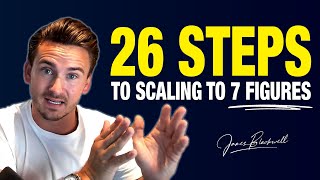
A single-speaker YouTube monologue offering 26 practical steps for scaling a recruitment agency from ~£100k/month to seven figures, based on the creator's experience growing "Ronald James". Core advice covers: clarifying financial goals (growth vs profit phases), building repeatable systems (clients, candidates, marketing, automation), evolving owner mindset and leadership, delegating operations/CEOs to create a self-managing agency, protecting cashflow and assessing risk, increasing lifetime value per client, designing a business that can run without its founder (built-to-sell principles), and using strategic planning time ("blue-sky" sessions). The video closes by inviting viewers to mentorship programs and demos.
In today's video, I'm going to share 26 steps that you need to know when scaling your business past 100k per month into seven figures in your recruitment agency. So first thing is just because you made it here doesn't necessarily mean you you going to know how to get it to the next stage. So what gets you from A to B doesn't necessarily get you from B to C. And I learned that from a previous vendor of mine and I understand that it cries a different mindset, different skill set, different toolset, different dynamic in terms of how you're building. So I'm sharing these tips on my journey as when I grew my Ronald James recruitment agency to seven figures. These are all of the type of things that I wish I knew when I first started. Now the next thing is be extremely clear on your financial goals because if you're ready to be in growth mode or profit mode and then dedicate your business based on what phase you're in. So in year one, year two it was all about making profit. So I wanted to get cash in the bank, I wanted to make sure the business was stable and, and then ready to grow. So and I remember in year three our profits took a big dip and that's because we over hired, overskilled and we made a lot of expensive mistakes along the way. So you need to make sure you have clarity and properly plan and strategize where you want that business to be. The next step is everything in your business will come down to systems. Now some of you that have followed me for a while or some of you in my mentorship program will know systems are the main thing of every business. Now anything that isn't a system is sort of broken because when you focus on hiring like you want to make sure that they understand how your systems work in your business. Like systems for clients, candidates, marketing, inbound strategies and automation. And once you've built those systems on, they're going to create a long term ROI. And next step is going to be like don't let your 8 year old self run the business. So we've all heard those phrases in psychology when 95% of your beliefs and habits are ingrained in you from 0 to 7 when, when you grew up and I knew who I was when I first started my business six years ago is totally different to who the James Blackwell is today version 2.0. So you want to make sure that you're using mindset evolution to get past that. So studying the grades, study books, self reflect, all of the Time see what bad habits you've got, what type of person you actually need to become in order to get to seven figures. Then it's also about knowing what you actually want. So it's about having a vision. Because if you want to have like clients and a team that don't really stick, then that person needs to sell the best dreams for the business in order they retain that talent. So making sure you have a good vision and a goal of where the business is going to go and to get everyone on the journey with you and next up is going to be what you will do on a daily basis will change so much. So don't even attempt to try and define your role as an owner, operator, CEO, recruiter. Like there's going to be so many different things like that you're going to do within this role. So I wouldn't try and pigeon your whole yourself into one specific role. The next thing, which is something that I've been looking at quite recently, was hiring like a CEO of the business or an operations person to help manage the business. So I moved from having like a peer to like an office manager and she helped a lot with the ops because look, we're all hardcore entrepreneurs, creative types. Yeah. So you end, you end up being stressed out and burnt out or you end up just really blowing up this business if you get stuck in operations. So you want to make sure these operations are delegated to a member of your team as you grow. And your main job is to really to figure out how to take yourself out of the business. So one thing I learned early on was how can I create a self managing agency that is pretty much relying less on me. So you want to make sure that you can. You're the one that creates attention in the business. So you're building the brand, the ethos of the company. You sell a vision and you build relationships to become a better leader. And another thing is opportunities will always be everywhere. There's always different pieces you can add to your business, different markets you could get into, different strategies, different shiny objects. Now you need to be very careful and the faster you say no, the faster you will grow. The more time you spend on yourself and outside of the business in what I call like a flow state, then the faster your business will be able to grow. So one thing I did early on was I call it blue sky thinking on a Monday. So I never worked on a Monday morning. I started off not working on a Monday morning. I used to start work at 1pm So I used to go to A coffee shop with the notepad and pen and I used to plan and strategize out the business and what I was going to do for the week. So it's very important to take yourself outside of the business to get into that state. Now a business will typically only grow to the like path that you, the owner or the co founders can see. So making sure that you take that time to actually plan out exactly where you want the business to be and reverse engineer those steps, the next thing is at this stage like a lot of things can get like change very quickly. So once you go from 20 to 30k a month, maybe 40k a month, and you've got more than one or two employees, like a few mistakes, all it takes and all of a sudden you're bankrupt because cash flow is going to be tight when you've got more overheads. So you want to make sure that you've got mentorship, you've got advisory, and you're having a feedback loop helping you with the choices that you make and making sure it keeps you on track because that gives you accountability. Now another thing, and one of the most important things that I always believe in is pay yourself what you're worth and ensure you're giving yourself what you want. So whether it is like a car, a house, experiences, you must have a reminder of why you do what you do. I see so many business owners like storing cash or not rewarding themselves with like nice things or a nice house and a nice experience, nice holidays with the family. Like remember the business is there to serve you, not you serve the business. The whole point of a business is to give you financial freedom and the freedom to work when and where you want and to give you autonomy and all. Most business owners don't do that. And that comes beyond because you need to build a business model that has those four key pillars. Clients inbound, candidate attraction inbound and a player lean team and systems like those four pillars are the most important for you as a recruitment agency owner. So you need to make sure you're getting to work on them and you're building them out. Next is like focusing on being able to increase lifetime value per client. So look at those businesses who do this, they always grow most faster. So it's important it's a lot easier, and you've probably heard this phrase before, it's a lot easier to sell more to the same clients than it is to keep winning a new client. So that's when you really drill down into your micro niche and you're Adding unfair advantages with those clients and you. And you're packaging up a service where you can make multiple placements and revenue from that client. Look after those key clients. And always remember, you are not your business. Your business is its own identity. And this means that your own values, mission and vision may not be identical. So as you grow as an entrepreneur, your vision and values may be slightly different to the business. But you need to make sure you can detach yourself from that and don't be totally absorbed in the business that you let it define you. And one thing that you should ask yourself every day is like, how could you put yourself on a business tomorrow? Or like, if the economy like crashed again or something happened with like those pandemics, etc. What would break first? Like, what are the biggest risks? Like, have a look at which areas. As a client, as a candidate, is it you, your team? Like, what is it that could break? And what are the things that you're doing right now that maybe you actually shouldn't be doing in a business? The next point is, as you grow, the speed of getting things done will always increase quickly. So remember that the faster you want something done, the more expensive it will be. And that's the same with mentorship as well. Because sometimes you might want to try and figure all of this out on your own and the path, and it took me four to five years to really figure this out, or you pay someone like me or someone else that's figured out the way, and you shortcut that route to success so you can make more money quicker. Those are the always two options that you've got in terms of growth. And remember, like, if you aren't responsible for your own emotions and patterns, then they're going to be amplified like 10x when you grow your business more. So you need to make sure that you remove yourself from, from getting wound up, getting anxious or whatever it is in the business, because you care about the business more than any employee. That's just fact. So you don't want to like try and push your emotions and patterns onto employees because they're there to do a great job. But obviously you're the one at the end of the day that takes all of that risk. And with all of that risk comes pressure sometimes. And sometimes that can come out. So you want to make sure you can handle that. The next step is if you don't focus on being a business owner or like as an investor, you will eventually get burnt out. So I know this from firsthand experience. So it's not as much fun as being like an entrepreneur. However, it's critical for the longevity of you and your business that you manage to create a business that runs eventually without you. Next point is just remember you can do whatever you want, so never forget that you create your own reality. One of the best books I've read was Reality Transurfing by Valid Zealand. And that was all about like Law of Attraction, but at a real higher level and putting that energy into the universe of what it is you want to create. And that will come back into your own reality eventually if you do the work, put in the habits and the rituals. The next point is building a business to sell will always create the best business, even if you don't want to sell it. Now, one of the first books I always recommend all of my students and my program is to buy the book called Built to Sell by John Warlow and you might see it come up here on the screen. Fantastic book and a story about a business owner that had a marketing agency and it was so reliant on him. He was stressed, burnt out employees leaving big clients that were worth like 40, 50% of his revenue. So he had to over indulge them and over deliver for them and how he actually peel that back to build a business with the right type of systems and a simple process that was repeatable so the business wasn't reliant on him and he didn't actually want to sell the business eventually. Because if you create a business to sell but it runs without you, you never really need to sell it. Now remember, if you need to pivot, pivot, fire people like change, tact with the business, niche seller or whatever it else may be. Remember, don't let your ego lead. Don't be too attached to something if you want to change and evolve. And probably the final thing, which is one thing I learned early on, was don't let your ego take the fun seat because your ego can take over and you want to make sure that you detach your ego from your business. So I hope you found that useful and I'm sure that some of you hopefully took away some good golden nuggets of advice. And if you're interested in getting more help or maybe what it looks like working with me more closely inside our recruiter accelerator program or elite seven figure mastermind, then feel free to book in a demo or call with myself or one of my team and we'll be able to give you some details around how and if we actually can help you and your recruitment agency to scale it to 100k months and beyond. And as always, if you like and subscribe to the channel. That would be much appreciated. And until next time, I'll catch you soon. Thank you.










