231. James Colistra, Wonderfish, on the Power of Podcast Guesting
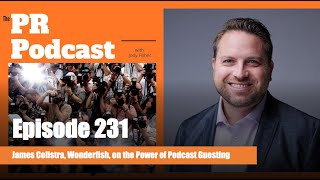
Episode transcript of the PR Podcast interview (host Jody Fisher) with James Colistra (founder of Wonderfish). Colistra describes his media/marketing background (Marketing roles at The Economist and Forbes; ~2014–2024 at Forbes on paid media), his transition to earned media PR and founding Wonderfish, and a service/product focused on podcast guest placements called the "Podcast Power Circuit." They discuss podcasting’s growth and formats, the long-tail distribution of shows (millions of podcasts), metrics and discovery tools (Listen Notes and other databases with inconsistent audience estimates), video vs audio podcast strategies, repurposing long-form podcast content into social/video clips, call-to-action tactics to turn podcast appearances into leads, and guest-prep advice (slow down, clear CTA, identify audience and unique angle). The episode ends with a rapid-fire segment and contact info for Colistra (wonderfishpr.com; LinkedIn: James Colistra; email: jcolistra@wonderfishpr.com).
Chapters
This is the PR Podcast, a show about how public relations helps you tell your story to the world. We talk with great PR practitioners who have the skills, creativity, and just plain savvy to get their clients noticed. Now here's your host, Jody Fisher.
Hey, everyone, and welcome to the PR Podcast. I, Jody Fisher. Thanks for joining us. Well, don't forget to tune into our YouTube channel. Yes, we have a YouTube channel. It's 2025 and we're on board with video here on the PR podcast. Sorry, just self deprecation just runs in my, in my blood here. But check out the YouTube channel because it's always more fun to watch. We're a video, we're a video society now, right? Everything is video. Nothing is from the radio guy, the old radio guy. Nothing is audio only anymore. Except maybe if you're listening to this on a podcasting platform. But YouTube is a lot of fun. You get to watch episodes of the PR podcast as well as listen to them. I think it's far more engaging and it's easy to find. Just go on YouTube and type in the PR podcast. Just don't forget the the, because there are a lot of PR podcasts out there, but there's only one, the PR podcast. So check us out there, like subscribe, hit the notification bell and all the things that the streamers say, you know, but do check us out. All right, on with our show for today. We got a great guest. James Calistra founded Wonderfish after spending the last 20 years at the intersection of marketing and media. Early on in his career, he served as a marketing manager at the Economist and eventually became the executive director of integrated marketing at Forbes. There he created content driven campaigns for some of the world's most influential brands, while also launching new events like the Forbes under 30 summit and, and podcasts like Steve Forbes. What's ahead, James? Welcome to the PR podcast.
It's great to be here. It's great to be sort of virtually in the PR garage. So thanks for having me.
And, well, and I love your setup there. You got the Wonderfish logo right over, right over your shoulder.
I have to give credit to my wife. She actually had that made. Like, she surprised me about a week ago with that. It's like a custom wooden sign. So I'm really excited about the sign.
I love it. You know, it's, it's so important to have, I, I, I don't know about you. We're going to talk about, we're going to talk about you in a minute. But the blur background bothers me on the zoom calls.
Oh, yeah.
Like, I get it. Sometimes you're in the car or whatever and you want to blur the back. That's okay. But, like, for your regular setup, I really admire. Right. You got to have something cool. And I really admire yours.
Oh, I appreciate that. Thank you, Jody.
Let's talk about you now. Tell us about your background at the Economist and Forbes. Now, you are on the marketing side, right? Not a journalist, but tell us about your experience there.
Yeah, I was on the marketing side, but I do. I do believe that marketing, sales, PR are also intertwined as far as the skills that you're using, the techniques that you're using. You know, we're ultimately all trying to do the same thing, which is to convince someone to. To make a decision, to make, hopefully a positive decision in our favor in the form of pr. We're doing it in the sense that we want to convince them to cover ourselves or our client. Right. And convince them that they are worthy of the coverage. Right. But when I was at Forbes and then beginning at the Economist, and I was at a few other places as well, but I spent about a decade AT FORBES From 2014 to 2024, I was on the. The paid media side, really. And so we did a ton of content. So storytelling was extremely important, is something that I've always really been passionate about. I'm excited about creativity and, you know, all that good stuff. But it's media. The media world has changed so much, which, you know, I could go down a whole separate podcast about that. But I think that at the end of the day, like, technology is changing so fast and every, you know, AI is coming at you, the algorithms are changing. But ultimately what has stayed the same is the sort of human element, right. Like the, the storytelling aspect that I, that I mentioned and the way that people do make decisions. So I did transition from the paid media side when I left Forbes into now. What I'm doing is more earner media pr. When I started Wonderfish, and initially I was doing marketing under. Under the umbrella or the. The sort of agency name of Wonder Fish. And then the reason I transitioned, I'll just quickly mention, is because as I was talking to a lot of different founders, you know, because at Forbes, I was working with a lot of bigger brands, a lot of these smaller founders who don't have a lot of big budgets. One of the things they kept asking is like, how do I get in Forbes? How do I get coverage? There's. It's kind of like a mystery. A lot of People don't really understand how it all works and don't even really know what it means. Like, what is in media? How do you, how do you get it? How do you get the credibility? By getting covered. And so I started to just do it myself and I was, you know, started out just helping them, connecting them with some people in my network, getting some coverage and stuff. And then I was like, I could do. This is kind of fun. And. And then I started. And to this day, I still do traditional earned media pr and I love it. But I could get into why, why I'm really focusing right now on podcasts and I created a product called the Podcast Power Circuit.
So, yeah, let's talk about podcasting. You and I were talking just before the show about how podcasting, I think the life of pod, the lifespan of podcasting is, has its ups and downs, right? If you rewind the clock to, oh my 25ish years ago when the ipod first came out for you young kids out there, yes, there was a thing called an ipod that just did audio. And that's all it did. It was like a thousand songs in your pocket. Go watch the Steve Jobs intro of it. But podcasting was big at that time, right? It just exploded. And there were, there were all different types of podcasts, and I remember listening to them when I was riding the train back and forth to Manhattan. Then there was a period where that kind of faded and podcasting, I'm going to say, went away. It just, it was not as popular as it had been. Then more recently, it came back again, and now it's in a place where it's, it's sort of finding itself again. Tell me about, Give me your pulse of where podcasting is as a, you know, big picture, as an industry.
Yeah, absolutely. I mean, I, I definitely think it's. It's growing. It's been growing every year. If you look at, if you look way that it's trending upward, like right now, I believe that about 55%, so the majority of the US population age 12 plus are consuming podcasts on a regular basis. So I believe it's coming into the territory of mainstream media. But podcasting is very interesting because, you know, it has that long tail, that bell curve effect where, you know, at the top you have these like, mega shows like the Joe Rogan and, you know, now, now we saw Taylor Swift went on the, the New Heights podcast, right? The Kelsey Brothers. And, you know, these are mega shows, right, that are demanding a ton of attention in this, in this fight for attention that we all talk about. But, but then you have, I mean close to 4 million. I've heard numbers of upwards of even closer to four and a half million of total podcasts out there. So you have so many podcasts and the majority of them have, do have, you know, smaller audiences. And so it becomes this idea of like you really have to figure out like what are the, what are the right shows if you are someone who wants to leverage them, which I could get into. But yeah, in terms of the overall growth, it has been gradually going up. I remember, I think 2014, the true, the true crime podcast serial came out and that was like a mega hit, man. That was huge. And I think that was actually the year that I started at Forbes. And I think that was like when people started to really take notice and sort of say, okay, this is like a little bit different than just like sort of a niche like sideshow thing. And I think even in the moment that we just had with Taylor Swift going on new heights, where that was like a record breaking moment where I think there was like 1 1.3 or something million like concurrent. So people watching at the same time because they tuned in live and then after the fact like within like 24 hours is like over 10 million or something. I don't know the exact numbers but you know, it was like Guinness World World Record. And obviously like the reasoning for that, it ties into the whole reason why people like podcasts. I mean there's a lot of reasons why people like podcasts. Obviously you can, you can listen whenever you want and you know, you have, have it in your pocket and stuff. But the idea that it's a long form interview is something that people really get excited about and crave. And it just goes to show you with Taylor Swift because she, she spoke on that show for I think like two hours or something. And that's something that she generally just doesn't do. She doesn't offer that to her fans. She doesn't do a lot of interviews and she got into like a lot of stuff to the point where she was like actually crying about like buying her music back. And you know, you could, if you look at the comments, people were thanking her, they're like, oh my God, you know, thank you Taylor. This is amazing. Like they were just so excited because people really crave like in this day and age of like the quick sound bites and the, in the, the reels with like, you know, and that's sometimes creates a lot of problems too when things are like, of context and you don't really have like full explanations of things. So I think this long form content has a really nice place in the overall media landscape and it gives you the opportunity to tell full stories, you know, not to be sort of truncated. And, and yeah, that's, that's what I'm most excited about when it comes to podcasts in general.
There are you mentioned serial, which was a very different type of podcast. It was almost like. Well, it was a, it was a serial type of show, right? S E R I A L, which was the name of it. But it was episodes, serial episodes in this long form story. It was not an interview that was based on interviews. There were interviews inside the show, but it was very dramatically scripted and written and researched and it was all factual too, which was really, really neat.
Right.
But point of my question is that there are different types of podcasts. Not every podcast is. Is two people like this, right? Two people talking back and forth. Are there. What other types of podcasts are there out there that you can avail yourself of?
Yeah, I mean, this is something that I'm learning about because I just launched the podcast power circuit in July. And I mean, I'll be honest, most of the podcasts that I have gotten my, my guests on have been like the solo interview like this. And so I'm still trying to learn about, you know, other formats. Like obviously some might be more of like a panel discussion or you know, you, I mean you have a lot of other types of shows that maybe don't necessarily accept guests, but most of the ones because I'm trying to get people on is like, I'm leveraging what's called podcast guesting. And most of the guesting shows are a little bit more of just like, you know, the one on one interviews. I think there's probably a lot of opportunity for, for some innovation there and coming up with different formats. But I know like, even at Forbes we did shows where we would take content from, you know, events because we did a ton of events at Forbes that you could do. You could do on site interviews at the events or you could just basically share like panel discussions and leverage the content that you're already creating and stuff like that. So I've seen a lot of those types of shows. You might, you might have shows that are a little bit more of just like someone talking and delivering news or you know, like the case with serial, where it's. Which is more of like telling a story. So. So yeah, I mean, it's something I'm learning about, but for the most part, my experience when it comes to like getting people on shows, because it's, it's just like that guest interview. It's been the one on one sort of sit down interview, but allows people to get personal and in depth about like their story and everything, their messaging and whatnot.
Yeah, and forgive me, we kind of overdrove the headlights. Not introducing your company here, Wonder Fish and what you do for your clients. So you place clients on podcasts in podcast interview opportunities, right?
Exactly. So one of the. I've been, I've been doing some networking just to try to get my name out there in the industry and you know, go. When I go to these different networking events, people like the first thing last would be like, oh, what's. So what's the name of your podcast? I'm like, no, no, I don't have a podcast. And, and then I'll talk to other people and I'll say like, I'll explain what I do in the like 90% of the people, not maybe not that high, but a lot of the people that I talk to will say I want to launch my own podcast. And I don't like necessarily like talk them off the ledge because, you know, I don't think there's anything wrong with launching your own podcast if it's, if, you know, if you have the time and the resources. It's just, it is a very resource. I mean you would know like Jody, you have your own show, like it takes a lot of time to do it right. And, and I'm sure there's money involved and depend, you know, how highly produced you want it to be and stuff. So podcast guesting it, like if you're doing it and you're trying to leverage it as a way. And this is what I do is I get people on the shows and I basically the first step is to identify the right shows that reach their ideal audience of who they want to communicate to. And then the second step is, well, obviously doing the pitching and presenting them in the right way, booking them, coordinating the calendar. So there's a lot of back and forth that goes with that. And then I prep them for the shows, get them ready, and then take that content, that long form content and turn it into social cuts and you know, short form content. But I think if you don't, you don't necessarily have to use someone like me. Right? If you wanted to do it yourself, you could def. There's definitely people that are diying this. It just does take more time. There's a Lot of behind the scenes stuff that goes behind it. But there's no reason you can't, you know, identify shows that you want to go on and pitch them. But what I've created is more of like a system that basically delivers it to you, right, Where I'm like, creating consistent opportunities that you can either like every week, or if you wanted to do it every other week, or if you even want to do it twice a week. It depends, like what frequency you want. I could create this consistent cadence and then it basically fuels your content engine on your own, own channels. LinkedIn is probably the biggest one that we've been working with so far.
Let's dive in on something that you just said that I think is so important, which is identifying the right podcasts. And that's what we do in pr, right, is we identify the right outlets, whether it's a newspaper, a TV station, or, you know, a column or a magazine, whatever. You know, you. You're going after your audience, where your audience gets information from. But identifying the right podcasts is not so easy. You just mentioned there's 4 million podcasts out there and not everybody's going to be on the Joe Rogan show, for example, right?
Yes.
How do you walk clients through identifying the right podcasts and without giving away any of your secrets, how do you do it?
So there are a number of different databases and tools out there, and I have access to a number of them. But the problem, though is that there's. If they're so inconsistent, right. And so just to give you an example, one of the ones I actually really like is listed Notes. So listen notes, and it's free to get the top level data. So if you go. I don't know if you're familiar, but if you go on Listen notes, you search your. If you search the PR podcast, it will tell you, I'm going to pull it up right now because I don't want to get this wrong, but it will tell you that, and this is really good for you. You have a really high global ranking. So it says the podcast is one of the top 5% most popular shows out of the 3.6 million podcasts globally.
You can't trust everything you read on the Internet, James. Come on.
Well, you can. That's the thing is you can't trust everything. So I don't know how. No one knows how accurate any of these tools are because then you go to like another one called Pod Pitch. It says, it says you have like 11 million monthly listeners. You go to like another One called Refonic. It says that you have, like, 800 monthly, so I'm sure you're probably somewhere in between, right? Like, who. Who the heck knows? But. So that's. That's kind of.
Not even my wife listens to this.
I know. So. So that's the problem is. So I. You can't rely. You're not even your wife. That's funny. You can't really. You can't rely on it.
That's how we stay married.
I'm sorry. This is your show now. My wife actually helped me prep for the show, which was pretty cool. I told her, I said, I'm going to give you a shout out on the show. Thanks for helping me. I was like, let's run through some of these questions. No, but. So where was I? So the problem is, like, yeah, it's very consistent. And you also don't want to go. Even if. Even if those numbers were accurate, you don't want to go off numbers alone because, like, you know, we all talk about vanity metrics, right? Where it's like, not about the total number, it's about the engagement. And so I've been. And I want to. I don't want to give away too much of my. My secret sauce. You could probably figure out what I'm. You know, there's some AI involved and stuff, but I am. I'm scoring the podcast based on. On the engagement. And so we'll look at different things across social media or. Or Apple Podcast or Spotify. And so it's not necessarily, you know, the. The listener count is, like. Could be a part of it, part of the overall, like, scoring method. But I'm not focusing just on that. And so, yeah, that's. That's really critical is to really understand, number one, you know, when I sit down with people, I understand who they want to be talking to. So I. So I'm not going after podcasts that aren't reaching their audience. Once I understand their audience, understand where they are and where they're most engaged, I think that's kind of like. That's not my secret sauce, but that's kind of my. My strategy.
Definitely the right philosophy.
Yeah.
Because, you know, you can. You can reach a million people, but if only 100 of them actually execute a transaction with you, whatever that thing is, buying your widget or donating to your nonprofit or whatever kind of. You're kind of unsuccessful. Right. But if you go after an outlet with, say, a Thousand Engage, a podcast with a thousand really engaged listeners and 750 of them do something with that information. That's a win, right?
Exactly, exactly. It's. It's really about the, the quality, not necessarily the quantity and what they're doing. And then I've learned that even some. Some people, some clients that I've been working with have gone on shows that the. All of the signals are saying they don't have a thousand, even a thousand listeners, and they're getting like five leads from it because it's. It's their ideal audience. Perfect.
Let's talk about the difference between audio and video podcasts, right? I mean, a lot do both. I think, you know, a lot do do what we do here, which is we throw it on audio platform, podcast platforms, Apple, Spotify, places like that. But then we also throw things up on YouTube. Do you see podcasting channels doing the same? Doing both. And what's your philosophy on the value of audio versus video? Is one better than the other?
Sure. Well, I think they're both super valuable. I think that now I'm starting to see. I think the majority. I don't know the exact percentage, but I would say it's probably, you know, it's over 50, definitely over 50%. It's probably closer to 75% of the shows now are incorporating video. And for some reason I haven't quite figured out what really drives this, but there are some particular clients who like, only want shows that are video. And I think it's. I think sometimes people feel like it adds a little bit more of like a vill. Like validity or like a credibility of like, oh, they're on YouTube or whatever. And I know YouTube is like much harder to get to build up the audience engagement. And so a lot of. I think a lot of shows are like, doing really well, more so like with. With the audio and having like a good subscriber base or, you know, followers or whatever you want to call it on, you know, Apple and Spotify. And then so sometimes you. It could be a little bit misleading if you look at their YouTube and there's not a lot of, you know, traffic or views or whatever, but they might actually have a lot of people listening to them. But the value I think for me of video is I like when they have a video because then you could take. And you could cut that up for social and put that on, you know, you know, your own channels. You like YouTube or LinkedIn. And that's something that we help people with. Like, not that it's hard to do, but it's just one more thing that we take off Their plate is being able to give them something to share. And, you know, video is very difficult. I found on LinkedIn in terms of getting engagement. We found that lately with like, I don't know what it is about the algorithm or whatever, that's not loving video. But even if, like, the way I look at video is like, even if you're getting, like, say you did a, you did a regular post and you got 10, 20 likes and did a video and you got five, like those five people, if they actually sat and watched your video, I think that's more valuable than someone that just like, skimmed your post. So you can really get engagement that way.
And it's also when you're talking about cutting video up and putting it on social media. Critical. Absolutely. So glad to hear you doing that. Because I think a lot of people, a lot of people don't think about social media in that way, about, you know, taking a piece of content and making it do, you know, multiple duties across multiple owned platforms, but talking about sort of counseling clients into what the payoff is going to be. This is a super awkwardly formed question, so I'm going to take, like the long way to get to what I'm asking you here. People think that I go on a podcast, everyone's going to click on, people going to hear me, they're going to click on my thing. It's going to be instantaneous. It's that easy button, right?
Yeah.
How do you counsel them through the thought process, the philosophy, the emotional entanglement of what the podcast is going to do for your brand?
Yeah, so that, that's, that's a really, really good question because. And it definitely depends on that individual and what their, what their overall goals are. Right? Because, I mean, there are some people that, and it depends like what their average deal size is and the lifetime value. But I do, I, I'm, I'm the type of person that I'm not, I'm not the guy that's like saying, oh, this is, this is just about brand building or this is just about the thought leadership. Because, like, while that's super important, you know that those are things that do take a lot of time. And, and that's where I think the benefit of, for me, a podcast, especially compared to a lot of other channels, like, if, if I were to go and get you, like a steady stream of articles or, or even, like, I don't know, radio or TV or whatever the other mediums that you want to, want to, want to look at. The difference with a podcast is While it does provide that top funnel sort of brand building and awareness and things for, for people that aren't really in the buying mode yet, it does provide an opportunity, if you have the right call to action, to drive people down the funnel. Right, like lower to sort of mid to lower funnel, individuals that are ready to buy. And so one of the things that I'm always guiding people is like have a really clear call to action and it's something I actually need to get better about myself. Like I, I just started doing more podcasts myself because I want to practice what I preach and you know, I'm, I don't really even, to be honest with you, even have a great call to action right now. But if you have something that's like go to my website and you know, here's a free guide or whatever it is that you're going to get them to put their details in. Right. That does provide there, you know, you are able to get leads that way. And so, and I've, and I've, and I found that with clients that once they started to implement that and like this one guy that I'm working with, Jake Holmes, he's an AI strategist, he has a call to action where he basically just says like the first three people to email me are going to get a free 30 minute consultation. And he's actually getting people to do that because people like, oh, okay, I can do that. Like it's free or whatever. So if you sort of play and test different call to actions out too.
Yeah, for sure. So how are you counseling and you were talking about prepping to come on this show, which you know this is a conversation show, right? Not exactly, but, but we prep our clients, right? I do. You do. To help them do the best that they can possibly do. What are some pieces of advice you can give to people who have landed a podcast are going to be going on to a show? You talked about a call to action just now. What are some of the other things that people need to think about that are specific, maybe specific to podcasts about conveying when they go into an interview opportunity?
Yeah, this is, this is something that I always have to think about myself because like I said, I'm going on podcasts myself. So. But I think it's good for me to learn like what works for me. And, and one of the things that for, for my own use case that helps me is like remembering to slow down, number one. Because I think when people get nervous this is something that like naturally people will speed up and, you know, start to talk faster. You know, you're sort of like, fight or flight kicks in and, you know, you start flying through a number of different things and you start trying to. Oh, I didn't mention this. Oh, I want to mention this. Like, just slow down, you know, take a deep breath, have a conversation. Right? And I think that's super important. But just be confident. Like in. The more you do, the more confident you're going to be. But, like, I kind of see myself almost as a coach with the clients that I'm working with, because some of the people that I'm working with have never even been on a podcast. I mean, it varies. Some have been on dozens. Right? But sometimes you just need someone to sort of coach you, to get you in the right mindset, to tell you that, you know, you're. You're doing great, you're going to do great. Don't forget to say this. Don't forget. And so sometimes you just need someone to kind of be in your corner, you know, even that. Even if that is your wife or your husband or whatever. But, yeah, just think about. There's a few things I would say to think about, too, when. Before any podcast. Number one is like, you know, obviously, like, common sense, but, like, what. What do you. What value can you provide to that particular audience, like, that they can go home and like, basically use today? Right. I also tell. Will tell people to think about what's unique about you that you really want people to remember and that. And that, like, these are all things that are just, like, you can apply this to anything in marketing or life in general. And then, like, understanding what it. What is your why. And then again, like, if you're going to be going out in the world and talking about your business, that's something you should do regardless if you're going on a podcast or if you're talking to, you know, your mom about your business. Right. You really understand, like, basically identify your why and like, what makes you tick and why you're passionate about it, because that will naturally come out in the conversations if you're basically, like, tapping into that and really understanding. So for me, my why is basically the excitement that I get about helping other people tell their. Tell their stories. Because I love storytelling, I love creativity. And so, like, sometimes I just have to remember that, like, is there ways. Are there ways that I sort of, like, integrate that into my conversations about storytelling? And, and, and, you know, maybe I need to do a better job about that. But that's, that's kind of like, what drives me so.
That is a great place to end our conversation. James, thank you so much for coming on the show today. Really appreciate it.
Hey, thanks for having me, Jody. I appreciate it.
Oh, we are not done with you yet. However, we are gonna segue now into the rapid Fire question portion of our podcast. This is where we steal a page from inside the Actors Studio. We ask our guests a series of rapid fire questions meant to elicit a simple answer, maybe a laugh or two, with your indulgence, James Calistra. Let's begin with Rapid Fire. Question number one. What is your favorite news source?
Believe it or not, I'm gonna say WSJ, not Forbes, because w. WSJ is great for the. The breaking news. I'm. I'm excited about WSJ the most.
And, you know, while we're on the topic, we gotta slide in another question here. What's your favorite podcast?
My. My favorite podcast. So probably the. She said this. Can I. Can I say your podcast? Because I've been listening to it so much lately.
All right, that's very nice of you.
Thank you.
That doesn't count. What's your favorite podcast?
Probably the. Let me think about this for a second. Let's go back. Let's go back to. Oh, you know what? I'm actually gonna go. I'm gonna go the Forbes interview, because that was one that we launched in 2017, and I, I still, I still go back and listen to it today. But Steve Bertone is like, he's kind of a friend of mine that I worked with at Forbes, and he came, he came out with that, where we came out with that podcast in 2017. And I'm kind of sad that it's not still. Still alive, but, like, I will go back and listen to episodes all the time because he, he's interviewed some of the most, like, influential people that are, like, rising stars. And now we're kind of like, super, super well known in the industry.
So there you go. Got the plug in. Rapid fire. Question number two. What's your favorite social media platform?
I'm gonna say LinkedIn, because I'm kind of a LinkedIn nerd.
All right, rapid fire. Question number three. Coffee or alcohol?
Five years ago, I would have said alcohol. I'm going to say coffee now. Trying to get away from the alcohol.
Rapid fire. Question number four. What's your favorite on the run? Food.
I'm going to say Chick Fil A. Yeah, my kids are asking to go there, like, all the time, too. Chick Fil A and Chipotle.
We are, we are frequent flyers over to Chipotle for sure. And rapid fire. Question number five, what do you want to be after you finish this career? Now you just started a new one, but you know, what's, what's the, what's the off ramp plan?
I'm gonna say a gardener. That was something my grandfather did when he retired. I just want to retire and just like plant flowers and water flowers all day.
That sounds very restful, very peaceful. Love it. Well, James, this has been a great conversation. Please let people know how they can find you and Wonder Fish online.
Yeah, so you can go to wonderfish pr.com you could find me on LinkedIn. Just searching my name, James Calistra. C O L I S T R A. And yeah, like I said, I need to come up with some better call to actions right now. Just basically go to my website, hit me up. There's a contact form on there if you have any questions. You could fill that out or you could shoot me an email. J colisher@wonderfish pr.com so that sounds great.
And that's the best. That's the easiest call to action you can give, right?
Exactly. Thank you, Joe.
James, thank you. Thanks for being on the show today and thank you everyone for listening. Please remember to subscribe to the show, connect with us on Facebook, Twitter, Instagram and Tick tock at the PRpodcast and send us a question or a comment. Our intro is by Christopher Appel. You can find him and his fantastic photography on Instagram at christopherappoldt. Check him out there and hire him for all your photography needs. You can find me online at Jody Fisher on all the socials and on the web@jodiefisherpr.com we'll see you next time on the PR podcast.
Sa.