1Q2023 State of the Market - James Nelson & Scott Singer
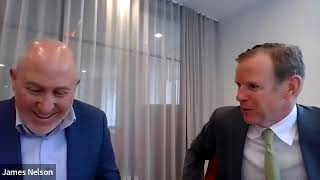
Recorded April 2023 webinar titled '1Q2023 State of the Market' with James Nelson (Davison Young) and Scott Singer (debt & equity finance). The session reports a pronounced decline in NYC transaction dollar volume in Q1 2023 (sales contracting especially at institutional scale) while transaction counts fell less sharply, indicating fewer large deals. Manhattan saw a larger drop versus the rest of the city. Asset-class takeaways: multifamily cap rates expanded (Manhattan multifamily ~5.22%), retail showed strength with higher $/ft and mid-6% cap rates, and office saw limited investment activity with some user-driven, high-basis transactions. Capital markets commentary: financing remains available but more constrained and expensive—index rates ~3.5–4%, typical borrowing now mid-5%+ to 7%+, debt yields below ~8% are difficult to underwrite; lenders require lower leverage, more recourse or creative solutions (seller financing, gap equity). Panel emphasizes deal-level assessment, diversity of capital sources (banks, CMBS, insurance, private funds), and opportunity for opportunistic, long-hold buyers.
Questions this video answers
$2.21 billion
108 sales
$1.17 billion across 48 sales
Average cap rate ~5.22%; price per foot down by $718/ft (Manhattan multifamily)
About $1,578 per foot; cap rates mid-6% range
Okay, welcome everybody. We will start at 2 o' clock sharp. Thank you all for joining on such an incredibly beautiful afternoon. So maybe that's an omen, a good sign of things to come. So I, I'm an optimist. Yes. So you have James Nelson here, principal and head of the Tri State Investment Sales here at Davison Young and Scott.
Singer, co lead of Tri State Debt and Equity Finance.
Perfect.
All right.
So I think to mix it up a little bit as opposed to what we've done in the past, which is just to go through a deck. I'm sure if you're here, you are trying to make sense of everything that's going on and with a lot of headlines out there. So we're going to be talking about hopefully what's really going on today to be most helpful to you. So be giving a quick overview of the New York City investment sales market for the first quarter. We do still have the property sales report that you all should be receiving links to as well as our traditional state of the market deck. But figured make more sense to talk through this and then really get into the state of the capital markets. So. So for New York City investment sales and again we're tracking multifamily retail office land conversions throughout New York City. We look at properties over $5 million with exception of retail, we dip down to 1 million 5. We culminate all the information from a variety of different sources and really go through and verify the transactions and the information behind them. And so what we have to present in New York City, probably not a surprise to most of you all, which is a pretty significant decline in transactions for the first quarter. So New York City saw only $2.21 billion in sales for the first quarter. This was a 59% decrease for the trailing four quarters or a 53% decrease off of Q4. Now as significant is that is the number of sales in New York City only dropped by 19%. There was a total of 108 sales in New York City in the first quarter. So again this was a 19% decrease off the trailing four quarters and an 18% decrease off the last quarter quarter four in 2022. So what this is already telling you is that there's been a pretty significant decline in larger, more institutional type sales. Where is the small to mid sized properties? Certainly there's been a drop off but not as severe as again the number of transactions. The discount is far less than the overall dollar volume. Now that being said for Manhattan, where on average the typical sales prices are much More significant, we are seeing a more significant decline. So in the first quarter, Manhattan saw only $1.17 billion in sales, which was a 71% decrease off the trailing four quarters and a 64% decrease off the last quarter. Once again, the number of sales was a little less significantly decreased in the first quarter. Manhattan had 48 sales. This was a 39% decrease off the fourth quarter and a 36% decrease off the last quarter quarter four. So I should have said right from the start, but I always like to remind you all that this is really a rear view mirror indicator. So if we are reporting on sales right now, which closed in January to March, Tom, those contracts were likely negotiated in the fall of last year. So this is really talking about what was the sentiment in say September, October. We all know that June was when the Fed started ratcheting up rates. And so this is really starting to feel the impact, this chilling effect with the rates increasing and of course the uncertainty that was added to this. And we believe that although clearly rising rates, that there is downward pressure on pricing. I think that the lack of sales volume, a lot of that also has to do with sellers and buyers pushing off decisions. So once rates started to move upwards, a lot of buyers found themselves and I'm sure many of you saying, when are you going to jump back into the market? When are you going to start seeing some great opportunities out there? So we are starting to see certainly some pretty interesting opportunities. And so we're going to go through each of the asset classes and then want to get into the discussion with Scott. We thought this would be helpful though to create the baseline for our discussion. So in the first. Yes, go ahead. Well, yes, we can, we can only go up from here. So. But yes, Manhattan in the first quarter had $430 million of multifamily sales. This was across 22 transactions. We saw an expansion in cap rates up to 5.22% and the price per foot went down $718 a foot. So again that inverse relationship, as rates continue, cap rates expand, pressure, downward pressure on pricing. So we're starting to see cap rates that we have certainly not seen in the last 10 years. Actually, taking back to 2012, the cap rates were averaging around 4.5%. Clearly the rise in interest rates have something to do with this. But also we saw a sharp change in 2019 when the new rent regulations went into effect. Some of the noteworthy sales for the first quarter was the sale of 408 East 92nd street for $115 million. Stonehenge purchased the property from UBS. You have the residential portion of the Mercedes house at 550 W. 54th St. That Invesco sold to Empire holdings for $100 million and then a mixed use property at 217 Thompson St. For $31.5 million. For land sales, there was only four of them for the first quarter in Manhattan. We're going to be coming back to you probably within the next couple of weeks on an overall land sale report, not just for Manhattan, but for the whole boroughs. A lot of that slowdown, certainly for rental sites, have to do with the expiration of the 421a. But in this case, the price per buildable actually went up. Now, granted only over 4 sales to 473 of buildable foot. The reason being that some of these sales were either for end users, as the case was on West 53rd street where the Catholic Church sold for 16 million, or an assemblage piece on 421 Ninth Avenue. So moving right along to retail. Retail has been one of the few bright spots in the individual asset class. With a rise of 32%, the average retail property sold for $1,578 a foot. Although there was a slight decline in sales over the trailing four quarters, there were 12 transactions. Now the average cap rate is still sitting in the mid 6% range. So for buyers out there looking for Y, that is definitely something to take a look at. But we've certainly seen an uptick in the price per foot. Now part of this is driven by some of these user driven sales. 155 Mercer St. Being a prime example. Dyson bought that from Thor for $60 million. But then we also saw some investor activity. 213959 Broadway changing hands. This last purchase was well over $100 million RFR coming in and purchasing at a basis of $38.7 million. So talking about some of the opportunities that are in the marketplace. And then lastly, 603 Fifth Avenue, where Aldo is a triple net tenant, at least for the next couple of years, was bought by a neighboring owner. So it'll be interesting to see what happens there. Okay, last but not least, and then we want to dive into our discussion about the debt markets is the office sale market and here only for sales as well. Not a lot of transactions, but the average price per foot up 17% to 1098 a foot, which I'm sure probably shocks a lot of you. And the cap rate still holding in the mid 4% range. But what we are seeing is certainly user sales that are propping up the market. And no better example of that than 1317 Late street, which Van Barton sold to Hyundai for $273,500,000. This was after Van Barton had purchased the property years back for 90 million. This was a complete redevelopment.
But.
But shows that Hyundai paying close to $2,500 a foot. Certainly a vote of confidence that they are willing to pay up for their offices here. But on the other end of the spectrum, we have Columbia property selling 149 Madison Avenue at $77 million. That's in the five hundreds a foot. That actually also went to an end user. So not a lot of investment activity in the office space, at least for this quarter. But I'm sure what we have to talk about next will certainly inform some of those discussions. So before I div. I just want to let you all know we will look at the Q and A if you want to post your questions there. We're going to get things started and then we'll, we'll address that. And for those of you joining late, yes, we will have copies of the report and what some of the statistics that I just went over. So, Scott, you know, if you look at the headlines and just flipping through the channels, bank failures, signature, sbb. Is this the end of the world for commercial real estate? Scott, what do you think?
No, it's not.
Okay, good.
It's not the end of the world, but it, but it may feel like it.
Right.
And I think that, that we're in a situation that is akin to the proverb of the difference between a depression and a recession. And it's. What's happening to you? Is it happening to you? Is it happening to your neighbor? I'm a mortgage broker, not an economist. And what I care about and think about and I'm knowledgeable about is the likelihood of any particular transaction being receiving money, finding money for a transaction and getting it and getting it done. And what we're seeing is that for transactions that are structured appropriately for this environment and the challenges and uncertainties that you've laid out, that it is possible to secure financing, debt and equity project by project.
Right?
It is. You're going to ask me a few times, I bet, about Macro Thesis and how's the, you know, and how's the market doing and how's the world? And we look at deals on a micro basis.
Right.
And I think that what you've laid out, you know, there's not a lot of clarity, certainly on the office side. I can look at the positive that they're have been transactions, one of them high. I can, you know, say that we have financed closed financings on office buildings in the past couple weeks. And, and is it easy? No. Are we in the, in the business of delivering good news? In a lot of conversations now, no. But if the question is, can a transaction get done, I think there's opportunity in this market and it is perfect.
Well, good.
And I'm sure that's your polite way of also telling our group when we ask you, Scott, when is the Fed going to quit raising rates? When are things going to flatten out? So, yes, we certainly are not economists. Yes.
Yeah. Or at least it doesn't get an answer.
Yeah.
So, you know, and what you had to say makes me think a lot about how I respond when someone asks me, james, how's the market?
Right.
It is so specific to asset class, building type, location, business plan. So it's really impossible to kind of answer just, you know, is there financing available? Where are rates, to your point, so specific. But we're going to actually go to a question that was already posted on LinkedIn. And thank you, Evan Weiss. And Evan writes, curious, what many of you think will happen when these looming maturities occur? Well, undoubtedly there will be losses, modifications and foreclosures. How bad deep will the issues really be? Are the headlines overblown or accurate and foreboding?
Look, I, well, I think the headlines are in general overblown and incorrectly conflating many different issues. There was a series of a couple quotes that have been reported over and over. They started out in some of the trade publications. They wound up in the, in the New York Times, in the deal book and in places that I respect, but that I think are not the correct message when, if the question is, am I going to be able to do my transaction Right. So one of the stats that was out was that 70 to 80% of the way it read was that 70 to 80% of all commercial real estate loans were held by regional and smaller banks.
Right.
And that, that's just not, that's not correct.
Right.
And in fact, Moody's has come out, I think today or yesterday with a breakdown of the reality. And the situation is just totally different. The large banks, I'm, I'm looking at something that came out today that said, in fact, the top 25 banks had 12% and the next 135 regional banks were 13%. And then we go down from there. So that, that got misreported. But even Moody's when they put out this report that was intending to refute the overblown negativity, made an interesting error, I'll say. They were talking about M and T and they were. And although it was in the context of saying something positive, they said, but even, but even M and T Bank lost. We had a 20 decrease in the value of their office building loans. Well, 20% sounds. That's troubling. That's, that's kind of scary.
Right.
But what they left out was that only four and a half percent of MT's loans were on office. So the 20% decrease shows that only. And maybe I had my numbers off, but it was in the end about 2% of the value of their office, of their loan portfolio had been affected by the decreases in office during this period of time when there have been these enormous challenges. So I think that the negativity that exists in the press around commercial real estate is a swinging of a pendulum that in a way that I haven't seen since the very beginning of my career in the early 90s. I teach, we both teach at REBNY, but one of the courses that I teach, I start out with this concept of the pendulum of risk and reward shifts over time, but it's rarely at equilibrium. It is. There are periods of time like 06 and the beginning of 07 when the focus is primarily on the rewards that can be achieved by being invested in, in, in real estate. And the last period of time when there was a, A the common sense narrative was that real estate is bad, real estate investments are bad was the early 90s. And it's. That is what we're seeing there was, I think it was Fortune had an article the other day that was saying negative things about the commercial real estate market. And then it said, and Elon Musk says that commercial real estate debt is the next major. Is going to cause the next financial crisis.
Well, he's an expert on everything though, right?
Yeah, but. But the point is that when major publications are seeking, are putting out that kind of commentary that says the. I don't know if I'm allowed to say this, but the zeitgeist is on real estate, you know, and that's just. That hasn't been the case.
We're only on zoom. So we're only on the zoom, by the way. So the FCC as far as I know, is not monitoring these airwaves.
Fair enough. But that's freely. Well, yes, I am, but I think that that is, that's when, if we come back to what, what we do on an everyday basis. The question is can you do the transaction that's in front of you or how do you do that?
So Scott, there's no doubt, and maybe the first part of this question is to compare where we are historically to, you know, the GFC or maybe before because I think your point that you're making is there is liquidity out there, there is capital for the right types of loans. However, I'm sure a lot of you all listening out there, whether you have a loan coming due and look, you might say I'm looking at my current loan and when I took on the debt, I was at a very conservative 60, 65% loan to value. My cash flow hasn't changed. And yet a lot of the lenders are coming back and you're hearing about lower loan to values. Now some of that is because of the debt service coverage ratios that are pushing proceeds down. But we are, you know, and again, you end up getting a lot of hearsay on this. But someone said they were speaking to some of the, one of the community banks out there saying that almost nine out of the 10 loans that, that were coming in for refi. We're going to have to be cash in. Now, again, who knows? This is how misinformation spreads. But clearly, you know, cash in, you know, for, for the first 20 plus years of my career, all we heard about was cash out. I mean that's why investors invest in real estate. And now we have a situation where owners who still have equity in the deal to refinance may have to cash in. So how would you.
Yeah, so, so I don't want what I said before to be misconstrued as that we're in an easy, an easy time or an easy environment. It is extremely challenging. And each transaction, there's no trans, there's probably almost no transaction that would look easier to do today than it would have a year ago.
Right.
And so, and yes, many of the, you know, the, the overall sizing of individual loans will be much less and the rates will be much more expensive than they were before. And that creates challenges in individual projects.
Right.
The question is, it's, there's, there's a big discrepancy that gets back into the depression versus recession as to within, in an individual transaction, is the owner equipped to deal with the challenges that exist and the new sizing of the debt financing and the new availability of equity capital. And so yes, some of the loans are absolutely going to require cash in. Question then is, does the existing borrower have the ability and the willingness to invest that cash or not, if they have the desire but not the ability, then is there an alternative source that can come in? And so as many of the conversations that we're having with banks who are saying either I'm pencils down or I'm not doing office or I'm not doing this, I'm not doing that, we're having many conversations with groups who now see the opportunity to lend in New York to better and higher name borrowers.
Right.
Or to invest.
Right.
Well, I would also say, I mean, how many new funds have you heard that are raising rescue capital and it's, you know, they're ready to jump in to plug this, this equity shortfall. So I mean, maybe the question is where do you see the opportunities for those out there? Maybe some, some lenders watching this now? Where are good opportunities to provide much needed capital?
Well, I think that, that, well, the, the answer to that first question is yes, we're getting those calls on a daily basis and we're getting the calls that I have capital to invest. Do you have deals and is it. And some will say rescue capital capital, others are gap capital and to fill the gap. And there is a difference between groups who are looking to take properties, for example, versus money that's looking to get in with groups that they haven't had the opportunity to before. So it's, I forgot the second, the second part of the question. But, but it's.
Oh, yeah.
Well, so I think the opportunity depends on the appetite. Right. So it's for one of the big differences between, in how challenging the environment looks is whether a, an individual or, or a group has the ability to be flexible.
Right.
And to, and to adjust what they're doing in the environment. So look, I, you know, if we take CMBS originators, right. Who are friends of ours and who we do a lot of business with, right now is a very challenging time to be a CMBS originator.
Right? Right.
I read it's the issuance is down 85% year to date somewhere.
Yeah, yeah. But on the other hand, I think it's important to remember that the cmbs, the current CMBS market was essentially created out of the early mid-90s vacuum of capital that existed. What, what, what happened? Banks, many savings and loan institutions failed and other banks pulled back to the point where on my first day in working full time in the, in 1994, the other brokers in the, in the shop had had the assignment over the weekend to come up with a list of any lender who was in the market for a New York property. And it was a triple space, two and a half page list. There were probably 14 names on. There was very little liquidity. And the CMBS market was really created to as a, as Wall street filling a vacuum for capital.
Right.
And so there's a nimbleness to Wall street that is, that may not be evident in what the CMBS market looks like now on the other hand, while originations have been challenged and the spreads are volatile, there are still an awful lot of really smart CMBS originators and everyone on the back end who are figuring out how can I structure deals now, where should I price them so they'll be attractive to the purchasers of the bond. So we are having conversations with CMBS lenders on many transactions and there will still be a vacuum of capital available for them to fill.
Maybe talk about some of the other lenders as well, maybe the insurance companies and then also the agencies because the agencies, especially if there is concern there's going to be a void of multifamily lending because of the, the challenges for the community banks. Could the agencies step up?
Yeah, I think the, I want to go back to this anti macro view, right. And they, and, and I guess I was talking about vacuum of capital but the void in lending for multifamily properties depends on the, the way that you've transacted over time. So, so one of the things that we've always focused on is having a very wide group of lenders and investors who we speak to about deals because volatility comes and goes and, and, and certain segments of the market can be more or less attractive to borrowers depending on these more macro events that happen. So I think that the conversations about the void in lending are driven by groups who did not transact across a broad platform of lenders.
Right.
So there are, so yes, the community banks and several of the community banks have been major providers to a certain segment of the the market. But the pullback that exists there then creates opportunities for others. So among the types of sources who invest, who lend on real estate are the banks of different sizes, many of whom are still active and healthy and looking to invest even with challenges. The CMBS lenders, as we said, insurance companies, pension funds and then other funds of all types of from. And so one of the dynamics that shifted over the last few years was that there used to be silos where insurance companies only made very loans on very safe properties below leverage, institutional quality and banks were the only providers of construction loans. And debt funds were only, and private equity funds were only doing opportunistic deals that were very risky and where they could achieve very high returns. Well, over time those lines started to merge in various ways. Insurance companies who were knowledgeable about real estate saw the opportunity to go beyond the low yielding, low risk deals and take some more risk. Many of them doing it in very appropriate and smart and entrepreneurial ways. In the other direction, private equity funds who were able to achieve high yields were attracting, started attracting capital from groups not only who were seeking high returns, but who simply said, you're good at investing in real estate, we want to give you other money to invest in other parts of the, of the capital stack. And then that morphed to a company like Apollo buying a theme or creating a theme or KKR that has Global, Global Atlantic.
Right.
So you have a, a, there's such diversity. There was so much liquidity in the market for real estate that you are able to have a massive pullback and yet continue to have enormous liquidity.
No, it's such a great point. And for those of you who did not see our white paper that we just wrote that you can find in Real Estate Weekly, that was a big point is the variety of capital sources that are available because again, there's so much press out there about the void and banks pulling back that again, not talking about a lot of the alternative capital lenders. So we're going to get to the questions in just one minute. And Scott, I know that this comes up on a, you know, an hourly basis for you, so feel free to kick me under the desk. But where, you know, someone's looking to go borrow today on a cash flowing multifamily, you know, where are the rates? What are people looking at today for a five, seven, ten year deal? I guess some good news that the ten year treasury has, you know, after, you know, hitting 4% a month back is now settled, I believe low three and a half. But you know, where are the spreads? You know, what is, what is.
There's a huge range. There's a huge range of spreads.
Right.
So the index rates are in the 3 and a half to 4% range now, depending on what, depending on which duration.
Right.
That you're talking about. So when index rates are 3 and a half to 4% and the lowest borrowing rates are going to be not lower than the fives.
Right.
And many loans are going to get done in the sixes and loans that have, that have higher spreads are going to be into the sevens and the sevens plus on the other hand, we are still receiving proposals and spreads in the 1002s. Not every deal, not the majority of deals, but there is. But, but it still, it exists.
Now why would a lender in this interest rate environment quote such a tight spread in your mind?
Because they believe they are never going to, that they will get paid for the entire duration alone and will get paid back. And they'll believe that because of the strength of the combination of the strength of the assets and the tenants and the locations and the, and the specifics of the, of the owner. One of the, you know, it's such a, it's very unusual market. First two headlines I saw this morning were one, Blackstone takes a $47 million loss on an office building in California. And two, Blackstone raises a $30 billion fund for new investments.
Right.
And that does the fund by the asset they sold.
No, I'm just kidding.
But I think that the point is that the fact that the fact that Blackstone took a loss on an office building investment does not mean they're bad at investing in real estate.
Right.
And does not mean that they, that others should not give them money to invest, but I think does. And was it foolish for the groups who put the money into Blackstone to invest going forward? I don't think so.
Right.
I think real estate is a business that has risk and it has yield.
Right.
And the reason. And we tend to forget quickly that fact.
Right.
And when you go through a cycle, like we've had a long cycle where there are very few defaults and it feels like you had to do something foolish in order to lose money on an investment, then over time the market forgets that there is risk in these deals.
Great.
So as a follow up and just again, if you have questions, feel free to type them into the Q and A. Definitely want this to be interactive. So Jade, you asked and this is just kind of looking for more of the, the terms of these loans. So talk a little bit more about the loan to values. Again, completely dependent, I'm sure, on, on cash flowing. You know, are these floating fixed? You know, are you still seeing some, some I.O. out there?
Okay, so the, so one question I'm looking at is, you know, are there, you know, how deep and liquid are the, are the debt markets?
Okay.
And so we have one transaction that we went out on recently that was a, a very highly regarded borrower in New York City property A about a 12 debt yield. It was primarily retail in nature. And we went out to, I don't know, roughly 60 investors and with that set of parameters, a year ago we would have had 58 proposals. We had six proposals. So how do you answer the question how's the market? Is it, is it. There's been a 90% pullback in liquidity for good deals or as I look at it, we have six proposals. We were able to create a competition and drive attractive terms. That got done. So I believe that there is still tremendous liquidity for real estate. It is not at the, at rates that would have sounded good a year ago or that and I would have gotten laughed out of the room two years ago. But the, so the, the, you know, where are debt yields? So in the hottest of the market, it became possible to do to size senior loans at full fairly low rates at debt yields as low as about 6% today. What's the appropriate, what's the appropriate sizing? It's challenging to do deals below an 8% debt yield. Is it possible? Yes, it's possible. It gets more expensive. Now on the other hand, there is a tremendous amount of capital that is seeking higher returns and that will look at a deal with lower debt yield and ask why and what is, and how is that going to change? And what can I, what yield can I make in lending or investing in it? And what's the likely sale value of the asset? So you know, loan to value. I would put back to you, what's the appropriate cap rate? What was the appropriate cap rate a year and a half ago for a, you know, for a very attractive multifamily deal in New York versus what is it, what is it today? It's that we can go back and forth because you'll ask me what's the, what's the rate that the, that the buyer can, you know, buy at and, and what debt service coverage. But these, these go together.
And as far as, are you seeing more floating rate debt and are you seeing any IO at this point?
We're seeing a great divergence in attitude among owners, borrowers as to the duration of loans they want to take and floating versus fixed. There absolutely are groups who believe that we are in a temporary higher environment and don't want to lock in for a long period of time. And we have others equally accomplished who look at this and say, if I can lock today at this rate, five and a half, five and three quarters could be six. But I know that my cash flow will support it for the next 10 years, then I want to lock in because I am the game I want to be in is maximizing cash flow for my Real estate, not surfing on interest rate waves.
Right.
But it's, but we see, we see both, there's both fixed and floating rate money available. Absolutely perfect.
And I know we've received a lot of questions on the ability to finance office and definitely speak about some of the, you know, the challenges out there and some of the distressed sales we've seen. But can you talk about a recent financing that you did for office just to give a sense of what, what is possible?
Yeah. The recent office building financings that we have closed have been for long term owners, long term holders who have kept their debt modest and who. And as a result we have been able to secure both long and medium term offers at levels that create a lot of security. I can't be too specific because we deal with many private owners and I wish we could advertise every deal we do, but we can't. The it is lenders are going to stress the cash flows on office buildings significantly. They try to look to the credit of the tenants and to the attractiveness of the building and the, and the attitude of the, of the owner. The operator. Is the operator spending money.
Right.
We look at, you know, the, the, the amenities that have been added to office buildings. For example, the Seagram's building which has, where RFR has done an incredible job taking a significant amount of space and building they call the playground.
Right.
And it's a place that people will want to come to, to the office that is going to be viewed. And I'm not talking specifically about the financing of the sequence building. I'm not involved. But a building that is in a strong location with an owner who is spending money to make it attractive in the current environment. Lenders notice that and pay attention.
So what was the occupancy of the.
Office building that you just refinanced and roughly the alone to value the loan. To value what? What's the value?
What was the occupancy?
Yeah, the occupancy was not full.
Right.
And so, and, and it was a. This is a building that if the owner had had full leverage before, we would not have been able to refinance with only debt.
Right.
But we were. So I think the question is how do you deal with and the situations where the leverage is not low.
Okay.
And so and where there are significant challenges and I think that we are bringing in and this is our conversations that we have upfront and this is where I say I'm not delivering good news regularly. So we are financing buildings that are cash flowing and that are Stable, good buildings with good owners with recourse.
Right? Right.
If I had gone into one of our regular clients with a cash flowing building saying I can get it done but I need 50% recourse, a year and a half ago, I would have gotten thrown out. I should have gotten thrown out.
Right.
But the reality is that that is a, that recourse from a strong owner is a way to make a lender comfortable now to. To invest. So then the question becomes, does an even owner, an owner may have a willingness to provide some recourse? Do they have the balance sheet? If they don't, then the question becomes can you bring in another party with capital, maybe equity, maybe subordinate debt to right size, the senior loan down to the level that can be achieved. And I think that what. And so somewhat to my surprise, over the last few weeks as we've been around in meetings, we keep meeting with owners and funds who say I have raised was on with somebody today who said we've raised our first 500 million yesterday, 400 million. Another group which is prep or met. This is flexible.
Right.
Another who raised a $4 billion fund a few months ago who said we're looking to invest in office. We believe that you can pick the office buildings that will perform well and invest smartly in them. And now we have the opportunity. We can own and operate, but we can also be a partner with groups who are good at what they do but don't have the balance sheet to do this. Now that money is. Is out there. It's not. There's no panacea.
Right.
That the money's going to be expensive. It is losing. You know, for an owner who has owned 100%, it is relinquishing the total, that total control. But I think that it is the. There's a divergence among different owner types in their ability, ability, both their attitude and their ability towards these challenging situations. Situations.
You know, we had also written a piece on seller financing which we also. Because from. From the brokerage side on investment sales, looking at some of these owners who are out in the market and when the buyers were able to get 65, 70% loan to value and borrow money at three and a half percent or whatever it was, buyers could get a lot more aggressive. But now there's that equity gap that not only does is the debt more exp. Expensive, but it also requires a larger check. So talking to some of our clients about providing seller financing, this isn't something that I've seen since, you know, the first few years of my career. But there's been, the debt's been so cheap over the last 20 years that why would a seller take a note for, you know, 3 or 4%, but now if you're a seller who's just going to, you know, park the, you know, the capital and a money market account, you know, Maybe getting a 6% percent return isn't the worst idea.
No, I think that's the kind of creative solution that was not necessary over the last period of time, but has been commonplace in, in other environments. Right. It's a way to bridge the gap.
Right.
Between a seller's expectations and a buyer's ability in this, in this capital environment. And we've seen, you know, transactions happen with, with one in particular early in Covid on Madison Avenue, where a solution was solved with seller financing. And so whether it's recourse or cash in or seller financing or an argument, I haven't won with you, but I'm going to raise here publicly, which is that I think that financing contingencies in sales contracts are a path towards sellers achieving higher valuations.
Right.
Because buyer, I look at it from the, from the buyer's perspective and how does a buyer really push to the highest level that they can if there is uncertainty in the financing and there is uncertainty in the financing? So one of the challenging aspects of raising money now is that there's so much volatility from week to week, both in Treasuries and in spreads, that it's hard to know far in advance what the pricing is going to be. So I know you, you're, you're making.
You'Re making a lot of friends, Scott, out there, everybody loves the idea of getting contingencies. But yes, I mean, to your point, if there is a win, win, where if a seller is saying, I can go with this purchase price, which is $90 million, but comes with a financing contingency versus $85 million for a cash offer. You know, that that's an interesting prospect.
Look, and I think it becomes a, becomes very important for that seller to have faith that that buyer is not going to use that as it has often been used as a tool simply to renegotiate.
Right.
But where you have a serious buyer and real communication. And I think it's something that ought to be considered wonderful.
Okay, so we had a question on where, you know, how is the debt environment? How is that impacting pricing? And again, all I can tell you is from what we're actually seeing out there in our first quarter report, where, yes, we are Seeing expansion in the cap rates. We are seeing multifamily cap rates in Manhattan now north of 5%. We're seeing retail in the mid 6% range. And what I will tell you anecdotally is that, you know, it is not saying impossible, but I would say 99% of the buyers out there are saying we do not want to take on negative leverage. I mean I remember selling in 2006, 2007 when that was money cost, 6% back then and our cap rates were 3%. So these buyers were taking on negative leverage. That didn't work out so great in the long term unless if the run up in income was so great. So now investors are saying I'm not taking negative leverage on, I want it to be neutral or hopefully still accretive. So that's why I think you've had such incredible expansion in cap rates. And I think that's also why New York is an opportunity. I think it is a buy and I think it might withstand this a little better than. Look, I mean we lost a lot of investors after Covid to the Southeast when Nashville and Miami and Houston, Dallas, you know, these were hot markets where multifamily were selling at 3 caps at 1 point. Well, okay, if it costs you five and a half percent on a multifamily, you know here it's the, you know, it's the same cost in those markets. So you know, here we've already seen some cap rate expansion. Now some of that is obviously because of the regulation. But so let's see, we got some more questions here. So. Okay, we've got a question you want to tackle this one from John.
Yeah. Hey, so this is a question about is financing. Am I only speaking to top notch borrowers?
Right.
And to, and to the most healed, well healed group. And I think maybe yes, with regard to some of the specifics of the transaction, but no with regard to the, to the availability of capital. If a borrower is willing to be realistic about what is achievable and what's not. There is, look, I mean look at Carlisle who's been buying the small properties right in Brooklyn has become a major buyer of small properties. I think that there are funds that have been aggregated to invest debt and equity in properties from very large to very small. And so the. Is there a better availability of less expensive capital, whatever that means now for high, for borrowers with longer reputations? Yes, I think there's always going to be that divergence. But the capital exists, we are inundated with outreach from bridge lenders of all types wanting to invest capital from, you know, $2 million to to $200 million. And a lot of that is interested in making the smaller investments that it's going to be painful, right? This is not, you know, a lot of the deals that can get done now are not going to be lending by choice. And one of the things I was thinking as you were talking about the the lack of sales over the last quarter, the period that you were talking about and you know, sales for the most part are voluntary and financings for the most part are not, right? And so yes, I believe there is capital, although it will be painful on attractive capital for in some cases for many deals. MICHAEL quarter the period that you were talking about and you know, sales for the most part are voluntary and financings for the most part are not right? And so yes, I believe there is capital, although it will be painful on attractive capital for in some cases for many deals. MICHAEL we have a question. What's the target IRR for new equity offer entering an office trust trade? And what I am seeing is that the target returns for each investor are very much driven by what are they seeing, how many deals are they getting done and what else we have question, what's the target IRR for new equity offer entering an office trade? And what I am seeing is that the target returns for each investor are very much are they able to execute on? And so in some cases we've had driven by what are they seeing, how many deals are they getting done and what else are they able to execute on? And so in some cases we've had there's a larger arbitrage in pricing of deals than I've seen at any point in my career, even beyond 2009. We have a one transaction where we had proposals from groups who felt they were providing moderate leverage on a deal with some there's a larger arbitrage in pricing of deals than I've seen at any point in my career, even beyond 2009. We have a one transaction where we had proposals from groups who felt they were providing moderate leverage on on a deal with some with some challenges where the proposals range from 400 over to some challenges where the proposals range from 400 over to 12. And the group at 1250 we said are you you know, what sort of what are you thinking? And they said, well, it's just a question of our allocation of capital. We're seeing enough enough good deals. So I I'm not but more it it is such a volatile environment that each Deal stands on its own. And I think the within an office transaction, the question would be or the challenge would be creating the structure that is appropriate for both the owner and with their, with their plan and finding capital that will match up with it.
And I would add to that because, you know, one of the most active buyers of office in the city right now is Empire holding, you know, private capital. And what has been amazing to see is it really looks like for them it's a basis play, right? They are seeing value, they are seeing prices that have clearly not been available for, for 10, 20 years. And so when you hear, you read the reports that they're in contract to purchase 529 Fifth Avenue at $400 a foot, I mean, again, that is to me a basis play as opposed to an irr. And it's interesting to me that one of their backers who's been reported is the Namdar Group, who is also one of, if not the largest owner of distressed shopping centers in the country. So what is that telling you when you've got, you know, here's the ultimate contrarian investors saying, look, this is an opportunity where a lot of the institutions are on the sidelines. These are buying opportunities that we have not seen in at least a decade or two and we're going to jump in. So I, you know, I don't even know if they're, they're calculating an irr, if you're buying a bacon or mostly bacon building. So I think that's a really good.
Point and I think that that is that some of the capital that comes in a meaningful and meaningful part will look at it in that way. There's sort of this divergence between the generational owners. Whether John, you said it as top notch, but, but I think that it's, it's just from an attitude perspective, right? I think that we've seen far more, you know, properties keys being handed over by funds than by individuals. And, and by families. And I, and it is, it is. I think it reflects positively on the families but not necessarily negatively on the, on the funds. You know, a fund that is the business of a real estate fund family that owns through the generations. The attitude is very much about holding on to the property through cycles. And there are various reasons for that reputational with regard to the groups that they do seek money from which are lenders, but they're not seeking for the most part outside capital. They're not convincing. They're not to convince equity investors of something that I think funds may have to, which is that they are willing to walk away from investments or not spend capital when they feel that it's, that it is the wrong time to do so. That may be helpful to raising capital which for an investment fund the primary business is, is raising capital.
Right.
And the. And now they can only do that if they're good at, at putting out and creating the returns. But I think that so in with Empire, if they're taking that approach of buying on basis, I mean that 529 is right across the street, right? This is an incredible location. That's it is people will occupy that building. A company that. And I don't know any specifics of 529 other than what it looks like. But, but a group, a company that has to achieve a certain IRR over a certain period of time and must exit within a couple years has a totally different. Has to have a totally different risk profile on the office market now than one which can look a decade out.
No doubt. And I think much the same way we're also seeing a lot of the foreign capital flow in seeing this as an opportunity again a long term hold. We sold this incredible corner on Broadway and Broome and looking at this, seeing a lot of the known investors say look, you know, we're waiting, we're on the sidelines and here comes a Swiss buyer who comes in and closes cash, you know, and so you know that that was a 5 cap where J. Crew was paying $150 a foot rent. And I've heard that they've recently doubled the rent. So you know, there's certainly opportunities out there. Now with just a couple of minutes left, I just want to hit on a couple of the last questions here. You know, talking about the trap delinquency rate, you know, is there an uptick in loan sales? You know, where is the distressed buying opportunities? And actually just got the phone earlier with a friend of mine who works with one of the big funds out there that's been acquiring a lot of the non performing loans. It's been pretty quiet and part of that is, you know, could this be the calm before the storm? But also because a lot of this distortion stress is getting flushed through really as a short sale where lenders are saying, you know, we're not going to foreclose all the way through, we're not going to drag this out. Let's just allow the sale to happen and take that short sale. So I think that's where a lot of the opportunities, obviously a lot of chatter about the signature loans that are going to go on the block and how many pools will that be and how many will be spun off?
So going back to the negative headlines so overblown, the comment that I've seen in several of those publications is and evidence of how challenged commercial real estate is is that signature bank that the FDIC still hasn't sold signatures pool of loans.
Right.
Banks failed three weeks ago. Right. Or, you know, or so. And the sales broker was hired seven days ago.
Right.
This is for $60 billion. It's. And that. And yet that quote is being repeated around the market. That, that's just right for I think for anyone on, on this call that is so obviously flawed in how to look at it. So I think that groups who can keep their head, keep their chin up.
Right.
And keep their head and look at individual situations and find and create paths that make sense in this environment that, you know, going back to that macro question. No, the world's not, the world is not ending. It may be, it may feel like it depending on the status of the individual transaction. But there are, but there are paths and there are things to do and these challenging environments create opportunity for individuals who transact. Wonderful.
So last question to take us out and just favorite investment themes or investment ideas and you all are clearly tuning in because you're not sitting on the sidelines. You're looking to be opportunity opportunistic. And yes, you know, there are challenges, but where there are challenges, there are opportunities. So Scott, where, where would you be advising people to go right now? What's, you know, the play right now?
I think that what I focus the most on is where I invest my time.
Right.
And where we're investing our time now is in creating the, is helping to create solutions.
Right.
And I think that it's important to look at where, where you have knowledge.
Right.
And, and where is. I, I believe that there's, that there are possibilities, right. In each asset class and there are opportunities in each asset class. And some group, some people may say the most money is running away from office. Let's look at office. Others will say that all that money is running away from office because there are these, there are challenges. It's very individual, right?
Yeah, I would if I had to pick a couple asset classes to focus in. And I agree lines you're looking to be opportunistic. And yes, you know, there are challenges. But where there are challenges, there are opportunities. So Scott, where, where would you be advising people to go right now? What's, you know, the play right now? It's all situational. But I would say as an overall theme, retail has made a really.
I think that what I focus the most on is where I invest my time.
Right.
And where we're investing our time now is in creating the nice recovery.
You just, it doesn't take much, just walk up and down, you know, the street to see that, you know, these vacant storefronts that just, you know, after Covid were just, you know, on every block have really filled up. And obviously there had to be an adjustment and where the rents were. But once you have that occupancy, see, you can certainly start to see some, some rental growth there. And we have seen the return of the, the tourists, you know, for the Times Square, that some of the pedestrian counts are actually higher than they were before COVID So that, that's exciting. And then, you know, I think for development right now, very challenging. And I'm sure none of you are. Very few of you are probably thinking about rental development right now with 421A still not really even, you know, know, up for discussion right now. But for boutique condo development, again, looking at how few land sales there have been and talking to my friends in.
The residential bro it's helping to create solutions, right. And I think that it's important to look at where, where do you have knowledge, right. And, and where is. I. I believe that there's, that there are possibilities right.
In brokerage space and new development saying, you know, we're going to have a real shortage of new condo inventory in two to three years, right. So if you can figure out how.
To each asset class and there are opportunities in each asset class and some, some people may say the most money is running away from office. Let's look at office.
Others will say acquire land, assemble, get it financed, get it built, think you're going to be in a very good position a couple of years from now when everyone's going to be looking around saying, hey, where's all the new condo products? So those are just a couple ideas, but certainly, as always, feel free to share your thoughts with us. We really appreciate your taking time and continuing the dialogue.
Thank you.
Great.
Thank you.
Thanks again for joining us.









