Building Communities with Phillip Huffines
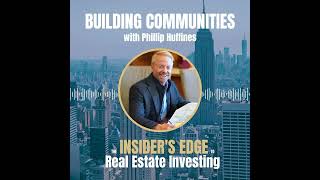
Philip Huffines built a family business from automotive ventures into master-planned communities across Texas. He acquired land during the S&L crisis, reduced risk through long contracts and seller financing, and sold horizontal infrastructure to homebuilders rather than building homes himself.
Welcome. This is the Insider's Edge to Real Estate Investing with James Nelson, the principal and head of Avis and Young's Tri State Investment Sales Group. In this program you'll learn game changing strategies to outperform the market. James will teach you how to source, execute and capitalize on the best real estate opportunities in New York and around the world. Now here's your host.
This podcast is for educational purposes only and should not be relied upon for investment decisions. The opinions expressed are those of the guests and not their company. Listeners should not act upon the information without first seeking appropriate advice from an accountant, lawyer or other professional.
Welcome everyone to episode number 203 of the Insider's Edge to Real Estate Investing. I'm your host James Nelson. Welcome and we have a treat for you today. And I love that Philip Huffines, who is co founder of Huffines Communities, came here in person from Texas. When we signed on, I assumed it was going to be virtual and in walks Philip. So I think that alone says a lot about the, the importance, the value of doing things in person. And so I think it made for a really great interview. Now Philip has come from practice of three generations of business and community work in the Dallas area. He and his twin brother, co owner Donald have developed their land development and land investing legacy by creating superior master plan communities for multifamily community lifestyle. The firm has developed over 20,000 single family home sites, 2,800 multifamily units in the Dallas Fort Worth metroplex, and invested in thousands of acres of land. The Huffine's name has become widely esteemed within the industry as the State of Texas and they've assembled over 150 LPs creating hundreds of jobs in North Texas. Billions in asset values. In 2021 alone, Huffine's communities invested over 120 million in land. Philip has established an unblemished reputation of high integrity, bringing every project undaunted enthusiasm, a commitment to excellence and an unwavering dedication to success for everyone involved. He's been married to Holly Hartwell. I had the chance to meet, we had lunch afterwards, the three of us for more than 36 years and we didn't have lunch for 36 years. They've been married for 36 years. They had three adult children. Philip graduated summa cum laude from the University of Texas at Austin and he's got quite a list of hobbies here including skiing, biking, hunting and mountain climbing. I think I forgot to ask him about that, but I love the work that he's also done at local high schools and as a volunteer for Junior Achievement where he serves on the board. So we're going to have a brief word from our sponsor, but make sure and go to james nelson.com if you have not already. That's where you can find show notes for this episode. You see the white papers that we put out weekly and Forbes other helpful resources to help you gain the insider's edge to real estate investing. So we'll take a quick break and we'll be right back with that interview with Philip Huffines.
A different approach to putting our clients first Avis and Young's Tri State Investment Sales Group sells multifamily office, retail, development and specialty sales throughout the New York metro area as experienced thought leaders in their industry. Our 35 member group is available to help you make informed investment decisions by advising you on your current holdings or identifying new opportunities in the marketplace. Our one unified team is built on an industry unique platform which promotes unparalleled collaboration and teamwork. We share core values of hard work, integrity and expertise. We put our clients first, providing tailor made strategies to achieve superior results. Please Visit us at aytristateinvestmentsales.com and follow us on Twitter LinkedIn and Instagram amesnelsonnyc to learn more.
Welcome everyone. Thrilled to have with us today Philip Huffines, co founder of Huffines Communities. Thank you so much for joining us.
Thank you, James, of course. It's an honor to be here and I'm excited to be in New York. It's always fun to be in New York.
Well, I was amazed to hear that you were coming here live and in person because I know you're from, from Dallas and so I just assumed we were going to be doing this virtually and they said, I don't know, Philip's going to be showing up to the studio today. So, you know, that says a lot. And not to discredit, we've had over 200 shows here and I'd say three quarters of them are in person, but probably three quarters of my guests are also local. And I've got to say that usually when I have an out of town guest, they're taking that zoom option, so to speak. So what compelled you to come up and do this?
Well, New York's a great place. It's totally fun for us, my wife and I, and she loves to travel and she likes the museums and she has her favorite museums, the Frick and the Museum of Metropolitan Art. And so she enjoys that. That's where she is now, you know.
Taking a tour of Something great time to do it. And I also, I think when you have the chance to sit down with someone in person, there's just a different level of connection. So I was really happy to hear that you were visiting and I'll certainly come find you next time I'm in Dallas.
Oh, please do. Yeah, that'd be a lot of fun.
Wonderful. So, Philip, I'd love to hear a little bit about your story. And we were talking just before. I just somehow I assume, because I heard that, you know, there's family and that your brother Donald co founded the company with you. So I figured this was kind of a long standing family business. Said, no, no. We actually started out in the car business, which is the story with my grandfather as well. So tell us a little bit about the car business and how that ended up translating into real estate.
Sure. And I'll try to be succinct. My grandfather started a chevrolet franchise in 1924, and that was in a small town. He was rags to riches, kind of like your grandfather, as you mentioned earlier, and started a franchise. And this is our 100th anniversary this year. And I grew up in the car business in the shop, changing oil and doing all of those things that you're supposed to do when you're in high school. But always I've been an entrepreneur. And so my twin brother and I decided in 1976 there was a bicentennial of the United States that we were going to go sell fireworks because that's a big deal. And so we looked around, checked all the rules and regulations. This is kind of how we got into real estate. There are a lot of rules and regulations. You had to be outside the city limits in a certain distance and you had to go research all the city ordinances and codes. And so we found some locations and we pursued that business for about five years. It was very profitable until from high school. I was a junior in high school, all the way to a junior in college. And we had multiple locations and bought, you know, TV Guide ads and made a lot of money. And so we invested that money later or during that time period in a rent house. I went to University of Texas and Austin. I guess I need to back up and say where I'm from. So I was born and raised in Dallas, which is kind of rare today because we have so many new people in the city. And my whole family's been from that North Texas area. And so I went to University of Texas in Austin. I majored in business, but it's an oil and gas Major. My twin brother majored in real estate. And how did that come about? So we're identical twins. And I like to say this is something that's important in case you see me again because you may not be seeing me. And all our life we've been intimidated because someone will come up and say, well, how come you're not friendly to me? My wife even would say that. She said, I saw you in class at ut and she said, one day you're moody and the next day you're nice. I said, that's not me.
You have the benefits too. Isn't that a classic sitcom where you trade. Trade places? So there might be some benefits there too.
Well, I'm kind of rambling, but the. So he. We got the. This magazine out, Texas Monthly, and It said the 400 richest Texans. And we looked at that list and where and what kind of business they had. And it was either oil and gas mainly, or real estate or inheritance. We didn't have inheritance. My father was middle class. I can get into that, how he lost everything and how we. He bounced back. And that's our paradigm where we come from and how to reduce risk. So I said, brother, you go into real estate, I'll go into oil and gas. So that's what we did. After college, I worked for Getty Oil for a couple of years in Houston. And that was in 1981, 82, 83. And oil was hot and big, but real estate was good. So I came back to Dallas and was helping my father in his business and some personal matters. And so I went into real estate with my brother about 1985, 86, 87. And then something happened in Texas that probably a lot of your audience isn't that familiar with, mainly because they're young and I'm old. And so in the mid-80s, there was what we call the SNL crisis. And I bet they don't. I bet most people don't even know.
I've definitely heard of it. I'm old too.
I mean, I talk to my kids or their friends. They don't know what an SNL is, a savings and loan and what created the crisis. I don't want to get into history lesson, but the savings and loans is where everyone went to get a mortgage for their home. So they're 30 year loans, right? That's their assets. 30 year assets. But they would borrow the money short term for deposits like CDs. You know, people bring money into the bank. Well, that was a. Rising interest rates when prime went to 15, 16% so the SNLs and banks were paying out 15, 16%, 12%. And all of the money that they were earning was 5, 6% in their mortgages. So they went broke. And as they were going broke, the government was loosening the rules and what they could do in order to make money. So they were investing in real estate, actual ownership. And then the government changed the rules on real estate. Oil fell to $10 a barrel. Banks. My father was in banking. He owned like five different banks. And they all started falling. Everybody started failing. And that was due to whenever there's an economic crisis. A lot of individuals remember. 09, you know, recently. 08 that I remember. I think everybody listening remembers that. But the difference between the two economic crises was in the 08, 09, the government didn't require the banks to mark to market. So they would have a loan and it's not worth the collateral on them. The collateral is not worth as much as it was. So the loan should be marked down, the collateral should be marked down, and the bank would have to put up more capital to support that loan. But the federal government said no, because that's going to fail all the banks like it did in the 80s in Texas. And in Texas, they had to mark those loans and values to market. And every time there was a foreclosure, guess what happened? The property next door went down in value. And then the property next door went down in value. So soon everything unwound. Every single major bank in the state of Texas failed. This is before interstate banking. So the federal government initiated a rescue which was to allow interstate banking. So anyway, enough of that history.
I want to get to that. I want to hear about these first few acquisitions. But first of all, I've got to go back and ask you about this fireworks stand and looking at the Forbes 400 list, because I'm thinking how many, you know, high school college students are actually doing that? I mean, the fact that you were so focused and so one clearly entrepreneurial, right, to go and figure out how to do it and look at the town ordinance and set up shops. I mean, I gotta believe that that experience, right, was probably helpful throughout your whole life. I mean, I'm sure you learned a lot of lessons. And then I just, I gotta say, I love the focus that you and your brother were thinking about. All right, well, we want to get on this Forbes 400 list, you know, so if we kind of divide and conquer some, somehow we'll get there. So I, I just really appreciate your sharing that.
Well, it actually wasn't Forbes, it was Texas Monthly.
Okay.
Texas Monthly 400 is a lot better lock out there.
All right, Well, I know there's a lot of real estate and oil and energy players on that as well, so. Okay. So you see this opportunity because I remember the founders of my company talk about how on one hand during the SNL crisis, I mean, there was a point where the market bottomed out.
Yeah.
Nothing could move. You just. There was just no money for anything. But all of a sudden, I mean, talking about how so many fortunes were made, the type of buying opportunities that existed, because again, all these assets were just written down, like you said, to practically nothing. So tell us about your first acquisition. Was it something that came out of the SNL that you were able to pick up? Tell us about that.
There were a lot of subdivisions that had been constructed and obviously no one was building a home. And I remember. So the SNL that the government would take and pool the assets before they were foreclosed on and even after they were foreclosed on. And the unique aspect was the government said the federal government, this entity that they created to hold all these bad assets was called RTC Resolution Trust Corporation. But it only had a three year life. And so everyone knew that that was going to be the bottom year two to year three because they had to liquidate. And so that meant everyone was going to auctions, live auctions, just like a foreclosure auction. And they would sell these assets or they would go to, not necessarily in the courthouse steps, but in auditoriums. And they. This is kind of cute stories what to get in. They wanted to make sure you had some money. Well, we didn't have any money because a lot of the stuff we had was foreclosed on. My brother and I thought we were super smart. We bought this rent house in Austin and made $60,000 and then those. It was a lot. And so we were buying other stuff. All of that went kaput. So we were down to nothing. But we had a life insurance policy and credit cards. I went cashed out that life insurance policy and the credit card and we would. That would get us in the door. It was $10,000. You could go bid if you had $10,000. But it was like any other real estate deal. The government or the sellers would give you 60 days or 90 day earnest, you know, earnest money, feasibility period. And 30 days to close. So during that timeframe we would go around town and flip it. So we. Because a lot of corporations, big companies, publics, they don't participate in that's too quick of a decision, they don't have the authority. So we would go to public mainly we were buying single family, fully developed, lots of. And so we would go to like the publicly traded pulte syntax companies at the time and sell off as much as we could to end up with some free and clear.
How did you know what was a good opportunity? So were you studying the market? Was this just kind of. I mean, because I'm sure there was a lot of this stuff that came out of the market. So how did you know what you were buying you could resell?
Well, I don't know if we really did. That was a great question. We just knew we were going to try really hard. So some of it was just land. And the first thing a broker will know is you go talk to the next door neighbor. Next door neighbor didn't have it leveraged, so they didn't have it foreclosed on. So some tracks of land we'd go put under contract. And that's what I was going to mention is how do you control the deal? So for individuals looking to get in real estate, the number one aspect is control the deal. How do you control the deal? You get it under contract. How do you reduce the risk? You reduce the risk by getting a long term contract as much time as possible to reduce the risk for the next buyer. And that's what we learned long ago is how do you reduce the risk so that someone else can buy it, you can sell it wholesale, or you can fully develop it and go retail and vertical. And so we've kind of had our company based on that. Get something free and clear, reduce the debt. And I was going to mention that too as how to kind of decrease risk and make it. And decrease the capital requirement.
Absolutely. So I want to get to that and I want to talk about what a master plan community is before we do. So you're out there flipping these properties, but at some point I assume you start having enough so you start closing on it yourself. So, so at some point you make the transition where you say, okay, I'm seeing money being made, let's start holding some of this as well. So did it get to the point where you start closing, entitling, doing further work? At what point did you kind of make that transition from being a reseller to actually owning and entitling?
Well, whenever we got the some of the lots or the land free and clear, then we would go and develop that or further entitle it and sell that. We had to have partners of course, for the first 20 years of our business because we didn't have enough capital. Some small deals we would do on our own. We had capital from up in the northeast started in, I don't know, early 2000s. But we got rid of all that in about 2015. We decided we didn't need any more capital. So everything we've done since then has been just with our money.
And how did you find those original partners? Because, and it's interesting one of the things that talk about in the book, because I found one, one of the top things that holds people back from investing is lack of capital. So you know that that's, that's, that's a logical reason to not jump in if you don't have the capital to invest. So the thesis in the insiders edge to real estate investing is your value is finding the opportunity like you were at auction. So you have the opportunity, you have the business plan and then you have the partner who can bring the capital and the track record. So it sounds like that's what you were doing to get your career off the ground. So how did you find that partner and how did you know that they were the right fit?
Well, our experience with partners hasn't been the best. It's okay. Yeah. But in our business we're kind of make quick decisions on what's the best decision. It's not necessarily what's in the pro forma or the financial model. Asking permission sometimes isn't kind of what we do. I mean, we're good partners. And the reason we, one reason we don't like partners is because we treat them better than we treat ourselves. Right. And that slows things down. And, and they're irr driven. We're multiple driven. Okay. If it takes, you know, land development or land, we have legacy land for 20 years or 30 years where there's no partners at one. Right.
So you can be patient.
You very patient. I can tell you on a track of land, I've never told anybody this, but we bought 90 acres in Dallas for 3,000 an acre. Was at 270,000. And I wanted to mention that seller financed. So it was like I don't know, 60, 80,000 down. And we had five or six years to pay off the note. And that track of land is probably going to produce 15, 20 million. Wow. And so. But that's taken 25 years. But I can wait 25 years. And a lot of your audience can wait 25 years. Right. And so I wanted to mention that and you asked that. But land is the fundamental value of real estate.
Did you just have that vision that you knew that at some point that this land would be worth more? I mean, how do you know that there's lots of land out there. So how do you decide? Where do you want to be in the path of progress?
Well, I think one has to pay attention to the property, make sure that it's getting entitled correctly if it's going to be annexed into a city or where the highways are going, new highways, new, new road systems.
How do you find that out?
Well, we looked at in this, in the state where they were planning a highway, and they were planning a highway right through the middle of this track. But we bought that in 1992. That highway didn't open until 2012. So it took a long time, but it's been a very profitable situation since.
And you've mentioned entitlement a couple times and maybe talk about that process of taking raw land and bringing it to the point where you can build on it. I know this also greatly differs by state, city, municipality, because here in New York City, for example, we have, as of right, zoning. So, you know, when you buy a piece of land, it's complicated, our zoning, very complicated. But you know exactly what you can build as of right. But then you go out to some of the suburbs around here, and I've heard horror stories where owners have been fighting with the town for 10 years to get approvals and they're stuck in this EIS phase, which is the Environmental Impact Statement, and they just can't get the project done. So, you know, it would seem to me that again, it's very location dependent. Yes, but in Texas, for what you were doing, a big part of your business plan is taking that raw, unimproved land and getting it entitled. So what does that mean and what's involved in that process?
Well, that's a great question, James. It's a complicated answer a little bit, but I'll try to simplify. And that is what I wanted to mention to your audience, is to reduce risk. Basically, my business is a land business. So we buy large tracts of land or small tracts of land and enhance the entitlements. And when you enhance entitlements, you're basically increasing the density, right. Whether it's a block or a lot here in Manhattan, and you increase the density, change the zoning in some way, then you've enhanced the value so that decreases risk. And that process in Texas is totally different than New York or the East Coast, I call it Mid Atlantic or whatever. Because we don't have state zoning, we don't even have county zoning. We have city zoning only. And if the property's in the county, then it's up to the individual and the market to determine the highest and best use of that property. So my, so what, what that entails is a lot of, a lot of detail work. Some things that master plan community developers do that we've done in the past is we create a charrette. And you're going to ask what's a charat, charade? Is it one, two or three day? Hopefully not two or three days. It's one day event where you invite the city planners, the city commissioners, council members, and you go over this piece of Property, okay, here's 200 acres or 103, it could be a thousand. Some of our tracts are really big. And you say, what is the highest and best use of this property? Where would you put the school? Where would you put the retail? And so that they have a buy in. The idea is that the ones who are going to approve the entitlements are part of the planning process to create the community. Because these are what we build. Master plan communities are really small towns, small communities. And so they're into the process now. We prefer not to do that, but we still have to do a big presentation with multiple videos and slides. And what the cities really want to see or the ones in charge of the entitlement is do you deliver what you promise?
So talk about the need for housing. So over your career, your firm has developed over 20,000 single family home sites, 2,800 multifamily units, along with multifamily projects. Retail, Office. Not. Excuse me, not. Not. Not office. I don't believe so this fundamental need for housing. I mean, I know we have a housing crisis here in New York and I would imagine that's a lack of housing. It's been really challenging to keep up with, with population. How much are you focused on that and looking to solve that need?
100% focused on that. I just saw some data. The United States is 3.2 million short in single family detached housing. And not that short as a country. But let me give you some data points to kind of keep in mind. The East Coast, I said Mid Atlantic states has Pennsylvania, New York, New Jersey and all the way up to Maine produces and build single family building permits about 50,000 a year. In Dallas, Fort Worth, 8 million people produces 50,000 a year. And the difference is we have a lot of growth. You guys have growth, but it's all stymied by the NIMBYs and all of these zoning codes and all of these different hurdles that someone who owns land has to have to go through and maybe never get approved. Just like you were saying earlier, maybe 10 or 12 years and they're in limbo. And in Texas, that doesn't really happen much. We have the ability to satisfy demand more quickly when it occurs. And don't get me wrong, there are some towns and cities that we go into fights with and we get into litigation with just like you would here in New York. We prefer not to because our reputation is super important. My grandfather and father always said, keep your reputation, you can lose it in a minute. It takes a lifetime to earn. So we're big on that. And it's the process of. There's always a shortage of housing for the next lifetime foreseeable because of the NIMBYs. And there's a new movement I want to mention that you were just mentioning. I read in the Wall street it's called YIMBYs. Yes, and the YIMBYs are gaining traction with the Democrats and the Republicans, which is interesting because the conservatives think it's unfair for government to destroy your property rights with rules and regulations when you've owned the property for any amount of time because of property rights and freedom and liberty. And the Democrats are concerned that all the NIMBYs and these wealthy people don't want anybody else near them. And they're all one acre lots of $2 million mansions. And so it creates this squeeze on housing. So both groups are trying to open up the supply. And I'll give you an interesting data point because I know New York has rent controls, of course, everybody knows that. But the new president of Argentina just released, just made it a law that there's no more rent controls in Argentina. In two weeks, rents fell 40% in two weeks. And that was in the Wall Street. I just thought that was amazing because that's how destructive rent controls are.
Well, there's no better business case than what happened during COVID So Covid, people move out of the city, apartments are vacant, and rents of course, drop. It's. It's simply a matter of supply and demand. So the decision though, to build single family homes versus multifamily. So if you really want to solve the housing needs, certainly here in the city, you need density, you need to build high, you need to build a lot of units. So, and you've done both. You've sold, you've developed homes, you've developed multifamily units. So how do you determine what's the.
Highest and best use for the particular piece of property? It depends on the location. And we know, we just like anyone else, we do reports, you know, what's the occupancy in the area? 2 miles, 3 miles. How much was the land per unit? Just like here, per far, per door, we call it. You know, how much does it cost to buy the land or hold the land? How much can we sell it for? So if it's legacy land, like we buy a thousand acres and we've got 50 acres of multifamily left over, do we build it or do we sell it? So we run that analysis. Can we take our cash now and move and do something else, or do we want to put that in as equity on the pro on the development? So we're pretty conservative because we don't have partners in any of those deals and we don't develop for fees. So it's a big difference. When you don't develop for fees, you just pay yourself. So it's like, well, we got to be careful. And we've been in the business long enough that we understand there's a lot of things that can come up that burn up the contingency. If anybody's ever developed, they have a contingency budget. Well, it very seldom ends up in contingency. It always ends up being spent.
Very true. So I wanted to, you know, I've always, when we talk about supply and demand and you know, the ability to develop. So this is an interesting topic to run by you. So New York is really challenging to build. Very difficult, yes. We have as of right zoning. But it's really expensive. It takes time. It's just, it's a challenge. There's not a lot of available land here. Clearly we're here on an island. So whereas Texas, and I know this isn't true for all cities, but. But some cities, if I'm not mistaken, might not even have prescribed zoning. As far as, you know, how high you can build and what you do, they give a lot of flexibility. So from a value standpoint. So the fact is New York is really hard to build. But once you have, what you have is valuable because you can't just create an unlimited supply. Whereas if you're in a market, look, it's a lot easier to build. And that's great when you're going through the process, but then that also applies to your next door neighbor when the developer comes and builds, you know, a newer community right next door to you. So, you know, how do you. How do you reconcile that? What?
Well, that's. That is an issue. We don't mind that competition. We feel we're the best in master plan community development in dfw. So there are individuals or different groups that follow us around, and when we develop, they develop next to us. And we look at it as that's okay because it makes us better. You know, like any athlete, the competition comes in, they imitate you, so you got to go do something different. And that's kind of been our niche. I didn't mention to you is we're not widget builders. You know, we want to always do something different, creative. If others have done it before, then we kind of back off a little bit. Because the holy grail so to speak, is what can I. What can we deliver? What product can we deliver to our purchaser, which is a home builder? And I don't know if I made that clear. We don't build vertical the houses. We build the horizontal infrastructure. So we buy the land and we put in the roads, water and sewers, and the drainage. Many times we buy problem property because it doesn't bother us. We've done it before, like Floodplain. How do you get it out of the floodplain? How do you move the FEMA maps or. We've had a lot of developments. I got to give this example. We bought the last large track between Dallas and Fort Worth. And there's a mid cities called Arlington's Town where this Cowboys play. So everybody's heard of Arlington if they watch football and tv. And there was a large track on the river that was floodplain. Two other developers in the last 10 or 15 years had gone broke on it. We bought it in 1907. I mean in 2007. And then there was the recession hit, the crisis and all of that. In 2010, we started the development, the largest in the United States to start at that time. This development has about 3,000 home sites, but we had to move 5 million yards of dirt. It was next to a landfill. It was next to, I don't want to say strip joints, but that's what they were. It was in a bad part of town. And yet we overcame all of that. And today when we bought that property, one of the city officials was at a function recently, like a few months ago and said, huffpunch, do you know, do you know the value of that property when you guys started? Because we set up all these acronyms I wanted to talk to you about. That's turf, PIDs, MMDs and muds, and we do all of that. That's a triple P partnership that I think your audience needs to be familiar with. And I said, no. I don't remember how much it was when we started in 2010, when we broke ground, or 9. He says, $8 million. That's what the whole assessed value. And in Texas, assessed value is market value. Not in some states, it's not market day. I said, great. He goes, you know what it was last year? I said, no. He said, 2.1 billion.
Wow.
So we went from 8 million building that community, and these are small towns, to 2.1 billion. So the city loves us very happy.
And you took an area that was a blight because I know sometimes there's. My mother is. I don't know if I'd call her an environmentalist, but, you know, she tells me about how big development is taking over Florida and the wetlands and all that. But it seems like to me that you're looking at areas that are challenged. In some cases, you're making them better. And then also looking at some of the plans that you have out there. I mean, this isn't. You know, it looks like that you kind of work with the existing geography. Right. And you kind of enhance it. Right. So I noticed in some of the developments, you've got, you know, river features running through it. I mean, is the actual physical land, is that kind of important to you and what you're looking for and how you plan for that?
Yes. So we look at each tract land as a blank canvas. And so we hire land planners and consultants to help us vision. But it's almost like if you've been doing it long enough, where do you envision the Amenity center, the center of the community to be located? Where the school is going to be located. And the topo does make a difference. But where we're located, topo is pretty flat. So when we get a track that's got lakes or ponds and it's got some scenic beauty to it, we're really attracted to that property. And so we may work a year, two years with that rancher or that farmer to talk them into selling. And I wanted to mention to the audience that one of the ways to reduce risk that we've done in the past very successfully, not very, but pretty fairly successfully, is seller financing. So whether it's a four plex here in Manhattan or two or three lots someone's trying to put together in Brooklyn to, you know, enhance the value of the highest and best use, maybe it's zoned for that. Maybe you have to go down to the city and talk them into it and you're putting those tracks together. It may take 10 years or 5 years to get those things together, but in the meantime, their cash flow is a covered land play. Seller financing provides almost another partner in the deal without having going to outside capital.
Yeah, I've been doing this for 25 years, done a couple of seller finance deals, but for the bulk of my career, debt was always so cheap and plentiful it didn't make sense. But now rates are up. Right. And hopefully they're coming down a little bit. But what's not going back up, at least in the near term, is leverage. So a lot of the banks have become a lot more conservative. So now if a seller wants to maximize the value of their property and this is really a win win for them and the buyer, you know, and I'm not saying go crazy and offer 80, 90% financing, but you know, it could be more than 50% and then you could actually get a real interest rate. And if you're just planning to get cash out anyways, you know, it could be a nice annuity to keep a first mortgage on a property. So I, I think it's really smart and I'm sure we're starting to see a lot more of those opportunities.
Yes, sir. And a lot of the, a lot of if it's assumable seller financing, the next buyer can assume it and so that the first buyer makes a spread.
So when you go in and plan these communities. Right, and you said you do the horizontal. Okay. So you know, kind of who your end buyer is. Tell us about that process and how that works and why you don't see the development all the way through.
Okay, I wanted to kind of define master plan communities. That's okay. Yeah, let's do that. Yeah, let's do that. Because I've already mentioned it. And they were like, what's the master plan community? I don't know. Well, I think if you've ever been to Florida, California, you've seen master plan communities. Especially if someone has a resort home or second home in Florida. I know a lot of people in New York do, or the east coast. And most of those are built in NPCs. And an NPC is a tract of land that a single owner has a cohesive vision for and has a lot of land restrictions, design guidelines, big HOA improvements, amenities, and so that everything's developed cohesively. And it can be as small as 50 acres, but mainly In Florida, like celebrations, one that I think most people may be familiar with or seaside. It's a small community, resort community and the Florida Panhandle, there's a lot of deed deed restrictions. So we spend a lot of time in our HOAs and our design guidelines and so. But to answer your question, I'm trying to define what an NPV is. And we built golf courses. A golf course. And we have all these central amenities. And that's the fun part. That's the part I really like. That's where you get creative. Like so my brother and I will go to public parks or we'll go look around and say, what are the kids playing on? What kind of equipment do they like? Where are the, you know, pickleball? Now is lights out popular pickleball.
So when you play in the community, the pickleball courts are already, they're all designed out.
Yeah, yeah. Where they're going and how many, you know, north, south, and whether they're shaded or not. And then the fitness centers we put into the clubhouse, the swimming pools, the swim up bars, anything you can think of. I think we've thought of slides for the kids, you know, coming in the pool. This year we're putting in. We had this giant red oak. We love to save trees and it's 48 inch, 52 inch red oak. I mean it's not a big deal up here, but in Texas that's a big deal. And we said that'd be great for a tree house. So we called up the treehouse masters, used to be on television, had TV program for like 11 years or something. Flew him down from Seattle, said, here's the tree. You guys design a tree house. And $650,000 later we have a tree house. And then another $500,000 later we have a big park around this treehouse. Anyway, so all that stuff is super fun for me. I really enjoy saying that. This is cool.
So you, you have the, the creativity, the vision to, to really work with the land and put it in its, its best light. But you are again, selling it to the ultimate. So how do you know what, what they want? I mean, I, I think the treehouse sounds amazing, but you know, you know, the pulpies of the world might say, I don't know what to do with a, a tree house here. I mean, how do you, how do you kind to make sure that the, the ultimate developer is going to like these plans? Because I'm sure for them they're kind of plug and play. They want to come in. I Mean maybe they make some revisions to your plans but how do you make sure that you're building correctly to the ultimate developers specs?
Well, a lot of it's luck and it's when I say luck, it's fortunate that there's such a demand right. In Dallas Fort Worth for housing. And so a home builder say it has 20 different subdivisions in the Dallas Fort Worth area and they may only be constructing in two or three master plan communities. They want that uniqueness, they want that feel. They want what is special. How can I sell more houses here? For them it's just about selling houses and making margin. And so we try to do that. We have a marketing department, we have newsletters and social media for our communities. So we try to drive traffic. So that's another aspect of building in a huffine community is a marketing department. Big amenities, active hoas quality control. So most home builders are looking for that publix or privates.
And your decision not to go and develop all the way through?
Oh well we develop all the way through in the subdivision aspect of it or we call on the master plan the horizontal and why not to build the houses. Right. We did get into the home building back in 06 and then hit 08 and decided to. That wasn't a great business.
Okay.
Margins were small competitions, intense. We don't have the buying power. We're not building like a Dr. Horton in the world. Building 50,000 homes a year and go to China and have their own factories and so all of the products cost more. And it's a retail business. Ours isn't. We have about 150 million. 100, 150 million a year in revenue with 30 employees. And so our business is high profit margins, long time horizons. But we make a lot of money and home building can during COVID post. Covid, you know they made a fortune. A fortune. But that's okay. They need to make some money. And all the stocks are all time highs.
And the flip question for them, why aren't they buying the raw titled land and getting it.
It's. It's a whole nother process that takes one to two years. And their, their balance sheet and their return on assets is driven. So they don't ever want to put more than 20% down and they put down a certain amount of money to buy that. We don't build spec. So it's all pre sold to home builders. Right. And when it's pre sold depends on how. Now the competition for the home builder to buy lots is, is pretty strict. I Mean, there's just not enough lots for them. So they have to put more money down. They have to go to a lot developer and say, look, I'll give you 30% down, I'm going to buy 100 lots from you or 150, things like that.
That makes a lot of sense. So I'd like to now turn a little bit. And I love the fact that you volunteer your time with Junior Achievement. You go out and you speak. Interestingly, it was an intern of yours who knows my son and put us together, which is fantastic. And when I looked at your website, you know, you had the interns, they kind of posted their accounts and advice that they would have the other interns. I just, I thought it was really amazing. So clearly mentorship is something that's important to you and that you're spending the time. So maybe talk a little bit about that.
Okay, great. Yeah, that's one of my. That's the biggest charity I contribute to, not only in time and money, but it's Junior Achievement. That's an organization founded 100 years ago and their main focus and purpose is to teach free enterprise or basically how to be competitive in business or just in life throughout the entire United States, mainly in low income areas. So what I enjoyed, I took the program when I was in middle school. And so I remember we created a product and went down the street selling door to door. And that's very important for anyone who has children. Listening to this is number one, tune them into your personal budgets and finance as a household as soon as possible. Don't shy away from that. And two, teach them how to sell. I don't care if it's boy Scouts and selling Christmas wreaths or popcorn or whatever it may be, teach them to go door to door and not be shy. Teach them how to introduce themselves, teach them how to be extroverted. And they may not be extroverted, they may be introverted. I have an introvert, one of my children and we focus the whole time they're growing up on that, how to shake hands, the whole bit.
So anyway, that's aside, I'm smiling, by the way, because my 13 year old son yesterday is literally knocking on doors. And this might just be one more idea, but the fact is he's got an idea. He says, okay, dad, I'm gonna start this garbage can cleaning business with my buddy. And so, you know, I figured maybe this is just one more thing where they come up with the idea and who knows? But you know, I hear my wife sending me pictures of Them hauling, you know, garbage cans back and forth from her house where they're power washing them and he's going door to door. You know, that's kind of scary for most people to get out of their comfort zone and actually go and ask someone for a sale. But that's great experience. And you know, I think today, and not to sound like, you know, the old timer in this generation, but I feel like a lot of young professionals today, rather than having a face to face meeting or picking up the phone, it's a lot safer to just, you know, hide behind your desktop and, you know, send an email or send a text or social media. So I'm sensing again, and maybe the theme of this, you really, it seems like the value of kind of this in person and for these relationships is a big part of your story.
It kind of is. It really is. And so I teach the kids when I go into the high schools, two things. One, what we talk about a lot, but. And they have a set program, your junior achievement. But I kind of set that aside and said, look, I'm going to talk to you guys. And these are juniors and seniors in high school. One thing I asked them is what does it cost in the morning to wake up, put your feet on the ground, what's your break even today? How much do you have to make today to cover your cost? So we go through fixed costs, variable costs. They say they're going to make 20 bucks an hour. We go through that. How much is rent? No one does this in our public school system to teach them entrepreneurial skills and, and how to be productive. And what's the difference between a public company and a private company? And the one thing I really try to point out to them is about capitalism in America. What is when you look out the building you see in Manhattan or wherever you are, you look out and you see so many things. How did it get there? The most important word is profit. Everything you see exists. This desk, this microphone, these clothes for profit. And if you don't make a profit, what happens? They say, well, Mr. Huffon's business goes broke. Okay, what happens to employees? They get laid off. And then do they have any money to spend? No. So the next business goes broke. And then how does the government get money? Well, there are two taxes. Well, no one's paying taxes. So, you know, we go through this whole process of that and then they start getting it, that there's this flow and money's a commodity and it flows all the time, all the way around. Banks buy and Sell it anyway. It's a lot of fun. I think a lot of it's over the head. But, you know, you plant seeds in these schools and when you teach kids or mentor and sometimes they grow into big oak trees.
Love that. And, you know, it is amazing to your point, in the high schools that again, you know, why don't they teach these practical skills, right? And you, you see business all around you, and yet it can then be kind of taboo to talk about, you know, the numbers behind it and how it works. So I love the fact that you're doing that with junior achievement. My oldest son, he's at usc. He's in the Marshall School of Business. And, and yesterday he sent me a certificate where he got a. From HubSpot, where they've got a marketing degree, you know, program that he did. And I said, you know, this is a program that I use in my business. I said, this is great that you are getting practical, hard skills that you can go out and apply to the business.
Well, my daughter went to Lafayette College here up in this area. You know, it's in New Jersey, just right across the river. And, and she was a liberal arts major. And I said, I don't know how beneficial that is in life, but, you know, it's okay. So she did that and then she went to got her MBA and she said, dad, you were right. Said, without the mba, I really just didn't know much about business other than what you taught me. So it's important that our kids learn about business and, you know, capital asset pricing model, the net present value of money, because that's what real estate is. It's discounted cash flow back to the price of the land, right? What you're buying, whether it's that apartment complex right out that window and you're going to tear it down and build something, what's it cost per door? And then how much are you going to get in rent minus construction costs and what's your return?
So I want to talk about. So you have three kids?
Oh, sure. Yeah.
And are any of them in the business or. They talked about them coming into the business because again, your. I guess your father was in banking and then your grandfather in the car business. So clearly you kind of went out and forged your own path. So how do you with your kids today? Do they have interest in being a part of your business? And then what advice would you give them on that note?
Well, they do have an interest. Two of them work for me. My daughter, who's 35 or 36 and she works for me. And she was at a private equity group for about four years, four or five years. And then my son works for me, he's about 31. And they both had to work outside the business for two or three years before they could come work at my business. And yeah, they really enjoy it. I think now they realize how difficult development can be or is and the amount of pressure that you have because, you know, it's levered and all these things. And. And so, yeah, they like the business. I think they realize now that it's probably the best business. I mean, there are a lot of asset classes in real estate, you know, but the one that we're in, which is residential, mainly single family, some multifamily. And the way we develop and take out the risk as much as possible. We don't develop unless it's pre sold and those kind of things is very lucrative. And it's creative. So it's a lot of fun.
Good. And I like the fact that your kids started elsewhere because my, you know, my oldest, sorry, said, well, dad, I can come work with you right out of college. I said, you know, time out, Luke, you know, first of all, you know, go out and explore what's out there. You know, if you like real estate, I certainly love it. There's a lot of opportunities there. But you don't have to go into this just assuming that you're going to end up in real estate. And even if it is, get that perspective going working somewhere else. And if we do end up working together one day, you'll be able to bring that, that value to the table.
Well, it's fun for the dads, right? I mean, you haven't gotten there yet, but you will.
Yes.
When you say, oh, I get to see my children every day, you know, it's really wonderful, really fun.
So what advice? So you're mentoring high school students or junior achievement, but those in college right now, or even those, maybe they're taking a master's in real estate right now. So what is the advice that you give to that person right now? Is it going and working for a larger developer? Is it going, trying to set out on their own from the start. What do you advise people looking to get into the business?
Well, probably to rent a U Haul and come to Dallas.
Okay.
I mean, Texas has so much growth and so many opportunities. And I think individuals who have a personality, like in real estate, that want to develop, developers normally don't want to be told what to do. We all think that we are optimistic we know what the market wants, we know what's best. Other people don't because Steve Jobs kind of did that with everything that he's been creative with or musk, you know, they just go on their own path. We're kind of talking about that a little bit before the show. And so I would say Texas is a place where if someone is creative and tenacious, they can succeed. Now back to that. If they're not and they're in New York, there's a lot of competition here and there are a lot of rules and regulations. So in any development business, I would say here it's much more difficult because you're going to get. They're going to get no's. When you develop, it's a lot of no's. No, you can't do this. No, you can't do that. No, you got to do this. So one has to have the personality that. That doesn't stop them. They have to go around the no. How do you go around the no? City says no, you can't do that. So you go over their head or you go around them, you sugarcoat it with something, you know, buy them donuts or something. And you try to get that no changed. And it's the same with sellers. So brokers experience a lot of no's. They kind of go around it. The. The one adjective I would use for real estate is tenacity. And you know, you got to be tenacious. It's never give up. There's always there's. You can make it happen if you're tenacious. And what we mentioned a little bit before the show is about goal setting. So I tell all the Junior Achievement kids, it doesn't matter what business or career they're in or what they want to do in life. I said it's super easy to drift. Drifting is super easy. I mean, it's what most of us do. I do it. Everyone does it. A day of drift. Two days of drift. But a sense of urgency. How do you create that in yourself? So it's for me and for others, it's tasking. You know, put a sticky on the mirror this week. These are my goals today. These are my goals. Put it on the mirror so you see it. My goal five years from now is to have a wife and, and one kid to be CEO of this little development company or whatever it may be, whatever those goals are, but break it down into steps so that you're successful. And I read this quote once I thought was excellent. It said, it's not Mine. A goal without a timeline is merely a dream. So I like that because it makes you focus. In my focus today, do I have a sense of urgency today? Huh?
And what about finding, you know, that whether it's the first opportunity, again, trying to strike out on. On your own, or is it, you know, looking for that bigger shop? Is it finding a great mentor? How do you go about doing?
Well, a mentor is great, and I noticed you mentioned that a lot in your books. Most people do that work for a company, but it's what's attractive. So most individuals in real estate, I think, start out in single family rent houses, putting together rental properties, buying a fourplex or something of that nature. In the east coast, there's so many rules and regulations. I would. If someone wants to start out, I would recommend skipping some of those intermediate steps, those beginning steps, and go straight to the city and the governmental authority that's controlling your density and say, what is it you want to see in this town? Where is it you want development to occur? Where do you want to gentrify? You know, each city has a gentrification area where it's kind of transitioning and say, well, what are the zoning? How can I get in there and use what we call triple Ps? In my business, we use a lot of triple Ps, public private partnerships, and that would be with various acronyms, whether that's a municipal utility district, a public improvement district, a tax increment financing district. There's all these layers. And I was looking on the Internet last night to see if New York had these. And they do. And of course, every law firm's out there, like, you know, hire us and we'll tell you how to do it. At thousand dollars an hour? No, forget that. Figure it out. Go talk to the city and say, hey, this is kind of a blighted area. What do you guys think if I do these things? Do you have any kind of tax incentives? Most of the time you can monetize those tax incentives, historical tax credits. You can pull those forward, sell those off and monetize it. Covers your down payment. Get seller financing, get time to get the entitlements, reduce the risk. You reduce the capital requirement when you have a triple P and find out which way to do it and how to do it. And I think that that is the avenue that the future has.
Wonderful. Philip, this has been amazing. You have shared so many incredible things. I love the story of how you started out, how you've built this incredible business, but also really, you know, goal Setting tenacity. I mean these are things that are so critical for success regardless of what you end up doing. So we just, we really appreciate your making the trip up here, sharing your story, tell the audience how they can connect with you all and follow what Huff Finds Communities are doing.
Oh sure, we're on the Internet. You know, we have websites, Huff Finds Communities. And then from that you can see any of our different developments that are currently underway. Yeah, I'd like to mention that We've got about 12,000 single family lots entitled Ready to Go and about 4,000 multifamily sites ready to go. We're under construction with about 50, 1500 single family lots and we built about 1500 every single year. So we are building small towns. We run them like small villages or towns. They have anywhere from 5 to 7,000 people living there. And we have all kinds of events from fishing contests to sports committees, newspapers for the community. And I think it's really an exciting time for Texas and Florida and areas where these communities are sprouting up.
Amazing. Well, Philip, thank you again for joining us today. We really appreciate it.
Well, thank you very much. It's a pleasure to be here. A lot of fun and best of luck to your son and his trash can cleaning business. That's going to be very successful.
Great idea coming to a town near you.
I've never heard that they can franchise that soon.
Absolutely. And thank you all for joining, especially those of you on the live stream. If you didn't get something out of this, I, I'm not sure what else we can do for you. But in all serious seriousness, please share this with a friend. That's how we get the word out on this. And as always, you can go to james nelson.com that's where you can find show notes on this, how to connect with Philip and learn more about Huffines communities. So thank you again for joining.
Thank you for listening to the insider's edge to real estate investing. We appreciate your subscribing and sharing with your friends. If you haven't already, please connect with James at James Nelson NYC on LinkedIn, Instagram and Twitter. Please also visit jamesnelson. Com where you can find the show notes and other episodes along with an exclusive video series and other helpful resources so you can gain the insider's edge to real estate investing. Until next week.









