Creating Experiences with Ezra Stark
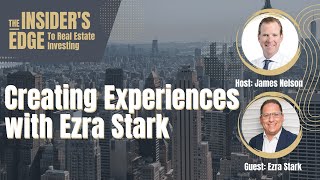
James Nelson interviews Ezra Stark about building Stark Enterprises and investing in multifamily and build-to-rent properties. They discuss family business dynamics, investment strategy, and operational insights for real estate investors.
Welcome. This is the Insider's Edge to Real Estate Investing with James Nelson, the principal and head of Avis and Young's Tri State Investment Sales Group. In this program you'll learn game changing strategies to outperform the market. James will teach you how to source, execute and capitalize on the best real estate opportunities in New York and around the world. Now here's your host.
This podcast is for educational purposes only and should not be relied upon for investment decisions. The opinions expressed are those of the guests and not their companies. Listeners should not act upon the information without first seeking appropriate advice from an accountant, lawyer or other professional.
Welcome to show number 183 of the insider's Edge to Real Estate Investing. This is your host, James Nelson. Thank you as always for joining and.
For many of you who might have.
Already seen this interview. We now are working out of a incredible studio here at my office at 530 Fifth Avenue and we have been live streaming thanks to Streamyard on all my social media channels including LinkedIn, Instagram, Twitter as well as YouTube. You can always find me at James Nelson NYC and you can see videos posted these interviews. That being said, I know a lot of you have been loyal podcast listeners for quite some time. That's generally how I digest my content and it's a great way when you're on the go to listen. So with today's episode we have another incredible story. We have Ezra Stark with us. I met Ezra a couple of years back through BizNow's conference down in Miami. He has an incredible story. He's going to be talking about building spaces with amenities to exceed expectations. Ezra is CEO of Stark Enterprises, a full service real estate development company. Stark Enterprises has a footprint of 9 million square square feet of Class 8 properties in more than seven states with a value of over $2 billion.
Wow.
The properties portfolio contains more than 50 properties retail, office, apartment, hotel and student housing segments. And what I really enjoyed from this episode was Ezra's approach how he's been able to break into new markets as well as the fact that he's covering a lot of different asset classes. So I know you all are going to get a tremendous out of this and in addition you're going to hear about strategies to operate and sustain a family business. Ezra was willing to get really and talk about how he started with his company that his father had started. And he discusses ways to draw boundaries, gain experience and operate with an eye for the future. So as always you can go to james nelson.com that's where you can find the show notes for this episode and a whole lot more. I built this site to you to help you gain the insider's edge to real estate investing. We're gonna have a brief word from our sponsor and we'll get right into that interview with Ezra Stark.
A different approach to putting our clients first. Avis and Young's Tri State Investment Sales Group sells multi family office, retail development and specialty sales throughout the New York metro area. As experienced thought leaders in their industry, our 35 member group is available to help you make informed investment decisions by advising you on your current holdings or identifying new opportunities in the marketplace. Our one unified team is built on an industry unique platform which promotes unparalleled collaboration and and teamwork. We share core values of hard work, integrity and expertise. We put our clients first providing tailor made strategies to achieve superior results. Please Visit us at aytristateinvestmentsales.com and follow us on Twitter, LinkedIn and Instagram amesnelsonnyc to learn more.
Welcome everyone and now it's time for our investor spotlight. And today, thrilled to have with us Ezra Stark, who is CEO of Stark Enterprises. Ezra and I had a chance to meet a couple of times down in Miami at the BizNow conference, which I highly recommend and I really appreciated Ezra's insight and his story. So I know you all are going to benefit tremendously from it. So Ezra, great to see you again.
Great to see you as well, Jim.
Wonderful. So Ezra, maybe for our audience and to give give the overview and they heard in the the intro. I mean, quite an impressive portfolio that you all have amassed. Over 9 million square feet of Class A properties spanning across seven states, a current value of over $2 billion. I would imagine that doesn't happen overnight. So maybe talk a little bit about the business, give us a little bit of history and then I want to work our way backwards and then get into what you're doing today as well.
Yeah, no, it definitely. My father always says it took him 40 years to be an overnight success. So you know, there's always a lot of things that go into creat whatever successful platform you're trying to, you know, set out to create. So our, our company, the company that I'm privileged to be the CEO, was founded in 1978 by my father, a native Clevelander. And you know, his true passion really was not necessarily initially just on the real estate side. He kind of fell into it. He was wait listed in medical school and my grandmother said, you know what, you should try this real estate thing out and so he kind of got enamored with the artistic creative component. He always has a thrill when he would walk properties and, and kind of see how people would interact with them and how, you know, whether it was a retail property or multifamily property, how these things would impact people, whether it's daily or they would come once or twice a week. And he just, that was really where he got his pleasure and sense of purpose when he was doing it. He was, he called himself the self proclaimed poet developer because again, he was viewing it from contextually. How was it being ingrained into the broader community and how was it impacting people's lives? So he was really more focused on the end users, I think more than usual than, than necessarily other commercial developers at the time. So it was founded in 1978, really focused mostly on retail. But my, again, I think my father, wanting to be pretty present at home, kind of created a self restricted radius restriction at the time so that he could be at all our mine and my three siblings sporting events and things like that. So, you know, being kind of in northeast Ohio with a little bit of western Pennsylvania, you had to be creative riding those kind of, you know, the real estate cycles. So you know, when interest rates were, you know, in the high double digits, which, when I tell a story a few years ago, so what interest rates were that high ever? And now it sounds a little bit more relatable, ironically. But when they were in the high teens, you know, he would go from like government, you know, Section 8 housing, you know, to then, you know, building a, you know, luxury shopping with Tiffany's and Lululemon and, and high end retailers. So it was really what was interesting was because of this radio restriction kind of where he was in the territory, we kind of as a byproduct and, and the necessity of creating, you know, diversity within the portfolio. We then became kind of experts in multiple asset classes which then really kind of propelled us to be really one of the innovators in mixed use development where you would integrate both, you know, residential office, multifamily, all in various, you know, projects. You know, the piece of resistance that my father had developed was Crocker park in Westlake, Ohio, which was over $1 billion asset in itself. Yeah, it's just great. I was able to then kind of come, you know, grow up, you know, at the dinner table with. It was exposed at an early age from like 16. I was privileged to be able to go to some of the real estate conventions, most notably like the icsc which was A retail focused one and was just able to shadow and kind of experience, you know, high level executives at these retailers, kind of, you know, just the demystification of people of that stature. You know, where we always put these top executives on pedestals. And again, they're all very smart, hardworking people. But to just to kind of normalize it, you know, they put their shoes on the same way we do and kind of develop that comfort level to understand how do you interact with people at that level in organizations and kind of how do you approach them and understand their kind of way of their line of thinking was a tremendous asset for me growing up. And then I think over 15 years ago now, I joined the firm and really focus on diversifying more of the asset classes more obviously geographically and also kind of going away from just our families being the sole investor with maybe one or two other friends and family to really creating a whole equity in terms of outside investors, whether that was a family office or institutional investors, really creating a whole capital markets division within the company as well. So it's been a really fun ride and now we're here today.
Yeah, I love the story and how you all built this. And you know, we've had a lot of guests on the show who started their business in New York, got a lot of capital here. You know, you're certainly in, you're living in one of the real estate, you know, top markets in the world. I mean, to build this out of Cleveland I think says a lot. And I know, I'm sure there's someone listening to this right now who's, you know, not to call Cleveland, I guess. Would you maybe not a top 25 MSA, maybe close, but.
Oh, it's definitely. No, it's definitely not. It's definitely not. Unfortunately, Cleveland's heyday was in the turn of the century. Well, last century, 1900s with Rockefeller and all and Carnegie, all these guys were, you know, in these, in these areas doing their steel railroads. But yeah, I think, I think that's the point. I think two things. I think it's a trial by fire. So when you're, when you're dealing in a more challenged demographic area where you add more people leaving the state versus coming into, if you could be successful, then you could be successful anywhere. And I think that that was the thesis that really makes you be so detail oriented and focused. You have no real margin for error. A lot to your point, you know, if you're in New York or Los Angeles and you made potentially a mistake on a valuation, the market could time was always the benefit that would benefit you because you, the market would catch up to you here. The valuations are way slower in terms of that. You may get decent cash flow, but again, make up for mistakes. There's a lot less room for error. So you really have to be on your A game. And again, that's why, you know, for sure, unfortunately, as a native oak Clevelander, and again, I have a ton of home pride and big Cleveland sports fan, had a good football year this year. But still, you know, that's why, again, we're focused now on our big verticals for growth. You know, touch space, touch upon it later. But like, in terms of, like our build for rent and our multifamily, you know, we're focused on the Sunbelt regions, the Rocky Mountain regions in New England because that is where the population is and there's, you know, there's a huge demographic shift.
Yeah, no, that's super helpful. And again, I think for it's, it's a great lesson for everyone listening, you know, regardless of where you are, you know, again, finding your area of expertise, because it would seem to me that again, you started that geographic area, you really created, achieved a dominant market share, and then you began expanding. It doesn't sound like, I mean, how many years did it take before you started looking outside the state again? Now you.
Yeah, I think at least 20 years prior. And again, I think it's also important to your point, real estate is such a localized business to, to be able to scale because again, only a local in theory would understand, you know, to use your New York analogy, one block over can be a double the rent of the previous block. Right. And so when you're looking at just pure analytics or data and you're looking at maps, there are nuance. There is the concept of being on the right side of the wrong side of the train tracks of the community or understanding, you know, various little nuances that can really impact the demand of whatever you're trying to create or develop there, let alone the political atmosphere, again, is all super localized. So being able to create the dominance in a home base where you have an account where you can develop the economies of scale and an expertise, I think does allow you then to scale and expand that platform beyond your initial.
Area of expertise, that's very helpful. And for those thinking about how to expand their business if they're in one market and thinking about how to go about that, and definitely we'll get more into your current investment strategy. But going back and looking your history and Your decision to join the family business, and I'm sure there's someone listening to the show as well who their family's in the business they're thinking about. Okay, do I go out on my own? Do I help scale grow the family business? What went into that decision for you?
A lot. I mean, it's a super complex thing. And I think, you know, I think a lot of business schools now are really developing curriculum for family businesses because there's, there's lots of pros and cons, as you can imagine. You know, initially I didn't, I don't even think I was going to go into business per se. I was, I wanted to be, you know, a psychologist. And then for various reasons, I ended up deciding I did enjoy business. And, you know, prior to coming to the family business, I made a point and my father made a point, and all of us agree to working other places first. Not just to, to acquire best practices from an outside perspective, but also to, you know, you want to create some credibility and political capital of your own prior to entering into a firm where your last name is on the door. Right? Because you're, right away you're going to be working up against, you know, you're going out and uphill battle. Right? Because right away, especially when you're young, in your 20s, and you're interacting with people in their 30s or 40s, and they're saying, ah, there's the boss's son, it could be a very challenging environment where lots of assumptions are going to come at you right away, whether that's the entitlement thing, the silver spoon thing, lots of things that you, you encounter that you're, you know, you're going to be in the fishbowl. And so that's the first thing that you have to consider when you want to go into the family business is that you are going to have to work harder than other people if you want to have that credibility, if you want to be a leader, if you want to mail it in and get a cushy position and, you know, just skate by, you'll be fine. But if you, if you desire to be in a leading position in your family business, you're going to have to work harder to gain everybody's respect. And that's just the reality. At the same time, obviously, you're going to have access to the meetings and other things. The door is going to be open for you, but then it's going to be your responsibility to walk through that door. So that's the one thing, and that's the one factor you would want to consider if you're looking to enter into your family business is in terms of working with employees and colleagues, you know. And then the other thing which is probably almost even trickier is if you're depending on who is else is in the company at the same time. So whether it's a parent in law or whether it's a sibling, there's all these various different relationship dynamics that are very difficult. And when you're in a family business, if you're in a 9 to 5 job, it's easy to flip the switch when you're on your way home from your commute from work and kind of be able to mentally isolate that and kind of then be present at home. When you're in a bit of a more of a family business and you have a responsibility of hundreds of people rely on you for employees or you have significant dollars investments, it kind of can spill into the dining room, into family life. And if you don't develop really strong boundaries prior, whether it's a parent or if it's an in law or siblings, it's very dangerous. You could have burnout and because you can have conflict at the boardroom and then all of a sudden it spills over to the dining rooms, then all of a sudden now family events, holidays, gatherings can become way less enjoyable and have more different stress or other dynamics but which are normal to have in the boardroom. But you want to have that delineation between that and your personal life. And so prior to looking at doing that, communication is everything you want to discuss governance, decision making and boundaries. And those things are really, really. And again when I started out I didn't really understand that. Now I have understood it a lot just through trial and error on my own front, you know, on my own right. And with being, you know, blessed to have that opportunity to work with my father. And now I have a sibling that recently joined the business. So those are the things that I wish I had known more prior to joining the firm initially, but definitely where I would plan if any of my children or my niece or nephews would so desire to potentially join in that in the, in a family business. These are the things that would be clearly laid out prior to them joining the firm. And that's what I would recommend to anybody. I do have people that come to me asking for advice and not even necessarily real estate related, but have family businesses and are struggling with whether or not they should enter into it. And these are kind of the things that the one on ones I will give to anybody.
Thank you Ezra, and really appreciate your sharing that and really going into depth. And you're right, I mean it is a very complex matter. There's a lot of different considerations to it and making sure you're making the right choice. And you're right. When, when you and I've seen this, when the next generation comes into the family business, you know, the immediate presumption is oh well, this was handed to them, right. And so this, well, I have to prove myself, I have to work that much harder. And there are people that I've seen in that second, third generation where some of them, you kind of get the sense, well, yeah, they want, of course, see things do well, but there's still that safety net and there's not really, you know, it's a comfortable situation for them. Whereas others like yourself have taken a family business and taken it to a whole nother level or added more another dimension to it. And so it's really helpful for you to share your thoughts and also about that separation of what happens at the office and in the home front. So really appreciate your, your going into depth on that. So maybe talk about your role within the company. So when you started and yes, you said you had to work harder than everybody else. So what did that mean? I mean, did you literally come in at the ground floor? Were you working as an analyst? Did you start working deals? How did maybe talk about your trajectory within the company?
Where I started was I started doing specialty leasing, which is great because you really kind of had a soup to nuts of deal making contract revenue. You kind of had to underwrite the deals. So it was kind of like a microcosm of everything on the asset management side of real estate. So I would literally, I had to go to local restaurants, went to other malls and I would go find, you know, the person selling the Beanie Babies or the hot dog, the cool trendy hot dog vendor. And then you know, as a, you know, 20 year old kids try to convince them, hey, you know what, come to our mall, let's do either an indoor outdoor kiosk and really handhold them, help them with their business plan and negotiate all those terms. So that, that might, that was my first gig really doing specialty leasing.
Can I ask you, because I'm interested to hear that even that direct one on one relationship that you're having, it was just a kiosk. But I've got to imagine that as you grew throughout the business and start working on, you know, larger leasing deals, I have to Imagine that experience was still great frontline experience. I mean I, that in many ways might have been more helpful to you than just sitting behind a computer and running numbers.
Beyond it was is. It was invaluable because even when you're. And again you do develop personal relationships with people that work for these, you know, for the TJ Maxx is or the Walmarts of the world. But again, there is a little bit of different dynamic and those positions always are rotating and shifting. And there's a corporate thing, the ability to meet a small business owner which speaking of no division between business and personal. Business is personal. This is, this is not the Godfather. This is only business, not personal. This is personal. This is their life, this is their passion, this is their livelihood. It forced me to develop, really accelerated the development of my emotional intelligence of putting myself in their position, understanding what are their concerns, what are they trying to achieve and then how can I help achieve it? Normally when you're, when you're an aggressive kid, when I'm, you know, learning the, on the finance side, you're like, well, here's the paper and I'm going to go negotiate it. And I can justify it through the numbers and really just give my narrative. Now sometimes you can do it. If you have the right leverage or pushing or whatever, you can do it. But again, that's a one off, that's not necessarily sustainable thing, right? And as you know, real estate is just such a, and life in general is such a relationship. Everything is about relationships and the connections you have with people. That's how deals are made. And so if you, and so this experience really helped me learn in a business setting how to develop genuine relationships that also had a transactional component to. In school, when you learn about transactions and business, you, you, you're you, you're not taught how important the relationship aspect is. And if you create a relationship that's purely transactional, there's no weight behind it. And again, you're not, you know, everybody's great when things are good, you know who your real friends are. When you have a bump along the road, you know, I always say the analogy, two people are drowning, they have two options. One guy could push the other guy down to keep him afloat, or you lock arms and you tread water together, right? And that's who you can see who are. And you want to be, you want to be in partnership and business with the person who's going to lock their arm, tread that water. And so to your point, it was that frontline experience was really invaluable and really taught me a lot of not just business lessons, but life lessons as well. I guess.
That's great to hear. So after that, did you graduate and start doing larger leasing transactions and then tell us once you started getting involved in making actual investment decisions?
Yeah, so then from the specialty leasing moved up to some smaller leasing aspects. And then really then when I start, the real transition to more on the financial side was starting to run our asset management component. So really all operating properties that weren't under construction or development were really under my purview where I would work with the facilities and the operations people, both in terms of valuing both expenses as well as revenues, creating central purchasing systematizing things and trying to create as much efficiency as possible, really incorporating as much technology as possible as well to streamline all those things. So that really kind of gave me more of the macro understanding of how properties worked, you know, how do you drive revenues and things like that? Which also then allowed me to really understand how to make better assumptions in the financial forecasting and modeling as well. And then after that position, then I was then the chief operating officer, where I started then having the seat at the table on the, I think I actually probably even at the later years of the asset management side, started getting a seat at the table on the investment.
And I would imagine your experience keeps building on itself. So having those tenant relationships and understanding how leasing works and concessions, and then on the asset management side of what it actually costs to run these buildings, I've got to think that now you're looking at deals through the acquisitions lens and you're thinking about, okay, if you have a value add business plan, you better understand the realities of what it's going to take to execute that plan.
That's right. Right. And like on the multifamily side, okay, we're going to add pickleball courts. What's that roi? What's that operational cost? How do we make those kind of comparisons? And so, yes, it is tremendously helpful to also have that perspective when making an investment decision.
Maybe talk a little bit today about where your investment focus is. And going from commercial real estate portfolio to getting into the multifamily space, build to rent, talk about what was the decision making process like to do that? New markets, new asset class, new business plan. How did you go about deciding to pursue that? Was it a diversification strategy? Did you have a thesis as far as where the market was going? How did you come to grips with that business plan? And then how did you Begin to build your platform to be able to execute on it?
No, it's a great question. I think the initial driving factor and everything was just the desire to diversify. Right. I think one of the things was you're talking 10 years ago or something like that where in the 90s landlords had leverage. You had four or five of every big box imaginable, right. Best Buy had four competitors, the pet stores have four competitors. And so retail was a wonderful, wonderful business. With the rise of Internet and Amazon and things like that, there was a massive consolidation. So now if you're lucky, you have two options in a specific in the junior acre, big, you know, big box space. And you know, it really transformed the leverage from the landlord to transfer the leverage from the landlord to the tenants. And so you know what the trends that I was seeing on the retail side was just the noxious use clauses and leases, whether it's co tenancy, just a lot of gotcha clauses that would get retailers to percentage rent. The continued desire for retailers to get more and more money from the landlord to in essence be their banker to fund the tenant allowance so that the intensity of capital that were acquired in the asset class, you saw that there was a downward trend where you know that retail was on a downward trend. Now we've seen now ironically over the last 10 years because of that downward trend, we've seen no new supply really be built. So as a result, and what you've seen is, is you probably seen 20%, you probably are going to see a lot still more repurposed. But we're seeing a lot of the failed retail being repurposed into distribution, industrial or other various types of projects. So now the supply and demand for outdoor retail has, has been a lot more balanced. So you're starting to see now retail actually having a really big resurgence in this last few years in terms of just being a really reliable cash flow property. But again it's still, you're not seeing a lot of new construction because the cost of construction still isn't justifying what the rents you would need and that they won't do it. And so it's interesting that cycle we see now in retail, you'll probably see an office in 10, 15 years from now. So we're office right now is having an existential crisis, remote working and hoteling and the fact that now people are maybe calling the office two, three times a day a week and they just need less space. And so what you're going to see what happened with retail was people did get Hurt the initial, those owners and then there was a reset. People bought it at the right basis. And when you buy it at the right basis, things start making sense. So I think what we'll see with office is office isn't going to disappear. You're going to see a massive consolidation. You're going to see just like in retail, you're going to see them repurpose hotel, you know, whether it's multifamily or hospitality into these office buildings. And with the smaller supply of office, there still will be the demand, you know, needed for class A office with amenities. You know, one of my mentors who's a major Wall street, owns a major Wall street financial firm. He knows he needs to be in this block in Manhattan because that's the brand of his company and there is no vacant vacancy in that building. And if he wanted to renew, he was actually going to renew his office lease at a little bit of an increase, which again is, is an outlier to, you know, tertiary markets, especially like Cleveland, Ohio. But we know that once that supply gets repurposed there will be some fundamentals that will make sense for office. But long story short, we stayed away from office because it's way too early in the cycle for that and thankfully we weren't that exposed to it. You're only exposed to it in mixed use projects. On retail, we are looking to buy existing shopping centers because the cap rates have become, it's one of the only asset classes right now with the higher interest rates that you can actually get a positive arbitrage. Right. So if you're, if real, if shopping centers are trading at 9 plus caps, so you know, if the interest is at 7, you're, you're still getting positive arbitrage where that was the tricky part with multifamily or industrial, if you were buying existing, you're buying still at a cap rate that's lower than the interest rates. You're getting a negative leverage. So you're really relying on rent growth in a recessionary weird, I don't know what you would call this market, right. So, so we're looking at this from a macro level which is okay, if we could buy some retail, we're going to look at it multifamily and industrial is a little bit challenging if you're going to buy existing because the leverage isn't going to pencil out. Do you really want to take that risk and make, you know, very little in the first few years and, and you know, with the being in a prayer or what can we do now that we think have strong fundamentals that we can create positive value and arbitrage now. And so that was kind of where we thought and where we what could we create that was economically agnostic? So whether it was in a bull market or a bear market, and having had a lot of experience doing urban infill projects, which was very highly government regulated in terms of zoning and variances, things like that, where, how can we avoid a project that would take, let's say five years, you know, when you're looking at opportunity costs. So what we, we just, so we said was let's look at the multifamily space. We looked at. It wasn't even the multifamily space. We first said, what's an issue that's facing America right now? And one of the things that are is facing America is that we still have a housing shortage. Okay, For a couple reasons. One of the reasons is since the Industrial revolution, we have not seen a shift in demographics in this country like we've seen now post Covid, where you know, Industrial Revolution, everybody left the Rust belt states and went to the coast. Now due to highly government regulated stuff in the coast, the very high cost of living and high tax environment, people are leaving California, New York and they're going to Southeast and they're going to the, you know, the Colorado's Utahs, the Texas of the world. So again, so we were focused on, let's look at that geographical kind of area where that growth is and let's try to figure out how do we solve for this housing shortage and this housing issue. Now the biggest demographic that is being challenged in America is really the middle class. What we've seen is unprecedented. Again, during COVID home prices were going out of control. And so affordability in terms of homeownership prior to the interest rates, if you were even for. Even when mortgage rates were low, people were getting priced out of homes. You know, homes that cost a few hundred thousand dollars were now hitting a million dollars, especially in these regions that were because just the huge influx of people that just the supply wasn't meeting the demand. And now all the more so with interest rates, most people's when they bought those houses at the market, most of the people's houses are underwater in terms of their equity if they were having to sell and somebody would have to get a mortgage at the current rates. So we said, okay, how can we now find an alternative to give somebody, you know, that 20 to 80% income earner in America? How can we give somebody an incredible value proposition and enhance their quality of life. And so we started exploring the build for rent space. And there's, you know, I remember when we were just developing lifestyle centers, the retail space and that had like a thousand different definitions of what that meant. And so even in the build for rent has a thousand different definitions, whether that's single actual single family homes, whether that's attached apartments with no garages, but just like a horizontal. So, you know, the term's been bastardized a little bit. The way we kind of approach it is we create attached homes. But you're going to have your two car attached garage within your home. You're going to have a laundry room in your home, you're going to have your backyard, your front yard, but you'll be either in a duplex, up to a six plus in terms of the buildings that we develop. And what you're going to have is super aspirational amenities. You're going to have golf simulator, you're going to have lounge chairs in the shallow, you know, part of the pool, you're going to have pickleball courts. You're going to feel like you live in a gated community with resort style amenities and the value, but you're not going to pay the price that you think you would pay for that. You're going to pay $2,000 a month, okay, for a 1200 square foot, two bedroom, two bath house and a two car garage. And again, and the reason why we're pricing where we're at is because we know all day long if we're compared to a traditional garden style apartment community, we'll win. Because nobody, if you don't have to have somebody live above you and hear the stopping of the feet or deal with that kind of density, they're going to prefer our product. Where we're competing though, and where we're winning is actually for either first time home buyers or empty nesters. Because now we're saying, look, if you were to buy a $250,000 home between taxes, mortgage, insurance, you're paying in the mid-2000s, all day, every day. So if we can tell you you're going to have not just a wonderful home that you can live in, but all these amenities that would not be in your budget and not have to mow the lawn or fix the roof if it leaks, and you're going to be paying 4 to $500 less a month and you went on your mortgage, what do you got to lose? And you go, then take that four to $500 a month. That you're saving, go invest it in the market and you're going to build your wealth a lot more. The misnomer, you know, I always said we're, we're reinventing the American dream or, or we're redefining it. Right. The American dream was homeownership. Homeownership, homeownership. And I've talked to politicians about this because again, everyone wants to shrink the, you know, the inequality gap, you know, of wealth in America. And they're like, well, the largest investment of people are their homes. And yes, in certain neighborhoods that's great. But in more rural or, or lower income homes or when you're talking about the working class, you know, the blue collar working class, if they're, they're traditionally those neighborhoods do not appreciate like that. And if they do appreciate, that's because they're gentrifying and then they're going to get priced out of the neighborhood. So it, it's a double edged sword if that's what we're trying to ride to, to, to bridge and, and increase people's wealth. So if we could create an incredible lifestyle where there's that tremendous savings that they can then use those dollars to go build their wealth in alternative investments which, you know, historically would outperform that. It seems like it's a no brainer. So that was kind of where we got, how we got into the space where our thesis was. You know, I think the sky's the limit for us on that.
Yeah, Ezra, thank you so much for walking us through really your thought process there. And hopefully what everyone took away from this is there's a real thought process that goes into that business plan where you, you have a very clear thesis on kind of where things are headed. Right. So that, that's very important that you have that macro belief and conviction and what you're investing in. So you know, we could, we can, you know, talk about the Wayne Gretzky quote, skate to where the puck is going. I mean, you are looking at where you see things going. And you know, clearly the fact that, you know, now it's easy for everybody to say, oh well, it's good to, to not be all your allocation in office. Right, but, but you were thinking about what's amazing to me and what you all have been able to accomplish is sure the Brookfields of the world are able to own, well in their case globally, but all asset classes. So the fact that you have mixed use, retail, residential, office. We didn't even talk about your student housing, your hotels, your Parking facilities. So this is really amazing to me that not only have you been able to expand geographically. Right. But you've also been able to do this with different asset classes. So the nuts and bolts of asset managing fully appreciated that each asset class is its own operating proposition. But as far as if you said, okay, well how different is it to own and operate? Built to rent as opposed to your retail portfolio? Is your, the office that you have set up your infrastructure when you've said, all right, guess what, accounting, we're now in the multifamily business, so let's start. You know, you know, there's reports that you're running for retail. Okay. You're going to do them for residential.
Yeah.
Was the learning curve for your team and infrastructure like really steep or was it just saying, okay, well we already know how to do this asset class and we're just going to make a couple tweaks and figure it out? Because I doubt you're going to say you had to reinvent the wheel for every single one because that also has to be a consideration when you're making a leap, whether it's to a new geography where you have to think about the new tax considerations and learn the local zoning regulations, but also the different ways that you lease. A leasing office space is very different. The leasing retail or residential.
That's right. It's a great, great question. You know, if I was starting a firm from scratch, would I, would we have as many varieties of asset classes? Maybe not as many, but again, the way we were founded. Right. It was, it was responding to cycles, it was anticipating where the puck was and being able to pivot. I think we kind of adopted that ethos on a go forward basis. But they're very different businesses. And to your point, we do not, we're completely vertically integrated. And I mean we, from construction to leasing and everything like that. We even have our own architects, graphic designer, social media, everything. The one thing I don't, we don't operate is our student housing. It's a. Or and again, even on our hotels. So the only third party operating management companies we utilize would be in the student housing class or hotel because those are more operating businesses versus operating a real estate asset class. So right there, knowing when it deviates too far from your core competency and being able to outsource some of that. The accounting is comparable and fine, but in terms of the actually operating the facilities, student housing and hospitality actually are very similar, but they're very different. The multifamily or retailer office and then in terms of accounting and things like that, there is a division on our accounting group. A multifamily is definitely very different than it is on the retail and commercial. So basically you do have basically these two divisions within the company that kind of oversee office and retail. And then you have another overseas like the multifamily and the built for rent. So there are overlapping things on the accounting side and facilities, but definitely on leasing and operations. Just overall they are apples and oranges.
So Ezra, with only a couple minutes left, final question. So the name of this show and the name of my book, the Insider's Edge to Real Estate Investing. Be curious what that means to you and what would you say is your insider's edge?
You know, I think people see something and they just want to copy it or see a piece of property and say, oh, this should be, you know, a Starbucks or something like that. I think you, I think there's two different ways of approaching it. If you're looking at it like what I just said, you see a piece of land and oh, I'll develop a Starbucks or something like that. That's great, you'll make money and it be a nice business. If you're trying to do create a platform or something, you have to really focus on what's scalable, what can you do programmatic and become an expert. So the one of the things is again, and the irony is that we're so diversified, but again in terms of being focused on specific things and creating your expertise in one or two asset classes, I think like for example, we're on our development side, we're only doing right now ground up, you know, multifamily and build front and things like that. But developing a core competency I think is super important. And I think also just the way we kind of approach how we fell into build for rent, what are the problems? What do you try to achieve? And you can kind of then back into a strategy, right? If you're saying I want low government regulation, I want something economic agnostic or things like that in terms of what you are looking for in terms of how you want to approach your work, life, balance and business. Once you start kind of describing what your, your parameters are, then I think it can help really sharpen and refine how you can solve for that in the real estate market.
That's great. Now really appreciate that response and that perspective. And so the last question would be for someone listening right now, they're, they're new to the business or let's say they're already in commercial real estate, maybe they're a broker, maybe they're an architect and they want to get into their first investment. What would you say to that person? Especially, let's say, and I believe that one of the number one things that holds people back from investing when they're starting off is fear and lack of capital. So what would you say to that person who wants to go out and do their, their first investment?
Well, to use another famous sports quote, right, Michael Jordan, you miss about 100% of the shots you don't take, right? So fear is your enemy. So that's the first thing you always, the best bet you can always make is on yourself. And you always have to believe that the risk is, the risk is worth the reward. You, if you're a broker or in an ancillary aspect of real estate, you can be very rich, but you're not going to be. Well, right when you're rich, you're making a high salary and you're making great wages and you're going to have a great life. Building wealth is making money when you're not working, right? And that's when you're sleeping at night, somebody's paying rent. And so to, to be able to, it is a tremendous blessing and opportunity. If you have the ability to transition from just being rich to wealthy, which is from transitioning from just creating a salary which is based on your hours, right, Your cap, no matter what you're earning per hour, you always cap. There's only 24 hours in the day. But if you can build that passive income, the sky's the limits. So one of the ways you can do that, if you don't have the capital or you're nervous, there's two ways to do it. If you're a broker, and I've seen a lot of very successful brokers do it, you know what, if you can afford it, don't take all of your commission, roll some of your commission into these deals. So all of a sudden now you now transition not just from being a broker, but now you're becoming part of the landlord. And by the way, and there's huge tax benefits that you can use to shelter your commissions. So, so I see, I see, I see some of the top lawyers, country, top brokers in the country that touch the real estate space are actually very large real estate investors. And one of the ways to do it is if you don't have the capital but put your fees in, it could even then now acting like an accountant, you can even then put them not just Pure equity. You can put them as a profits interest and then you don't even have to pay taxes right away for those fees that you would have had to if you took it as salary. So that's one opportunity. Now, if you're not that professional and you're. If you're not a lawyer or an accountant and you're just a scrappy person and you want to get into the game, well, come up with a concept. What I was taught in Learn was if you have the strong enough concept, the money will be there. So if you find the right project, you say, hey, I just got this great piece of property and I could put a Starbucks here. Here's my business plan. You'll find the money and what you do then is you. Then again, instead of taking a salary or the fee, you roll that into your. It's called sweat equity. You put your time in in that way and you start building your net worth and your assets that way. Those are the ways I would do it structurally. And then the other way is get yourself a mentor. It is the most important thing you can do. Don't try to reinvent the wheel. There are so many smart people in this industry and there's so many generous people in this industry that will give their time and teach and are so generous with that as well, that I highly encourage whoever wants to get into that to also require a mentor or more than one mentor.
Ezra, that's incredible advice and I hope that everybody is taking notes and are going to put this into action. I love how specific you were with those suggestions. So really appreciate your joining us today, sharing your story and what's the best way for people to follow what you're doing? I know your website, starkenterprises.com I know you're also active on LinkedIn, but what would be a good way for people to follow and see what you're up to?
Yeah, I'm probably mostly active on LinkedIn. We're going to be breaking around on five more build for rent communities this year. So that'll be fun. And those will get announced. So I have some fun on LinkedIn also, you know, I do a little bit of, when I have the time, I do some blogging and I either post that on our website starkenterprise.com or on LinkedIn. And then again, if anybody has any questions, feel free to email me@eastarkstarkenterprises.com and I'd be happy to help or give advice.
Yeah, no, and I will certainly make an endorsement for that and I know what it takes to spend the time to put a white paper out there. And I see you're very active with your blog posts. And we'll have to compare our list because I know your last article was 5 Ways AI May Impact Real Estate Investing. I did a little twist on that. I wrote an article on how AI will transform the CRE landscape. I wrote the article and then I had ChatGPT write the article and I had people choose which one they thought that I wrote. Now, fortunately, 2/3 guess correctly of the one I wrote.
I guess maybe the better question would.
Have been to ask which one did you like better? If it was, I would say 50.
That's right, this typos, that's yours.
Jim yeah, if it was 5050 I'd say what's the point if people don't even know the difference? But now Ezra, this has been fantastic. Thank you again for sharing your story. Thank you for everyone who's joined, but if you haven't already, you'll definitely want to subscribe and share this episode with a friend who you think this could be helpful too. So until next week, this is your host, James Nelson. Thank you again for joining.
Thank you for listening to the Insider's Edge to Real Estate Investing. We appreciate your subscribing and sharing with your friends. If you haven't already, please connect with James at James Nelson NYC on LinkedIn, Instagram and Twitter. Please also visit jamesnelson.com where you can find the show notes and other episodes along with an exclusive video series and other helpful resources so you can gain the Insider's Edge to Real estate investing. Until next week.









