Multifamily Real Estate Agent Interview - Beau Beery
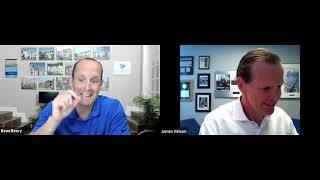
Beau Beery, a Florida multifamily broker, explains how investors build relationships with brokers to get first looks at off-market deals. Brokers control most transactions, so consistent outreach, regular CRM contact, and prioritizing IRR over principle amount matter. In-person meetings and a strong reputation create durable deal flow advantages.
And now it's time for our spotlight. And with us today, I am thrilled to have with us Beau Berry is a multifamily broker and advisor. Bo has been in the commercial real estate business in Florida since 1999. After going to University of Florida, he has gone on to get his prestigious CCIM designation. In 2011, he teamed up to buy an interest in Coldwell Banker Commercial where they were the number one sales sales team in multifamily in Florida, number two nationally in 2020. And the accolades go on and on. What I'm most excited to speak today is his new book, Multifamily Investors who Dominate. An inside look at how elite investors transact. And Bo, I gotta say, I was just blown away by this book. I read this in a single sitting. I have been recommending this to every investor I speak to. So I so thrilled to have you join us today. Thank you so much.
It means a lot coming from you as a fello multifamily broker as well. And I tried to write it so that other brokers wouldn't feel like if they hand this book to someone, that customer is no longer their customer, they're going to come to me. You know, that doesn't ever happen. It's as if 10 brokers got together and said everything they ever wanted to say to an investor about how to do things right and really grow a portfolio and make themselves so attractive that we as brokers can't live without them. Like that's what this book is. It's just you and I like pouring stuff into it basically.
You know, the way you just described the book is so insightful for people to understand why they need to read this. And I was actually looking for your stat here, but I believe your Florida market, it was something like 97% of the transactions are brokered, right?
Yeah, 93. 90.
I did a five year old as a broker, I like to round up. But yeah, so. So over 90% of the transactions are brokered. And you know, one thing that we absolutely agree on is the most important part of a transaction is where you bought it. It's the that you cannot change about an investment. And so being able to find that opportunity is so key to success of our listeners and investors out there. So you know, the fact that if 93% of your transactions are brokered, if you do not have good relationships with your brokers, you are really going to have challenges. So I'm really looking forward to getting into the book. But before we go there, I want to talk a little bit about your story because you know, fascinating to hear how you built up your company and now you're out on your own with your own platform. Maybe talk a little bit about maybe we don't have to go back all the way to the beginning, but maybe Florida and talk about what you were doing there. You got your master's of science in real estate. So pretty clearly thinking about it. Was real estate in the family. Was this something that you all had your eyes on?
My dad was a real estate broker. He brokered actually like low income HUD houses in the Volusia County, Florida for, I mean for years and years. But you know, real estate was never really on the brain. It wasn't until I actually was going to be a personal trainer coming out of college. I didn't get the job I wanted, wanted. And I was going into the gym one day and a buddy of mine who worked for Trummer Crow Residential was doing leasing and property management on a new construction asset in Gainesville and he said hey, we're looking for someone to help us in management and leasing. And I said sure. So I came over there and I just fell in love with the whole business. The fact that you know, 800 people are paying for a 400 plus unit asset. I never saw the owners. I'm like this is amazing. I started with a company called the AMJ Group after Trumbull Crow Residential and I brokered and managed a commercial portfolio, office, retail, industrial, multifamily. Did that for 10 years and then acquired the Coldwell Banker commercial. And that's when I just did multifamily and I've loved it. I owned that business for nine years, sold it back to my partners and then January of 21 started my own boutique firm. It's just me and my staff members and that's the way I like it. That's kind of how I was running it. Even with the Coldwell Banker commercial, my partners ran the business. I just did brokerage. I had my own little world. Anyway, I'm trying to build a little more of a brand around the BO knows multifamily and be able to help my customers in a really cool way moving forward. I got a lot of fun stuff planned.
Well, you no doubt having a tremendous amount of success because you know the whole thrust behind the book which to be helpful for your investors and I think that's such a big part of success is, you know, don't make it about yourself, make it about how can you be helpful to others because in our business if our clients succeed Then so do we. So you clearly get it and you embody it, and it's just been really exciting to see what you've been up to. So let's dive into the book. I got a ton of questions here, but first I've got to start by saying in the first couple pages, you talked about one of your favorite books, which is certainly at the top of my list as well, which is none other than Dale Carnegie's how to Win Friends and Influence People. So on my website, james nelson.com I have a list of recommended books and podcasts, and that is my number one book. Recommended Be between that and Think and Grow Rich. But it's right up there. So maybe talk about why that book has been so important to you and why did you choose to bring it up right off the bat?
You know, it. I mean, the book I wrote, the Multifamily Investors who Dominate, is really largely a regurgitation of how to Win Friends and Influence People. It wasn't, you know, created from that. But the fact of the matter is that, you know, everyone's heard of how to Win Friends and Influence People. Most business people have read it. Most don't apply it though, or they'll apply it for three or four months and they'll be like the perfect human being. And what happens is, you know, the first time you run into someone who really gets under your skin, you know, it all goes out the window and then it happens a second time and then you forgot all the principles. But in business and real estate investing, how to Win Friends, Influence People book is really, really important because this basis, this business is so based on relationships, especially among the higher level investors. It becomes less about money and more about ego and respect and relationships. You and I have seen as brokers, countless deals fall apart for no other reason than ego. Someone says something, does something, changes something in the contract, does a red line, does something during due diligence, does something right before closing, whatever it. What probably should have happened in 99% of those instances is the two parties should have gotten over it. Whether it was a $20,000 issue or $100,000 issue and closed, that was the right financial decision. But what happens too often is I don't have to sell this bow. I don't have to buy this bow.
And right.
And then, and then there's clashing and it goes to hell. Because how to Win Friends, Influence People wasn't in the mind at all, right? Once, once that ego gets tripped, it's like this fury comes into the person's mind, Especially for the guy who's worth $50 million, owns 8,000 units, he doesn't need to do any of this stuff. Right. He does it because it's kind of like his way of life and almost takes a joy sometimes in puffing up and saying, take a hike. I don't need to deal with it.
See ya.
Even though it could cost him millions of dollars in a sale profit or on the buy side, it could have been something where he could have earned a 22% IRR over the next 10 years, but he let it get under him. So you and I deal so much with the egos and the emotions that get involved in an and my book, at least a good portion of it, sort of addresses how to operate and transact in a gentlemanlike manner. Because everyone is watching what you're doing. That's what everyone forgets. It ain't just the seller watching how you make a decision. It's the broker who controls 93% of the deals. It's the property manager for the seller who talks to other property managers who own other assets. It's the attorneys involved who are connected to other investors who own other assets, who all talk and know each other. And we go to parties and we talk on the phone and we're calling up on comps and we're just having these conversations. And James and I are talking about a guy that we did a deal with that I did a deal with in Daytona beach that James did a deal with in his market. And we're like, oh. And then James is like, oh, Bo, did he do this during the transaction? I'm like, yeah, he did that. Can you believe that? Yep. And so that's how people develop a reputation. It only has to happen a few times. It's a very, very small world. And sooner or later, within a very short number of years, you've become that guy no one wants to transact with that. No broke brings you deals and you sitting around with plenty of capital you have to place, but you can't figure out why no one ever brings you deals.
I hope our listeners are taking notes because so many good things there. And I was smiling because as you're explaining, you know, the zoner with thousands of units I don't need to transact and the puffery and all this that goes. Yes, fortunately, I found that to be the exception, not the rule, but what we.
Sure, of course.
And I've got to even say, early in my career, I got really worked up and I was riding this deal roller coaster and you know, all the shouting and all this friction and there was other guys in my office who were yelling and it was just like, well, that's what you do, you just grind it out. And after a while I said, you know, this isn't very fun. You know, I'm like stressed out, I'm not happy, like I'm up, I'm down. And yes, this business, there's a lot of, you know, lefts, rights, diagonal. I mean these deals take on a life of their own and you gotta just keep an even keel and you gotta play the long game. And so I've really, I think over the course of my career I've learned that that's how I like to oper operate. And certainly the investors who I deal with, who I've found are really. You define them as elite investors. And it was like as soon as I read this, I went right away and I showed you because, you know, we're both very good friends with Blaine Strickland. He's been on the show, author of Thrive, author of Adapt. And one of his principles is the top 125. Who are the 125 people that you have to get to know to do business with? They're going to make introductions. Well, I took that list of 125 people. I said, okay, well who are the elite investors on this list? Who are the people who are really making an effort, we're a pleasure to do business with, want to transact and I've created a subset there. So, you know, it really helped me focus in over even the last couple of weeks. This is, you know, I'm 22, 23 years in the business and I love refining what I'm doing and learning. Why don't you define for our audience what an elite investor is? Because I love the numbers behind this. I'm a data driven guy and I love the fact that you came up with the 93% of the transactions being brokered and you said Florida, there's 1935 apartment complexes that are over 10 years units and this is how many that sells. And there's 252 a year. And the elite investors are going to be the ones who get the first look at these things. So I think you were really able to kind of quantify the opportunity here. So who are these elite investors and what are their characteristics?
For starters, they transact way more deals per year than all the other investors. Most investors who think they're doing pretty good are doing two, three deals a year.
Right.
And that is Good. Like, I mean, you and I, I mean, if we bought two or three complexes a year, that'd be pret nice. I mean, in five years we probably never have to work again. But there are groups who are doing 10 to 15 transactions a year consistently for 10, 20 years. And that's the big difference. You and I know some investors who have come on the scene in the past and killed it for two or three years. But they did it in the wrong manner. They were a bull in a china shop. They just pushed people around. They were hard negotiators. They renegotiated things or retraded things and then they die off. Now they'll sell those assets eventually for a profit. Any broker will sell the asset for you. But it's going to be difficult for them grow beyond that. The elite investors have been consistently for over 10 years. And the ones I've tracked for 20 years are always at the forefront. They're always the one getting all the deals before it even comes to market oftentimes. So the elite investors are the guys who. I'll give you an example. Beau gets a call from seller Sam, and seller Sam's like, hey Bo, we're thinking about listing our property. Want you to do a BOV on it. You know, our partners and I, we probably would come to market the next couple of weeks. Want to get your thoughts on this. So what most brokers do is immediately upon hanging up before I've even got the listing agreement. I haven't even done the BOV. I'm already thinking about those 1520 elite investors that I know right off the bat that I love. I do. 79% of my deals are done with that top 125 list. And then within the 125 list, I have the elite guys. Those are the 1520 that I, that I'm thinking of immediately, before I even have the listing. And I'll call a couple of them. Hey George, listen, seller Sam just gave me a call. He owns those apartments over in Daytona beach on Main Street.
Yeah, yeah, yeah, yeah.
Oakwood Apartments. Those, those, yeah, right. Listen, I'm getting ready to do a BOV on it. I can't give you any financials, that's all confidential information. But ahead of time you can go ahead and be driving by it. And so what happens is I hang up and George now has a two or three week head start to drive by the property. He's talking to his property manager about leasing rates. He's talking to his contractor about renovation costs. He's talking to his lender about what the terms are going to be. And that's why when I come to with that deal in three weeks, that's why there's 13 offers in eight days. Because 10 of those 13 guys got a head start. Most of the time they still have to compete, but they've got the advantage. They've solidified their numbers very, very well because they got a head start. Very rarely do sellers these days want brokers to just go to one buyer and try to do a deal. They want it fully marketed. So I tell these guys ahead of time, you're still going to have to compete this. The seller wants to go all out, but hey, here's what I'm looking at because I trust them not to call up employees. I trust them not to do dumb stuff, otherwise they wouldn't be elite. Other characteristic of elite investors is they're always trying for a win win, not because they're trying to be a nice guy, but because they're looking long term. They know that if they make decisions that are win win for the seller, that all those people I talked about are going to see the way he treats people and they're going to bring him deals. So the broker's going to see the way he reacted in that deal. The property managers are going to see it, the attorneys. All these guys are going to see how he operates in a gentleman or gentlewoman like manner during a transaction so that when they get listings in the future, they know who they want to take him to. And you know, there's retrading. There's how you talk about a property during the tour. There's what happens when something comes up in a red line on a contract, something that maybe happens to the piping during due diligence. There's all kinds of instances. And the tendency in this world is, hey, that's the seller's problem. He needs to take care of it. Even if it's just a 20,000 doll thing that came up on a $20 million deal. Most investors lose sight of the forest through the trees and they're like, hey, the seller needs to take care of that instead. In such a competitive world, why not go opposite? Bo, I don't care about a $20,000 pipe that burst. Let's close. So what happens when that happens is the seller says, damn. All right, all right. Hey, I like the way this guy thinks. This is awesome. By the way, as seller, I also own three other deals in Jacksonville. Bo, I wouldn't mind you talking to him about this one. Or Bo, the Buyer say, I don't care about the $20,000 pipe that burst. Bo, let's close. Bo is already working on two bovs that he got last week. Guess who I want to run that by? I want to run it by the guy who doesn't complain about a twenty thousand or even hundred thousand dollars issue in a $20 million deal. And what elite investors do is they make decisions on irr. They don't make decisions on principle. What I mean by that is making decisions on principal would be, Bo, it's not my problem. It's his property. This happened. It's not my fault. He needs to take care of it. That's printing principle. Irr decision making means both. A hundred thousand dollar issue came up. The survey was, changed the title, whatever, it was something that creates $100,000 issue. But when I plug that into my IRR, my IRR changed from 19.7 to 19.2. Yeah, I'm closing. That's an elite investor. They look at the long term, okay? Because they know that bringing up $100,000 stupid issue on $20 million is going to diminish their reputation. And it's going to give a broker and that seller and everybody a second thought about bringing them a deal next. It's just human nature.
Yeah, it makes a ton of sense. And I know that the first chapter that you wrote about was reputation, which, you know, if you're only going to read one chapter in this book, read this. That's like the price for admission. If you do not have a good reputation in this business, you're done. Unless if your game plan is to try to transact with people who don't know about you. But look, even in a giant city like New York City, it's a small world. When investors retrade, they don't do the right thing. They try to take advantage. People talk about that, right? And it's not just a broker. Like you said, there's a lot of people involved in the transaction.
So problem, James, is that most people who think they have a good reputation or do things right oftentimes are the ones that are most guilty for these little things. And so the elite investors, they're trying to figure out how can I operate in this transaction that is so shockingly good by still staying within my irr, that will earn me more deals. Not how can I squeeze every, every bit of profit, every bit of blood from this deal? How can I just bulldog all the way through and show my investors how big and tough I am, that I can earn that IRR instead thinking long term about how you can get through this transaction and make it so that we're falling in love with you, we're calling you before it comes to market. So that sellers are calling the brokers and be like, hey, Bo, remember that deal we did three years ago with so and so I tell you what, my partners and I thinking about doing this other transaction. I don't know that we want to go to full market or not. I don't want to upset my tenants and my staff. Why don't you take it back to George, see what he thinks.
That stuff happens, no question. I've experienced that many times. And so we were really talking about playing the long game here. Now talk about the Jordan effect because you liken this to Michael Jordan. I thought that was so cool. And after the last dance and you talked about how he played above the.
Rules, there's a guy named Andy Andrews who's a best selling author. He coaches other businesses, large corporations, and he talks about this Jordan effect, which has actually been covered by news media back in the day when Michael Jordan was playing. But the Jordan effect is a lot of people felt like Michael Jordan would get calls his way that other people didn't. And many people thought it was unfair. What most people thought was because he played so good, he got better calls than others. That was probably. That was maybe some of it. But the bigger part of it was the way he played off the court. So he made friends with referees. He would talk to referees about their kids and he would ask them about their wives and what they did over the weekends. And there was a relationship there. It wasn't just about the gang. He created this relationship where during a call, if it was in a gray zone that could have gone either way, he got the benefit. Instead of the NBA player who cusses out, the referee who throws a chair, who says you're an idiot or you're blind. Jordan got the calls. And the elite investors are the same way. The elite investors are treating the relationship building with brokers who control the inventory like the Jordan effect. And they're not doing it to be disingenuous. Most elite investors genuinely enjoy developing relationships. Relationships with human beings, period. Not buying brokers things or taking the lunch. It's not about that. It's about having a real relationship, a friendship, a respect for each other's business acumen as well. And you can imagine these elite investors over a long period of time through a systematic routine approach, through a CRM, contacting every broker who does multifamily transactions in every market they operate in every 30 to 60 days, calling them, having conversations about business, also talking about family and hobbies and just kind of catching up like friends would do. Can you imagine doing that with 60 or 70 multifamily brokers in the market you cover over a 10 and 20 year period, who do you think is getting the first calls on a new listing? It's those guys, no question.
And I want to get to that because you have such great concreted base on how investors can become elite and be top of mind. But before we get to that point, because I got to tell you, a lot of the listeners to this show are aspiring real estate investors starting out. In fact, we even get a lot of college students who write in and say, look, you know, I'm here at school, I'm, I'm interested, jumping in. And you know, I don't, maybe I don't have a real estate program here. So for those listening who are starting out, I don't want them to get discouraged by this. So here's the question, Bo, for someone who does not have a track record or the reputation, what do they do? Because your stories here are about investors who have, you know, you've had very, you know, several successful transactions with and reap business. So if I'm new to the game, I'm thinking, hey, I got no shot here. How do I break in? It's chicken and the egg. I can't show someone I'm credible until someone gives me that chance. What would you say to them?
I'm going to give it to you straight. I mean, there's, there's good news and bad news. I think it's good news and good news. But you may take it as good news and bad news. The bad news is a beginning new investor who owns no units, doesn't have a whole lot of money, doesn't have a lot of experience. You can't compete these days. Now the good news is you got to hook up with a mentor and there's, there's lots of them out there, people who do have the experience, who do have the money, who have the stature with brokers and sellers, they would be happy to do deals with you, to partner with you, to give you money and mentor to you that everyone wants deals. And the person who's good at finding deals or befriending brokers who bring deals or whatever the case may be, you've always got money and experience that will back you. So the best thing you can do is the new investor is and there's a bunch of these programs out there. There's, there's some, some of these, some of them are syndications. Some of these are groups like Jake and Gino is a very well known group that trains and teaches new investors and so forth and teams up with partners. Chris Urso does that. I mean there's, there's a bunch, there's a whole bunch of them out there. But find ones that are respected and go ahead.
So, so Bo, cause I, I got a follow up question for this which is so, so let's say we got someone listening right now and they're willing to really roll overseas, pound the payment, you know, go do the leg. Question is, should they look to partner with someone who is already an elite investor? Okay. And that elite investor might say, hey kid, thanks but I got it covered. I know every broker in town. I don't really need your help. Or do you think they can help? Maybe it's a long term owner who's been in the game for a long time. Maybe they see this as an opportunity to jump back in. They've got the capital, but they don't. They're kind of a little bit past their prime. They want to be a little more passive. So would be it. Do you think, do you think someone partners with someone who's already active in the game where maybe they're not as needed or do you think they find someone who has active and they can help?
First of all, let me back up. Lead investors are probably not going to hook up with a neat a newbie, but good solid frequent traders who are maybe not elite yet. When I say elite, I'm talking about the top 1/2 of 1%. I mean these are the best guys in the world, but there's a whole bunch of people in between that are phenomenal at what they do, who would be happy to partner with up with people. But you have to look at it this way. So let me answer your question this way, James. You know, as a broker, when we come out with a new listing, we're going to get at least 10 offers on everything we do. And when those 10 offers come in, most of us present these offers to a seller in some format that they can read. I use Excel spreadsheets. So I'll list the buyer, name the principal, name the price that they offer, the price of unit, due diligence, period closing, and then I usually write some notes about each buyer. It's going to be very difficult for a new person who owns no units and doesn't have Anybody hooked up or has hooked up with a guy that has two complexes that he bought in 1982 that's backing him. If I'm going through these offers with a seller and I'm saying, here's Peacock capital, they own 4,000 units. This guy owns this. This guy owns two assets right next to yours. This guy owns 8,000 units in Texas and he's looking into the market. This guy owns four property complexes and he's doing a 1031 exchange. Oh, and then I've got this person. They don't own anything. They're really nice people. The equity is by a guy who owns assets that he bought in 1982. Who's going to win? It ain't going to be the latter. That's the hard truth. I mean, it's just, it's just common sense that sellers are not going to go with someone who is less than someone else. I mean, unless they're just some super soft heart seller that's like that sees something and that young person, maybe they.
Overpay, maybe they have the proof of funds. But yeah, I think they have to.
Way overpay in order to compensate for a definite closing, though.
So I think that's really helpful because. Because especially starting to get into the business, I couldn't agree with you more. Find a mentor. Find someone you can partner with.
That's what every badass did. I mean, even the elite investors, they were nothing in the beginning and they certainly didn't go solo. Most of them had a mentor, someone they were partnering with, someone they were doing things with.
Absolutely. So I want to talk now about strategies that can really help our listeners. Investors be top of mind. Okay, so you already alluded to some of it. Whether it's cataloging the brokers, calling them on a regular basis. And look, that's what brokers do for investors. We have systems in place where we routinely call our investors. You'd be surprised or you wouldn't be surprised because you live this today. People listening would say, james, you mean you don't have investors who call you consistently once a month? I can count those investors on maybe one or two hands in particular. And he knows who he is, probably listening to this show and he comes into our office once a month and guess what? That person who shows up and says, look, even if you're telling me me you don't have anything, let's just sit down and let's just catch up, find.
Out that guy's a badass.
Inevitably after 30, 45 minutes, it's like well, Mike, actually, now that you mention it, we just got a call on this and it's, it's really early and he buys it. So that's just the in person effort. But I like what you had to say about investors creating their own drip campaign brokers. We're, this is what we do. We've got the newsletter, we got the website, we got the social media machine cranking. There are so few investors who actually make a name for themselves. And I am going to call one of them out because they were on this podcast. Stephen Kashanian from Closed Properties with a K. Go back and listen to that podcast, check out their site, check out what they're doing. I get an email from Closed every single week. And it's not garbage. It's like, hey, we just closed another property. We just closed this. We're in contract. This is our criteria. Please send it to us. And they've got three people on their acquisitions team and they're very polite, but they're all, you know, systematically calling, you know, James, we're ready, let's go. What's next? And they're on top of their game. And there's no surprise that they're probably the most active buyer in New York right now because they are not passive, sitting back, waiting for the deal to come to them. And, you know, I think that first, more ego driven, hey, I've been doing this for a long time. I don't need to do business. You know, those people are waiting for the deal to come.
That's right.
Those who are really looking to grow and expand, they are on offense. So talk a little bit about that. Some of the things they can do. Is it a newsletter? Like, what are some of the strategies?
Let me give me start off with numbers. I always speak and answer in numbers because it brings home the picture. As a multifamily broker, I cover the northern half of Florida. So Florida's arguably the one of the top five states for multifamily in the country. I compete against roughly between 50 and 60 other multifamily brokers. The top 20% of us are doing the majority of the volume. But I compete against only, only 50 or 60 people. As a multifamily investor. Your world is so much more competitive than you and I, James, it ain't even funny. But the problem is investors don't look at it that way. In my same northern half of Florida, of the 1959 assets that exist over 10 units, those are owned by 996 people. That's a small world. But there are tens of thousands who want to be one of those 996six. And that's who every one of the investors are competing against. You're kidding. Competing against thousands of people? I'm only competing against 50 guys. So if you compete against thousands of people, you are a salesperson. And you are way more of a salesperson than me and James are. And the way you got to do this is if brokers are controlling the inventory, there's no way you can remember to consistently Keep contact with 50 or 60 brokers, depending on how many markets you cover. Like in your market, there may be 130 guys who are covering that market. Whatever it is, I have a complete system in my book that's like step by step. But let me put it in a, in a nutshell. You need to buy a CRM, which is a customer relationship management software. There's a whole bunch of them out there. I use realneck. Doesn't matter what you use, as long as you use it. But it's a system that you can import in contact information, you can import in properties, rental comps, sales comps, vendors, whatever it is. It has the ability to track history, conversations, you can schedule events, you can import data about properties, you can put in pictures, you can do mass emails from it. That's a CRM. You need to get every single multifamily broker, whether it's the most productive guy or the guy who mostly does office and retail transactions and closes a multifamily deal every two years, even down to that guy or gal, and you're putting them in your CRM, you're putting in all their contact information, phone numbers, email addresses, and you're having your assistant or your person that you hired from WeWork define all this information. And in addition to contact information, you want to find, find out everything about these people. I mean, like, you know, you're going to their social media accounts, you're going to their websites, you're downloading their pictures, you're finding out what their hobbies are, you're finding out where they went to school, you're going on their LinkedIn account to see all the people that you know together. You're basically creating a profile about each person to the point where if the broker knew you did this, they would think you were freaky. But it's all public. That's all public stuff. But you're creating a profile in your mind about who these people are so that when you call to introduce them, you have a little bit of in common. Common stuff. Hey, James, my name is Bo Berry. I'm an investor out of Texas. I'm looking to invest in Florida. Hey, when I was looking up your contact information, I found you on LinkedIn. I saw you and I know Matthew together, man. Let me tell you, I got a couple stories about Matthew when we were back in college, but we can get to that here in a minute. It's just creating rapport in the CRM you are scheduling every 30 to 60 days, literally creating an actual action item in your CRM every 30 to 60 days for every one of those brokers to make contact with them. Now, the reality is you may be making contact with them every couple of weeks, but you're going to have that backstop scheduled in your CRM for every 30 to 60 days. So when you come in on a Monday and you open up your CRM and it's going to show you all the things you're supposed to do today and other things you're supposed to do today, there's like four brokers you're supposed to call that day and you're calling them up and you're just sometimes an introduction, sometimes you already know them, sometimes you're just saying, hey, Bo, is there anything I can do? A turning offer on? Are you working on anything? By the way, how's the family? Whatever it is, you're just, you're talking to them like you develop a friendship. That's how you're going to consistently maintain contact with the brokers. But you also have to be selling your own self through social media, through emails, through mailings, creating a campaign. And the reason most of these investors are not good at is most people aren't marketers. I mean, a guy who's good at sales oftentimes is not the guy who buys 5,000 units. That's just natural. That's nothing against them. But if you want to compete at a whole different level, you got to become a sales salesperson. When you go on to social media, some of the most active investors are the ones who are on LinkedIn, Facebook, Twitter. Sometimes they film themselves doing due diligence on a property. Sometimes they're doing a posting about a closing, sometimes they're doing a posting about a refinance they just did. But they're copying the lenders and the brokers that way. All of these guys are copied in on there. And then those brokers are sharing what you just did. And so what happens is on social media media, through the copying effect and tagging effect and posting to all the different Groups, your name is all over the place. So Bo and James are seeing Jerry Capital pop up left and right. They just did this, they just did that. And so you're fresh in the minds of dozens of brokers so that when they get that next listing, even if they don't even know you very well, they're thinking, oh, I gotta call Jerry Capital. Those guys are all over the place. Maybe look at this asset. And these companies now, the ones who are doing it right. It's not just social media. They're creating newsletters. I get newsletters that are really good. It's not crappy stuff. Stuff like 17 pages of text. Right. Nobody wants to read that crap. It's usually a couple bar charts or a graph or something super interesting about the market. And of course towards the bottom it could be a little bit about their company and what they look to buy. Sometimes I'm getting mailings from investors which I think are very nice looking. They're good. And of course meetings are number one. So here's the echelon with brokers meetings. Nothing's better than that. Next would be a zoom call because that way you can have the face to face. Next would be the phone call, then next would be the email and then the mailing. And you know, social media is kind of somewhere in between there. You know, you're commenting on stuff that brokers do. You're commenting stuff on what lenders do because lenders are connected to inventory as well. You're commenting on property managers. All these people are all in the business and they all have the ability to bring you a deal or tell you about a deal at some point. But you got to be active even if you're an introvert. Learn how to do it. This stuff, it matters when it's combined with everything else, it makes you appear as though you are an unstoppable momentum ball. That is a buying machine and that's who we want to associate with.
Love it. That's awesome. You know what's, what's so great about your book? Not only is it that there's step by step advice, but you know, you're really big on the goal metrics and you say somewhere in the book that whatever you measure improves. Right? That was, I think your father in law said that you don't have a goal and you don't have something to track going to get there. Right. And that, that goes back to. I'm reading a book, legends right now about the all black rugby team, talking about how the son, his goal was to Be, you know, on the rugby team. The father said that that's not good enough. You've got to be the best rugby player of all time. And the son says, well, that's insane. He says, well, if you don't say it, if you don't think there's a possibility, it's never going to happen. So it's like, you know, why wouldn't you set these goals? The idea. And you even have this kind of love factor, love ratio where, yeah, if I'm an investor and I'm looking at all the deals that sold. Did Beau show these to me? And if Beau is selling these deals and he's not showing them to me, I'm probably one of his lead investors and it might be time to take Bo out to lunch and find out how we can improve that. So I really loved how you kind of took a data driven approach to this and with goal setting. So only have a couple minutes left. So I do want to talk about two more important topics and we've already been talking about the approach and doing right. But you talk about the need for empathy and you usually, I mean, you think this is a pretty transactional business. You know, you got your buyer, you make an offer. These are my terms. Do I have to be empathetic? Do I really have to care about what I'm doing? So talk about why. Empathy, first of all, it's the right thing to do. But talk about kind of the difference and the way that these elite investors act to embody that.
Besides building the relationships in a, in an actual organized manner with brokers, the number one most powerful tool of those who trade the most frequently is empathy. We all know empathy means thinking about the other person and putting yourselves in their shoes, but it's just, it's so overlooked in this business because everyone's out for themselves, they're trying to win instead of keep a reputation intact, every single transaction has something that comes up with it. It's extremely rare. Where from soup to nuts, from contract to close, that nothing happened. It was just the smoothest thing in the world. It's super rare. Something always comes, comes up. And if you can start training your mind as an investor to think about the other party, it goes so far, man. It's so far. Like when a red line comes back from the seller instead of saying, that's ridiculous. Never in the history of the world have I ever seen a seller ever cross through that on my contract. I've done, and I literally get this all the time, James, I've done 600 transactions. I bought 32,000 units. No one has ever in the history of the world crossed through that part in my. In my contract. It's like the dumbest thing you can say because I'm listening to it and I'm already thinking, I'm never bringing this guy another deal. Right? I just. I just don't want to work with a guy like that who says things like that. Instead, I want to work with the guy who says, all right, so he crossed through that. All right? He's probably thinking, if I'm the seller, he's probably thinking, you know, he's trying to protect this and this is a concern to him. All right, I understand that. Bo, if you will, please call the seller, ask him if the reason he crossed through that is because of this. So I can make sure I understand it, and then we can come up the solution and even type that out in an email. That way I, as the broker, can forward a incredibly thoughtful, empathetic question like that to the seller. And what that does for the seller is he reads that and he's like, oh, like this dude's totally trying to work with me. Like, he gets me, he's looking out for me. And immediately that seller will go from protecting Ultra, protecting himself. And he starts to think, okay, well, man, I can probably budge on that a little bit. It's not a big deal, right? As soon as someone feels like you're working with them, they lighten up. It's a big deal. And hiring empathetic attorneys, huge deal. There are investors who I don't bring deals to. I can't stand their attorney. I know that any buyer who turns in something, it's going to get redlined ad nauseam. So hiring attorneys who think, okay, well, the buyer, he didn't like this red line that I did. Well, he probably doesn't like that because of this. Okay, let's work with them. And we get on the phone and we have conversations that are empathetic. Hey, Mr. Seller, my. My guess is you. You probably cross through this because of that. Is that right? He's like, yeah, yeah. I mean, I make sense to me, I would probably be the same way. What about this? Well, you can. You live with this. And we have conversations like that instead of, listen, no way we can live with that. But we get that all the time. A lot of the time, buyers and, or sellers think they can. They can pile through and get a deal done because maybe it's happened to before. And so they multiply that forward instead of just Being empathetic. You're not being empathetic just to try to get a deal done. It's being empathetic because that's what's going to earn you more deals down the road. Everything you're doing is so that you don't have to make calls to do deals. They're flooding you, the most deleting guys.
I know makes no sense.
They're getting flooded with deals. They're coming into their office on a Tuesday and they can't even make a phone call. They've already got emails from brokers and messages from brokers, brokers about yo, yo, yo, just got this deal, just got this deal, just got this deal. That's how it happens.
It makes so much sense and it's the way to live life. And kind of on that note, as the last question, I really appreciate that you put this into your book, but you talked about that live work balance, working 80, 90 hours a week. It's just not sustainable. And I see obviously you're a guy who's got a lot of fun. It's very easy to see that you love, that you do. But you also clearly make time for family. And even, you know, checking out your Instagram account and seeing you and your kid backflip off of a dock, you clearly have fun. So above all, I gotta imagine it is having that live work balance and have fun with what you're doing.
There's a bonus chapter in my book is what you're referring to. Having been in this business for over 20 years now, I've watched a lot of really good investors grow fast and they hit this point where it almost feels like a midlife crisis where you, you're just, you're so stressed out, you're working so many hours. And then what happens? Investors lose sight of why they're even doing all this right? We're all, we're all, you and I are brokering and investors are buying and selling, all for the reason to have a better life for ourselves, our family, our descendants, to have joy, to have time for ourselves. And what happens in this fricking business is it takes over. It's so easy to work 18 hour days, easy. And you still never catch up. Seemingly. It's an endless business. And the only way to do the do it right is you got to put hard stop stops in your time. I am absolutely like ferocious about not working more than 55 hours a week. There was a study done, which I quote in the book by John Ponchavel, who's a professor who literally did a study that under 50 hours is when you're most productive. From 50 to 55, there's still good productivity. And then over 55, you plummet. And what happens is the more busy you get, the more beyond 55 hours you get, the more stressed you get. You start to get that heavy channel chest, the tight breathing. You're more short with your employees, with your partner. You make worse decisions and you eventually become the kind of person where not many people want to be around you. They don't get you and it trickles down. Brokers don't want to do deals with you. I can name several names right now that people that I'm working with that I can just tell, like they're, they're going to reach that point where there's going to be a break. And some people don't make it out of it, but most do. Most, they reset their life. They come back to doing things right and noticing what life is about. But the elite investors I work with, they have phenomenal personal lives. They spend a lot of time in hobbies, they spend time with their kids, they have spouses or whatever it is. And I can't, I can't, I can't call them after 6 or 7 o'.
Clock.
They don't talk on the weekends. They've put in that hard stop, probably because they've faced those hard times in the past. And they knew because of their addictive personality of going in this business and I was the same way, that if they don't put in those hard stops, they're going to keep going and going and going. And Frank, most investors who are pretty good at it up to elite investor level, they don't need to make more money. Oftentimes. We're all doing this because it's fun. It's what we're known for, it's what we're good at. It's something to do. But most of these guys don't need to make more millions. And so they start to notice that relationships are more important. Having that quality of life, that's when it starts getting really fun. When it's no longer about earning the rates of return, it's about doing stuff with cool people. This business gets really fun.
Well, Bo, that's an incredible way to end. And I mean, you've given so much helpful, practical advice. But that last point above, beyond. I so hope that our listeners are taking this to heart. And I mean, this is an incredibly fun business. And I think everything you're about is surrounding yourself with incredible People and you know, that's certainly what I love most about the business. So before we break, just tell our audience where they can find out about you. Amazon, if that's where you, you're direct by your book. But where else can they find you?
My website is beaubeery.com B E A U B E E R Y Doesn't matter what state or market you operate in. The reason to go to my website is the most popular section is if you go to resources at the top, there'll be a dropdown and I've got, I've got popular resources templates. But then I show all the markets that I cover and even though you may not buy in any of those markets, what I'd like you to do do is click on some of those buttons and see some of the reports I have. Because you as an investor want to master every one of those metrics that I have in those cities on my website for your market. And when you can master the kind of buttons I have on my website for your market, you've mastered 50% of becoming dominant. The other 50% is becoming what every broker wants to bring you a deal. The other 50% is mastering the market so that you can react and five days with an offer. The only way you can do that is when you know, rents, vacancies, absorption, what renovation costs are, what things sell for all that stuff. I also have a YouTube channel, Bo knows multifamily and of course I have the book out. It's on Amazon and hardcover, it's on Audible and it's on Kindle. I highly recommend doing the Audible. It's actually the cheaper version. It's me reading it. And then the book does have some really cool charts and stuff that you might want to grab as well.
That's awesome. Bo, thank you so much for joining us today. This has been an incredible conversation and I know we're going to be at an off site retreat, so I'm really, really looking forward to spending some quality time with you. But thank you again so much for having the conversation with us.
I appreciate you having me on your show, man. That's awesome.
Wonderful. This is James Nelson, your host of Real Estate Investing live from New York. Really appreciate your tuning in once again. If you haven't already, please connect with me at James Nelson NYC, whether on LinkedIn, Twitter, Instagram. I love your comments, your questions, please keep them coming. And if you have not already, please go to james nelson.com, sign up. You're going to get an exclusive video series and a bunch of resources there as well. Our job here is is to make you the best possible investor to give you that inside edge. Until next week. Goodbye. Thank you.









