State of the Market & Phase 3 and Beyond Webinar
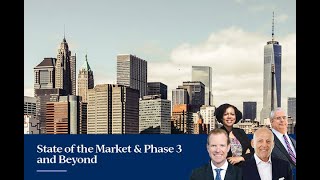
Webinar (July 2020) hosted by James Nelson (Avis and Young) giving a data-driven state-of-market briefing for New York City real estate followed by a panel (Mike Keough, Jessica Walker, Ofer Yardeni) discussing Phase 3 reopening and business impacts of COVID‑19. Nelson presents stark Q1→Q2 declines (annualized 2020 sales ≈ $15B; first-half sales down ~77% vs prior year) and asset-class specifics (multifamily cap-rate expansion, scarce land/development deals, steep drops in retail/office trades). The panel covers reopening phases, small-business distress and pivots, rent-collection patterns (residential collections improving through June), local political dynamics, and risks to the city’s fiscal health and future demand.
Questions this video answers
Approximately $15 billion (annualized from first-half figures).
Q1: $6.1 billion; Q2: $1.5 billion.
A 77% decline in the number of investment sales in New York City from last year (first half comparison).
Manhattan: 30 sales; Brooklyn: 24; Queens: 6; Bronx: 3.
About 4.6% (with commentary that cap rates may expand toward ~5% in Manhattan).
Okay, so it's 10 o' clock on the dot, so we will get started. Welcome everyone. I am James Nelson. I'm principal and head of the Tri State Investment Sales group of Avis and Young. Really great to be here. Thank you everyone for tuning in and want to welcome our guests and we're going to get back to our panel shortly. But with us we have Mike Keogh, who's partner at Bolton St. John's we have Jessica Walker, who's president and CEO of the Manhattan Chamber of Commerce and Ofer Yardeni, chairman and CEO of Stonehenge. I will give them a more proper introduction before we go into our discussion so it's fresh in your minds, but I will give you all the state of the New York City sales market for 2020 and then we'll get into our panel discussion which is Phase three and Beyond. And I will say that when originally we envisioned this, this webinar, we were going to entitle it Phase two and Beyond. And we are moving so quickly now that happy to report we are in phase three. And Mike, once we kick off, the panel is going to talk a little bit about what that means. But I am pleased to report that Ava Sin Young is open our office. You can probably see by my attire and background that I am sitting here in a beach house in Cape Cod. This was a vacation that was planned before we knew when we were going back to the office. But I very much look forward to returning to the office on Monday. Brokers are now allowed to show properties engage in business and so really excited about doing that. But we are open for business physically. We've obviously been all staying virtually connected through this challenging time. So without further ado, Matt, let's dive into the state of the market. If you want to flip to the next slide. So look, we knew the sales figures for the second quarter were going to be grim, certainly a big decline in the amount of transactions. But we are witnessing, if you look at the first half of the year, a 77% decline in the number of investment sales in New York City from last year. So if you annualize the first half of this year, we are looking at 15 billion in sales. This is about less than half the 10 year average, certainly far down from the peak in 2015 at 68 billion. But still looking like we're going to be triple what we saw in 2009. But as we really dig into the numbers and look at what happened in the first quarter and the second quarter and we'll share these all with you in our property sales report and release that we will send out. But the first quarter in New York City was 6.1 billion in sales, whereas the second quarter was only 1.5 billion. So that's a 70 again, a 77% decrease. What's important to note is if we took the first quarter of New York City and then added what happened in the second quarter and replicated that in the third and fourth quarter, we'd only shape up to be about 6 billion in sales. So it would seem a lot more like 2009. So we are benefiting by this $15 billion annualized number because of the fact that New York City had 6 billion of sales in the first quarter, if that makes sense. If you look throughout the various boroughs, Manhattan, year over year, excuse me, quarter over quarter, 83% decline. Brooklyn 40%. Queens down 81%. The Bronx down 93%. Manhattan down 77%. So unfortunately again, we knew a lot of these sales were going to be held off as a lot of owners are going to decide not to sell in this market. They're going to decide to wait it out. So let's look at the next slide. You look at the number of sales. Manhattan only had 30 sales in the second quarter. Brooklyn 24. Listen to this. Queens, only six sales, 81% decline over the first quarter. Bronx, three trades. That's it for the entire second quarter. Again, we track sales that are $5 million above for all asset classes except retail. Retail we include a million dollars plus. That certainly didn't help in this situation. Upper Manhattan, with only three sales, a 77% decline. So if you look at what again we're annualizing for 2020, it's looking like 438 sales for all of New York City, less than half the 10 year average. But once again, as I said on the dollar volume, if you replicate what happened in the second quarter for the third and fourth quarters, I think we're going to be looking like a year like 2009, unfortunately. But I do want to also note, and Matt, maybe just flip back to the last slide because this is interesting. Look at what happened from 2009 to 2010 to 2011 to 2012 after, you know, an all time low that we had tracked of sales in 2009. The sales volume then doubled in 2010. It doubled again in 2011 and almost doubled again in 2012. So what happens when owners don't sell is there's kind of this pent up product. And the good news folks is that there's plenty of cash out there on the sidelines. This is not like 2009, 2010, when there's not capital out there to deploy. I mean, just look at the headlines. Look at how much cash Blackstone is sitting on. I mean, there's tons and tons of money. And we're going to be hearing from Ofer later talking about his investment appetite, which I know still remains alive and well. But let's go ahead and flip to the next slide here. Okay, so multifamily sales, looking at cap rates, you are seeing some cap rate expansion. The average now is 4.6%. A lot of this is already baked in still from the rent reform that took place last year in June. Price per foot coming down as well. If you're keeping score, peak to trough. From 2009 to 2011, you see an expansion of cap rates of 80 basis points for multifamily office and retail was 150 basis points. So not crazy to think that cap rates in Manhattan might push up in Manhattan into the 5 range. But we are watching that closely. Average price per foot was 868 a foot. But again, we're only reporting on 14 sales that happened in the second quarter. So really tough to get an average when you're dealing with very few sales. Let's flip to the next slide. Historically, Manhattan sales in 2015, that was the year that Stuytown closed over 15, excuse me, 12 billion in sales. We're talking about close to 500 multi families that sold in Manhattan. This year. We're only on pace to do about 100 sales or 2 billion. So again, not enough product to choose from here. But we're hoping that we do see some of that increase in volume that we saw in 2009-2012 before. Okay, next slide. Looking at some of the key transactions. Icon purchased a portfolio in Midtown for $25 million. And then 103105 McDougall street this was a sale we handled for 22 million, 2:50. I think what's really indicative of this sale is this was a contract closing. Typically when a buyer buys property, they put down a 10% deposit. They wait 60 to 90 days to close. They get financing. Here the buyer just showed up with a check and financing and closed contract closing. So going back to my point earlier, if the price is right, there's money out there to close. So that was good news there. And if you're keeping score, that was $575 a foot, price per foot. Half the building was vacant, including a giant restaurant space which I think was A lot of the concern there and certainly needed a lot of work to correct. Okay, next is what's going on with the Manhattan development sales market or what's not happening. Only two pieces of land sold in Manhattan in the second quarter for about 170,000ft of buildable. So the good news, if you're concerned about oversupply and what happens in two, three, four years, well, the, you know, the spigot has shut down. You're not seeing a lot of new development and as a result you're going to see that, you know, I don't see vacancy spiraling here. Office there might be a separate, you know, discussion, but for multifamily historically vaccinated vacancy rates have always been below 2%. Okay, so next let's go to the historical land sales again. Back in 2015, there was over $10 billion worth of land that sold and that's why we saw that huge wave of development in 2016, 2017. Not so for 2020 and beyond. Top transactions, this corner on Madison avenue and the 40s. This is the old HSBC branch that JPMorgan Chase bought. Important to note, they purchased, they went in hard contract with bank of China before COVID they still closed. But this was what I would assume was pre Covid pricing. And then the next largest sale by a long shot, or I should say the only other sale was at 1832 Second Avenue at $18.5 million. So we're seeing some of the what formerly would have been boutique condo sites kind of in that $570 $600 a buildable foot range at best. But really developers out there, if they are looking for land, they're looking for land that's priced for rental in the 3 to 400 at buildable range. Next slide, retail. No big surprise here, huge drop in price per foot. But again, there's only been five sales that have taken place. So hard to talk about an average of fifteen hundred dollars a foot. But look at cap rates almost up to 6%. The good news here folks is when you look at where you can borrow money on this and not huge loan to values, but you get a 50% loan on retail, you have a good paying tenant in there, which we could say might be hard to find these days, but you're getting a great cash on cash return because the rates are still very low. We'll flip to the next slide. There have been still some key retail sales. Oh, here's historically again, once again, very lackluster sales compared historically. But on the next page, this is Some of the most notable sales, the Puma here, you've got a London group that comes in, buys for the first time, pays SL Green $168 million. So there is still foreign appetite for New York. It's still a lot less. Obviously, if they can't travel here to see the real estate, that becomes a little bit of a challenge. But there are, you know, there's still foreign capital coming in. We were involved in the sale at 1683 Third Avenue. That's a retail condo with the city of New York is the tenant that went off at a six and a half cap. And you could say that rent was high in relationship to market and that's why it was a six and a half cap. But again, there are certainly opportunities out there in the retail space if you want to be a contrarian. Next slide. Office sales. Only four trades for 145 million. Huge drop average in the number of volume about $800 a foot. Cap rates at about four and a half percent. Expanding and again, not enough sales here to really talk about what is a trend here. But if we flip ahead, because you look back to certainly 2015 when there was over 20 billion in sales, a lot more of these mega trades that took place. Next slide. You see the sales that did take place were these lower rise. You've got a building that was in bankruptc at 55 Christie Street. You have 150 East 45th Street. This was the children's aid building, required a gut rehab. These were buildings that went off at about, you know, five, six hundred dollars a foot. But no doubt we'll need a lot of ti and work to get them repurposed. Okay, we'll go ahead. So we've been tracking since COVID how many weekly Manhattan sales there have been. The historical average is about five. You see that since maybe, you know, we're getting two sales a week, three sales, one sales, zero sales. So we are continuing to watch these. The one thing that I always like to remind people, which I did not do at the beginning of this, is our property sales reports are rear view indicators because they say what was going on three to four months ago, not what's happening today. Because deals that closed, with the exception of the 103, 105 McDougalls that were closed on the spot, which I are actually rare, were typically negotiated previously. But we're now seeing that sales that would have been negotiated post Covid. The sales numbers are coming down here. So questions for the future and maybe we can touch on a couple of these as we discuss the panel. But is this the year of must sells versus discretionary? Again, those are the estates. That's the partnership disputes if you don't have to sell. Now, I was just on a call with a major, major owner in New York. They said, look, we're not selling anything this year. We're going to wait. We are waiting to see if we can get more leverage in the debt markets. The rates are still cheap, but the community banks are still being conservative. There's some talk about will the city lose interest to the suburbs. I'm sure that our three panelists have some strong feelings against that, knowing that we're, we've got three really big believers in New York. But we are talking about what does the future of office look like? Meaning how do people use space? Are they going to, are more and more people going to work from home? Is there going to be contingency space in the boroughs? Retail? And again, I'm going to get Jessica's opinion on this. What does the future of retail look like? And then the last question is when are we going to start seeing some of these distressed loans, the banks start to take back some of these properties? My opinion on that, it's probably not until later this year, early next year when some of the forbearance from the lenders dry up. And if some of these tenants do not come back, that's going to put some of these owners under hardship. But look, I always try to end these things in trying to find the positive and the glass half full. And what I will say is again, looking back to 2009 and, and the opportunities, rear view mirror that were available at that time and looking at sales value and looking at pricing, I mean, again, you saw a real buying opportunity. So I know we've got a lot of investors on the call with us today and I know it's challenging to find those opportunities out there, but when you see them, jump on them. So that McDougall sale that we talked about off Bleecker, you know, 575 a foot, you know that that's, you know, those are rare opportunities in any market. So without further ado, and I did that at 15 minutes on the dot. I want to give a proper introduction and thanks to our panelists. So again with us we have Mike Keough, who is partner at Bolton St. John's. Mike has over 20 years experience working with the city and the state. Previously he was the director of finance for the New York City Council. He also lobbied for District 37 and was in Private practice before. We have also with us, Jessica Walker. I had the pleasure of serving on her board. She is president and CEO of the Manhattan Chamber of Commerce, represents and supports the business communities throughout the borough. She's on not one, but two Power 100 lists, the Manhattan Power 100 and the Power of Diversity Black 100 list. So congratulations there, Jessica. Prior to the chamber, she was VP of Government affairs for the Partnership for New York City. She's also an appointed member of Governor Cuomo's Regional Economic Development Council and our Mayor's Business Sector Advisory Council. So it'd be great to get some of her feedback on what's going on with those councils. And last but not least, my friend Ofer Yardeni, who's chairman and CEO of Stonehenge. He founded this company in the early 90s. He's amassed a portfolio of $1.9 billion, 2,800 apartments, 2.9 million square feet. He's a great advocate for New York and the industry, serves on rebny, ymw, rea, amongst other boards. And he's got an incredible story of coming to the US from Israel back in the 1960s. And I'm going to make a plug for my radio show, Real Estate Investing Live from New York. Go back, listen to the interview that I did with Ofer. Amazing stuff. You can find it on itunes, Spotify, or I just found out this week, iheartradio.com so if you're tired of listening to the same top 40 songs over and over, you can listen to my interview with Ofer. So please check it out. Okay, so let's dive right into it. So, Mike, again, when we started talking about this, we were going to announce phase two and beyond. We're already in phase three and beyond. So what businesses are open right now and. And what's left to open? What's phase four and beyond?
Well, Jim, first off, thanks so much for hosting this important discussion and also your prior discussion which feeds into this regarding the city and the state and their financial and budgetary challenges that they're doing during this time. Both of these are going to really inform why we're going through the phases that we're going through and the ability of the state and city to weather the storms that they're seeing, because everything that you just went through in terms of the real estate market is going to have a significant and lasting impact on the state and the city's ability to respond to the challenges of COVID and continuing the reopening phases. But in terms of what we're seeing opening now at this particular point, if you didn't know you were in phase two, you have missed it. We are now into phase three. As Jim mentioned. Real estate offices are open. Commercial building managements are open. You can buy and lease your vehicles. Again, the showrooms are open. There are now in the next phase. Phase three. Barbershops will be joined by nails care spa like services. There will be an opportunity to dine indoors outside of New York City. There will be an up to 50% capacity as long as the tables can stay 6ft apart. Outdoor dining. Everybody saw the work going up in the city for barriers so that people can be safe if the outdoor dining has to happen within city streets. So those activities will continue for New York City to just be outdoor and pick up from your favorite restaurants in New York and folks are looking for when we will get to indoor dining in New York City. It's a significant question that we wind up getting asked by a lot of our folks in the hospitality industry. It's being driven by the experience of the states that are seeing spikes that went to indoor dining for rather rapidly. And the governor has very much made keeping the number of infection rates low and putting down or rather delaying activities such as indoor dining until we see more of a flattening of the curve throughout the rest of the country. Whether or not that's going to happen anytime soon. And the real risk and concern is that New York will again start to climb up the pandemic mountain and seeing an increase of infections. So I do think that we're also going to probably see things like Broadway has already said that they're not coming back until the earliest of the beginning of next year. But other theaters and movies, those are likely to be put off into phase four. And it will also depend on whether or not we're seeing those activities keep the spike or rather keep the infection rate low in New York.
Excuse me, I was on mute. I said that's a great summary. Thank you. And it really seems that the city has been cautious as well as the state with our reopening plans. And you know, that's really representative in the number of cases and how we have been able to get control the new cases there relative to some of the other states which have been a little more open, shall we say with how they've gone about getting back to normal. But I know some of the questions we talked about before this call, you know, we're not going to sit here and talk about when could Yankee Stadium open up. I mean it's Just, you know, some of these questions, you know, you start have to start thinking about things in a post vaccine world as well. But it seems like there's certainly been a prudent approach. So, Jessica, the Manhattan Chamber represents thousands of businesses here. How are they doing out there? Talk about, and not that your constituency isn't just retailers, it's small businesses, they use office space. But how are they faring? How are they getting back on their feet?
Yeah, well, thank you, James, for putting a spotlight on the issue. So obviously it's a tough time for everybody. I think everybody's seen revenue declines. But those who are faring worse, it's no surprise are the companies, the businesses that because of the shutdown had to completely lose their revenue for a time. So restaurants, of course, really have gone through it. We're starting to see them pick up because of some creativity in government, they're allowed to do more of the outdoor dining and there are some opportunities there. But you know, retail is really suffering and gyms, event planners, those are the types of businesses that really have just seen no revenue coming in with offices. With more office based work, a lot of them obviously were able to move operations into homes. And so with a little bit of technology that has allowed a lot of those businesses to continue. But I think, you know, everybody knows this has been tough for every business.
Are there any, Jessica, are there any bright spots, any businesses? I mean, we know Amazon has certainly done well throughout this. I mean, that is not your constituency. But are there any of your local businesses who have actually thrived throughout this?
Yeah, I mean, listen, we actually launched an initiative in the last few weeks called Pivot to Win, which is really geared towards trying to help our small and medium sized businesses figure out what the opportunities are. We did a internal survey of our members and found out that the three things that they're really looking for right now, besides financing, of course, which is. We could talk about that, that's still a concern. But after that, a lot of these businesses, they don't have this big capacity in house to really examine what's going on with their business and look for opportunities. So what they really need is strategic help and advice on how they can be pivoting their business, what the opportunities are. Also the two needs that we're seeing are really around finding tech solutions and marketing. Because I think that this is what we're seeing is a lot of businesses right now and in order to save money have really cut back on their marketing, when in fact, depending on what the business is, this is the opportune time to actually double down on the marketing.
That's fantastic. And I definitely want to get back to some of those points and how we can be most helpful to businesses getting back on their feet. But Ofer, maybe from the owner's perspective, I know you've already started seeing some signs of life and I appreciate all three of your updates. You all do great jobs giving weekly updates on what's going on in your segments of the market. But Ofer, in reading yours, it seems like you're seeing better collections from residential and commercial tenants alike. So I would assume that means that they're also starting to find their way back. Ofer, you might still be on mute there.
Yes.
Great.
Good morning. Yes, I was on mute. So James, thank you very much for having me and hosting me and thank you very much for the panel. I have been in New York investing for the last 30 years and I was listening very careful to your presentation that took 15 minutes. I can tell you that I enjoyed listening you to it. But I disagree with your assessment over the market. You're making an assumption that our last six months we will be able to duplicate and we will be able to match it in the next six months. And I completely do not see it at all. I do not see one in terms of pricing, in terms of value, in terms of anything that you mentioned. And it can be another conversation that we can speak about why I don't think that COVID 19 the crisis that we are now can be compared to 2009. It's a completely different fundamental. Yes, we were in crisis, but it's a completely different way. We are coming out of it with businesses and any other. With respect to your specific question, actually.
Ofer, let's feel free to dive into this. I think we can take an extra minute because I really value your perspective. And what you brought up is exactly what our research department and I've been, you know, struggling with over to try to read the tea leaves, so to speak. But again, when you look at annualizing the first half, you know we are in full agreement that that is not. If you just annualize the first half, that's not representative of what's going on. And that's why I was trying to make the distinction of first quarter versus second quarter. And I do agree with you also that this is very different than what happened in 2009. Very set of circumstances. But the net result is going to be a very low number of sales this year and hopefully that pent up demand is going to have certainly Going to grow in the years to come. Probably not as quickly as we saw last time. But would love to get your thoughts on that because this is one of the sales reports where you look at the stats and you just say this can't be right because the first quarter is very, very different than what happened in the second quarter quarter. So we'd love to get your thoughts.
But even if you speak about the crisis, that are not the same crisis. If you look at 2009 with the crisis of the banks and the financial meltdown, clearly we as a nation, we as people could have blamed the banking institution and the financial institution that brought us to this chaos. The government was not prepared. The government did not know how to act, did not know how. Yes they saved and bailed some of the banks. But if you look at the layoff that we had, the layoff where at the top executive big earners that trickled down towards affecting of the retail and restaurant and other businesses. The crisis that we have right now, it's really not that anybody's fault. We are together fighting an enemy that we can't see. Anybody that ran a business and overnight was supposed to shut down and have financial crisis today, it's not because he did not run his business properly. It's because the government forced him to close and overnight he lost his business. But I think that the government in most cases and try to help incentivize and immediately recognize where we are and try to fuel the economy and try to provide financial health to The Citizen. During 2009, we as owner of multifamily, especially in Manhattan, our tenants lost their job. If you worked for Lehman ber Stern, any financial institution, you lost the jobs. Today these tenants are working from home. If you look at the 30, 40 million people that lost their job or laid off, these are people that are making somewhere between 30 to 70 thousand dollars a year. These are people that are working in the service industry if it's the hotel, retail, if it's the city, if it's other agencies. But it's not really affecting the people that are earning from 125 to over and making more. So we are not in. We can't compare those crises. What we know is that we hope that things that the government will do and the comfort level and the safety, we will all be able to come together. And families are affecting right now, kids are affecting emotionally, physically versus in 2008. Yes, maybe you were foreclosed on your home, but the majority of the families were not affected. We are affected all of us together and the implications are tremendously and it will take a long time to heal. With respect to your asking about the collection, I began to review. I left New York, Manhattan on March 14th and I was quite concerned because the media immediately started to report about tenants not being able to pay. Tenants should not pay. The media started and some of our politicians started to talk about organize national rent strike started to talk about don't pay your rent, don't pay the mortgage. And as an owner of real estate, I was a little bit surprised because nobody really said don't go and pay at whole food. When you buy food and don't pay, just take the food. Nobody said that if you have a car, a lease on your car, don't pay your lease payment. Nobody said anything about non payment of many. If you go to the pharmacy, just take the medicine that you need and don't pay. They looked at the real estate somewhere as a 501C, as a charitable organization that with owner of real estate you don't have to pay the rent. So I was a little bit concern. But overall I believed in New York City and I believe that the people and I can tell you that collection improved from April, May, June and we understood why they even improved. So in the residential field, if you look at the rent stabilizer, they pay by check. Our collections on April were around 80%, our collection on May were around 90 and our collection in June were 98. And now we are at 99%. And the reason why we got a delay was not because the tenants did not want to pay the rent. It's we moved offices and by the time they sent a check to us, by the time the post office delivered the check to our other location, by the time we deposited, we recorded late payment. But on the fair market tenants in the city we got over 95% of our rents. And yes, the message was we will work with you guys. We are in it together. We need to make sure that everybody is safe and healthy. But overall the residential, the thousands of residential people who live in New York paid the rent. We had some surprises on the commercial side on the retail and the garages. And I think that maybe the garages especially they made a decision on the business level. We are not paying rent. The rumor started that even though they were operating, they did not pay rent. And some of them acted in that faith. Clearly I can't tell you that as an industry, they all acted in the right way. They worked, they got money and they decided not to pay because they figured that's what they are going to do. So as an industry, we are going to deal with that. And with respect to the retail, our hearts are with them. You know, some may we find that the small tenants that we have, the family that run the business, they pay the rent, they try to do the best, they understood how much is important their business for them. But we find that the credit that you mentioned before, that you can buy and finance a credit tenant, James, there is no credit tenant anymore because a credit tenant can make a decision not to pay the rent. And you cannot do anything right now because the courts, you can't enforce it. So we find that on the retail side, we got paid close to 40% from the pharmacy, from the UPS, from the banks. And we find from some of our tenants that were opening and allowing takeouts, we found that they paid them a certain amount of rent. And we are working with that because I'm telling you, this crisis is a completely different crisis than anyone imagined or fought because it's nobody's fault. We are in it together and we need to come from it together.
That's really, really great perspective and you bring up really important points. And so I'm trying to unpack them and I want to give a chance to Jessica and Mike to respond. And I really like what you had to say about the mom and pops versus the credit tenants. Because if you talk to maybe some of the publicly traded companies and looking at their retail collections, they're at 25% and you hear these stories of these billion dollar corporations who've just systematically sent letters to everyone saying we're not paying rent even when there's cash, you know, clearly on their balance sheet. So really, you know, appreciate that these mom and pops are trying to work with their landlords to make it happen. So Jessica, maybe we can go to you on that, which is, you know, how are these tenants surviving? I mean, did they take advantage of Triple P? Have they been able to work things out with their landlords and get things back on track?
Yeah, so we've actually worked with a lot of our businesses to try to get the federal assistance through ppp. And Manhattan fared very well, we're happy to say about that. But as you know, there were especially early on, before the program was amended, most or all of that money had to be put towards retaining employees. And so it could not, most of it could not be used towards rent. We did a lot of webinars with our members to counsel them, with lawyers of how to have a responsible conversation with the landlord if you need more flexibility, if you're having issues, clearly all of the lawyers said it's a bad idea just to flat out stop paying the rent. That's not a good idea. And I think Ofer is right that we did see a lot of the smaller and medium sized businesses want to make those rent payments stress about it. But I'm happy to say we heard some really great stories and anecdotes about landlords really willing to work with, work with the business to try to, you know, provide the flexibility that they could. So. But I think that's right. We're going to see more of this as this goes on. You know, it's going to be hard. Revenue is still not coming in the way that a lot of these businesses would like to see. So even those who are, who might be paying now, I think it is probably going to become more of a hardship in the next few months.
Yeah. And I know the lenders have had a part in this as well. And you know, just anecdotally, you know, you know, certainly with the community banks, you know, without fail, most of them have given three to six months forbearance. So if the borrowers don't have this burden of debt service, they can pass on that relief to the retailers. I wish the same could be true. I know the city might gave a little bit of relief on taxes where instead of if you're late on your real estate taxes, instead of getting hit with 24%, I think it's only a 7% penalty. But what else has the city and state been doing to try to, you know, work with tenants to get them.
Back open for business?
Well, in terms of the rental protections that Ofer was talking about, that was done simply because the city and the state were not able to deal with potentially dealing with a lot of people losing their homes during the pandemic crisis. And some of that has been extended throughout some of the different phases. But the city and the state are directly dependent on the funds that real estate transactions create in terms of the tax revenue and just the regular paying of tax that rent rolls are fueling that makes up a dramatic portion of the city's budget. So they need to find a path to have those things continue. There is a very well coordinated organized tenant lobby at the city and state level and they are still very active and have great relations with their elected officials. So they have been able to put the tenant concerns at the forefront of most of the legislative and executive both at the city and state level. So they've Been looking more with an eye towards dealing with more of the aspect of how do I deal with somebody who may have lost their income and may not be able to pay rent as opposed to how do I make sure the real estate industry is functioning so that revenue can continue to flow not just through the entities in the private sector, but the tax revenue that comes from all of the activities that happen because that's how they're going to be able to afford essential services. You spoke a lot about this in your previous webinar and this is really going to be a crunch for the city and the state because they've kicked so many of the cans down the road in terms of dealing with decreased revenue that they're getting. And it is primarily from real estate based taxes or industries that make money off of real estates that apply for the lion's share of the city and the state's revenues. That's going to be the challenge for them. How do they keep those entities? Sorry, I couldn't hear.
On the back from your cell. You might have to go to mute.
Thank you. All right.
That's going to be the challenge. That's going to be the challenge for the city and the state because traditionally when you have hard economic times, the government has used real estate and infrastructure projects to drive economic activity, which then leads through funding for those governmental entities to provide essential services going forward.
Great. I should have said at the beginning of this webinar because I want this to be interactive. So please use your Q and A button if you have questions. I'll do my best to try to ask them throughout. But we're also just trying to keep this to an hour to be efficient with everyone's time. We're already getting some comments. One anonymous attendee says that 18% interest for unpaid taxes. This isn't a solution. I would agree with you. And another attendee asked if there's been any thoughts about a reduction or pause in property taxes, especially for properties that have been affected by tenants unable to pay for rent. And as we all know, and maybe Ofer's got some thoughts on this as well, but most of these real estate taxes with a retail tenant, a lot of them gets pushed through to the tenant as a pass through. So if they're having trouble paying the rent, I would assume they're having troubles paying the taxes. So it's a tough one, as you said, Mike, because we've got a huge budget shortfall, whether it's 9 billion at the city, 33 billion at the state over a couple years. And the real estate industry pays half of the city's budget. And so if we're not, we're not getting it from transfer taxes this year, we're not going to get it from mortgage recording taxes. So, you know, it's a tough answer. So Ofer, I don't know if you.
Have any thoughts, so. Yes, of course I have a lot of thoughts about many, many things. You know, I'm not a guy that does not share his view and I'm trying to be as much as politically correct that I am one from the point of view that I love New York, I've been in New York, I came to New York by choice. I love walking in the street, I breathe smell and I really love what the city has been provided me. And I'm talking here from the point of view of citizen and I'm talking about you from the point of view of somebody that's involved in the real estate community. I don't want to say leader, other people will decide. But I was very, very, very surprised a second ago when I heard that the city needs taxes and the city needs money. And of course we understand that. But if you look at it as a real estate developer owner, I'm very disappointed from the way the administration handled the real estate for the last few years. And I don't want to get involved here with the issue with Amazon and I don't want to talk about the new legislation that happened in 2018 with the change of the rent laws. But I rather concentrate here on the 2000 where we are now with the COVID 19 and to hear somebody said but the city needs the taxes because they have a budget. And what do you think we as an owner, don't you think that we are entitled to get paid? Don't you think that we have the mortgages to pay and we have to run properties, Everybody has obligation and from the city to come and to insult to us that we should pay 7% that is almost 10 times higher than the 10 year treasury or 12 times and they are doing us a favor. The fact that we are not occupied, the fact that people are not paying rent and the city officials, city council and several representatives are saying let's have rent strike, let's not pay again. I have nothing against the whole food, but nobody speaks about any other industry other than us where we are providing so much capital for the city. So I think that we had amazing mayors. Mayor Bloomberg, for 12 years, the city prospers. The city real estate taxes increased by maybe 30, 40, we as owners supported it. We loved what was created in the city. But to sit here at COVID 19 and to see where the city is going, the financial crisis that New York City will have and you will see, James, this is going to be. We are going to have two to three years of horrendous crisis in New York City. For me to sit at home and to watch TV and to see the protesters and I support civil rights. Everybody that knows me knows my passion and love for democracy, for liberal, as a humanitarian and everybody knows me knows where I'm getting involved. But to see the looting and to see the damage that was done to the buildings and five or six of my buildings got hurt and the city never gave us any assistance. We needed to go in to protect the building by ourselves and the crime that is right now going in the city where families are not willing to come back. COVID 19 is not the issue. People will not come back to New York because of COVID 19 until we get a vaccine. We need to give vaccine to several of our politicians, people at City hall, the way they are running the city and the way they are viewing it, us. Enough is enough. We are in it together. But we cannot just put the blame on everything at the landlord community and the real estate community. So from my point of view, the city did not do for us anything. On the contrary, the city hurt us by creating all those laws that non eviction, nobody was going to evict any tenant. The tenants today, the tenants on the high end in the city are getting paid and the tenants that need assistance, the government is giving them tremendous amount of compensation every week. So nobody is really sitting and being homeless and being thrown out from the house, from their homes. The city needs to take the responsibility and cure all the damage that they did in the last several years. So that's my thoughts about where we are today.
James, if I could, if I could just for just one second because I.
Think I want to get Jessica's response because.
Oh, go to Jessica first because there's a lot of, of different things in what ofred said that really impact the direction that where the city can go next.
Right? And before Jessica does that, I want to. If you all did not see that webinar that we did with Martha Stark, Andrew Rhine and Ari Shalom, a lot of that webinar is what Ofer was just talking about. So you can go to my YouTube channel to go watch that again if you haven't already. But yeah. Jessica, any comments on what Ofer just had to say?
I Mean, I think it was well said. I think that there has definitely been an anti business feel to the city for a number of years now. It's something that we've been pushing back on for a very long time. And unfortunately when this crisis happened, it was sort of more of the same. There's no question about it. We, we even saw, we saw the city council put forward a well intentioned bill to try to do more to help the essential workers who were still making deliveries. But it was going to put a lot of new costs onto small businesses right at a time when there was no revenue coming in. It was very shocking. The good thing though is that the business community, all facets, I mean all of the organizations, even some nonprofit organizations came together very quickly to say this is a terrible idea and sort of push back on that. So I think one, it showed that there is, you know, some organizing that's happening now to try to push back on these things. The other thing which I'm sure, I'm sure Mike will talk about is that next year we have a big election coming. We're going to have, you know, we're going to get a new mayor. Over half of the city council is term limited out. So we're going to have, you know, turn over maybe two thirds. Mike. Of the city council will be new.
Almost 40 council members will be gone and will be brand new.
So, you know, I guess what I would say is that this is a great time for people to get involved, to really be thoughtful about where we're headed. But go ahead, Mike. He knows politics.
You do very well at it though, Jessica. And I think Jessica's point is really what is the path forward is to be bring the business community story, real estate's story to bear by and large, because we live in a tabloid culture still in terms of how the city is reported. The bad tenant, excuse me, the bad landlord, the bad business owner. That story gets front page treatment and it may be indicative of a lot of other people's day in, day out experience, but there are a lot of other folks who aren't doing that. They are a vital part of their neighborhood and they are working, providing a service, providing homes and doing things responsibly. That story is never going to make news. But the organizing efforts, like what Jessica just demonstrated, that bill was ready to pass, that bill was going to then do a lot of unintended harm to restaurants and small businesses. And that would have had negative impacts in terms of being able to afford. The person who's helping me in the restaurant I may not be able to afford them now at this particular point, or whether or not their ability to stay open to provide the food services that we had. So it would have had the unintended consequence of hurting the very essential workers that they thought that they were helping by telling your story in terms of business as opposed to throwing one's hands up saying the politics are what they are and I can't do anything about it. That is a default position that businesses tend to fall into. And then we wind up with legislative outcomes and unintended consequences because nobody's balancing the politics. And Jessica is right to point out that we are going to we're in the midst of this election year in which the state legislature is up for election. By and large, the makeup of that elect of that legislative body is going to be determined by the absentee ballots that are being counted starting as of today from the primary that happened last week. So we'll know who is returning and who has been voted out of power. There are a number of legislators who did not win their primaries or who are behind in the vote totals. So we're going to see a different body, just as we saw when in 2018 the legislature switched over from Republican to Democratic control and most of the folks who were running ran on progressive issues that were pent up and held in abeyance by the Republican majority. That would not have necessarily affected business in the city of New York, but didn't deal with a lot of the historical social justice and societal ills that we have now seen come in the aftermath of the homicide, the murder of George Floyd sweeping the country. If we can, as a business community, acknowledge and James, you did this very well at your in your prior seminar. Talk about how business is part of the solution for getting to a more just society and take some concrete steps to do it, then there isn't necessarily the fervor for throw everything out that we have today and not necessarily be clear about what we'll replace things with. And government, I think, would be a willing partner not to just find ways to work on or off of a progressive agenda that does not take business concerns into account, but is informed by people who have a lot to offer and who are basically paying for the majority of the city government that we have both at the city and state level. And quite honestly, in terms of the taxes that are taken out of New York and sent to other parts of the country to help subsidize them because they don't have the tax base to support the federal services that they're receiving. So there's a lot to unpack.
I didn't want to call you up because that is really good stuff. But unfortunately we only have five minutes left and we have two really good questions that I want to get answered. But before we do that, just a comment. Thank you, Michael Salzhauer, for just saying that elected officials need to know better about the fact that landlords somehow benefit from keeping stores empty. That that's in no way the case. I'm not asking you all to respond to that. Just take it under advisement because I know that is some fallacy out there that somehow landlords like keeping space fake and quite the opposite. But Ofer I want to. And I don't know if you saw the Barry Sternlicht interview that's been going around and this isn't the first time that he's talked about how a lot of the business is leaving, pursuing red states and driving our highest taxpayers out. Margarita made a comment, she had a question her statistic and I don't know if this is right or not, but could believe it that since March, 420,000 people left the city between March and May. Some of them might be living with their parents. We're hoping they'll come back. But over that comment of and really more of a case for New York City. But why do you believe that New York will come back, will continue to thrive when you have contrarians like Sternlich saying that businesses and people are leaving for other states that are more business friendly?
So thank you very much. I heard the interview that Barry Sternly gave and Barry is very, very smart. He's very articulate and he has a lot of valid points in his description about New York City. But let's all remind everybody that Barry's office was never, I think, in New York. He was in Connecticut for many, many years. I don't think he was able to attract a lot of talent to his organization there. And he moved to Florida many, many years ago. It's not that he moved. Right now. There is definitely a flight from New York City right now. And I can tell you that it's not necessary just because of COVID 19 it's another poor decision by the administration. I'll give you an example even about opening schools. We all know that the most valuable thing in our life is our kids. It's not the building that we own. It's not how much money we have. We are all parents. We're all family. It's our kids. People still do not know if New York is going to be open or not. Those families are going to stay where they are. If it's in the Hamptons, if it's in the Berkshire, if it's in other places, they are not coming back to Manhattan until there is evidence. So you're going to have a crisis in the multifamily, in the two, three, four bedrooms, all those rentals on York Avenue and other parts of the city because people will not come back and they will decide to stay where they are until the government will make a decision and there will be a clear message. I believe dearly that Manhattan overall will. And we are in a crossroad, to be honest with you. We are in a crossroad between the capitalism and the socialism. Do you want New York City to be like the 70s that would be crime, prostitution and homeless or do you want it to be during the time of Giuliani at Bloomberg? We are in a crossroad route right now. I personally believe that the young kids want to be in Manhattan. It's from the 20 to the 30. They graduate from college, they want the jobs, they want excitement. New York City is a vibrant city. It's exciting. It's exciting. Every time I walk in the city I feel like 30 years younger. So these kids will come back and they will be in New York City and they will rent, they will not buy. Because if you don't have safety, if you do not feel comfortable to walk on the streets, if you have no police protection, if you cannot call for help and if you see people are working with guns, people would live. So am I, am I, do I believe that people will come to the right sense? And let me tell you something Michael. Yes, we have a choice and it's not a cut up. We can vote and we may be. Somebody told me that the darkest night part of the night is, is just before the dawn. So maybe we are right now in the darkest place in Manhattan in our life. Maybe right now people will be so mad that they will come and vote and change those politicians that are really not thinking in the right way, that are anti business, that are completely progressive, that are destruction, that they want to transfer the wealth. I came as an immigrant with $600. Nobody gave me anything. I worked hard and I'm very grateful. There are opportunities here and I believe people can do well if they put their time and the effort. So one, we have a choice to vote. The other choice that we have is we don't need to live in New York City, we can live in other places. And I'm not saying that because of taxes. New York City used to be a brand and for a brand you are willing to pay more. But when the brand is homeless, when the brain, when the brand is people urine on the street, when people loot your stores, when people fret you, that's a negative brand and that's what I'm concerned. So we are in the pinnacle point. If we will not make the changes now, we will suffer for the next decade. Because as you know, when you get an injury, even if you're in the best shape in your life, for a surgery for you to heal, it takes six months or a year. We have been under a current administration that has been so progressive, that has not been able to listen to, yes, they listen to the demand of some of the people, but this is not democracy. This is oklokratia. This is letting the mess run city hall. That's what's going on. So either we change it or I can tell you that all your graphs about New York will have to change, all your investments about New York will have to change. It's our choice. So either we will choose by voting or we will just leave the city. But the status quo cannot continue.
Thank you Ofer and Mike for sharing your thoughts there. And we are over time. So just Jessica with maybe a minute left and a question from Mike Sankari. How do people get involved? They wanted to ask in the political discussion and the elections, how can people get involved?
Well, of course, obviously funding helps, but you really need to learn who the candidates are in the race right now. And I think that we're going to be doing some candidate forums. I assume Rebni will as well find out which candidates you want to support and then do everything you can to help them. And also don't forget that some, some of the people out there might even consider, you know, putting forward a candidate or running themselves.
Mike, you want to, you have about.
Eight people who are eight to nine people who are planning to run for mayor of the city of New York alone. That's going to be one of the largest numbers in a Democratic primary that we will see. And you will have many more people coming out of the protest movement that's going on right now looking to see Kayer office who currently had not thought about doing it, but now they're going to be doing it. So the city council field is going to expand dramatically.
Right. Well, this has been a wonderful conversation. Want to thank everyone for joining today. Ofer, Mike, Jessica, thank you as always. Really good discussion here. And some really great thoughts. Forget New York. Moving forward in Phase three and beyond. Thank you all. We'll be in touch.
Thank you.
Thank you.









