Successful Partnerships with Brian Ray
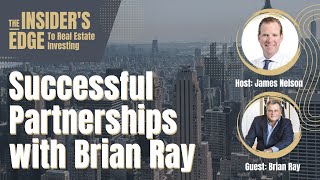
Brian Ray, co-founder of Alchemy ABR Investment Partners, talks about building a 25-person integrated firm through a merger nine years ago. He traces his path from property management at Tishman through RFR, and explains how reputation and relationships drive deal sourcing, especially with religious and not-for-profit owners.
Foreign.
This is the Insider's Edge to Real Estate Investing with James Nelson, the principal and head of Avis & Young's Tri State investment Sales Group. In this program you'll learn game changing strategies to outperform the market. James will teach you how to source, execute and capitalize on the best real estate opportunities in New York and around the world. Now here's your host.
This podcast is for educational purposes only and should not be relied upon for investment decisions. The opinions expressed are those of the guests and not their companies. Listeners should not act upon the information without first seeking appropriate advice from an accountant, lawyer or other professional.
Welcome to episode number 175 of the Insider's Edge to Real Estate Investing. This is your host, James Nelson. Thank you as always for joining. Thank you for making the investment in yourself. We're here to help you gain the Insider's edge to real estate investing. You are learning game changing strategies to outperform the market. That's what this show's about.
That's what the book is about.
That's what jamesnelson.com is about. I built this site for you and you can go there now and you can sign up for our monthly newsletter which will help you abstract a lot of the lessons learned from these shows. It will also include very helpful links for articles and I'll also have While you're on the site you can go ahead and get show notes as well. And for today is no exception. We've got a great interview lined up for you with Brian. Ray had previously interviewed two of his partners, Ken Horn and Joel Breitkopf. Those are great episodes so I definitely encourage you to go back and give those a listen as well and you get three different perspectives on how this business has come together and all the incredible things that they've accomplished. So Brian's co founder, Managing Partner and Principal of Alchemy, ABR Investment Partners and ABR Partners LLC, his family holding company and during his 20 year plus career Brian has acquired, developed and managed properties with a value exceeding $3 billion. And you're going to learn information on how to set up partnerships and build long term success. Along with managing everything and having fun along the way. Brian advises looking at situations in a way to help solve problems and develop deliver an outcome to the client. A long term approach can lead to great success and Brian has been involved with such iconic buildings across the New York skyline including the seagram's building and one Rockefeller Center. So again, if you go to James nelson.com where you can get the show notes. You can find out how to connect with Brian. And so with that we're a brief word from our sponsor. We're going to get right into that interview with Brian Ray.
A different approach to putting our clients first. Avis and Young's Tri State Investment Sales Group sells multifamily office retail development and specialty sales throughout the New York metro area. As experienced thought leaders in their industry, our 35 member group is available to help you make informed investment decisions by advising you on your current holdings or identifying new opportunities in the marketplace. Our one unified team is built on an industry unique platform which promotes unparalleled collaboration and and teamwork. We share core values of hard work, integrity and expertise. We put our clients first providing tailor made strategies to achieve superior results. Please Visit us at aytristateinvestmentsales.com and follow us on Twitter LinkedIn and Instagram amesnelsonnyc to learn more.
All right, welcome everybody. I am going to push my chair out of the way. Sorry I'm shorthanded today. So I am the production assistant as well. This is James Nelson, your host and I am thrilled to have with us today Brian Ray, great friend, who is co founder, managing partner and principal of Alchemy ABR Investment Partners as well as ABR Partners llc, his family holding company. Brian, welcome. Thank you so much for coming up to the studio, AKA my office.
It's great to be here. We've been friends a long time, very happy to be on your great show and talk to you about history and our business.
Absolutely. Let's get into it. I love the fact that your partners have already been on the show. So Ken Horn came in as well as Joel Breitkopf. And I know for a fact that Ken talked about how he got started off in the gelato business and how that turned into a real estate play. And with Joel, you never know what's going to happen. But we did air the show so I know it was at least, at least, hopefully nothing offensive in that but would only be in good fun.
Nothing that we found out about.
That's right. Well, good. So Brian, just for our audience, because this merger of Alchemy and abr, maybe talk a little bit about how that happened and so the audience can get a sense of what you all do and then we can kind of roll back the tape and talk about where it all began.
Sounds great. So my great partners at Alchemy Properties, Ken and Joel, about nine years ago we got together, they wanted to expand into other fields separate from the condo Business. My background was more office and residential development type stuff. So we decided to start as a joint venture where they had their great team. And I came over with Chris Carlo, who's now been over nine years or 10 years and we set up a venture to do anything non office, I'm sorry, non condo. So over the last nine years we started buying office buildings. We bought three buildings, one in New York City, two in Florida and then we started developing projects. So we're now developing six projects together. We're very active and I would say after all these years, it's really been a full merged enterprise. We have an incredible team of about 25 people that work with us and we're partners. Very fortunate to have kind of a full set of sectors. We have in house construction, in house, project management, design. We have a few architects on staff, we have acquisitions, we have capital raising and we have accounting and marketing. So we have a fully integrated owner operator, development company.
Wonderful. And your reputation and what you all have done, not just in the for profit sector, but you all have this incredible reputation of working with not for profits, churches, synagogues and help unlock some of the potential of the real estate. So I think you all also have an incredible again, reputation dealing with partners. And so that's, I know, a big part of it as well.
Yeah, we're very fortunate. We have a great brand. We have. My partner ken has a 30 year distinguished history of just being a great operator and developer and true to his word and Joel as well, I think it's the key to everything is our reputation and our brand. And I feel like I'm just part of something great. So I think we all bring different skills to the table at the end of the day, you know, we have agreements like everybody else, but we're handshake kind of people. We have great investors, we have big LPs across the spectrum and then we have small LPs, family office type LPs. So we're very proud of our brand, we're very proud of our team. So just trying to keep that going. Always interesting site.
Yes, for sure. So talk a little bit more about again, I understand why you all came together to be complementary, but at the time were you thinking about, okay, I need to expand my business, I need to kind of bring this to another level. I mean clearly it seems like they were thinking about diversifying. Was it just kind of right time, right place? Had you guys been talking about this for years? And again, just a little more background on that decision because it was a big one. To join forces, right?
Yes. So, you know, it was around 2008, 2009, when the world world went sideways. I had my own company. I was doing some great projects. But the world evolved after the financial crisis. When I was an operator, I was on my own. I would find deals. It was pre Internet, you know, I'd get early calls from all the brokers. I came out of RFR and Tishman Spires, so I had a great network. But after 09, the world kind of changed. It got more global. You needed a website, you needed a cfo, you needed in house, you know, components that I really didn't have at the time. So by the time I would bring a deal to different partners, they either had already seen it or they were already looking at it. So my business started evolving when I was on my own. It wasn't really so easy anymore to bring the value that I originally did. So I needed a larger operation. I needed that team. I needed that balance sheet. I was growing, my family was growing, my kids were getting bigger. So from my lens, it was really what was best for next steps to build my business. And alchemy just offered just the perfect platform, complemented each other. They weren't really in my space. They were incredible guys. I originally met, you know, Joel in Las Vegas at icsc. We became fast friends, introduced by our good friend Sal ciovino at Benison, and, you know, we just hit it off so well. And I remember when I got back from Vegas that year, I had sent them a condo deal that Harry Macklow ended up buying. They were getting into being a professor at nyu, which I already done. I was a professor at nyu, and I sent you all my. My syllabus, and they sent me an office deal. And then it just kind of started evolving. What are you guys working on? What are you working on? Wait a second. Let's talk more about this. I remember Joel and I sealed the deal. We had. We had lunch at Pietro's on 43rd Street. Ironically, we ended up buying a building across the street. But it's been better than I imagined. It's just been a great partnership. And I can't say enough great things about Daniel, too.
Oh, that's awesome. So let's go back now and maybe we could talk about when we first met, which has got to be 15, 20 years at this point. So. And I'm trying to remember if that was while you were at RFR or Tishman.
Well, I definitely would have mentioned my RFR days because you were working. We bought a few Things I think about 25 Fifth Avenue from you. So I remember coming to the office to see Bob to talk about the deal. I must have met you around there. You know, you were the AD Lily. You had your corner set up around the corner of the building, and you had your several monitors set up. Your future podcast. There were no podcasts. No, you're already preparing for it. And I must have met you around those times when you were. You guys all had the territorial ideas, and I got to know all your brokers looking at all these different things. And then, you know, as you started growing and evolving and you guys, I guess, remember Cushman, you know, we've always remained friends, but I've watched your career explode, and I'm very proud of you. You have not aged a day since I've.
Well, you and me both. And I think running after kids probably have a big part of that. We were tenants of RFAR at the time, and I remember at 400 Park Avenue and just, you know, as I looked at your resume and the deals that you've been a part of, I mean, it's pretty much every single iconic building here in New York. So maybe you didn't necessarily build them, but certainly in many cases, repositioned. So while at rfr, Lever House, Seagram's Tishman being involved in the acquisition of Rockefeller center, the crisis, very small way.
It was a puppy. It was a guppy puppy in my Tishman.
You can take credit for it, Al.
Sure.
So I. I guess maybe talk about how you started off in the business. I mean, these are. When you look at these firms and the experience that you've had in some of the buildings that you've worked on, I mean, these are really, I mean, the preeminent properties, landmarks here. So how did you kind of navigate your way to go to those firms to be involved in these kind of projects? Was it right out of school you kind of jumped right into the big leagues, or were there a couple stepping stones along the way?
I have an interesting history. Like everybody else in New York real estate. I started out as a biology major in college with the plans of being a doctor. And let's just say, mom, I become a doctor, but I built a medical office with him.
Okay.
But I didn't follow in the family business, but I was very fortunate. I got into the business early on. One of my dear friends, Jimmy Runsdorf, who tragically passed away about 18 years ago in a boating accident, knew the head of property management for New York for Tishman Squire. And it was A different time back then. This was 1995, 96. And they didn't have acquisitions teams, development teams. Tisha was still kind of a mom and pop. If they were just really exploding, they hadn't had the fun yet. And I got very lucky. And there was no Internet. You couldn't explore job opportunities. There were no networks coming out of George Washington University that I was aware of. I grew up in South Florida, so my New York network was very limited. And my good friend Jimmy introduced me to a gentleman named Peter Cole who ran New York City. And they needed an assistant property manager at 237 Park Avenue. I had no idea what that was. And he said, you need to go there. Jim worked for Canyon Partners at the time. He thought maybe I should come join him. And as we were talking, you need to start it. Tishman's buyer. They're one of the great companies in the world. I'd never heard of them at the time because I wasn't from New York. And I got very fortunate. I got my foot in the door running office buildings. And it was greatest education. You know, most people are in the business, they're doing acquisitions or development, all these asset management, but you never really learn. The properties ground up. So I think one of the things I cherish most about my career is I started really at the bottom running buildings, working with the staff, working with the cleaning department, the security department, the guards, the admins, the facilities managers, the receptionists. It was really just the best foundation. I learned accounting and I learned all the important things on rent rolls and leasing. And I really paid my dues at Tishman's Fire. They sent me that. Were you to grad school at night. So it was a really great time in my life. I was in my mid-20s. Growing up Tishman's Fire. I had no real plans other than I just always thought I wanted to be a real estate developer and I always wanted to keep pushing along. And I was probably a little ambitious and probably got whacked down a little bit for that. But I really had a great experience in my Tishman days. Managed some iconic buildings as part of a bigger team. Tishman's Fire was an incredible company. It was just a little spoke in the wheel during my career.
You know, I have to go back and check, but I know we've had multiple guests on the show that spent time at Tishman. Again, everybody always talks about the training and really, I mean, it's amazing how much their business has scaled to one of the largest global real estate firms out There. So that, that's again, no doubt incredible experience. You know what I was thinking about when you were talking about how just by chance, by luck, by that personal connection, you were able to find that job even though you didn't have the experience. You know, I wonder if you think that today it's easier to get a job in the real estate business or tougher. What do you think?
So when I got in the business, everyone was on Wall street, they were in law school. There wasn't a real estate business that I even really knew about or was really publicized. It was a lot of family businesses on real estate. It was a very different type of industry. It's just evolved and changed. It's become more international, it's become more institutional. There was the big players, the insurance companies owned buildings, but there weren't that many jobs. There weren't big acquisitions. It was a very different business. Private equity world hadn't really stepped in. Blackstone was probably just getting into it. I remember Apollo was a partner of ours at the time and they were just getting into it. I think we had two deals with them. I don't remember. It was like an Apollo fund deal that had two buildings on sixth Avenue. So it was a very different business. You know, Goldman Sachs at Whitehall, they did with Tishma Spire on, you know, I guess it was just a much smaller industry. I didn't know anybody that was in real estate. And I remember going out one night and telling somebody I was in real estate and they're like, really? How do you get into that? That's so interesting. Manage office buildings. Who does that? And I'm like, I don't know, I guess I do.
Yeah, I wonder now. And I see the resumes that come in and like you, I was so lucky to get my first opportunity because I had no real estate experience. I didn't even know it was a thing. And now it's become such a huge industry. There's so many different ways to get involved. And you see these students now who have these incredible internships and they've been ARGUS trained. Although what I've learned, and most commonly I get asked for career advice and what I tell people still is that this is an in person business. So the way that you were able to get your introduction to the business I think would probably still be a good way. If someone's looking for a position now, instead of just submitting something through LinkedIn and hoping they respond, I would think kind of looking within your network and making personal connections is probably a big part of how this works, I think.
It'S the key to everything. And like yourself in the years, we're veterans now, dozens, hundreds of resumes for the years. And some of the kids you remember, they follow up, they've had internships with me. I've always had interns through the years that I've tried to help get jobs. But you also know the ones right away that aren't going to make you in the business. I mean, you and I are cut from the same cloth. Talk to anybody about anything. We're, you know, very decent. Our approach. We're the same people. We've always been the same guy today that you were when I met you 15 years ago, and I would hope you'd say that about me. So I think that the most successful people in our business are the people that have staying power. The ones that are still grounded and still have humility and still work harder than anybody, which I think absolutely. But getting your foot in the door is. It's timing, you know, it's luck, but it's also, it's persistence. But not too much persistence would be annoying. And I think it's having a certain style. And I. Peter called an assistant, Priscilla. I think every day for three months, I called Priscilla and said, is the job ready? Is the job ready yet? And she'd say, brian, stop calling. Peter's going to get back to me. I think the position is going to open up. We didn't have email. I couldn't email. And it was always with a joke. But I stayed on top of it. And it wasn't even the most glamorous job in the world. I knew that was my opportunity in the door. At that time, the market was not great school like most people. So I think again, hard work, persistence, following up, playing into your Rolodex. Now you can find anybody. I was at a Shiva call last week. Some guy said, my son wants to interview. So it's easy to find people now. Back then it wasn't.
Yeah, well, I love what you had to say about the polite persistence. Right. And just staying top of mind because someone has to figure well, wow, if you're that deliberate about the fall for a job, imagine what happens when you're in the workplace and if you have that same dedication and follow through. So I think a lot of great lessons learned there. So, Brian, as you came into my office here and you were observing some of the books that I have on my shelf, and yes, there are other books out there besides the insider's edge to real estate investing. But you know, just thinking about, you know, if someone was looking to get into this business, you know, what are some of the books that have inspired you? And not just. I mean, we could talk about some of the real estate books, but are there leadership books, books that have kind of helped you throughout your career in life that you'd recommend?
So, like yourself, it's a great question. I'm an avid reader. I try to be. I think the key to being in real estate is to be well rounded. Real estate isn't physics. I think real estate is really a people business. It's having things to talk about. We could talk about sports, we could talk about history. I pride myself on really understanding the history of New York City. Anytime I'm walking with somebody that's coming back from the Ranger game the other night, a couple of my buddies were walking. I was dropping them off the train. I live in the city and I'm pointing out all these different buildings and deals and they're cracking up. That I have a history in New York City that is passionate. Whether I read that in a book about, you know, the book Empire or the book, you know, Skyscraper Dreams, or I read it in Gotham or I read it in, you know, the Great Book, you know, so many books.
Power Broker.
So I just, I read a lot. I read a lot about the history of New York. One of my favorite books is island at the center of the World, which is about the early Dutch history of New York City. Right. By Russell Shorto. It's not a real estate book, but it's literally all about the early foundation of New York. And it talks about how the streets are named. The streets and the Bronx is the Bronx and Brooklyn's Brooklyn and the early wars between the British and the Dutch. And, you know, I've read dozens of books that form my foundation. When I read 1776 about George Washington, it takes place in New York. So you talking to the battles that took place up in Washington Heights. I go up to the Cloisters and I know the Hessian army, you know, chased the, you know, the Revolutionary army across the river to Fort Lee, which was named after General Lee. So, you know, I think reading and reading real estate books as part of it is a big part of my foundation. A lot of fun.
Yeah. I mean, it's so interesting to know the history and understanding how things came to be and also to kind of understand what we can learn from history, what worked and what didn't work. So I would agree with you. I mean, and it's what makes Things really fun about this business is that we're constantly lifelong learners.
Right. Every day. So now that my kids are in school, I'm actually getting a better education.
Absolutely, yes. And now especially, at least two of my kids have bypassed my math abilities, so. So, Brian, talk about. So I probably see you, on average, a couple times a month, for sure. And there's weeks when we're out in charitable events, real estate, trade organizations. But you're out there. And that's, I would imagine you would think. I mean, certainly you enjoy it. You have fun catching up with friends, but also an important part of the business. So maybe talk a little bit about how you go about that. You can't be everywhere at once. But how do you think about where you spend your time?
Great question. I mean, again, we have a very great network of people in our business. I think we have the best group of people in any industry. I know New York real estate. I'm very proud to be part of the community like yourself. You've been here 20, 25 years. In our careers, we paid our dues. We start at the bottom. You meet your friends in your office. You go to grad school at night or during the day. You join a club, you join Rennie, and you build a network slowly. And people say, brian, you know, all these people, 25 years. I've never done wrong by anybody. I've always done right by everybody. I build one friend at a time. I'm true to my word. I work hard every day. I've been involved in countless transactions and counterparties or the partners or people that are in our industry. So, you know, you can destroy your reputation very quickly in our business, but you make a reputation over a lifetime, and part of that is cultivating these relationships. And like yourself, and I'm very proud of your charitable endeavors, but I'm on a bunch of boards. I'm involved in nyu, on the board there at Shack, I'm on the board. I've been on the board of George Washington University center for Real Estate. I'm involved in some other charities that are important to me. But like yourself, I do my best to make things make an appearance. It's not easy, but I love seeing friends. I love getting out there and seeing friends. At this stage of my career, it's probably my favorite part of the business. It's just the relationships and how many of them become lifelong friends and partners. And we continue to make new friends and new partners, but I really enjoy helping people being part of that. The resumes I get from My friends and their kids was crazy. Now for me too. I have so many friends, I'm starting to get their kids resumes coming out of college, you know, and then you get the people in the business in different cycles that maybe their job, you know, hasn't worked out and they're coming back to you to help them with new opportunities. So, you know, we're constantly evolving, constantly moving. You know, we've all had different manifestation manifestations of our careers. So I think the most important part is our reputation and our relationships. So it's very important. I don't think there's anything more important than my reputation and my friendships. Whenever I get a new partner, I always start by saying, whether we're partners or not, the most important thing here is our relationship. Build a relationship, trust each other. I'd love to be friends. I'm friends with everybody. And if we do the deal together, great. If not, it'll be a future deal. I never want to start our relationship.
That is the most important piece of advice. And I forget the saying if your reputations are built over a lifetime, but you can and lose them in moments. So it's so important to do the right thing, not just when things are going well and everybody's watching, but at all times, which I know you and your partners certainly do. The other thing that I would observe is you guys really seem to have a lot of fun while you're doing what you're doing. And maybe we don't talk about this enough on the show, and real estate can sometimes be a dry topic, but it really does seem like you guys are enjoying the people that you're working on, the projects that you're working with. So there's no doubt risk in what you're doing. Stress, financial concern. So how do you kind of balance what you're doing and having the right mindset where you're able to have fun with it even when things get challenging?
That's a great question. I think the foundation of anything is we're good partners to each other. You know, we trust each other, we respect each other. We cultivate an environment where we all have a great voice. And it starts with Joel and Ken. And I've been fortunate enough to add that and be a part of that. And if we didn't have that, we wouldn't be having fun. So, you know, over the last nine, 10 years, you know, we built a team and a culture where everybody has a voice. Organization, I hope people see it that way, is very flat. Empower everybody, and everybody has A voice. And we happen to be fun, first of all, because Joel's the funniest person I know. And Ken is equally funny. And Ken's kind of straight man. But Ken is also at the level where he could act like a 12 year old, like we do. And I kind of go back and forth depending on when I get to throw my lines, but we all have a sense of your. And I think that comes with, you know, the fact that we're all New York citizens, we're all byproducts of this city, in this community. And I think having fun is not easy to do, you know, a very stressful business. When it's time to be serious, we're serious, which is every day. But when it's time to be fun and have fun, we have fun. But we also enjoy each other. So, you know, we've been on trips with our wives. You know, our wives adored church. Our wives have become friends. It's wonderful. And they respect my children. My kids are in the office. My dad was in the office today he's in town and Joel gives him a big hug, you know, so they're my kids. Bar mitzvah and bar mitzvah and vice versa. Each other's weddings, kids weddings. So can. So I think that's the key to everything in our environment is the mutual trust, respect and the funds of byproduct. And, you know, I always, I came up through great companies, tishmanspire, RFR and watching those cultures and there were many incredible things about them. I always, as I thought about building my own business, wanted to have my own type of identity and type of culture. And I think the culture that I have and that I've been a part of and created with and as part of alchemy has been a byproduct of where I came out of. So sometimes I walk into a meeting, what would Jerry Spire think? Sometimes I'll AD Rosen think. And I was great partners with Charlie Benden and Paul Paris, went to college product. And I'll say, how would they look at it? So I kind of have a lot of different, you know, incredible mentors and, you know, teams I've been a part of and many other people along the way. I take things from. It's turned into something where we have a lot of fun, but when it's stressful, it's stressful. You know, when we have a tough conversation with a bank or a partner or a situation or a tenant, you know, we're not telling a lot of jokes.
Understood. And that makes Lot of sense talk about kind of the office environment. And it's very clear, you and your partners. And it's great that it's not just work. It's. You're involved in each other's personal lives as well. But for those who are listening, who are thinking about building out a team, a company, you know, what type of environment, you know, for the junior analyst who's on your team running the numbers, when this person brings to you a pro forma, is this person saying, wow, I hope I got this right, or I assume, you know, that they don't expect that you're gonna berate them if they make a mistake. But what is that environment like? And thinking about also? And now, of course, Ray Dalio with his book and the idea that anyone can challenge anyone in the office. What is that dynamic like? And especially also for those who maybe are the junior analysts right now sitting at a real estate shop, like, what is that healthy dynamic within the office?
I think first and foremost, we try to be teachers. So I pride myself on trying to train my people. And if they don't know the answer, it's because they're still learning. And we all make mistakes. I make mistakes, you make mistakes. So I don't want people to be fearful that they're making mistakes. Everything. Again, we're not doing brain surgery that you can't recover from some mistakes. So the key is an honesty and an integrity that you challenge people to take risks and take chances and learn. And if you make a mistake, let's fix it quickly. So our stuff is kind of complicated sometimes, particularly the modeling, the financial stuff. So you want to create an environment and a template that they can learn from and they can grow from. At the end of the day, you got to sit down and spend a time, you know, we're looking for another analyst. Probably going to get about 100. Yes.
But make sure to leave your email address at the end of this interview.
Yeah, we're looking for analysts, and, you know, we really want to train them. And I think that's the key to everything, is give people the space to learn and to grow and to have a voice. You know, I think the most incredible part of what we do, you know, is the design process, designing buildings. And we get in a room with everybody, whether it's the acquisitions people or, you know, Janet Horner's capital markets or even the accounting team for meetings, and you're designing a building, and everybody has an opinion, and it's great. You know, why should I have a monopoly on with the lobby descher. So everybody brings something to the table. We respect everybody's opinions and at the end of the day kind of morphs like a piece of clay into something that's great. But you know, things change as value engineering is always different components. But again, this is fit, you know, real estate. So everybody brings something to the table. Love that.
So on that note, how do you go and search out new opportunities, your investment thesis? I mean, one of the amazing things is how many different types of things that you all have done, not just here in New York, ranging from luxury condo to office to multifamily in the boroughs and now a huge footprint in Florida. You're going to tell me certainly other, other markets that you're involved in as well. But how do you decide what you want to invest in? Right, so it's not just kind of asset class, business plan geography. And then how do you go get smart on it and find it like.
Everything else, you know, you gotta work on projects, you can get capital. So. So as much as I want to buy every office building that's vacant in New York City, because I big time still believe in New York City, there's not a lot of capital for it. So we're very cautious on, let's say buying office buildings now because the LPs are sitting on the slide. We're very fortunate where we have great relationships with guys like you that you call us early and we know what you call us. It's something that you've thought about us and you think that we're a really credible buyer and you think we're going to grasp onto it. So we have incredible relationships like the ones we have with you that we get early looks on deals. We would hope and we work hard on this, but at the end of the day we're going to go after deals that we think we can execute where we know we're going to be able to capitalize. We've moved into some other markets just to expand into Florida. We're developing our first rental building in Florida. We're developing our first two buildings in North Carolina and Raleigh. A rental building for sale townhouse.
And do you have partners on that or do you, you're gonna create an office there and figure this out on your own.
We had our great local partner on the ground, Jason Hayne, who's got his own entity called Breakers Capital. I've been friends with Jason for 10 years. My best friends and incredible partner. We met Jason through the years, all the same networks. Jason came out free. Frank, he did some great jobs, some other companies, but Jason has just a great presence in South Florida. So he's been instrumental in helping us build our enterprise down there. He's very active. But at the end of the day, day, you know, opportunities sometimes fall in your lap. I mean, we're building an office building on 57th Street. It came to Ken from our architect as a broken condo that the church didn't want to do, to deal with. And Ken looked at it as a condo, and at the end of the day, it didn't make sense. Ken has a funny story how he penciled it up on a yellow legal pad, so I'll let him have that for posterity. But, you know, Chris ran a 37 Tab model, and we analyzed it as an office building. It kind of fell in our way. We hit it off of the Calvary Baptist Church, and they're a wonderful congregation, and we ended up building office buildings. So if you were to ask me, we were looking to build a office building on 57th Street. We weren't looking for it, but it fell in our lap. So I think a big part of our fortune is we have just a great set of relationships. We see a lot of opportunities. Families that own real estate, Think of us, they call us. Most of what we work on now are families that have a piece of real estate they want to monetize or an institution or Ken's built a great brand with Joel, you know, sourcing deals through religious institutions. So at the end of the day, we're fortunate. We get tremendous deal flow. But when it comes to picking our battles, it's really, where are the investors? And we have again, Jed Horn dialing all day long. Where's Prudential? On the market today? Where's New York Life? Where's Carlisle? Where's Clarion? Where's our great partners at Keen International? So we're always trying to cultivate new partners on a daily basis.
Great. So you all have an incredible track record. You've had very successful partnerships with specifically some of these religious organizations. So I would imagine that once you've done several of these, now you have references, right? Which is really helpful when you're approaching a new organization. They want to know that you can execute. So what would you say to the person listening right now who says, look, this is really interesting. And there is this, I would imagine, a notion also, hey, we're doing good. We're helping this organization. Maybe they're real estate rich, cash poor. So by redeveloping, this is helping with their mission. I would assume that's part of it. If someone was attracted to that and they wanted to do that, but they have yet to do a project with, with a not for profit, what would you, what would you say to that person?
Call us, we'll give you a nice feed. Again, it's, it's just our, it's the way we do business. It's our approach. You know, we're pretty easygoing, we're very honest. We try to be, have a lot of integrity and I think that shows. And you know, early on we try to help people solve their problem. We look at every opportunity as somebody's issue or concern and we look at everything as an opportunity. How can we help you solve that? Right? So when I take a first meeting, I'm like, how can we help you solve this for yourself? I think that's the key to everything, is everybody's looking for an outcome that they can either monetize or get upside from. We just did a deal with the Salvation army in Florida and it was what can we do to create value for all of us? What can we do long term? So I think that's the key to our approaches. How do we help you? I think there was a situation on one of Ken and Joel's deals on 15th Street 15X that they did at the time with Angela Gordon, who were great partners. There was money left over and wrote a check back to the Xavier school. I mean there's not a lot of developers that would do that. It wasn't me, it was Ken and Joel but. And obviously Angel Gordon making that decision. But those are things that, you know, it's a lot of money and over time that's what helps your brand and helps people think of you. That word gets out there.
I really hope that people are listening to what you just said and they're taking notes because focusing in on a situation and seeing how you can help solve problems. Right, so as opposed to just, you know, most people would think, you know, look, you're looking to buy the site, you're looking for the best price at all cost. And you know, that's a pretty short term way of thinking of things. Especially if you're looking at a partnership and especially some kind of joint venture together, really understanding what their needs are first it would seem is paramount, but then you can figure out, I mean, the numbers obviously have to work, but if someone doesn't think that you're not looking out for their interests, I don't think you'd have many partners.
That's the thing with real estate, the buyer always thinks he overpaid, seller always thinks they got underpaid. So first you get a deal, you underwrite the deal. You look at the structure, you look at the deal itself. The deal is to stand on its own, and then you trim around the edges. How does it make sense? How does this work for us? What are they looking for? Do they want more upside? Do they want more money up front? Are there different components we can toggle different things? Maybe somebody up front, maybe a partnership interest, maybe some upside. So try to look at all the different formulas and see what's best for them, but that you can also execute. The key to everything is execution. So time is valuable. That's our most important commodity. So we focus on the things and the deals that we think we can execute on. And we'll look at 100 deals, just to have 10 in the pipeline that are five that are maybe really executionable. And out of them, if we're lucky to get, you know, three a year, I mean, that's a good business to have.
Yeah. It's no doubt a numbers game. And sometimes I hear people say, oh, it's frustrating. I can't find anything. Well, you're not looking hard enough. You need. It really is a number numbers game. So I. I'd like to ask you. I know I asked Joel this question so we could almost go back and compare it to see how you all did. But, you know, part of it is obviously finding the deal and then it's matching it with the capital. Though your take on it was find what the capital is looking for first and then go find the deal. Right. So. So. So you're not swimming upstream.
Right. It's. Again, we have our fear on the past, so we see a lot of deals on the course of any day. I get dozens of deals, whether it's a piece of land in Florida or an office building in New York or a busted site here or there. So we kind of know, we sit down as a team and where's the money? Where's it looking? Who do you think of which capital partners want to do New York? We had a great call with a capital partner over the weekend. They emailed us. They're looking for New York City office conversions to rise. So it's on our radar. We have a great Juniper Square, and there's a plot for Juniper Square. We track all of our investors where the mark is and really understand where different investors want to be and work very hard in making sure we understand where the investors want to be. So again, we're looking at all food groups, but we know early on we're never going to find.
So let's expand on that because I know a lot of our listeners, especially right now, they're raising money, friends and family, but they're looking to take it to that next level and institutional and you know, let's be broad with that definition. Not just pension funds, but it could be an ultra high net worth, it could be a foreign investor. Talk about how you find these capital relationships and then talk about the balance. And I'm almost positive I asked Joel this question because what happens if you have that deal where let's say three of your capital partners want. It's a high class problem, but how do you navigate it? Because you know, you don't want to burn bridges for the future.
Everybody's professionals. So if we're fortunate enough to have multiple JV partners, you know, we try to be forthright, we try to be. We're talking to two people and we have to take what's the best deal for our investors. We're fiduciary is also for our money and our GPLPs. So we try to structure. That is a most accretive for us and our partners. At the end of the day, it is a joke. How do we have our partners? A lifetime of being who we are. You know, Ken and Joel early on did deals with AW and they did multiple deals with Credit Suisse, you know, and I got to know Taconic early on and you know, just over time you built up an hour. And our third deal with Carlisle, we get introduced to our great partners at King. We're building office building there. On our short list we show probably have a hot list of about 20 partners potential. You know, we show them many, many deals. So, you know, we have that group of institutional investors that are just again, you know, I'm on the coattails of Ken and Joel. Thirty years in the business, right. And making money for your investors. I think most, if not all the deals have done very well. But at the end of the day, you're only as good as your investors, you know, respect you and trust you. And you know, every deal is a negotiation. But right now a lot of investors are on the side, but there's great opportunity. It's like the best time ever to buy if you have a fund, which we don't have, but it's the best time in the world to buy real estate if you have the right investors behind you, the right dollars, the right fund structure. Because there's great opportunity.
So how do our listeners break into that? Because again, you now have decades of experience and certainly the work that Ken and Joel have done from the start. But for someone listening to this now who is still that they have this friends and family network, but they want to break in to that institutional type money because there is that kind of chicken and the egg, you know, how do. How do you get there? If you don't, you can't point to two or three other examples. I mean, what would you say to that person who is looking to do a larger institutional type deal?
I think the shortest path is to do it joint venture with an operator. So we have. That's how I started. I brought my first deal to connect and they were my partners. It was great. And I couldn't assign loans. Right. So for me, it's partner up with an operator that has that balance sheet.
Yeah.
You just have to keep growing.
So I think it'd be super helpful for our audience if you don't mind sharing, because the idea, and I fully agree with you, bringing it to a partner is a great way to take your business to the next level. So how did that conversation go with Taconic? Right. So you brought them an opportunity. You don't have to give the exact economics, but just how did that conversation go? Who, you know, what was your responsibility? What was theirs? You know, what equity were you bringing to the table? How did that all work? Because I think that would be really helpful for our audience to understand.
Yeah, I mean, I was a constant network. So I went to everything and met everybody. And I had a very good friend from our far days, Neil Kennedy, who was one of their partners with Michael. And he introduced me to so many people. He knew Charlie and Paul from their Jones Lang days, I guess their general days. And I met Charlie. We had a great mutual connection to our GW alma mater. And Charlie was great. Charlie took a liking to me. I don't know what I said or what I did, but he just started showing me deals. What do you think? They were doing some big things, and I think they were looking to maybe do some smaller things. And Charlie gave me a bunch of deals to look at. And one of them was this old garage on 75th between first and New York. And I did a lot of heavy lifting early on. And Charlie was fantastic. So he brought you in on the.
Deal as opposed to you bringing him a deal.
It was like, I don't know if this is for us. Probably take a look at this one. Modeled it up and I looked at it, and the plan was, let's do an office building. All the hospitals are there. We did all this research on Cornell and Sloan Kettering and, you know, New York Presbyterian and all the beds that were there and the trends that were taking place with doctors, you know, leaving the hospitals to do their own real estate. So it was a lot of heavy lifting, but they brought so much to the table. It wasn't just. I called them and they wrote a check. They had an incredible development apparatus. What.
What was your value? I mean, as far as contribution? And what did you get?
I actually had a lunch with Charlie last week. I give them tremendous credit for helping me get my career.
Yeah, Yeah.
I think Charlie saw, you know, an opportunity to help me, and I don't think they particularly needed me on the deal.
Right. So they gave you some kind of sweat equity kind of state.
I wrote a check. I wrote a check, which was big for me at the time. It wasn't the type of checks that kind of blow away many people, but I had real skin in the game and I could promote. And I was at every meeting and I was at every project meeting every day on site. It wasn't too hard on the upper side. But, you know, Charlie had his team hand in hand with me. But it was interesting. It was a great time for me because I was building a building. And this was, you know, 2006, 7. The world is still pretty vibrant. And we were working on a lot of stuff. We had two or three deals that I was like, I'm on my way. I'm developing a resort in Belize. That's a long story. And I was developing this for Charlie and Paul and his team and their team. And at the same time, you know, we're looking at some incredible deals. Like, Glenn Refrano at the time, was at Bricksmore at the time. They were Centro Pre Centro was more properties to my. Greg Levine. My buddy introduced us. We're working on the Queen's Diner, Teconic. I thought we were going to do that deal that was like a $300 million deal. I was like, honey, we're on our way. And then, of course, the financial crisis, you know, cleaned the decks for everybody. But early on, I had almost a plug and play partner with them. And then it kind of just evolved. And that crisis was hard on everybody. And I was trying to understand. I was fortunate to dad and have an incredible wife, was an incredible career. So as the world got sour for all of us in 08 09, 2010, as it was changing I was able to be patient and find opportunities, things I was working on. I was developing a project in Queens and I was doing some other things and I had another project in Times Square. But as we know, it's very cyclical. So during those down times, I went out of my way more to meet capital and meet new people and follow the trends. And I knew when the world came out of that and all my partners, whether it was a Rock Point or a Rockwood, and they love guys like me, at the time they had that all in house. Don't forget when everybody came out of 2010, they started having their own in house capabilities that they were competing with me because they were big time, but they didn't need guys like me to source deals.
Right.
I had lunch a couple weeks ago with Darcy Stinkham and I remember Darcy called me of all people, you know, because I just come out of our forest. She was like, hey, Brian, I got this great group called Rock Point out in Boston. You should meet them. They're great guys. Keith and Paul, they're going to come down next week. Here's a deal. You should show them. I got off the train, they met me. Who says they were emerging into their big business. They rolled out a wristbuck. I don't remember. But I walked the deal with them. And I wish I really understood at the time what they were going to become. And they were fantastic. And through the years I started showing them stuff. But when we came out of 09, you know, they were doing it themselves and they built an incredible business developing projects on their own. So I saw that trend early. That I can't really be Brian Ray walking around sourcing deals. Darcy's not calling me anymore. In that first call early on, because the world got bigger, the world collapsed. A lot of these giant companies needed that in house fiduciary responsibility to get their fund investors to invest with them. So again, I knew the writing was on the wall. I need to be part of something.
Yeah, well, I love the approach and I'm sure at the time you weren't thinking, okay, how do I maximize every single penny out of this deal? What it seems has really served you well throughout is focusing on the right partners, the right opportunities. And every single time that you partner with someone like a Taconic or spending time at RFR Tishman, again, every single deal, it just builds on itself, which I think is really incredible about your story. So with only a couple minutes left and advice to someone listening right now, we get a lot of college students, we get Master's students as well. Well, so the idea, I guess the question would be would you recommend that someone starts off at a smaller, more entrepreneurial shop where they can really get involved in the day to day? Is there benefits to working with a bigger, more institutional shop where there's more training? What would you advise someone doing that?
That's a great question. There's benefits to both. I pride myself that I started my career in Tishman's and I was equated myself to playing in double A or rookie ball. I was one of the young kids at the company. I was learning the ropes, but I always felt like I played for the Angels and I built so many great relationships. I was part of that brand and it led to every opportunity that soon followed. They put me through nyu, which I give them great credit, respect for and it kind of ran its course and I enjoyed on far, which was still a big shop. It was much different. But I was fortunate that I had. You know, you always see people in tech, they started at Hewlett Packard, you know, you might have started in the car business at General Motors. I worked for a great company to start my career. So to me it's in my DNA, it's the way I look at the world that I was fortunate to get that spot. There's only so many spots, so it worked out for me. On the flip side, I know plenty of successful people that started working for somebody right out of the gate, an entrepreneurial developer and took it from there. So I think there's benefits to everything. It's a lot different world now. I always tell people, get the best job you can. Try to pick the field you want to be in. If you want to be a broker, get a job working for James Nelson Davidson Young. If you want to be in development, you know, nobody knows what that is all the time. Go work for an owner. Start doing asset management. You're not going to be a developer. You might be a property manager. I've always worked for owner operator. So my DNA is owner, operator, developer. It's all I know. If I sat in your office, I wouldn't know really what you do and how you do what you do. I work with banks. I still don't know how banks work. So, you know, pick the field you want to be in. Follow that path. Get the best job you can to start be yourself. I would say for you, you're the same person I've always known. I hope people say that about me. I'm the same person I was when I was 25 years old, you know, with a staff at 237 Park Avenue. I think that's the key to everything, is be yourself, take one day at a time, always do the right thing, be honest and jump in the river and start swimming. Before you know it, 25 years later, you're married, you with two kids and one of them is going off to college.
And you're here on the Insider's Edge to Real Estate Investing podcast. So, Brian, this was awesome. This was a lot of fun. Really appreciate your sharing your story. I know people are going to get a ton out of this, so really appreciate it.
And I appreciate our friendship and I'm very proud of everything you accomplished.
Wonderful. Well, thank you everyone, as always for joining and for those of you I believe if successful, we are live streaming as well. So those of you who might be seeing this on LinkedIn, Instagram or Twitter, and for those of you listening as always, thank you so much for not only listening but also sharing this episode, rating it. That's what helps raise reach a greater audience. We're here to help give you the insider's edge to real estate investing so you can gain the advantage to outperform the market. Until next week, this is your host, James Nelson. Thank you again for joining.
Thank you for listening to the insider's edge to real estate investing. We appreciate your subscribing and sharing with your friends. If you haven't already, please connect with James at James Nelson NYC on LinkedIn, Instagram and Twitter. Please also visit jamesnelson.com where you can find the show notes and other episodes along with an exclusive video series and other helpful resources so you can gain the insider's edge to real estate investing. Until next week.









