The Capital Stack: Finding the Opportunity
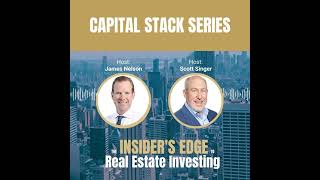
Scott Singer, who has arranged over $10B in real estate financing, explains how debt and equity advisors work as intermediaries from deal sourcing through closing. He tells emerging sponsors to either prove a track record or partner with experienced operators, and to tap personal networks for initial capital before engaging focused intermediaries early.
Questions this video answers
Over $10 billion.
Six times (Scott has his name on two of them).
Summer internships in 1991, 1992, 1993.
1994.
Foreign welcome everyone to the Insider's Edge to Real Estate Investing. This is your host, James Nelson. I'm principal and head of Tri State Investment Sales for Avis and Young. And thrilled to kick off today our new series the Capital Stack. And joining us is my fellow principal Scott Singer, who is co lead of our Tri State Debt and equity finance group. Scott has a tremendous background and experience having come to Avis and Young through the Singer and Basset Organization. He's arranged over $10 billion of construction and permanent debt and equity financing on behalf of some of the most regarded families, owners, developers here in the city. So we're going to get into this. But Scott, welcome. Thank you again for, for doing this.
Glad to be here.
And you were also a great partner in the information in the book the Insider's Edge to Real Estate Investing. We went over the capital stack, you helped out with the glossary of the terms. So we really want to dive in now. But Scott, before we do that, just maybe give our audience bit of a background on how you got into the business. Maybe there's someone listening to this right now who might want to go into the debt equity business as an intermediary. So maybe just tell us a little bit about your story.
Well, I, I was born into the business, so that, that, that helps. But I, I like to think I've made the most of that opportunity. So I started in the business in the mid or early 90s. 1991 was my first summer and I did summer internships in 91, 92, 93. And I often wonder why I wanted to get into the business after. After seeing a true depression in New York real estate and a liquidity crisis for New York, I came into the business expecting that it was practically impossible to close a deal the first time around. When I started full time in 94, still it took 3 times around marketing each deal before deals closed. I think I was very, very lucky in the end to start in a challenging environment. I think that people who start in the sort of rare easy money periods come into the business expecting that it's easy and that deals should close and you don't have to work all that hard. You just sort of throw it out there. But the reality of the business is it's, it's generally challenging and it, it takes hard work and ingenuity, creativity to get deals done.
Well, you certainly have that. I know you've won the real Estate Board's deal of the year award how many times now?
Our team's won it six times. Okay, so I'VE won. I have my name on two of them. And I will say, I think the, probably the, the best and most creative deals that we've ever closed, we've not been able to submit because client confidentiality reasons, which is always first and most important. But. But no, we've taken on some pretty challenging assignments, always with a client who's strong and good at what they do. And that is very. A real focus for us and that makes it much easier.
Wonderful. And I definitely want to get into that. But just one last question. I know you still support Cornell, your alma mater. We've gone up, we've spoken in front of their real estate program. Were you taking real estate classes there? How much education was needed in advance of your fulfilling your current role?
I did. I wasn't in the hotel school as a major, but I, by about halfway through, realized I wanted to be in the real estate business. And I had access to real estate finance and other courses in the hotel school. So I actually won an award my senior year in one of the hotel school real estate classes and wound up getting an article published a couple months before I wound up in the business. So I still have that framed and I'm proud of it. Yeah, it was a great place. I was able to bring in one of our interns in our project management division who won MVP of our case study competition. So, yeah, I'll put in a plug for all the Cornell real estate programs for sure.
Wonderful. Okay. So I'm on the investment sales side of the equation. We work hand in hand. When we're going to market, you're going out, you're helping get indicatives, you're working with buyers, helping them figure out how they want to approach this. Certainly you're involved in refinancing, raising equity. A lot of different facets here. So maybe this is a basic question to start off with, but what is the role of the debt equity advisor? How do you approach this role? How do you work with cl?
Sure. Different brokers. I mean, we still refer to ourselves as mortgage brokers, but we're real estate finance intermediaries and different ones approach the business differently. For us, it's a very high touch, hands on, long process. And so we view the point when we get to a term sheet on a deal and we've selected the capital source as being roughly one third through what we have to get done. And so we start early on on an acquisition. We want our clients calling us as soon as they're looking at a proper and we help them determine how much they can afford to bid based on the capital that will be there. And then we are involved in an active outreach process. We spend as much time as we have available to us on our presentations to make sure they are complete. Correct. And I've been saying to my team that my first focus is I want our books to be set up in a way where someone with poor eyesight can understand the deal. So a lot of bold and large font explanations of the most important facets of a deal. And then the deal process is we are involved through the very end. We spend a lot of time with counsel. We're not lawyers, but we've seen a lot of operating agreements and loan documents. And so we are in the trenches through all aspects of the deal until it closes.
Wonderful. Well, I know this is an introduction of the series and in the following episodes we're going to get into key terms and sizing, we're going to get into the financing side of the equation. We're going to talk about, about equity and joint venture structures. So we're going to really get into the details, but again, just still keep it in high level. And you know, this question applies for maybe someone new to the business. Maybe it's someone who's got a track record. When you are working with a new client for the first time, what are you doing to get an understanding of what their capabilities are? You know, are they, for lack of a better word, bankable? So how you're approaching this and how you can best position them in the market?
Well, I think one of the most important aspects is understanding what they want and what they need. And that is very different across our clients. We represent some multi generation great families of New York real estate who come in with a significant set of existing relationships. And that is a very. And what they need is very different than a new up and coming company. Maybe someone who's spun off and has been an employee until recently and really needs to make a name for themselves and doesn't have their own relationships so that it really starts with what the client needs as far as vetting. We are in person people, we're in the office, we are out of the office, to the sites, to the clients offices. We've really built our careers around owners who are either headquartered in New York or who have an office here. And so by coming over to Avison a few years ago, they added people on the ground all over the country and all over the world. And so we're able to have those in person interactions in a different way than when we were a boutique. But that's critically important to sit with people, to walk their sights, to meet their teams and to understand what they have accomplished and what they need going forward.
For emerging sponsors who are listening to this show or watching it right now and thinking about how can they put themselves in the best position, let's say they've just, they've worked at a big shop and they are striking. You know, they're heading out on their own right now. How are you going to leverage their past to make them look like really a qualified sponsor? And then how are lenders? And then maybe we could talk even a little bit about equity. How are they looking at that potential sponsor in willing to back them?
Yeah, it's a very hard time to be doing a first deal. There's no way around that. And so we focus on the reality of what role or roles that team that is now doing the deal has actually played previously. It's easy to claim an involvement in a role, but we will get to a point early on if we find the right capital source where there will be a face to face meeting and a long conversation about what the role really was and what they did. And investors are smart, they will see through any puffing. And so in today's environment we are very focused, especially in raising LP equity, in showing up front that there is serious specific expertise and track record with the type of project, the size of project in the local market. And if those pieces are not in place, then the focus quickly turns to who we can help that new sponsor bring onto their team or into the deal, who will provide the expertise and track record that's necessary. In other markets it is possible to be more lenient in those ways, but not now.
I'm really happy that you brought that up because that's one of the premises of my book and one of the questions I always get or I ask people, what is the number one thing holding you back from investing? And many times it's lack of capital, maybe it's lack of experience. Track record suggest in this book is bringing on a partner, an experienced partner who you can not only learn from, but leverage their track record. I mean, that kind of sounds like that's what you're saying. If this is someone's first foray into an acquisition, a business plan, choosing a partner who has done this before probably makes your, your job and finding potential investors all the easier.
Yeah, and it's really not a question of easier, it's a question of possible. And so we have to be in this environment realistic upfront as to what's possible and what's not. We are in a fortunate but unhappy situation frequently now of saying it's not feasible, it's not possible to do what a developer, what an investor wants. And we are sifting through to find the possible and to create the possible. So we try not to be simply, no, forget it. It's no but. And here's the but. Here are the ways that we can make the project feasible. I speak to a bunch of Cornell groups and one of the questions that I have had frequently is how do I start? How do I raise the capital the first time? And what I say to them, and it really pertains to anyone, is just look around the room. This is when I'm in a group of undergraduates or graduates, look around. This is your network. This is your first network. Get to know the people in the room. They are, some of them will be very successful. That'll play out well over time. Some of them come from family money or have other connections. Think about who you grew up with, find your network and use it. And the first capital is going to come from someone you already know. That's the way to grow the equity side of the business. And then we can be accretive to that and we can get into this more later. But at Avison, we've developed a group of principals who have relationships with the billionaires, we call it. And these are extraordinarily wealthy individuals who do not have large family office structures around, but who do like to invest in real estate. And first and foremost is they're not going to talk to anyone unless there's a personal relationship. And so we're trying to leverage our networks the same way that I'm suggesting to the students.
So what is the preferred order? You've got a sponsor who's found an opportunity. So they come to you and say, okay, Scott, I'm looking to do this deal. Let's just say to keep things simple, it's a $10 million all in transaction. You look at this and think you can get 6 million of financing and we can talk about how we would go and structure that. But there's going to be a $4 million equity requirement. Is it? Before you go to a potential lender, Are you telling that sponsor, look, you need to have your equity lined up where we can go to a bank and say, okay, we've got the $4 million soft circle. These are the investors, or is this all kind of happening in tandem?
Again, it's different for different types of sources. So if we add a zero, right, and we make it $100 million transaction, where there's a $40 million, then many of the investors who play at that level, many of the developers who play at that level have substantial internal financial strength and a track record. Then it's really dependent on the market. In a better market environment, the lenders will give that developer the benefit of the doubt that they have or will raise that equity. And often it starts with debt. In an environment now where debt is somewhat uncertain, then investors may require knowledge about the debt being in place in order to spend time. So it's very, very situation dependent on a $10 million deal. If it's a, let's say someone's striking out for the first time, meaning going out for the first time to raise on their own. It will be challenging to get lenders to pay attention until they know that the equity is there. It's chicken and egg, and both are important. So we do a fair amount of back and forth, back and forth, focusing on both sides and finding the interested parties and then pushing forward.
So I know each of these situations are so specific to the sponsor, the type of opportunity and we're going to get into in future episodes about the different types of lenders. But clearly we're at a time in the world where community banks are under a tremendous amount of scrutiny. We had one of the largest here in New York, sign your bank, implode. And so now I would imagine it makes things a lot more challenging for other community banks to do certain things. But there's also this whole world of private lenders who are out there. In fact, you know, we speak to a lot of investors. It seems like everybody today is a lender. You know, if they're not out there, they say, well, why would I buy if I can lend? So you, you have this whole world of private lenders. I just, I wonder for them, is it more important the economics of the deal as opposed to the sponsor? And I guess that's also going to beg the question, are we talking about recourse financing, non recourse? Again, we're going to get into that in the future. But I'm just kind of big picture trying to prioritize. Is it the sponsor, is it the deal? Meaning that the metrics of it, is it the business plan? Like, how do you, how do you weight those? And is it different when you're talking about maybe a private lender versus a conventional bank?
If a lender's not focused on the sponsor first, then that Means that they are comfortable taking over the deal. And that is a challenging place for a developer to be when they're getting their senior capital. But that is the case with a large number of the new entrants into the market. They may not be loaned to own. It may not be the purpose, but it is not the terrible scenario that a foreclosure or a takeover is for a traditional senior lender. And so there are definitely examples of groups that were owners first that created lending businesses that in this challenging environment have proven that their intention is not to take the properties, that they really do have two separate businesses. One that is lending with capital, that wants its money back and just wants to earn its return. But for in our business, which has primarily been focused on existing experienced developer groups, we are focusing on the sources who focus on the sponsor first because that's generally the most attractive capital and the lowest cost.
That makes a tremendous amount of sense as we start to wind down here. Just thinking about advice that you would give for sponsors, emerging sponsors. I think so many people are focused on the deal first. I've got to go find a great opportunity. So let's say they found it, they found this unbelievable off market deal, but then all of a sudden they scramble and they're trying to raise equity. Go find a lender. I'm pretty sure what you're going to tell us is that don't wait until you have a deal. Would it be better to start making out, you know, start cultivating investors, you know, having them think about your business plan. Should they be reaching out to a mortgage broker before they actually start bidding? You know, just thinking about how to put themselves in the best position to actually be able to execute when they find that great opportunity.
Well, there's a softball. So yes, always reach out to the mortgage broker first. I think credibility is key, especially in a challenging market. I think it is most important to not overestimate the capital that will be available or the pricing of the capital. In today's environment, it starts with the network. And that network can be grown by having the right intermediary helping and involving whoever that person is going to be as early in the process is important because most things don't happen quickly now. And if you're going to use an intermediary, use them on an exclusive basis, hopefully us. But regardless of who it is, if a broker is willing to work on a non exclusive basis, if that's their business, then you have to question what level of focus they will have in representing you.
That's wonderful. And I know we're going to be getting to this in further detail on how to go about this, but if I didn't already give you a slow pitch, maybe we're doing a home run derby here. So how does someone go about and find what makes for a great debt equity advisor, mortgage broker? How do they find that person? How do they know if they're competent?
That is a softball look for us, the best pitch that we can make is the clients who we represent and who have been using us for a long period of time as well as the new ones who have, who have come on recently. And I think that that is a great place to start. Can a new intermediary do a great job? Yes, certainly it's possible. But look for a proven track record and then ask how they operate. First and foremost, do they insist on exclusives? If not, how many assignments that they have that they're just shooting out? And what does that tell the capital on the other side about their focus and knowledge about the deal? That's the most important reason that we work only on exclusives is that the capital sources know that. And so they know that we control the deals. The clients always make the decisions, but we control the deals. We know the status and they are as unlikely as possible to be wasting time if they're talking to us. And I think that's critically important.
Yeah, I think that's a great way to end as well because it's not just having that track record but that experience. So when you pick up the line and you're speaking to that loan officer, it's not a first conversation. They know that what you're bringing is vetted and gives you the highest degree of success. So Scott, thank you for joining us for this. I know we're going to get into the details in the next couple weeks. I mean the, the whole capital stack is such an integral part of being successful. I know on this show we focus a lot about finding the opportunity, executing on it, but certainly capitalizing it is, is vital so that I'm really excited to have these next few conversations. And thank you again for joining us today.
I am as well. Thank you for having me having me.
And thank you all for joining. As always, if you have not already, you can go to james nelson.com that's where you can find out the show notes for this. You can also find helpful white papers they've written. Again, I built James Nelson.com for you to help you gain the insider's edge to real estate investing so you can outperform the market and gain the advantage. You can also connect with me at James Nelson NYC. Very active on LinkedIn, Instagram, Twitter, and that's a great way to connect as well. Thank you as always for taking the time. And if you like this episode, please give it a rating, share it with a friend. Until next week. Thank you again.









