The Insider's Edge To Real Estate Investing w. Richard Wilson
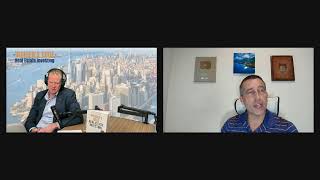
Podcast interview (Insider's Edge) featuring James Nelson and Richard Wilson (Founder & CEO, Family Office Club). Wilson describes the Family Office Club's history and scale, explains three types of family offices, discusses where wealth is created and why families seek real estate (cash flow, inflation hedge, development exposure), and outlines how wealthy principals prefer control and trust-based relationships. He emphasizes due diligence and red-flag detection, introduces Dewey (an AI due-diligence advisor that analyzes deals ~50 ways and generates questions), offers practical fund-raising advice for sponsors (one-sentence pitch, one-minute video, one-pager, 12–15 page deck), and summarizes mental models learned from billionaires (expectation of excellence, relentless learning, anti-herd mentality). The conversation also touches on lifestyle and health priorities among ultra-wealthy individuals and closes with membership/contact options (familyoffices.com, pitchdex.com).
Questions this video answers
2007 (18 years ago, as stated)
About 300 in-person events
Published 13 books; interviewed 47 billionaires and about 60 pro athletes
Out of ~1,300 investor clubs globally; offers 30 live events per year and 30 AI tools for dealmakers
Dewey (Dewey Instant Due Diligence Advisor); it analyzes deals in roughly 50 different ways and generates an initial set of ~7 customized questions for diligence
Welcome everyone to a special edition of the Insider's Edge to Real Estate Investing podcast with us today. Thrilled to have Richard Wilson, who is founder and CEO of the Family Office Club. Richard, thanks so much for joining. Really appreciate everything that you do for the community.
Yeah, thank you for having me here.
So, Richard, maybe for our audience who is not familiar with the Family Office Club, maybe you could just give everyone a background on who your members are, the type of programming that you put out, and really the community that you've created.
Sure, yeah. So I started this Investor Club in 2007, 18 years ago. In the last 18 years, we've hosted 300 in person events. We've published 13 books. We've interviewed 47 billionaires, about 60 pro athletes, including Mike Tyson. You can see my interviews with Mark Cuban and Tony Robbins and Tim Draper and Grant Cardone@billionaires.com and essentially we've put a ton of work into just providing thought leadership and just building good karma in the ultra wealthy family office space. And now we're out of 1300 investor clubs globally. We're the only one that's offering 30 live events a year and 30 AI tools for deal makers. So we're proud of that.
And I definitely want to get to all that, especially what you're doing in the AI space. But we'll just give a personal endorsement as I've attended one of your invest events in New York and can just attest to the quality of not only the speakers but also the guests there. So you've really kind of locked into a very large space in that the family office. I think your statistic was roughly $14 trillion of wealth controlled, which is more than all of private equity and venture capital combined. So talk about how big that universe is. I mean, how many family offices are we talking about? What's the range when you talk about a single family office to maybe some of the multi family offices you work with?
Yeah, sure. So there's basically three types of family offices. There's a virtual family office where people outsource everything and they could have as little net worth as 7, 10, 20, $30 million. There's a single family office where if you sell your company, you might want a team serving just you. You might hire a few wealth advisors, but it's really a full time team serving your investment needs. And then a multifamily office is like imagining a wealth advisor, completely redesigned to focus on the unique needs of somebody worth $10 million or tens of millions of dollars. More long term planning, more holistic connecting all the advisors, centralized planning, you know, maybe some charitable giving, tax planning, estate planning, all of that kind of wrapped into one. Ideally those are the three types of family offices. What's interesting about our space is that many people are worth tens of millions of dollars and especially if they're not in the US or Western Europe and they've never heard the word family office before, they might have a holding company, they might have all their advisors meeting together once a month. They might have all the signs of a family office, but still just don't even know the term. So they don't self define as a family office perhaps. And then you have some marketers that really are just trying to sell you product and they call themselves a family office just to try to sound fancy and try to get in with ultra wealthy families. So those two things muddle the industry a bit. There's three types. There's the marketers who try to attach themselves. There's the super wealthy families have never even heard the term, even if they basically are one. So that's just kind of like the state of the industry. And people told me I was wasting my time 18 years ago when we bought family offices dot com. But now nobody says that because the industry has grown so much thankfully. But that was just a little bit fortunate timing I guess.
And if you have the breakout, I'm curious, out of these family offices, where was most of this wealth created? And then I want to get to the next part. You know, how important is real estate as a component either to achieving that wealth, continuing to grow it?
Yeah, great question. So when I started consumer products, real estate, industrials, technology was like number three or four on that list. Now very clearly I see technology being where the most new wealth is being created and real estate as a top three area. You know, finance and investments is still a top area as well. But what's interesting and more important than that is that every, just about everyone who gets wealth says themselves, what should I do? Probably play a little bit of defense, diversify to the max and the wealth in the, in the stock market. You know, every wealth advisor beats one song called the diversification song. It's the only song they know and that's their job. Play defense for you and diversify. But the smartest family is, are doing that then also investing in real estate and then they're playing offense on their balance sheet in one or two very focused ways where they're better than anyone else in the world of playing that unique game. But just about every family wants exposure to real estate. You know, usually 80% of it cash flowing, maybe 5, 10, 20% development. And unless they made their money in real estate or you know, that percentage might change of what they allocate there. But just about everybody wants hard assets, they want like some land, they want like cash flowing real estate that's going to move up with inflation hopefully, et cetera.
And how are you seeing these family offices get access to real estate and how are they getting involved up and down the capital stack? Are a lot of your contacts and members investing directly where they want to own, they want to control the real estate run the day to day? Are they coming in more in a limited partner capacity where they have an operating partner? You know, are they getting involved on the, on the debt side? I'm sure all the above. But, but for a lot of these ultra high net worth individuals, where do they tend to gravitate to?
Yeah, I think like there's a full spectrum. We have 10,000 registered investors in our club. There's about a thousand that are super engaged at a time that are attending our events and like actively allocating and super activating one point in time. And so there's a full spectrum there. I would say that people say this, this saying in our industry that's super non helpful and it's kind of a get out of jail free card. Anytime there's a tough question on stage, they'll say, well if you know one family office, you know one family office. So I can't really help you with any insights. It's like, all right, well that was a waste of time for everyone to hear. But it's not true. If you look into the, the animal kingdom and say like how many legs do animals have? Or like what do they eat? Oh well, I can't help you. You know, they're all unique. It's like, well that's not true. There's like a genus and species and within that subcategory they're pretty damn similar. Right. Like some have spots and some have this. But so the same thing with family offices, right? If you're a first generation family that made all your money in auto dealerships, you're probably investing in other similar things of other similar age. People that are first generation that made their money in auto dealerships. And so part of it is narrowing it down to what genius species type of family office it is. And second third gen families typically are not entrepreneurial enough to keep on spiking the wealth up. So typically just not passed on as a value strongly enough. And so they turn into diversifying, just being passive in funds and they usually don't have that part of their balance sheet that they're really playing offense on, at least not successfully. Some do, but most don't. So that's one thing to keep in mind. The other thing to keep in mind is that if you're dealing with the principal of a single family office or someone who's worth tens of millions or hundreds of millions of dollars, they're an entrepreneur. They're basically like a super founder. And so coming at them with like, want to be my lp? You want to be a passive investor in this deal and that's like the only way you would ever possibly work with them. You're just going to lose out on like 90% or 70% of relationships because some will be happy to, but some of them are entrepreneurial and they're like, well how about I give you all the capital you need and we're a JV partner or we're co gp, we'll fill up half the deal, you go run around and find the other half or we'll be pref equity or we'll do convertible debt or something really unique like that. So I think that's important to know is just that like the wealthiest people you work with are not always going to fit in your neat little box of being your passive lp, you know. So being open minded will allow you to get four times as many deals done in my experience.
Yeah, that makes a ton of sense. And clearly in my day to day I'm working with professional real estate investors who own operate. However, one thing I've noticed, and first of all I'd comment that a lot of the real estate wealth that sometimes inherited or maybe it comes from someone who owns a business, their company, their warehouse. I remember selling the Liberty Brass factory in Queens and suddenly the value of the real estate became worth so much more than the business. So I'm sure you see that a bunch. But what's interesting is even these families who own real estate inherit real estate and they're not in the real estate business, meaning they're not actively investing when it comes time to reinvest the proceeds. Typically when they have great advisors, you know, they start looking at what happens if I cash out and what's the after tax result as opposed to maybe implementing a 1031 tax free exchange and defer, you know, we see a lot of these. Again, even non real estate professionals gravitate towards that. But the point I wanted to underscore is it most of the times These ultra high net worth individuals want control. Right. They don't want to go into a situation where they don't have major decision making. So I know I just threw a lot of things out, maybe three topics there. You know, businesses that own real estate and the real estate becomes valuable. The second is kind of tax efficient strategies and kind of that third piece about, you know, control and wanting to have that whether you're an LP or a gp, but just anything you want to tackle first.
There's. Yeah, yeah. I think that anytime you can build a business and at least on a percentage of your locations be owning the real estate underneath, you control more of your own destiny. You could pay yourself slightly below rental rates and then as you get ready to sell, you could sign with yourself 20 year leases to boost the walt on a mixed use real estate project or just to secure income for the future with some nice, you know, bumps that are slightly above a reasonable inflation gain on those rent bumps or something like that. Right. And that the buyer who's institutional may like that there's a long term lease locked in. Oh good, we're not going to get like renegotiated with six months later and, and have to move. So that, that's one thing we see often. I mean look at the Roman Catholic Church, you look at McDonald's, you look at like all these different organizations that acquired real estate almost as a secondary effect of what they're doing. And now it's a massive balance sheet item. Right. So but on the control issue, I would say that like it's true. Yes and no. Like I think that investments are made based on trust more than anything else. Anybody can put any number on a piece of paper. You know, the wealthiest want to meet you in person, walk the property or have someone on their team walk the property. They want to see a picture and video, but most important, meet in person. And if it's, if there's no trust, it doesn't matter how amazing you say your deal is like they'd rather invest with someone they trust if, even if the deal is more plain vanilla than someone who over promises and just they just for some reason subconsciously are not trusting what they're saying. And I don't know them well enough, don't have references on them, et cetera. So that comes out all the time. And then with control, sometimes it's negative controls, sometimes it's, if you mess up, then you get a forgiveness period and then we take over because we're not going to have you lose our money. Especially if they're the majority investor. They might say, great, yeah, you can run with this. But if it goes off the rails and then we notify you and then you still don't fix it, you get one last warning and then we're taking it over and you're out of the deal. You know, because we're not going to be passive to the point of you burning our money. So we're dealing with a distressed manufacturing investment deal like that right now. We just took over an apartment complex ourselves last week that was distressed. We came in as prep equity. So we're in all of our money out first and then we're getting a profit split with the past investors who kind of didn't run the operations correctly in that deal, et cetera. So I think that families do prefer that and like that. But they also know if they're going into a $50 billion asset manager, how much leverage do they have? I mean, the GIC out of Singapore might be allocating $200 million. You're like nothing compared to a sovereign wealth fund or an endowment fund or pension fund writing 30, $50 million, $100 million checks and you're coming in with your $3 million. And you're used to being like the big, big check at the party, like while you're not in those situations. Right. Like, so I think that it completely changes if you're dealing with institutional managers versus a small company versus a moderate sized sponsor. But the one point I'd like to make is just that family offices can be life changing. And even if you didn't raise a single dollar from family offices, learning of how they think, their mental models, their deal structures or strategies, how they source deals, how they negotiate, all of those things could just make you so much more effective in the real world just from learning from them. But also if you meet one family office, a $4 million check equals forty hundred thousand dollars checks. So it's like it doesn't matter if it takes 40 times as long, it's still worth it. And you might get 40 million, which is 400 small investors. So it's like the dramatic things that can happen when you meet someone who has a publicly traded company. It's truly life changing and you just learn a ton along the way. So that's what we have fun doing here.
Amazing. Well, thank you for covering all those topics. I know I threw a lot at you. I want to go back to one of the first things you said about the importance of trust. Okay.
Right.
And I think I want to point out at this time that you're not just an Eagle Scout. I think a generational Eagle Scout. So I guess maybe your father, your grandfather, uh, I, I only made it to the rank of stars, so. So now I'm going to fail miserably and remember, but if the Scouts oath, trust, loyalty, obedience, it's definitely all in there. So I, I guess the question is, how do you establish trust? How do you, if you're an investor, how do you do your diligence to make sure. And again, we could talk about, you know, after the Madoff scandal and all these things. I mean, how do you really know and establish that trust?
Yeah. Well, one thing is you learn to look for red flags, right? Like you and I have both seen or been part of and watched billion dollars plus. And deals get done, right? So when someone comes out of the gates and they're promising an investor an 82% IRR, you're like, well, what are you doing here? Like with this real estate development? Or what are you doing here that gets you an 82% IRR? Because even if you believe that, if you pitch that, you better be able to back it up with some conservative assumptions or you just kind of look like amateur hour. And if someone is saying that they've done 5 billion in deals and you look at the best deals Blackstone has ever done in the history of Blackstone or BlackRock, and none of the portfolios produced an 82% IRR to investors over 400 deals, and they've never pitched anything that promised investors over a 35% IRR. You're like, let's push pause for a second right there and be able to call that and just move on quickly. So that's one thing is just growing kind of a sixth sense. For what? For calling BS on things. I think there's like a daily IQ test in the world now, whether it's working with someone that's going to come fix your home, that wants to charge you more because you live in the Hamptons, or a service provider that sees your ultra wealthy, so they want to charge you eight times more than it should. There's a daily IQ test in the investment world to control your emotions, be thorough, trust your gut. You know, the Harvard Business Review had an article saying, should you trust your gut? And it says, well, it depends on what your gut is made out of. And someone like you, like, your gut's made out of thousands of deals that have gone, well, that blown up, they've gone sideways, you had to recover them. So you have to learn to trust your gut as part of it. The last thing I'd say is that what we did is took 150 white papers and checklists on due diligence. And these are due diligence best practice white papers and checklists for private equity, angel investing, real estate, institutional family, office, due diligence, took all of those and then created emergent content from that to train a ready to use artificial intelligence tool that's just free for our members. So it's like nothing that we're selling separately or raising money for, but basically we call it Dewey Instant due diligence Advisor. And what it does is analyze a deal in 50 different ways, instantly scan a PPM, a pitch deck, etc. A deal is pitched you over email and then analyze it in 50 ways, produce a report, identify missing items, red flags, unusual fees, legal structure, how it's unique, signal versus noise, all of that. And then pump out seven questions you should ask first. And the reason I bring that up is that those seven questions are customized to the red flags to the missing information that are just massively needle moving gaps in what was sent to you. And if they can't answer those first seven questions, don't use your human brain to look at the deal. Like use your second brain of AI, use Dewey, look at the deal, send over the seven questions. If their answers are horrible, move on. If they're decent, ask Dewey again. Or use your human brain and then get on a phone call after they've asked 14 questions and actually pass that test. 99% of things will not pass that or people just simply won't answer your seven questions.
Wow, that sounds like an amazing tool and very timely with everything going on. Richard, just curious, with that tool, does it also do the diligence on assumptions that are used so often in a deck? You're trying to make your pitch and you just say well okay, here are the demand drivers. Population growth, annual median income. Does this AI actually check those assumptions? Because I don't know how many people when they look at an investment deck are actually vetting all those statistics used. And not that anyone might fudget, but but it might be interesting that the fact check as well. Some of those things go into a deck. I don't know, maybe a future version.
It does, it does. It looks at some of those assumptions and does a first principles breakdown of like what are the core principles underlying this investment? The core assumptions that if any of those are not true, this investment completely falls apart. And one area famous for losing people's money is the Film industry and Broadway musical type stuff. And I know that from experience and it's not saying that all deals are bad in that area, but just about all in my experience. And I was pitched a deal from a family, a sentimillionaire family that we help operate as their outsourced chief investment officer just a few weeks ago. And I looked into the deal, the pitch deck, and it said if we stayed at 95% sold out at our shows over 7 or 10 years, the return to investors would be 20x. And I looked it up and even Cats and the most famous like Hamilton Broadway musicals, like the most famous ones you could think of, Phantom of the opera, zero of them ever had 95%. Like you're literally saying this would be the best Broadway musical out of 4,000 produced the last decade. And then that's what you put in your deck is a promise to investors. I was just like, it's like unbelievable. It's like anyone with any experience would just call BS on stuff like that and easily check stuff with AI these days. So I just like would warn people against overpromising amateurs over promise. True professionals display their assumptions and build trust by pointing out the elephant of the room of like, look, here are the risks. You need to disclose the risk to cover your backside anyways. And no one's going to take you as honest if you try to hide the risk and then like have a bunch of puffery and pumping the deal up saying this is the best deal of your life, you know?
Yeah. I mean, on that note, and I was very fortunate, one of and remains a mentor of mine today, Paul Massey, who I started my career with, we go with these meetings and he would always, if we were selling a deal, he would point out all the issues with it first. Paul, aren't we salespeople? Are we trying to make a deal here? But talk about earning that trust. And at times it was almost trying to talk the person out of the opportunity. Here's the pitfalls, this is what could go wrong. But I think from the investor they say, well look, that's my downside. Either this risk profile is a match or not. And then we can decide whether we want to go forward. And by the way, all those things were gonna come out through diligence anyway, so why not hit it up front? So Richard, you've given some incredible advice here on kind of how to present an opportunity. And most of the listeners to this show are either active investors or aspiring investors. And many of them are out there finding deals. They're looking to Go out and raise equity. So the question is, and a lot of these deals, we're not talking about hundreds of millions of dollars. It might be, you know, couple million dollars, five, $10 million. And sometimes that money is harder to raise than $20 million plus because, you know, you've got a lot more institutions. But what advice would you give to the sponsors out there, the syndicators who are trying to raise money? You know, whether it's a value add, multi deal in the Southeast or whatever is hot. I mean, how would a sponsor like that try to get in front of your audience to make a compelling case and to maybe make a match with a first time investor?
Yeah, yeah, sure, great question. So the first thing is that like at Family Office Club, it's like we have like a Netflix mobile app type tool with 1250 investor talks. So when you join, you can stream ideas from billionaires and sent to millionaires literally telling you how to pitch them straight from the horse's mouth. Right. So that's important to know. The other thing is that the very core premise of what you're doing should start from here is something very unique. You know, Peter Thiel says if you ever find yourself in direct competition, you've really screwed up. Like you should do something that is refreshingly unique in your deal structure, your branding, your positioning, your extreme focus, something that other people didn't know was going on or have never heard somebody pitch before. That's the initial premise that is most important that you need to nail is to have a unique strategy that people can understand that forces appreciation. Once you have that, I find that 99% literally of people raising capital mess up everything else I'm about to say. And we've surveyed people at our events who have heard me say this and they still don't do almost any of it. And all of this costs almost nothing. And so you can just take this advice and run with it. Basically, you have to be able to say what you're doing in a single sentence. That makes people lean forward, know you're credible and know that you're experienced. Like, I think you've closed over $5 billion of transactions. Most people can't say that unless they're a complete fraud, because they just haven't done that. And so you want to say things that other people are not saying and that other people can't say because it's just not true. That's the first thing. And you have to say it in a single sentence that makes it very clear and compelling that you are established and Focused in a way that other people are not. So the single sentence is important. A one minute pitch video of you explaining your strategy, where do you execute it? How do you force appreciation? How are you credible at least from the founder for part of that one minute video. And then show pictures of assets before and after what you've developed. Picture of your team, your manufacturing floor, whatever it is, if you're buying warehouses, etc. And so having the one minute sentence or the one minute video built off of your one sentence pitch and a one minute video is just three or four sentences. Pretty easy for anybody to create in a day. And then instead of having a 44 to 70 page pitch deck like most people, a 12 to 15 page pitch deck and then a one pager, that's a one sided PDF. And your video should be in your one pager in your pitch deck. The one liner should be at the top of your one pager. The front page of your pitch deck. So many people are Greek God capital on their pitch deck, Confidential, in whatever. On the front page you have no idea what they're doing because it says Wilson Capital or some nonsense. And then you go to the next page and it's a disclosure that your attorney would have been fine if you put that on page 14, probably. And the next one's a table of contents. Like I don't even know what this firm does. Now I'm on page four, you know, and so you're just dead in the water. Like the more valuable the investor, the more busy they are, right? I'm not worth $100 million and I have 30 LLCs and lots of employees and equity stakes and K1s and you know, every day some county sends me a property tax, you know, notice, update, whatever, right? So like, like busy people do not have time to read your 70 page deck, you know, Wow.
I really hope our listeners here are taking notes because Richard, you just gave a lot of great actionable advice. And starting with I love the Peter Thiel reference and it almost sounds like Blue Ocean strategy. And when I think about our value proposition, if I'm just running the same sales process that any other broker does, then I'm a commodity, right? And then the only thing that we're competing on is fees. But where is the opportunity? How are we doing things differently? How have you found an opportunity? And I think it's such a big part of my book, the Insider's edge to Real Estate Investing. How do you have the insider's edge? How are you gaining the advantage? And so we Talk about specific strategies in here. And it doesn't have to be rocket science. I love the fact that your elevator pitch, it's got to be tight and it's got to be, you know, just to give one quick example, in this book I talk about how to unlock the value of vacant distressed property. So pretty simple concept. Vacant properties sell for less money. They're difficult to finance. Let's say you have a tenant relationship in your back pocket and you can buy that vacant property at a discount. You sign that tenant at the same time, you package it almost instantaneously, you've added value. And ps, that's how Jeff Sutton became a billionaire. Running around New York, finding stores for Payless and then Walgreens. So, you know, you don't have to reinvent the wheel either. So I really appreciate all the guidance there and some really helpful advice and I hope our listeners will take advantage of your network there. So Richard, the fact that you have interviewed, I know that the target is 100 billionaires. I think you said you're up to 46 and pro athletes. And I love the fact. And you all should definitely go to billionaires.com to get those podcasts and the videos. In each of those interviews, you have the three steps or the three action items, the takeaways. So you've heard dozens of these. What is it that these billionaires have in common? What are kind of the top three things, if you will, that they do that separate them and put them on a totally different stage than even the millionaires out there and high net worths out there? What is it about these billionaires that they do so differently?
Sure. One is they expect excellence around them and for themselves. So the expectations is true excellence. And if you don't meet that, then they unapologetically will replace you and not work with you or be very hard on themselves. And others, like Sam Zell says he likes to live life full throttle. Or he said that obviously he passed away not too long ago. But I think living life full throttle really sums up a lot of what these billionaires go for. A lot of sentimillionaires. And billionaires, they get to several plateaus where they say to themselves, okay, you know, if I want to, I could just never work again. Or like, okay, I have enough money for everything I could ever imagine. Like, and some people take their foot off the gas and they kind of just coast and then they work three hours a day, an hour a day, and that's fine, right? But a lot of them who reach hundred million or a billion, and not just 10 or 20 million. They're driven by something much deeper and it's combination of drive and expectation of excellence. Another thing that's made me even more excited to study them is that they're voracious learners, they're curious, they're asking questions. And one of the reasons that they're always trying to learn is they're trying to find the gap in reality where people have made all these assumptions and said, this is how the industry works, this is how it has to happen. And then really what they find is that if everyone agrees around the table, they said, yep, that's a best practice. Yep, that's how everyone does things. They know if that is the statement around all their strategies, they're, they're dead. That it's a very bad idea. And they know that they're onto something. When someone says, no, you can't do that. No, that's not how the industry works. Like, no, that's, that's not going to work. Like. And one billionaire interviewed on stage in the real estate space, he said that normal maintenance people at an apartment complex might handle six to seven jobs per day. They expected people to handle 25 to 27 jobs per day. And so they stopped hiring anybody from their own industry because they came with all this baggage of like, what are the norms? And he said they would retrain them to their method, their strategy. You have none of that baggage dragging behind them as an anchor. And they were wildly more profitable and successful in managing their real estate. So I would call that like anti herd mentality. Like, it's not just trying to do something unique, it's knowing that in some parts of your business you have to take risks. Like Ray Dalio recently said, if you're not aggressive, you'll never create wealth. And if you're not defensive, you'll never keep your wealth. And so that's why you want to have the three parts of your portfolio, right? Diversify over here, let the wealth managers do their thing in some part, invest into real estate, play offense on your balance sheet, which again, could be real estate if you're a real estate family. But lots of people created the wealth outside of real estate. So those are a few of the unique things. And I would say that what's so interesting, that turned me on to studying pro athletes after I've gotten deep into billionaires, and we're still going towards the 100 Billionaire Interviews, and I've identified 245 books authored by billionaires, and I read 131 of them so far. And you can see all of our interviews at billionaires.com and my top 10 favorite books at billionaires.com books. But the last thing I'd say is that what's so interesting is that the billionaires don't say, do these 12 things and you'll be worth tens of millions or 100 million or a billion dollars. They don't say that because time moves forward, industries evolve, and there's these little windows of opportunity that people have to jump through and execute on. Right. Like Sam Zell rolling up mobile home parks. You can't do that exact same thing today. You could, but it's a different model. And so the point is that what they do provide are mental models. They say, this is why I was successful. It was my grit, my expectation of excellence, my voracious appetite to learn, my disregard for industry standards, you know, et cetera. And basically it's passing on those mental models is what they try to do in the interviews and the books. And after interviewing lots of pro athletes such as Mike Tyson and NFL and NBA players mostly, we're trying to download those mental models, the mental models of family offices sent to millionaires and deca millionaires, and just infuse those into the members of our investor club to kind of change their life going forward. Wow.
You know, it is when you listen and I'm thinking of some of these interviews I've heard with Dyson and you're talking about completely, you know, do not accept the status quo. Right. And you said don't follow the herd. I mean, Musk is such an incredible example of that. I mean, again, I don't know how he dreams up half of this stuff. You know, he's definitely operate on a different planet for sure. But I do wonder for our listeners, how do you find that next big thing and how do you know that maybe the reason why it hasn't happened is because it's not the best idea. So how do you make sure that your North Star is the right direction?
Right. One thing is Ken Wilber wrote a book called the History of Everything. He's a philosopher. He says everything goes through immaturity, adolescence and maturity. Part of it is collecting enough information that you move from immaturity, at least to adolescence and then hopefully maturity. Because once you're in the maturity stage of understanding, this is what family offices are looking for. Here's how to structure a deal in a smart way versus a bad way. This is what a COGP deal looks like. Here are trends in the industry here's what everyone's talking about it. You throw a loaf of bread and you hit 10 multifamily syndicators upside the head at a real estate event. And so when you see all of that, you get more of a lay of the land and you're mental map becomes a bit more accurate than it was two years before. Then you can identify a little canyon between the mountains or all of the investors on stage complaining about the same thing or something that you see inevitable. Like the CEO of Under Armour said that he tries to expedite the inevitable. And so if you see some trend that's coming, you see something investors would truly appreciate and everyone else is being broad and you can be laser focused. Or if you think of seven things you do now and one or two of those things make you all the money. And out of those two things, one of them is super unique and it's going to obviously grow and the other one might stay flat, then it's really leaning into that. And Peter Thiel says you can just be a blob of mediocrity or you can decide to focus with a definite purpose. And prioritization should be painful, the things you're saying no to. Warren Buffett says you should know that they would for sure would make you a lot of money. But you've already prioritized and you have your extreme focus, which Peter Thiel says is a superpower. And I think Elon says that speed is the ultimate weapon in business. And so if you don't have extreme focus, you learn slower, you get feedback slower. And if the idea is horrible, you're going to find it out faster when you're more focused on it. So we try to apply that to every part of our business as much as we can. And I started this business broke in a studio apartment in Harvard Square without enough money to pay my rent that first month. And it's just from learning from people like yourself, deca, millionaire center, millionaire billionaires, we've been able to build a great business ourselves. So that's kind of the fun part of this whole thing.
Yeah, Richard, what you had to say, I mean, I think about it and I certainly have not met anywhere as many billionaires as you have, but I have fortunate to have some as clients and have had the opportunity to engage with them. And there's no doubt this, this passion, this full throttle and you know, well onto their years where they could have retired decades ago, but they just, they just love the game, right? And it's just, it's just Always raising the bar. So I could certainly attest to that. You know, that being said, you know, the billionaires I know, they don't operate on the same plane as far as time, right? And as far as, you know, they're not clearly having to check into the office from 9 to 5, you know, might be getting a call from their yacht out in the, you know, the Mediterranean Sea. But there does still seem to be that, that balance, right, where they're really having fun with it. And I don't know how much you, you've seen that. And then I wanted to ask you personally because I know part of your bio and I don't know if this is part of your decision to reside in Hawaii, but, but you know, clearly if you wanted to be around the most billionaires, you'd probably be, you know, New York, grinded it out with everyone else. And yet, you know, you've got this ultra healthy lifestyle. So I, I guess, you know, the, the question is, you know, how with, with this financial success, you know, do you also find balance?
Yeah, yeah, no, that's a good point. I think if you love what you do, your goal is not the traditional sense of balance. It's like the goal is to not do things that suck and deal with crappy people. It's like the goal is to fire anybody who's just a nag to your life and is an energy vampire. Like delete them, right. And like the business unit's not making money, sell them off or just shut them down. Right? So I think that is the luxury of being very successful is that you can just say no to almost everything and be pickier and just choose excellence and choose the best things around you. I think that running our club for almost two decades now, I've seen so many families that are ultra wealthy. But many, many times the ultra wealthy sense of millionaire or billionaire is clinically obese. They're for sure going to die early and they have less energy, they're less healthy. Some of them have been married four times, some have drinking problems or addiction problems which may come from childhood trauma. So you can't blame them for what's happened to them when they were a child maybe, or the hardship they had to go through. I'm not saying that. But what I've seen is a lot of unhealthy life choices that came with the building of wealth and sacrifices. So personally, after seeing that, my goal is to have my energy and being ultra healthy fuel me becoming ultra wealthy and associate with those that have similar goals and are aligned with that because that's not everyone. And the weird thing about it is that even at a doctor's investor club event I was at where everybody in the room was paying either 30 or 50,000 a year to be part of this club, I had 180 people raise their hands if they spent 30,000 or more on their health in the last year. And one hand went up. And I don't know if it's because they had a cancer surgery or a cosmetic thing done, I don't know. But what's super interesting is every people, every person even in the health industry was spending more on their wealth than their health. But even if you're the greediest person on planet earth and all you care about is money, it's like if you get sick more often and die early, guess what? You're probably going to stop making as much money when you're dead. And if you're hospitalized and if you're low energy and you don't feel good and you're basically communicating to your kids and everyone around you. We worship money in this family to such an extent I'm willing to get divorced, abuse substances and not talk to my children and not have a social life and not do those bucket list trips with my college buddies, going backpacking in Everest, base camp in Machu Picchu and be overweight and die early, all to get some money, right? And it's like what happens when you die? Your son in law gets spoiled and gets to fly first class everywhere. Like, you know, it's like, what's the point of that, right? So my, my goal and I tell my kids like, look, we could have bought 20 Lamborghinis or this, this house we have near the beach here in Hawaii. But our family values are enjoying life, being ultra healthy, being outside, and we attract people through our digital funnel. We have 17.9 million people in our social media groups and we offer these 30 live events a year. So we're fortunate enough not to have to live in midtown Manhattan to network. We're like network through our own 30 live events. So we get to cheat a little bit that way. But that's super important. I didn't know you're going to bring that up, but it's something that I'm obviously passionate about. I do CrossFit with my wife all the time. We go to the beach almost every day. So it's definitely central to what I think is important.
Wow, Richard, I really appreciate your sharing that and what's most important. So thank you for that. As we wrap I would love for you to share with our audience what is the best way for our listeners to engage with the Family Office Club? How do they get involved? What are the different ways and how do they find out more about all the incredible things you're doing?
Sure. So the most unique thing we do is just offering 30 Investor Club events per year. We've got four of them going on next week. We have our 850 person annual event coming up next month with 125 speakers on stage. So it's really the in person events that make us super unique. The AI tools I think are unmatched in our space for investors and deal makers and capital raisers as well. So you can learn all about that in the membership options@familyoffices.com if you need help putting together the one minute video, the one pager, the collateral to get everything dialed in and you want to be going back and forth on WhatsApp with me to dial in that positioning, you can go to pitchdex.com and you can see the options there to work with us and getting your positioning dialed in. Even if you don't want to come to any events, we can help you on that level. And if you're not too sure about us yet and not sure like what these events are like because sometimes people host like these angel investor events and it's a bunch of startups that have nothing but an idea and a bunch of maybe high net worth investors sitting around a 20 person table listening and it's kind of worthless. Go to our YouTube channel at CentaMillionaire Strategies and then look under our playlists on Billionaires sent a Millionaire interviews. Look at our the, the video footage of our events to see the quality and I think you'll get a ton of value from doing that and you'll lean forward and want to get involved and meet us at one of our events. So feel free to shoot me an email if you have any questions. It's richardamilyoffices.com or shoot me a text at 305-333-1155.
Richard Amazing. And again, I can personally attest to the quality and the value that you all are providing. So thank you again for sharing your story and the stories of so many others who have achieved such financial success, but also underscoring the importance of doing that in a very well rounded approach. So thank you again for joining and we look forward to hopefully seeing you at one of your live events soon.
Yeah, we look forward to having you speak on stage at one of them. So make sure you keep in touch and we'll get that scheduled out and do that.
Wonderful. And I want to thank all of you for tuning in and listening. And as always, as I've been asking, I think the best thing you can do is is share this conversation with someone who you think would benefit. I do this all the time. I consume podcasts. I'm constantly learning, as Richard said. And I think the best thing you can do is I mean certainly there's so much value here. So you want to forward this to a couple of your friends who you know would benefit. So as always you can go to james nelson.com this site is not about me. I built it for your benefit. You can have you'll see the show notes, you'll see how to connect with Richard. There's also a lot of helpful video and articles that I write for Forbes. So a lot of value there for you. Until next week. Thank you again for joining.









