The Insider's Edge To Real Estate Investing with Diego Hodara
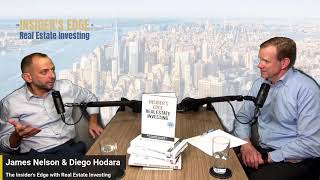
This is a YouTube video titled "The Insider's Edge To Real Estate Investing with Diego Hodara" featuring an in-depth interview conducted by James Nelson with Diego Hodara, founder and CEO of Titanium Real Estate Realty Group. The conversation, recorded in 2024, covers Diego's personal journey from Uruguay to the US, his architectural and urban planning background, and his progression from small real estate investments to large-scale ground-up developments primarily in Jersey City and Port Chester. They discuss practical aspects of real estate development including project acquisition, construction management, risk mitigation, community relations, and market analysis. The interview provides valuable insights into real estate investing and development strategies within transit-oriented emerging markets in the metropolitan New York area.
Welcome everyone. I am thrilled to have with us today Diego Hodara who is the founder and CEO of Titanium Real Estate Realty Group, a real estate investment and development company focused on mixed use and residential assets in transit oriented emerging markets within the metropolitan area. Sorry, did you need to start that back up? Okay, we are good, we are live. So Diego, welcome. Thank you so much for joining us today.
Thank you for having me.
Wonderful. So Diego, maybe we can start from. You have a very interesting story. So you're from Uruguay. You came to the US in you said 22,003. Okay, wonderful. So talk about your journey and how you made the move. We were just discussing. You spent some time in Japan, so maybe that'll give everyone a little bit of your background.
Well, my professional background, I'm an architect and urban planner by trade in Uruguay. And as we were talking before, one of the reasons I've been in Japan before this time, but even before is because in Uruguay, the University of Uruguay, the architecture school has a program for more than 50 years or so that you sell raffle tickets while you're a student and then you travel throughout the world for one year after. So I have seen the entire world when I was 25 years old and, and then when later on as an architect working in Uruguay when there was a crisis in 2001, 2002 that affected Argentina a lot and Uruguay as well, I decided to look for opportunities and I came in 2003 to the US and I chose Chicago because was my favorite city after crossing the entire U.S. so that's how I started.
So to have this architecture background because just to give the audience a sense and maybe to let them know, Titanium Realty Group has now developed close to 2,000 apartment units either completed or in construction.
Completed and half in pre development phase already.
And this is in Jersey City and Portchester.
Yeah.
So how many different projects? What's the average size project that you're building?
No, we, we started from small.
Right.
I mean in fact I started even with two family houses before these ground up projects. So step by step, two families and a little bit bigger. 19 units, 29 units and so forth. I mean lately we had the latest was the joint venture that with Elliot Spitzer on 425 Summit. We which are 390 units right before we finished 413 Summit next door, which is mostly like 150 units. But before I was doing another one with 3, 4, 5 bowing 116 units. And before High street was 83 units. So step by step now we Have a couple of projects in Portchester. They are close to 200 units each. Another coming soon in Jersey City. Larger. But you start from small.
Yes. No. I love your story and I'm very excited to have you on the show because I knew that was the case that you had started with two, four families and then just kept building. But I've got to imagine that this architecture background has been helpful as you think about know how to approach a site, what you're looking for. Now some think of architects and they think, you know, you've got design architects who know how to make a really fancy looking building. I mean I, I would. When I've seen your projects, I think that you really try to meet the market. Right. And so. And some of that I would imagine is value engineering. But I'd have to think that in your travels or your experience building and. And if I'm not mistaken, you built a Sheraton hotel in Uruguay. So I don't know if that's before you came to New York.
Before it was before. Because the truth is the, the architect school has also the problem including urban planning. So you come out with the urban planning and architecture degree in addition to that is very, very intense in construction process. So we have a lot of construction background. In fact, when I was a student I was working for a big developer there as a construction manager and included the Sheraton Hotel was one of the biggest buildings at the time. The tallest buildings at the time, 25 stories, post tension concrete system. So it was a whole innovation we are talking about in the late 90s, right before I came here. So. So I always love having boots on the ground and being in the construction process. And I think it's important to have both design and construction at the same time. Because if you are merely designer but you've never been in a construction site, how can you envision what you're designing? Eventually start making sense and you can have very big problems in the coordination that will affect later on in, in construction cost over rounds and change orders.
I love the fact that you were getting that real boots on the ground experience while you were in school. And we have a lot of students who listen to this program whether they're getting their master's in real estate. So you are going to school to architecture school. And while you're doing this you're also working on a major hotel development. So what is, what does that look like? I mean how many were you working round the clock, seven days a week?
I mean I was, I was, I was a New Yorker without knowing it. And yeah, I always like to work on what I love doing. And so it was. It was tough because I would work during the day and then I would go at night to. To the university to study at night and then juggling with the time I could to. To take the exams. But I would say that that know how that I was able to get through my practical side of the. My career, professional career helped me to make better in the academical side. Like when you finish, you have to basically build a construction documentation of a project that you started from the beginning. And for me to create that construction documentation and we have to even design plumbing. We have to become kind of our own mep, mechanical, electrical and plumbing engineers. We have to basically calculate all that. It's crazy, it's very intense. But at the end I came with no money. I'm coming from just struggling middle class in Uruguay at that time was really tough moments, but I came with that. Know how? I think that was important for me to start my professional career in the.
US So you start in Chicago. So did you have a job in Chicago at the time or you started?
So I chose Chicago. Yeah. I'm an architect. I love the city. I didn't know how tough is in the winter, but because I remember the first time I went was I think April, the end of April during that trip around the world. And I got in love with the city. So when I decided to come to the U.S. i always say I never entered through the main door of New York City and enter from the back door in Chicago. And that gave me some hedge in the sense that I would say I think I had less competition. When I was looking for a job. I was with a tourist visa, knocking doors, knocking doors. Architects didn't want to hire me. I didn't have a Social Security, I didn't have anything. I went to construction companies. They didn't have success. I went to developers impossible either. And so I ended up going to the Merchandise Mart and it has a floor for a lot of construction products and design, from ceramic tiles to kitchen cabinetry. And you have all these famous brands that you can see here on A and D building, for example, that you can go into the. And the building and you see or the other one these in Lexington Avenue. So it's kind of that floor and I was knocking door, knocking door, knocking door. I remember I spent the whole day and it was a floor that time was on the 13th floor. Then they moved to the first floor and there was a guy who saw Me like a five o' clock when everybody closed and I was going down the elevator. And he says, I saw you passing my retail, my. My store in the building like five times. Can I ask you what you are doing? Are you selling? I said I'm looking for a job, so keep it up, Keep it up. And that just this person that I didn't know, but he was giving me some, you know.
Encouragement.
Encouragement, exactly. Continue motivating me to look for it. And then eventually I found someone who was willing to sponsor my visa. There was one guy who said okay, perfect. But he didn't want to sponsor the working visa. I said, I'm not going to stay illegal here. It's not worthy. He was willing to start to hire me. And finally I found another one. And he said, okay, how is it? I said, well, you have to be willing to sponsor me. I was kind of prepared to tell him what it is. And he said, you are the perfect person I need.
So what were you going to be doing for him? Just drafting up plans. What kind of was as a developer?
No, he was a high end kitchen cabinetry, retail space. And it was the only place I was able to find a job.
So you started off by designing kitchens?
By designing kitchen. Because I knew how to cut by helping to the installation. Because I knew construction. So I could coordinate with the Hispanic construction community. You know, I speak Spanish in Chicago that you have a million Mexicans that are a lot of them involved in construction. So it was beneficial for me to communicate with them. And then I had some. And thanks for my parents who encouraged me always and my brother and my sister to get a degree, professional degree and learn English. So I had a middle kind of advanced English. I think I lost it after so many years. But I was better in my grammar. But. And that I was starting selling. So someone will come in into the retail and boom, I will sell her or him a kitchen, something like that. So eventually there was an opportunity to get to New York. And I have a business background too. I started business administration. So we presented something, we were accepted and eventually I was transferred to New York. And that's how I started my journey in the New York again. Starting from kitchen cabinetry. Eventually I moved to construction.
So you were saving up money I guess at some point along the way. And then you decided that you want to start investing in real estate. So what was it that allowed you? What gave you that idea? And then maybe tell us about your.
First acquisition was terrible. It was a mistake. What I made was a mistake because I didn't have savings much. I was living in a woke up building in Hell's Kitchen where still wasn't that trendy. And before in Chicago I started in an sro single room occupancy. For those who know Chicago was on Halsted and Jackson, right on the border on Greektown. And that time 2003 wasn't what it is today. I could hear the shootings once a while. Here I was saving as much as I could. So the first investment was during the subprime loans in 2006. And I had limited credit history, right. But everybody was giving. So I was one of those naive people who jump into these booming times and. And I bought a two family house and I thought I was making the American dream. And suddenly I realized no, I owe more than I own. And when everything crashed and so I couldn't flip that property and I started managing and trying to weather the storm with a high interest and negatively cash flowing because I had to rent it but I couldn't cover my. And it was tough because I wasn't making much money working. Now I was able to find a job in construction management. So I was doing a lot of construction for a developer in Brooklyn and in the Bronx. Great learning experience for me but I wasn't making much money and so I had to live very frugal. That was 2006, 2007, 2008 and I kept it. And eventually I was able to grow my business. I learned a lesson. By 2009 I was able to start raising capital and learned the lesson with my own money. I had put 5% on a two family house. It's not that much money but it was all the savings I had and. But then I knew, okay, I'm not making the same mistake again. We are always going to make mistakes. We are leaving our comfort zone and jumping into the unknown.
What was the mistake on the first one that just you bought in at two price or you took high. Okay, so you didn't, you didn't do your research. You thought you were getting a good deal.
I did my research and I because here where we are 2006, where is the My2 family house? It wasn't in Brooklyn or in the Bronx where I was working for the developer. It was in close to Journal Square. So I already knew the potential of that area.
Yeah, but you were just a little.
Early, maybe early in the market. I didn't have capital and. But by 2010 I wanted to buy the entire area, but I didn't have track record much minimum Just two family houses. And I was doing a little bit bigger stuff.
So were you. You were buying these two families to try to flip them. You'd buy them, renovate them and resell them. Was that the.
Yeah, by. In 2010, I was already. So 2008, I got my green card. I was without a job. Now I didn't have money. I'm cash flowing negatively with that. Two properties I had in Jersey City in Latin America was booming. But I said, now I have the green card. If I move out, I don't have the green card anymore. So it was tough. I decided to stay and I went to NYU to take the masters in NYU shack. But I focus on real estate finance and investment. And finance was important for me because I knew urban planning, architecture, construction. But I needed finance. And it was excellent experience. I learned a lot. Great professors, great classmates. We were doing business with my classmates today, whether on the broker side and the lending side. And in. So at that time, while in nyu, I started active the buying again, raising capital from Latin America and short sales reos. And I will buy the entire area. I had 50, 60 properties. At some point, doing what you just.
Said, is this all on your own or at this point, did you have people working for you? I mean, I would imagine 50 or 60 homes that you're renovating. You had.
I started, yes. Getting a team slowly was organically step by step. I was in downtown area publishing a room from an architect friend and eventually he had different rooms. So as I was growing, I was taking more and more space. Of the people who were leaving, I was renting those.
How did you have conviction that Journal Square, Jersey City was going to turn? I mean, at the time, this is still, like you said, this is pretty early into the cycle. So what did, what did you see in Journal Square that. I mean, because today there's, you know, well, tens, you know, tens of thousands of units being built there.
There are several things. First of all, in 2004, when I moved to New York from Chicago, that I was getting peanuts in my and in Chicago, but they were raising my salary for New York. And then I thought, okay, I will have a car. I will be in a nice apartment in Manhattan. When I realized I couldn't afford anything with that, in 2004, I found in Craigslist an apartment subleasing in Jersey City. So I moved to Jersey. People were joking that I was in 2004 living in Jersey City. And I said, wait a minute. It makes a lot of sense. Very. I mean, easy, easy commute and and so early before even buying that two family house and later on with Titanium Realty Group developing, I was searching that area in depth. Like I would go during the, the, the weekends and go every area. So then I by 2010, well before I already read the master plan, the Journal Square 2060 redevelopment plan. And he said this makes a lot of sense. And that was early. Kre had bought what is today Journal Square and what a 50 story tower? Three towers. Yeah. And yeah, one of them even taller than that. So as I bought my two family house next to the Beacon Tower which was a mega project that went bankrupt during the recession time and it used to be a hospital, art deco buildings like 11 buildings. I said well this is a monster. I bought my two family house next to it. They're investing a lot. Eventually yes, someone took over and it's still active the same way I thought, okay, you, I cannot be a pioneer, but I maybe follow if it makes sense. The investment thesis makes sense. And indeed transit oriented emerging market was always my thesis. And that's why eventually ended up in Portchester because it meets transit oriented emerging market within metro area of New York.
So after doing 50, 62 families, you then decide to go ground up at some point. That's when you formed Titanium Realty Group. That was in 2011. Was that with what was really the focus then was going to be on ground up?
Yes. The truth is it was formed before, but not active until that time. It was formed to buy a property in the Bronx and I don't know, I was going to put that name under the, the property name and eventually became the name of my own company management company that doesn't own real estate itself. I was going to buy the property in the Bronx that was filmed American Gangsters. So I was invited by the owner of that building and I saw Russell Crowe and Denison Washington, all the setup and then I got the cold feet or I couldn't raise the capital and thankfully and then the market crashed and so that that company then I, I started actively using it by 2011 and I, it was a time when I was already done with my masters and I saw there was a even I would go to an auction and I was being overbeated by people that I couldn't, I could tell they didn't have a clue what they were doing. So I said okay, this is too much competition. I don't have an hedge here. If I enter to ground up, I have more competitive advantage. It's a less competitive niche right there you have people that do renovation or value up, but they don't do ground up. And the same happened eventually when I went to high rise and high rise, then I said, okay, completely different doing a six story building from even a 12. Not even. I mean building a 12 story building has almost the same challenges as right now, 28 stories. So.
Well, talk about that first ground up though. So that the first site that. And talk about the process of acquiring the land, getting it entitled. If you remember on the first one.
Yeah, yeah, it was the, the first one was a few blocks from that two family house that I was bleeding that eventually, many years later, I sold it for a profit.
Good. Okay.
So, but, but yeah, and I was seeing that site and I was able to resort, redesign it and to do in a different way. And that one, I didn't build it. I started the renovation of one. One portion and eventually I got an offer that I couldn't say no. And that was my first windfall for me to start getting. Okay, now I have some savings, you know what I'm investing into my team and I started building a team, a stronger team. And so every penny I get, I put it back into growing my company.
So the first ground up site, then that you went vertical. Talk about that deal. As far as finding the land, you know, how does that work? Did you put a soft deposit down? You had plenty of time to close, get it entitled.
No, no, no, I, I put my, my money as in the deposit. And then eventually I started seeking for some investors. Some of them already had invested with me on the smaller scale. And I was telling them I want to buy the entire Journal Square and that was whatever, 2000.
But you had time to close on this first deal.
How much? No, no, I had to run and look for the money a couple months. Yeah, yeah. No more than 60 days.
Yeah, I mean, because it seems like.
You know, I never bought a property contingent to approvals.
Really? Okay, that's surprising because I thought when you're buying outside, you know, major cities that sometimes, you know, you can get more. You get due diligence. You get. Yeah, you get time or you buy it. Subject.
So, but not too much.
Not too much. And did you just have confidence that you could get. I mean, what is the entitlement process like in Jersey City? When you buy a piece of land, do you pretty much know what you're going to get?
Yeah, you have to read the plan, the zoning code.
So it does have what you call like in New York City, as of Right. Development, where certainly there's Some cities where you go and you don't know what you can build until you go. And I mean, I've heard, you know, there's sites that we've looked at that have been held up for a decade. And so it's not just getting the approvals, but. And they say, oh, well, we got to do the EIS statement. We got to go and get the environmental impact and parking studies and just take forever. You're at the mercy of the local municipality. And I have seen sites that have just so. So I guess Jersey City, you were able to establish very early on that this is a. A city that has a zoning code where you can do something as of. Right. And that's probably very helpful.
And again, the reason why enter more in the ground up. In Jersey City or even in Portchester, there is a redevelopment plan. There is already zoning codes clear. And if you are meeting them, yes, the difference from New York is that you need to be. You need to be heard from a planning board in front of a planning board, but different from here, that as soon, as long as you are, as of right, you can start building. You get Sony approval. But there I. That's the additional step that you have to make.
Right. And I know just having spent time with you and your approach and how you've been able to develop multiple projects in Jersey City, it seems that you have really great community relations. So, you know, some developers get their reputation. They come in, they say they're going to, you know, build something, you know, looking for a variance way beyond what would be typical, and then they kind of negotiate their way down. I mean, it seems like you have a good relationship where you're able to go in with your plan, and it seems like you generally have community support. Is that a fair statement?
I think so, but that's only been built through trust, and time is needed for that. I think when the community sees that you are a flipper, then you get the reputation that you got approvals, and then you flip and you don't bill.
That's really interesting.
Whereas they see everything. We have been approved, we're building and that one thing. The second thing is during the process of construction, the logistics in. In a. In. In the urban area while you're doing construction is very, very complicated, very, very complex. So. So you need to be in constant communication with the. The traffic department, with the city council, the neighborhood association. If we have to break the street, then we'll create disruptions with the traffic. We have to coordinate with them. So sometimes we have to Do a connection, water main connection. Okay, you know what in four weeks we wanted to do today, but it doesn't change our critical path, meaning it doesn't change our ending day, the day we are finishing our construction. If we move it four weeks. But let's move it four weeks because in four weeks we have, how do you call it? There's no school that week. There will be no school for whatever, holidays or whatever. So less traffic, everybody's in agreement. Boom. And we do that. That type of coordination with the community is very valuable because at the end, if you didn't affect your project by pushing it four weeks, that connection of the water main, but you create less disruption in the community, then everybody wins.
So Diego and I wrote about this in the book because sometimes for first time investors and it's interesting, you definitely followed the path. You started with the smaller multi families, you did a bunch of them conversion projects until you ultimately went ground up. And you know, certainly with your experience and your accreditation, you know, you had this knowledge to build. That being said, development is the riskiest type of investment. So clearly you control the price of what the land is and what you pay. But you are building an asset that if you wish to capitalize, you know, you might not know, you're betting on what values are going to be in two years. What is apartment demand going to look like in two years? Where interest rates going to be in two years? I mean there's a lot of risk by definition and I want to get to that. But you know that critical piece in between when you're doing your numbers saying okay, this is where I'm acquiring the site, this is what it's going to cost to build, this is how long it's going to take. How do you go about a construction project? I mean, are you the GC ultimately, are you doing this all in house? Are you subbing a lot of this out? Like how, how do you go about a ground up development and how do you make sure that you can stay on top of, you know, the costs and the timing which is such a critical piece to make one of these developments a success.
So first of all, we don't self perform. I used to when I was doing smaller scale projects and so today we hire a constructor. Moreover, at some point I had in maybe 2021, I had five projects at the same time and in different stages. One breaking ground, the other one almost done. But among that. So you better, if you are having so many development at the same time, you try, you rather focus on the development and hire construction management companies to do that. And so then it comes to the. We have you mentioned different things in terms of risk but let's focus right now on the construction side which is cost and time. I had it all. I went through everything. Like just for example you were talking about the one of my. Not the first one one. One of the. The mid rise buildings I had was with Hollister Construction. They went bankrupt in the middle of the construction. I had to take over and self perform and finish it to.
To get insurance proceeds for that or.
What it was a whole thing. But, but, but the, the good thing is I had already the team I had people that I've been working with and and we were able to finish the whole thing.
So how do you. And again freak occurrences can happen but how do you properly qualify your. Your general contractor? So I, I would assume. I'm sure you have preferred GCS that you work with by now having built multiple projects. But do you still bid out these projects? And I would assume you're not going to tell us that you just pick the cheapest bid that you get. So how do you know that you're dealing with a reputable developer and how do you know the price that they're offering is fair?
Well we work either as a GMP or Cost plus so we are very into the process of buyouts of trades. So we are seeing what they are actually getting in contract with. So if you are a lump sum contract you don't see what they have and they may have a, a contract for a hundred and they're putting and then charging me 125 or 130 right. And they make in addition to certain fees they make that is exposing the contract they make a profit for that specific trade when you are with.
But before you go why would anyone ever do that? Just to me it seems like why wouldn't you want to fix your costs or Cost plus where you actually see what things. Why. Why would anyone even think about doing it kind of the lump sum.
Well the lump sum has a lot of risk and includes the fact that you don't see what's behind that when you are in a GMP or, or a Cost plus it's open book. So then to answer one of your question. Well you see what the performance of your contractor because it's he or she is acting as a CM construction manager and basically get a fee and the rest is okay, I got this plumber, this plumber and this plumber and by the way I have bad Experience with this one, they might tell you, I have great experience with this one. And eventually together we make the decision. So I have a team where every trade we were buying out, we are making decisions along the way.
And what happens if there's delays along the way or is there a fixed time frame?
There might be delays. I mean we, we had.
When it's beyond their control. I mean some of this might be.
The, I mean, so to say. Yeah, I told you in 2021 I had five projects and a lot of them got hit by the, the supply chain issues because of COVID And, and so we, we had to, we have to work through sources and one project, the, the, the roofer didn't have the products, didn't have the materials to put the, the waterproofing on the roof. And so because of supply chain issues during, during COVID So I call another vendor that I personally knew and he came the next day, brought that and we had to pay a premium for that. But we solved the problem. We were able to close the building, the whole envelope so that we could work inside and put the rest of the materials and move on. Which, as you know, the time is way more costly than whatever premium I paid for that material of the roof that came the day after. And then we have the other risk, which is, yeah, the interest rate. When we underwrote all these deals, we never thought that we would go with permanent loans on interest that we have today or even bridge loans that we could get today. We never thought and nobody knew when we were buying properties pre Covid or even 21. So those are risk, but we need to juggle. So for example, in Portchester, it was before the interest rates went up. We have all cash. You know what, it may affect my promote in the sense that because I have less leverage, I don't have leverage. So it's going to be harder and harder to reach her returns. But we are in control. We don't have a taxi, we don't have the lender breeding my neck, you know, I can sleep at night. We have great assets. We have, we got approvals, we are working on tax abatement. So you try to mitigate the risk in different ways and that could be one.
How do you avoid change orders? Because I would think that would be. So if you're doing open book cost plus. But then the GC comes back and says, you know, Diego, you know, I'm showing you what we're spending here. But you know, the architect, these plans that you gave us, this doesn't Work or maybe it's something that you want to change. So how do you minimize. Because I would imagine obviously change orders not only costs money but it also adds time. So how do you.
That's a great question. No developer likes the word change order and and the first thing is get deep into the construction documentation. Don't rely on the architect. We we in one project we fire the architect as he was working on the construction documentation and I think he was in the 30%. I told my investors and I said this cost is sunk cost done on what we paid. But it will be a fortune if I continue because of all of the changes that we come up because the.
Architect just wasn't planning for or wasn't.
Didn'T have designing bread fair but didn't we could tell because I have my own team. The all my development team is architects background and construction background. Everybody in my team development side.
And why wouldn't you then just design the buildings yourself? Why do you go to. I understand why you'd want a GC third party to build your projects but why. Why wouldn't you design build. But what's the benefit of bringing in a third party architect?
We do, we do a under Euforma which is another entity less like a sister entity. If you go on the website you will see we offer that I never seek for the license in the US as a. I need to get my license and I'm developer so I work with licensed architect and to get to a project done. But for example some of the projects that we did we have you form as a designer. So we do schematic design and we enter on the design portion a lot very, very involved.
So how do you decide what is the highest and best use for a development? So you go in, you know what the zoning is. Let's just say for sake of argument, you know you can build a hundred thousand feet. How do you decide how many apartments you're going to build? What is the the unit mix? Are you going to add retail? And then what is the level of finish? You know what are you building to because obviously that also impacts what you're going to have to pay for it.
It's definitely very important to understand the market as you are in the design phase. And we are not only when we say boots on the ground, it's not only on the construction side but also in the neighborhood in the community.
So you're seeing what your competitors are building. You're following what's renting. You really understand what the market wants.
In addition to the data. In addition to what we work with different brokers, they can give us information. Like in the rental side, right. Those brokers who do rentals. And we can understand the demand. In addition to all that, we walk, we are there, we spend time. I personally, you might see me sitting in whatever deli in Portchester or in Jersey City and you see who is interested. I talk to the people, to prospective tenants or who are living there, what they are looking for. So then with all that data that we get through the brokers and what we live in the place, we design accordingly. But you're right, it's a very thin line between overbuilding and under building. You have to be right there.
So for those of our listeners who are thinking of going into development, explain to us. And I know this can get very technical and I know you were talking about building this 25 story Sheridan Hotel with post tension concrete slab system. I don't even know what that is, but sounds very fancy. So the question is, and you hear a lot of builders say, oh well, I can do stick construction here because it's under six stories. Then I kind of graduate to a podium with stick on top or do I go all concrete? So when and what that has implications is obviously, you know, the scale of what you can build, the height of what you can build. So just, you know, to educate our audience a little bit, when you talk about the different types of ground up construction, you know, how do you, you know, what are the different options in materials? Kind of, what's the break point? What are the advantages, disadvantages? So I know you could probably spend a whole hour talking about this.
Very interesting. But so first of all we are talking, let's define this. What you were talking about is the superstructure, okay. Because then we can spend hours talking about maybe the mechanical systems. That is another thing. How do I ventilate, how do I get the AC cool and hot air? Right. I mean that's another. But right now your question is related to superstructure. And the superstructure first of all is based on building code. Okay. You will follow building code and any. Varies, varies depending on. New York City has different building code codes from Jersey City, for example, or Portchester. So that's the first thing you need to meet building code. Then a little bit more broader. These things, whether it's stick or wood structure or concrete or steel decking, depends on a lot on the fire coating as well. So for example, you are able in Jersey City to do six floors, but the first two have to be concrete podium. And then you could do four on top. But if you do seven stories you cannot do three concrete and four that would meet the seven. Because it's also related to what the fire trucks can reach to the bottom of the windows on the upper level floors. So right there you will have to change your whole structure. If you are doing seven stories into either steel decking, concrete on steel decking or. Or concrete slab. Now concrete slab is very fast. We in all of our high rise bowing high street. I'm sorry not bowing or the two summit projects. We were pouring a slab every three days. Every three days and we were going fast. Now when you are in the seven stories that's tricky because the although time is very important, right. Because you are saving a lot of cost and financing cost. The cost on a lower scale for concrete slab becomes impacts a lot. So you may go with the steel decking and we work with all. We work with the comps lab as well. So we have done comps lab and comps lab is necessary when you have in Jersey City, for example, as I mentioned to you, you could do two called podium and then for wood. But if I'm putting a lounge room, if I am putting or a seventh floor then I need to do this type of concrete. So I we use comm slab which is like a deep decking system. And that also even though the soup you are increasing your cost and superstructure you are decreasing some cause in the fire proofing. You are also making a solid building. You have less impact on noise. There are the benefits. It's upfront cost and you have to measure whether it makes sense or not. I'm coming from a country where even a two family house we do concrete. Sorry.
Yeah. I was going to ask if concrete is so much faster than wood. Is it just, it's just a cost. A matter of a function of cost.
Yeah, it's more expensive than wood, huh?
So Diego, as we, as we start to wrap up and this is, this has been fantastic, I want to really talk and you know one thing that I really admire about the way you do business and I remember touring some of your projects and meeting with a potential investor and we're, we're there in Jersey City and you know there's cranes going up and you know, other developments and we're, you know, we're talking about the project and what's going to happen with the market. And so you know, clearly you know to, to bring in a potential investor. You want to talk about. You know, most of us like to emphasize the positives. The opportunity And I remember you, you turned to this investor, you said, well, you know, here's the reality with Jersey City. Clearly there's a lot of development that's taking place here and the next couple of years you're going to see tenants start to move around. There's going to be concessions that are given to try to lure tenants in. But I believe in Jersey City long term. Right. And that's why I'm continuing to build. So I just, I thought it was admirable again, that, that, you know, you really, we talk a lot about this on the show and how to present things, you know, up front, but, you know, just maybe talk about your general ethos, your way of doing business, your approach with, with, with partners.
Always tell the truth. I mean that the, you, you, you need to build trust. And the only way is by telling the truth and, and showing the facts. You cannot make it because people, people understand. And so even when it's. Something happened on the construction or whatever, you have to mention the bad news, you have to tell them. And this is how I'm planning to solve it. Right. And the same thing for the, the supply in that specific area where we are. Yeah, this is that this is the supply. This is over the supply because everybody who is opening a building wants to lease it as fast as possible. So I'm, I'm looking forward to seeing all these buildings built, done and filled. And so then there will be less rotation and maintenance moving from one building to another building. But until that happen, it will be, you know, maybe another year where we have to all compete with each other. You have to tell that when you are, someone is willing, you know, ready to invest with you, you have to tell the pros and cons, but if they are looking for the mid long term, it's a great, great opportunity.
And how do you, when you're thinking about, you know, clearly at some point you, you saw something in Port Chester, you said that because it's transit oriented. And I, I agree with you that that's, that's a huge attraction. In fact, you could make the case that since New York City, you know, our vacancy rate in New York City is 1.4% and you know, the city tells us we need 500,000 more housing units, so that would, you know, I don't even know if New York City could accommodate all those units. So that's why we see Jersey City and Porchester flourishing. But how do you, when you think about the future, you know, five years from now, ten years from now, are you going to just continue to be doing larger and larger projects, you know, throughout the metro area here. What's next for you?
I will continue trying to grow step by step as I've been growing it. Titanium Realty Group. I have other ideas. We are working on new stuff. We are too early to tell today, but there are many more opportunities. We could go larger. I think it's important that you do this by step because as I mentioned about the trust with the prospective investor, by telling the situation, you also have to build trust with the communities. So for example, in Portchester we were at the beginning, well, who is this Jersey guy? Because they think we are only in Jersey City and therefore. Wait, wait, who is this guy? Eventually they understood we are here to add value and cooperate. And slowly we build trust among all of the city officials in Portchester. It's great community, has incredible potential and we are looking forward to make a good impact in the community. And now there is this trust build. We were making a presentation for our pilot programs for our properties. They were very well received. Basically we told them everything we were able to do and what we plan to do. So as we go through that phase, eventually if we could expand into other communities, we will do it. Yeah.
So Diego, as we, as we wrap up advice that you would give to our listeners right now, maybe it's someone who's looking to get in development. Maybe it's someone who has a very successful career owning and operating building and you know, thinking about making a foray into development. I mean, how would you suggest if someone doesn't have ground up experience.
What.
Would be a good way to start? Or is it better for just people to kind of stick with their, you know, their focus?
I've seen a lot of great people as a person, right. But in the development failing and maybe because they didn't have the know how or they weren't with the right people within the, the team with the know how. So know how is very important. And even for me, I know that I don't know everything. And every day I'm in the learning mood because if I think I know everything, I will fail immediately. So I'm always open to learn. So know how is very important. If you don't have it but you want to enter into development, which is very complex process, as you mentioned, then team up, team up with those who have more knowledge and you will limit your mistakes and. And then network is needed. Right. Because it's very capital intensive. I didn't have anything, so I had to start with two family Houses and slowly proving it with people so they would put a little bit more money. More money. So maybe some people have uncle, father, mother, whatever. That's, that's a good start. Or partners. And. And then jump, jump into the unknown. Being ready to make mistakes and try to be proactive. And because you have to know you may make mistakes. How would you limit those risks that you are taking? Right. And as I mentioned to you, for example the Portchester that we don't have a loan. And you know what? That was a way for me. We are all sleeping well. We have an asset approved getting a pilot. Eventually it's an opportunity zone. Things will turn around and we will have. It's the best location in Portchester. We'll have tons of oz funds interested in our properties. We are not going out right now because it's not the right time. Eventually we will go and they will be a successful project. In the meantime we have a lot of work to do. So you limit your risk right there. And, and if you don't know much, then be aware of that right. To limit your risk. Get as know as know how as you can.
Diego, this was fantastic. Really appreciate it. I love your story. Again coming here to the. The U.S. you know, basically with nothing, you know, building your way from the ground up, starting small, you know, to having, you know, built or under development, 2000 units here. I mean incredibly impressive. So we really appreciate your sharing your story and making the time today.
No, thank you for having me. It's always a pleasure to be with you. Great.
And for all of you, especially those of you who are watching the live stream and yes, maybe you're listening to this now, but we also you have the opportunity to see this interview whether it's on Instagram, LinkedIn, Twitter or the YouTube channel. So make sure and subscribe to those or connect with me at James Nelson NYC if you'd like to see those in the future. So we appreciate your joining. Until next week. Thank you again.
Thank you.









