The Insider's Edge to Real Estate Investing with Robert Hart
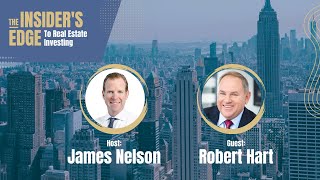
Bob Hart built True America Multifamily from nothing to 60,000 units across 17 states since 2013 by focusing on value-add apartment deals and local market expertise. He talks about relationship-driven dealmaking, how he scales incrementally, and why he invests time in mentoring and organizations like Chrysalis.
Welcome, everyone. Today we are thrilled to have with us Bob Hart, who is the founder, president and CEO of True America Multifamily, a top multifamily investment firm in the U.S. bob, great to see you. Thanks so much for coming on the show.
Thank you for having me, James. Very exciting to be here with you.
So, Bob, first of all, as a fellow podcaster, I have to say your show is fantastic. Right. So maybe you could start by telling our audience a little bit about. I want to hear about the why. I mean, Bob, you've obviously been doing this for a while. You've achieved incredible success. We both know kind of the time and the effort that goes into doing a podcast like this. So maybe I'd love just to hear from you what inspired you to do that and kind of what has your experience been with that so far. And just tell. Remind everyone the name of it so. So they can. They can look for it and follow the show as well.
Thank you for mentioning it. It's called Building Better Communities by Bob Ari. And by the way, I. I'm a mini podcaster compared to you. I've done about seven and you've done about 100. A couple hundred. So I'm. I'm just at the beginning stages. No, I. I thought about where society is going, particularly in investments in real estate. And the truth, I think, is that although people will pay attention to hearing about transactions and, you know, those kind of things that go on, and people, you know, I call it tombstone pr. It's. It's sort of like a point in time, I think, more so people want to hear about thought leadership. And what I wanted to do was project through other CEOs that I have done business with, or I know in the community that are both successful in their own careers, but also have given back to the communities in different ways to build them in a bit, in a more thoughtful way. And so I've identified people like that and want to continue to talk with them and really provide thought leadership for other people, particularly younger career people in the industry.
Well, first of all, I love the name and the thought behind the show and that you're looking to not just do business, but to do something with. With purpose. And your show definitely accomplishes that. And, you know, we were talking a little bit before we went on Live here about, you know, this show and the value of this, and we really want this content to be evergreen. So, sure, we might talk about some things that are going on out there. I'm definitely interested to hear your perspective from the west coast and your holdings across the country. But also we, we know there's really valuable lessons here that we want someone to listen to this show a year from now, two years from now, 10 years from now, and get benefits. So really wonderful that you're doing that. You're really giving back. You're providing a lot of incredible advice and content out there, and I know how much it's appreciated.
So I think we have a duty as leaders, particularly senior leaders, to help other people in our own industry grow. And it's just one small way I'm trying to do that. But I've kind of always built the ethos around my businesses around some form of giving back and participating within our community.
Bob and we certainly want to get into what you're doing with True America Multifamily. But on that note, Bob, how do you study great leaders out there? Are you an avid reader? What other type of content do you consume that's informed your own leadership style?
I think leadership is a do it to yourself process where it occurs over time, and I think it largely comes from the people that you interact with through your career and personal life. And I've met many other leaders who have been either mentors or someone that I myself could learn something from. And, you know, I don't learn about them in an abstract way. I try to learn about them through engagement and getting to know them. And frankly, great leadership can come from a colleague or a junior member of your team that's done something. So I try to, I try to be an active listener is how I learn about other leaders. And certainly in the, in today's world of the Internet, social media, you're certainly getting plenty of content, and there's all kinds of ways to access information.
Bob I love that answer because clearly, mentorship and, you know, seeing what other leaders are doing and talking. But I love the fact that you also say learning from, you know, those who are junior to you and having, you know, listening and also evolving. So that's really incredible advice there. So, so now for our audience, just give them a sense of what True America Multifamily is today. Tell us about the company and your holdings.
Will do. True America is really the outgrowth of my four decades of investing in multifamily here in Los Angeles and now nationally. And I started the company 11 years ago, side by side with my partner, Guardian Life Insurance of New York, who had been an investor of mine when I was leading another firm, Kennedy Wilson's Multifamily Effort. So I got to know Guardian Life, who's one of the oldest mutual life companies in America. Very steady firm with a very strong balance sheet and very high ethical standards. And became closer to them and formed a partnership where I moved from a public company into a private company with them as partners. So we started the company together in 2013 after I spent 14 years building the multifamily brand for Kennedy Wilson, which is a New York Stock Exchange company.
And what does your portfolio encompass today? How many states? How many assets? Units?
So we, we've been probably one of the fastest, if not the fastest growing, privately held company. In our space in Malte, we grew from zero in June of 13 to 60,000 units today, and we've sold 20,000 units as well. So we've been a very active transactor of apartments. We're currently in 17 states and 32 different MSAs around the country. So we, we started in obviously in California and immediately started branching out through the west over a period of four years. First four years and then we took the show on, on to the east coast and had to learn those markets and learn, learn the ropes there. And that took a little while and that's now become the higher growth engine of our company. Where from call it the Boston to Miami corridor with a heavy concentration in the Southeast. And now gradually building a business in the Northeast has also been a main growth engine of the company. And then three years ago, we entered the center of the country through the state of Texas. We're in every major city there and we're also in the state of Ohio.
So I just want to pause for a minute here and talk about what you've accomplished. So we're talking about 11 years here. You start from zero. You're now a top 24 apartment owner in the country according to NMHC. So we could spend the entire hour talking about how you actually did that from zero. But I mean, to scale at that size and to break into new markets, I mean, you would think that each one of these new markets that you go into, there's a new learning curve. I mean, how did you build, build your company, your platform, foundation, to scale it? Because I, I, you know, you hear that expression, oh, I'm going to just build the plane while I'm, I'm flying it. I, I don't think you would have gotten to this point if you didn't have a business plan that kind of really had the, the roadmap to accomplish this.
Yeah, I mean, every, every good growth story starts with, I think, a much smaller domain to begin With, I mean we started out with 10 million of working capital and 10 people 11 years ago. And we incrementalized our growth. We started in the west where we, you know, where I'm from, and we built out from there. And what we kept doing is building a team that had market and industry knowledge and kept bolting onto that team. And once we had re established this new brand True America, we felt confident enough to replicate that in the east coast and we went to Washington D.C. to start with and built an office there and really built a lot of leadership through people in those markets. And from there we ventured to the south and now we have an office in Miami where we really know the Florida, Georgia, Tennessee and Carolina markets. But again, you know, we did it piece by piece. And as we got confidence and traction in markets and could prove to ourselves that we knew what we were doing, we then branched out further. So it was really an incremental growth story, but a rapid one. We did a lot of large transactions, some, some multi billion dollar portfolios along the way and had some really great partners in addition to Guardian Life.
So I want to go back to this $10 million of working capital because you're talking about amassing a portfolio now. Billions of dollars of value and $10 million I know in New York doesn't get you very far. I doubt it goes very far. And la.
Yeah, maybe.
What's that said?
It pays the escrow, title fee and closing costs in New York.
You know, I believe that one of the biggest things that hold people back from investing, there's really two things. One is lack of knowledge, experience. That's what we're doing right here. People are learning how to do this. But the lack of capital, that is the number one thing that holds people back. So how are you able to leverage that $10 million? I assume this means you were bringing on partners from the start. How did you leverage that?
Yeah, so the $10 million I used was strictly as seed capital to build a team and to build an infrastructure. Then I matched capital with the Guardian Life along with other third party limited partners in kind of a joint venture structure. But we did it through strategic alliances. It wasn't a one night stand. It was really building, you know, relationships that were repetitive. And so this allowed us to grow. We were never scrounging around for GP capital. A lot of, a lot of novice sponsors, you know, start companies and they don't think about capital formation and they only think about the upside. Well, real estate can devour you and you could see that now in the current debt markets, what it's doing to folks who aren't prepared. So you have to have capital and access to capital in addition to skill, knowledge, and leadership. But you're absolutely right. Capital formation is really critical. So I had been doing joint ventures when I was at Kennedy Wilson, and then when the company went public, it had a different form of balance sheet. So we, we had a, we had a different balance sheet and we also had a fund. But in the early years, that's what I did there. I kind of scrounged around for capital at a more humble time. And so I'm not, not afraid to raise money, and I'm not afraid to get out there and tell the story. And you have to be able to do that in order to form confidence around buying real estate in a very competitive environment. Because we're not alone. There's other people that are equally capable.
Yeah, and what I'm hearing is certainly your track record from before and relationships. It's not like you started with zero, with, with no experience leveraging the 20,000 units acquired worth $4.5 billion at Kennedy Wilson. Clearly there was a track record there that, that you could, could leverage. So I think for those listening and Bob, maybe the question is for, okay, so let's say maybe someone doesn't have $10 million of working capital, but they have a million. But maybe they don't have their own track record. Maybe they've been working for a big shop on their own and now they want to go off and do it on their own.
So let me, let me dial it back for you a little bit. Okay, we're talking. I started the business in June of 13, but I started investing in real estate in the 80s. So my start germinated really as a, as a small side entrepreneurial investor. I scraped together, I don't know, 10 or $15,000 back in the mid-80s to buy a duplex on the west side of Los Angeles in a crummy neighborhood. And that's how I started. I just started very, very small and gradually built a personal portfolio of real estate over a period of years. So it really, you know, started with very, very humble beginnings. It didn't start as an institutional thing.
For me, that's so helpful to share and for those listening who are looking to go out on their own and, you know, they see what it's become today. But to your point, it starts with that first transaction. I've got to imagine, if you think back to that first acquisition, that probably felt like a big gamble at the time, 10, even 10 million. I mean, a lot of people think, wow, that that's a lot. But you know, I'm sure that 15, $20,000 at the time, in the 80s, that was probably a big commitment for you and you probably felt like you were taking a pretty big gamble, maybe doing something that you didn't. I mean, did you know all the things that you were going to need to know to make that, that first purchase a success?
Absolutely not. I had, after I got out of business school in 83, I kind of work, I worked in different fields and I scrounged around thinking I could be a real estate investor with a lot of false starts. So in the very first deal, I found a seller who was willing to kind of mentor me and show me how to get the deal done, how to put financing on it. Even though it's very small, it's no different than what you do at the billion dollar level. So again, I think mentorship is really important and putting yourself out there. When I lecture at times or I, I encounter people that are early stage careers. How do I, how do I do you? And I said, well, put some skin in the game. Let's start with that. You have to be able to invest your own money because it creates a visceral, it's like a prod that's up your back. Because if you're not taking risk and you're just using other people's money, then you're really not a true entrepreneur. Entrepreneurs invest capital in addition to creating businesses and real estate. At the, at the lowest stage, if you're just a small owner, okay, you're an entrepreneur. You're risking your own money alongside most of the time with other people. And then eventually you become, you know, custodian of other people's capital more so than your own.
So, Bob, I would have to think that along the way, you've probably done every single role in the real estate realm, from overseeing the construction, renting out apartments. So assuming that is the case, how has that helped? You know, as you grew your company, you weren't, you were managing from that perspective. Having gone through it yourself, I would imagine that was probably helpful as you build a company and trying to manage others when you've been there yourself.
Yeah, I mean, I mean, we never had pricing software using artificial intelligence to set rents. We set rents by going around knocking on doors of other buildings and having managers do the same thing, collecting rent and going through all the grubbiness of what you have to do sometimes to run apartment buildings. So unless you're doing it at an entry level to start with, you never get that, that feeling that, you know, you can empathize with people at the property level. So you're right. That's how I started out. You know, when I was, I tell this story a little bit when I was an executive at the Walt Disney Company in the 80s and I bought my first piece of real estate, the one in west la. It was kind of in a bad neighborhood. So I would go down on Friday evening or Saturday morning after work. It was on a corner lot. I had a bucket of paint and I used to paint the graffiti out along, along the fence, hoping that some, some crazy person wasn't going to stab me in the back or kill me because it was that kind of a neighborhood. So until you've done that and until you've really, it's very hard, it becomes more theory than it does practice until you start really understanding what goes on at the, at the property level of owning and running buildings.
So, Bob, something you mentioned. I'd love to get your thoughts on this because you talk about the data sources AI as opposed to the days of knocking on the doors. I have a theory that real estate is still a pretty inefficient business. Right? There's a lot of information out there, but a lot of it's private. And a lot of those who have that information tend to keep it to themselves. Which, by the way, if you're an investor, I think that's a good thing. Because if this was a perfectly efficient market and everybody knew about every single trade, you know, then you couldn't gain the insider's edge to real estate investing. So would you agree with that statement? Do you still think that there's inefficiencies out there that you can capitalize on, or do you feel like real estate investing is getting to the point where it's so efficient that everybody has the same information?
So let's unpack that a little bit. And what. I'm going to separate the consumer side of real estate from the investment side of real estate. In that conversation, I'm going to start with the consumer side. United States has a very transparent system. However, knowing regional markets and knowing local markets has to come from networking and being engaged because no one's going to hand you the information. But we have a very transparent society where you have firms, you know, very large brokerage firms like Avison, that provide data. Okay. You know, in many countries that doesn't exist because they don't have the same kind of systems we do in transparency. So it's very hard. If you transact in real estate like I have in foreign countries, you'll see it's much tougher. So we do have a very transparent system because we have a good flow of information. But it didn't start that way. It began through really just hunting and gathering comparables and on the investment side and on the rental side. So I think in that sense everyone can have the same information. But information is of no use to you unless you know what to do with it and how to analyze it and how to. It's still an instinctual business. And on the investment side, you're absolutely right. It's, it's a very clunky business. It takes a long time to transact real estate. It requires a lot of touches of different documents, loans, contracts, forms. It's not like trading stocks or anything. That coupled with the fact that landlords, as you said, or whether it's office or retailer apartments, you, you have different strata of people. You have families or individuals that don't raise rent, okay? So they're not interested in other data, they're just interested in keeping their buildings as full as possible. And that's a fine strategy for somebody. And then you have, you know, institutional folks that are, you know, buying for, for long term cash flow. And then you have value add folks like myself that are looking for those inefficiencies in the market. But the beauty of the business is not an oligopoly. Not everybody's sharing information, setting price together. So the inefficiencies is what creates the opportunity, particularly if you're a value add investor.
Wow, I hope you all are taking notes. There was a lot of great information in there. And Bob, someone told me this quote the other day and I'm not sure who said it. I'd love to give credit, but, but follow the trend lines, not the headlines. And you're based in la? I'm based here in New York. If you're looking at the headlines, they don't, they don't sound so great. Right. But I doubt when you're looking to invest and figure out what type of markets to consider, you're probably not reading the headlines. I mean, I've got to imagine that you're pretty focused on the trend line. So what are those key data points that you're looking at to make before entering a new market or entering back into maybe a market that maybe you've stayed away from for a while?
So I want to go back to the quote headlines or trend lines. You have to obviously pay attention to what's going on in the world. But you keep reading headlines, newspapers and Internet feeds, it'll make it crazy because what you'll just focus on are all the things that could go wrong as opposed to the little gems that could go right. So you're absolutely right. You have to look at the trend lines. You have to look at, you know, as John Gray at Blackstone said it, follow the brains of the country. Where are the brains going? Where are the brains living? Where are they working? That's one angle. Okay, so you're looking at where is your job growth, where's your income growth? In my case, in housing, where housing costs just so high to purchase a home that you're going to build a greater cohort of renters by necessity or over a long period of time. So we're looking to look, we're looking for durability there and, and, and growth and, you know, opportunities to, in our case, do do something more with the real estate and add some value to it through rehabilitation and repositioning physically, and then we get the growth organically from that.
And what about the pipeline? Because what I would say is for the first 20 years of my career was solely focused in New York. Now we're starting to get involved in assignments across the country and talking to some of our investors who've gone into, you know, the smile states and, you know, post Covid, they were, you know, three cap markets and rent growth was double digit. And now that it's all, there's been a lot of development in some of those markets. So I don't want to just paint, you know, this whole region with one brush. But how are you tracking the pipeline and understanding is it meeting the demand? Is it going to get oversupplied? How do you, how do you research that?
Yeah, so in order to keep pace with, you know, trends in markets, we've built regional teams that are located in markets. So we work with, you know, our own people that are either in asset management or construction management or acquisitions and underwriting, and we expect them to really learn their local markets. We back that up through a portfolio management strategy corporately, which does a lot of data analysis to, you know, continue to support those efforts. But we mine our own data. Okay. When, when covet occurred, you know, several years ago, everybody ran in hiding for a while and everybody thought everybody would stop paying rent. But when we looked at our 60,000 data points by market, we started to develop knowledge and confidence that people were in fact paying Their rent, most of them. And we did that through our own data money. And we do the same thing when we go to a market. We don't show up once, we show up 20 times. So we're in Orlando and Tampa. We know that MSA because we have 10,000 units there. We can build confidence just by looking at our own aggregated data in addition to competitive data. And if you're sensitive to what's going on and you're not operating like a bull in a china shop and you're asking questions all the time, you're varying your approach to setting rents and to rehabbing units, because markets do ebb and flow. They do get oversupplied, both by too many rehabs or too many new construction deals with. Which can bring down pricing in the class B sector. So you've got to be paying attention daily. Okay, we track rents and, and collections and vacancy through a very large, complicated tracking system. But we expect our local leaders to be looking at data and to be accountable for it so they can better price fairly the real estate.
And are you. How are you determining what to develop? I mean, it's a true America multifamily building. Does it look the same in every market? Does it speak to that market? I mean, how are you figuring out what you want to deliver?
What's the same? We don't develop, just to be clear. We buy and reposition. Okay? So, no, not everything looks the same, but the methodology is the same. So when we go into a market or a deal, we build a business plan first and get to understand everything we can about the piece of real estate through our own due diligence and discovery and inspection. And before we go to the next step of completing the capitalization, the debt and closing it, we should know more about the real estate than the seller did. And we should really have a business plan that we believe in. And that business plan starts with, you know, what are the rents going to be over the next five years? Projecting them out, understanding our capital program, whether there's a lot of deferred maintenance has to be dealt with, whether there's opportunities to improve the infrastructure, you know, which are some of the common areas and the aesthetic. And then last would be units. We do try to create consistency in how we turn apartment units, because that's what we spend probably 50% of our capital and our time on. And we try to create not vanilla, but if we have six flavors, we try to replicate those flavors across the country to different standards and different levels depending on the, you know, the Point of setting rent and are you trying.
To deliver product to where you think the market is going? So are you just trying to. Are you developing best in class product? I mean, I'm sure you're not trying to over amenitize. How do you know that you're not just meeting the market, but you're also, you know, to use the old Wayne Gretzky skate where the puck is going to. How are you thinking about how you position an asset?
I'm going to tell you how I think about it, okay? So first of all, we try not to over position. And my little rule is that I grew up in a tenement house in Boston, okay? So if I wouldn't live in one of my own apartments, in a pinch, I'm not doing it. So we try to raise the standard of living for people to give them more choices and better choices while trying to maintain pricing at a level that people can still afford. So we're looking at incomes too. So if the household income in the market, and I'm using lower numbers because it's not New York, you know, call it 75,000 a year. Okay. Or $6,000 a month. You want people to be able to afford that apartment, that might be 2 to 2,500, which I know sounds cheap in comparison to New York, but.
Yeah, that's a third of their income. Yeah.
We're investing across America, so we don't over rehab. We try to. It's a little bit of art and a little bit of science and how you do that. But we're trying to, you know, apartment units don't necessarily need crown molding and granite. They need, you know, they need, you know, good aesthetics, better flooring, better lighting, you know, operating plumbing and all the things that people expect to have a roof that doesn't leak. But we do create very nice units. But we're not spending the kind of money maybe that we would spend to do something. I'm not saying we could do it for half the cost, but because of our economies of scale, we can keep costs very, very low.
So I want to go back to how you were able to scale this portfolio and while you were acquiring these properties, some the market was very hot at times and very competitive. So you're not the only firm looking to do this. So talk about what was your inside edge. How were you able to acquire these properties? Were these mostly marketed deals? What was it that got you to the top? That got you the deal?
Yeah. Without sounding overconfident, I think we've always projected and it didn't start this way. And again, it's an accumulation of years. But we, we are big protectors of our brand. We don't overly haggle with people. We're not trying to grind out the last ounce of price reduction or we're not retrading. So we really built a relationship where we said, okay, you want to sell, we want to buy, you want to get off the train, we want to get on the train. We're going to do that in the smoothest, most comfortable way possible. And we're going to be user friendly and transaction friendly. We also try, you know, a lot of deals are marketed, but when you get the first look or the last look, you have a competitive advantage. And that comes from the comfort level and trust. If you're a broker, you don't want to do it twice or three times. You don't want to pick the wrong horse. So we try to maintain focus where we can. And we call it, we've given it this name called True America Triangulation. We try in every transaction to know at least one or more of the entities involved. It's either through a relationship with a broker, we know the seller, maybe we know the seller's partner, maybe we know the lender, and maybe we know the operators of the real estate. So we're trying to focus where knowledge and relationship matters. So we like to say that we transact in relationship capital.
Bob, I love that answer because, I mean, we've certainly been on the side of the table when the other side is nickeling and diming and retrading. And sure, maybe the deal gets done and Maybe they save 1%, but the next go round, that person is certainly not going to be a first phone call, to say the least. And this is the long game, and.
Frankly, it's a long game. And, you know, I have a lot of LPs that are very smart people, but sometimes, you know, you encounter younger folks at these firms that haven't really been involved at the street level. And, you know, their tendency is to want to grind out the highest price or the most concessions or the best terms. And certainly you got to be a good custodian of capital. But the more you transact in a fair and open way, the more you're going to get from the marketplace itself. And we don't win every deal. Trust me, we did not. We, we probably win 25% of the deals. And we take rifle shots, not shotgun shots. So we understand what we're looking for. And what we do is we try to focus, you know, the limited amount of resources we have at a smaller subset of potential transactions.
Bob, this is solid gold. I mean, this is. I really hope that people are not, are paying close attention to what you just said, because even if you're just starting to build a company, you know, you want to do it the right way, you know, and again, another quote or saying of, you know, it takes a lifetime to build a brand in a minute to blow it. I mean, it's really, you know, the way you act. Again, you don't want to make that shortcut, right. That you think saves you a buck here if it's going to cost you in the long run and you want to do things.
I think that's 100% right, James. But the other thing, and maybe it's because I've been through many cycles, you know, you have to know how to play defense also because real estate does cycle and you've got to be prepared for that change. And, and it could come at different times. And as I said to certain partners and friends that kind of pound their chest when they do something, that's great for the moment, but we all live on this. If you're a mountain climber, on this precipice, I call it the precipice of fragility, it only takes one misstep to fall down the mountain. And if you fall too far, it's very hard to get back there. So don't get ahead of yourself. Don't try to necessarily go beyond where your comfort zone is. I mean, it's okay to push, but I think you got to be very careful in this business because it can turn on you. It can turn on you very quickly.
It's great advice. So, Bob, I want to now talk about, I'm sure you've experienced this in la, certainly here in New York, but regulation, Right. And, and the political climate, you know, and I, I think a lot of it, I mean, maybe post Covid, people start to migrate, especially if they're, they're working virtually. But I think there's also this sense of, you know, I want to go to a market that's, that's pro business. Right. You hear a lot about that. I, I just love your thoughts on that because it seems like that, that you are investing in markets that are regulated. Right. And there's others that I'm sure are a lot more maybe business friendly. So can you talk a little bit about that?
Yeah, absolutely. I mean, there's no secret that the bluer states, particularly California, have, have been More challenging, particularly the urban areas of Los Angeles city and San Francisco city. And very much harder to navigate, both for developers and even for owners, because of the layers and layers of both rent control and other regulation. And frankly, Covid really made the landlords in some of these areas more like pariahs of society than heroes. So it's tougher and tougher to navigate those markets. Even though we call Los Angeles and California home, where we have about 17,000 apartments, we are very careful in what counties we operate in because some are much more business friendly than others. And we've also come to learn through the years of investing that other states, like you mentioned, are just more business friendly. It's so much more. It's so much easier to do business in Nevada and Arizona and in Florida and Tennessee and many of these states that have a more open, you know, regulatory society. I mean, we all have to follow laws. I mean the. You have to fall fair housing laws, you have to follow the guidelines. But you know, in order to create growth, that's why so many people went to the Southeast. It was in Texas, it was just so much more business friendly. And that's kind of the reality of it. So we've done that where we've migrated. However, California is still our home. We still do business here, but we're very careful where we do business as a state and how we do it.
I'm sure we could spend a whole nother hour talking about the merits or not of rent regulation. But, you know, here in New York we have 1.4% vacancy rate. So we have. And about at least 2/3 of our stock is regulated. And now, with good cause, eviction, with exception of buildings built after 2009, everything is effectively regulated. So there's kind of this idea, well, you know, that might keep the rents low for the existing product, but, you know, isn't the issue that what's needed is more housing? So in New York, the city's called for 500,000 new units. The real estate board says 530,000 units. I'm sure in LA, there's, there's still a housing need. I'm sure in some of these markets, and maybe it wasn't great for those invested who were oversupplied, but I would imagine when developers and you let the free market prevail and units are delivered, that that brings down rents across the board. But in some of these markets where you think all these regulations, you're trying to keep rents low, but what it's doing is just keeping out private investment that's going to add more units. I mean what, what are your thoughts on that?
Well, yeah, my, I agree with you. It, what, what rent control does particularly it would very draconian rent control where there's no vacancy D control or mark to market. It creates this huge disincentive to rehabilitate apartments and to build new ones. And it only makes the existing landlord more money in the long run because of supply constraints. And even though there may be regulation eventually, income does catch up at some point. So I, I think if you could retrain, call it the regulators and convince them that more is better, not not worse. You know, I'll drive through some of the areas of Los Angeles that are, you know, we have a long, long sprawling boulevards here and you'll see miles and miles of small retail and two story courtyard low density buildings. Those, those same lots could accommodate five and six story smaller units for the, for the working people. So they didn't have to live in the Inland Empire and really far away to commute into their jobs in the city closer in. So we don't really, we're not really thinking correctly about growth and a lot of that is fostered by NIMBYism. No one wants to see density too close to their own backyard. But the reality is it's selfish. If we really wanted to help working America, we would continue to build more housing. Because you're right, that's why frankly, Austin is very soft right now. They built so much darn housing. It's pushed down rents in the B and C markets because there's so much class A product that's, that's there and it'll normalize because the city is going to have a lot of growth and maybe it was too much too soon. But if you had a normalization of growth and allowance for, for that without regulation the market would reset appropriately.
It's a great point. It's really wonderful to get your perspective on that again being invested in so many of these different kinds of markets. So Bob, now, now I'd like to kind of turn more to kind of what your, what your role is currently. What, what is your typical day to day because you're, you're overseeing a top 24 apartment owner in the U.S. you also give back. I want to get to some of the, the charitable involvement and what you're doing on the UCLA leadership board. You have your own podcast. I see you at the, the Marty Berger ski trip. You know, so, so obviously you're having some fun still while, while you're doing this. So is there even a typical day or week for you?
Not really. I try to spend a lot of time when I can in the field, and that's where I probably have the most enjoyment rather than being in the office. But every day is different. I focus a lot on obviously the investment side of the company and working closely with our leaders there to either raise capital, support the capital we have raised, and solve problems. And I try not to manage in a dictatorial style. I try to create, I try to give advice and try to create decision making from the bottom up, but when there's a clog in the system, I try to unclog it immediately. So the key is to move through the process and to really make sure that the team is really empathizing with whoever their constituents are, whether it's an investor or a problem at the operating level. So I try to stay engaged. We do quarterly in depth financial reviews, which I'm involved with. So I spend time doing that. But a lot of time is spent either raising capital or in the field looking at real estate in addition to once in a while having some fun like going on the Marty Perkins ski trip where I met you.
Wonderful. So, and this definitely sounds along the lines of, just finished this book by Dan Sullivan and Ben Hardy. So I've been on this kick that 10x is easier than 2x. And, you know, the whole premise is if you just try to do double what you're doing, you work twice as hard, you burn out, you can't work ten times as hard. So you have to focus on what are the, you know, those core activities. If you look at the 20% of what you do, that's most valuable, that's probably going to have 80, you know, 80% of the results. Right. That whole 80, 20 principle. So, you know, what advice would you give to those listening right now to really think about, you know, how they can be most productive with their time and, you know, whether it's leveraging a team, delegating what, you know, whatever it is. But how can someone really make that 10x jump to, to really, to really.
Leverage your time is what you're saying?
Yes.
I think you have to build trusted relationships with your, your team both, you know, at the lowest level and the highest level of your company. And you have to learn and learn how to work with other people. So if you're, if you're isolated or you're just working in a silo, I think it's harder to leverage your time if you're working in a collaborative way. I think it's easier to do that. And that's what I try to do. I try to really just understand daily what the evolving priorities are and focus on them and channel my own energy and my own direction when I can, through other leaders within the firm and let them grow and build at their own pace.
That makes a ton of sense. So, Bob, now with the couple minutes that we have left, I do, like I said, I want to hit on your charitable involvement. I know you recognize the Spirit of Life Award, the City of Hope, and you sit on a lot of charitable boards. I want to talk about this Chrysalis, which is the nonprofit organization dedicated to creating employment opportunities for the homeless and low income individuals. I mean, I would think giving someone who's homeless a job and helping prepare them to get back on, on track. How are you involved with that and what kind of impact are you all making?
So I've kind of adopted Chrysalis as my, you know, the organization that I care a great deal about. It's been in, it's been in existence for 40 years. I've been involved for about 24 of those years. And what I decided, you know, I don't know, a couple of decades ago was we're all involved in industry associations, alumni associations, and networking organizations to further our careers. And that's all great, but where the real satisfaction I think comes from is doing something at the community level, one on one, that can really help people. And so I wanted to do that and I chose this organization because it sought me out and I, I just got involved at a very, very junior level as a, you know, trying to help them raise money from the business community and, and then eventually evolved into leadership roles, eventually got on their board and, and then became a chair of that board and helped navigate the, the nonprofit through the great financial crisis and then continue to stay involved. But what I, what I like about it is the money goes to a very direct cause. It goes to training and development of people that are evolving from homelessness. So there's many organizations that help the homeless, that feed them, that provide medical services, but there are very few organizations that take those people that are emerging from homelessness and help them facilitate. You know, you don't just show up and become a bank teller. Chase Manhattan Bank. Okay, there's a step here. And you know, how to dress, how to kind of, how to put your resume together, how to, how to communicate properly in a constructive way with people. Again, because people that have been homeless have obviously gone through, you know, deep, much deeper issues. And maladies in their lives that got them there. So as they're rebuilding, they need to rebuild confidence, and that's what they do at Chrysalis. They really provide a cocoon for those people that are emerging out of homelessness. And, you know, they take over 3,000 people a year off the streets of Southern California with very low recidivism. So it's a very, very effective program, and I've enjoyed helping to build it and to engage my own colleagues throughout the community who are now adopted it as well.
Amazing. Wow, that sounds like such a wonderful organization to be a part of, and it's not, again, to take that leadership role as well. And the advice that I give, and it's wonderful to give money and your time, but to really take a leadership role is really something to aspire to. On that note, you know, we get college students who listen to the show as well. We get those who are maybe five years into their career. Maybe it's someone who's been doing this for a while, and they're thinking about going and getting a master's degree in real estate. So you're on the leadership board for UCLA's Zimmer center for Real Estate. So I guess the question would be, why would someone want to think about going and get a master's? You know, when is the time right for that? What should they expect to get out of that? You know, are all these master's programs the same or what. What would. What would be the. And full disclosure, my son's at sc, but. Well, I'll go ahead and, you know, shine a light on UCLA for a minute. Maybe not a game day.
He's in a very fine school. We do a lot of recruiting at usc, and we have a very strong, both UCLA and USC contingent and Georgetown contingent. So when I went to business school in the tectonic age, you went to business school to be able to do something else. In my case, it was to do. I graduated as a civil engineer, but I really wanted to do something else. So business school was my pathway to doing that. Other people emerged from careers in law or just other fields. And when I started, there was no. There were very few master's programs in real estate. It was mostly an mba, and if you were lucky, maybe they had two or three courses in real estate. So my learning of real estate was really not through graduate school. I think there's some really fine programs out there, and I think it really helps. I've done some lecturing at Columbia these last couple of years, and also at that school down the street, usc, and I've met some really, really smart young people that I think in their call it, mid-20s to late 20s, where they've really gotten a little bit of experience already. They just ask better questions in the classroom and I think their interaction skills are much better with their fellow students. And real estate's an experiential business. You can't just learn it from a darn textbook. I wish you good. It's experiential. So you got to know the right questions to ask and you got to have some perspective. So I think going right from undergraduate school into a master's program is the wrong move. I think you got to go, go get some experience, get knocked down a little bit and really then come back with that perspective. So, but I mean, I know I'm a big advocate of ucla, obviously, and sc. Georgetown has an outstanding program and so does the University of Wisconsin and Columbia, mit. There's just so many great programs out there. We recruit from all these schools.
Yeah, there's no doubt that that network, and again, what happens in person, in the classroom, those, those connections will, will serve people well for, for life. And although there's, there's not, you can't learn it all in a textbook. I, I, I will make a, a, a pitch because I, I do believe that, well, for, for anyone interested either getting into real estate, stepping up their game, the insider's edge to real estate investing. I, I, I think that if students read it before they went into the master's program, this kind of tells you the arc, how it all works. And so, but then, you know, you have that foundation.
When I was starting out, it wasn't that book I was reading about Robert Ringer, who was a motivational guy who's talking about how to win through intimidation. I mean, trying to figure things out from a very different perspective. So this is a better book.
I think it's in a much softer way. Yes.
And I commend you for doing that.
Well, thank you. Well, Bob, this has been amazing. We really appreciate your giving your time and again, you get so much going on. But any parting words, thoughts, advice for our listeners right now? Maybe it's someone who, whether they're in school or maybe they're working for a big shop, they're thinking about going off and maybe it's making their first investment. What words of encouragement would you give them?
Well, I would give them words of encouragement that even as we're sort of in a transitional period of cycles now in real estate, there's always going to be great opportunities out there at through up and down cycles. And my suggestion is to persevere, stick with what you want to do and really tell your story and stick with something for a while. What I've seen a lot is people doing a lot of job jumping and career climbing and they, they barely know where the copying machine was before they move on to their next next thing. And so I would encourage people to find either an institution or an entrepreneurial opportunity and really just stick with it for a while and learn the business. Everything else will, will come after that.
Wow, Bob, that, that's, I love that advice. And for me, maybe I got lucky. But it was kind of rare that first job out of college. I was there 17 years with Massey Nackle. We sold it to Cushman. We were together, at least all together as a group, you know, for, for the first 20 years of my career. And I can certainly attest to that. So Bob, thank you again for spending the time and, and for, for anyone who is just learning about Bob for the first time. And you should definitely check out his podcast, the Building Better Communities. And if you like this episode, I don't know how you couldn't please share it with someone. That's how we're spreading the words, the ratings, comments that also helps get the word out. So we really appreciate it. And as always, you can go to james nelson.com I built this site for you. That's where you can find the show notes. That's where you can find helpful videos, articles and ways to connect with me as well as with Bob. So thank you. Until next week.
Thank you for having me. It was great, great job.
Thank you.









