The Insider's Edge To Real Estate Investing w. Cat Greenleaf
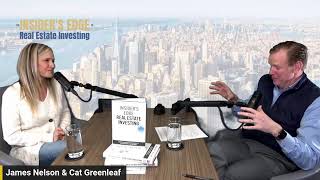
This is a YouTube video titled "The Insider's Edge To Real Estate Investing w. Cat Greenleaf" created in December 2024. It features a conversational interview between James Nelson and Kat Greenleaf, a veteran TV personality and host. The discussion covers Kat's career in broadcasting, her podcast on sobriety, and her nonprofit work with the Restorative Housing Organization, which focuses on affordable waterfront housing for formerly incarcerated individuals using Section 8 vouchers. The conversation also delves into the challenges and strategies of real estate investing with a social mission in New York City.
All right, welcome everyone here today with Kat Greenleaf, who is a veteran TV personality and host, best known for long running series Talk Stoop, where she interviewed and entertained actors, musicians, politicians and other notable folks. But she's done a whole bunch more. And we're going to get in today's show talking about her podcast, Soberness, and we're also going to talk about, most importantly for purposes of real estate, her new nonprofit, the Restorative Housing Organization. So, Kat, thanks so much for joining with us.
Thank you so much for having me.
So, Kat, I've got to say, you are clearly the veteran, the pro here. So it was a little bit nervous coming into this. You know, you are the master at interviewing. So I appreciate the compliment before. I'm just so glad that you agreed to do this. So thank you.
Oh, and I love listening to your podcast. Really clear information. Your guests all seem very comfortable and that's the mark of a great host when you make your guests comfortable.
Well, thank you. I really enjoy it and I always learn so much and was just fascinating. And again, we connected at the New York City Expo and got to talking and then I realized, oh, wait, there's a lot more that you do here than real estate. You said, should we still do this interview? I said yes, absolutely, when I heard about this. But I just think it would be just for context. I think it would be fun for those of you who have not followed you or have seen your show, maybe talk a little bit how you got into tv. If I'm not mistaken, you started off, I think it said, as an airborne traffic reporter. So I'm envisioning that you're like up in a helicopter or something. Is that what was going on?
Cessna plane, which is sort of like.
I don't know if that's better or if that.
It felt very much like a Yugo with wings. Like it was a very rickety ride up there. But I loved it. So that was out in San Francisco and I was on the air for KGO News talk radio and it was so cool. I mean, I got to watch the sunset over the Santa Cruz Mountains and under the Golden Gate Bridge and just a really cool taste of that city. However, my sense of direction is non existent, completely non existent. So it was a short lived job, but I loved it. And then I took my middling traffic skills here to New York and I was on New York 1. I did their rail and road report.
Yeah.
Which was, gosh, you know, I wish I could say I was better at it. I was fine. But Traffic wasn't really my forte, so once I realized I probably needed to expand out of that if I was going to be useful in this world, I went into features reporting because New York City and people's lives herein is what really rings my chimes.
Wonderful. Well, I want to hear a lot more about that, but I've got to ask about New York one and still watch them. And they're still such a great source for information here in New York. There's really nothing else like it. I mean, how much of that did you kind of absorb, just being there and speaking to the other reporters? I mean, you must have been really dialed in with what was going on in the city.
Well, I wish I could say that's how it was, but I was actually in a satellite studio on 57th and 5th, just right up the street here. And I was. I wasn't around anyone. I was in my own little, tiny.
Even back then. Okay. I just thought there was, like, a.
Big buzz of it. All right, well, that's what I was hoping for. And then I realized, like, no, you're kind of in a closet in the back of an office building. And it wasn't. It wasn't the glamorous newsroom you'd expect.
Okay. All right.
But then I made it over to Channel 4 to NBC, and that was that.
Got it. Okay.
I love being in the newsroom. The energy, the buzz, everyone running places. Like, it's really. What. I mean, I don't know how it is now, but when I first got started, it was really that way. And I thought that was so cool. My husband works for cbs, and it's the same over there.
Amazing. So how did you come up with the idea of talk stuff?
Well, okay. We had moved over to Cobble Hill, Brooklyn, and was lucky enough to score a house with a great stoop where I used to sit all the time and just take in the neighborhood and the neighbors who had been there forever and ever. And we had a great seltzer delivery man and a great UPS guy. And I just thought it was so cool. And I wanted to get their stories, and I don't like leaving the house, so I pitched it at work. And, well, like you were saying before, with everyone busy in the newsroom and all the buzz, I pitched it and, like, no one said anything. They didn't respond. They didn't look up. They were busy doing other things. So I just started shooting it, and it took off pretty quickly.
Wow.
It took off because of the taxi tv. Do you remember those?
Oh, Yeah, I mean, I guess they.
Still have them, but sure. In the beginning there wasn't any programming. And so we put. First I did features and then talk stoop on that and everyone was taking cabs. Then it was before you were looking down at your phones for video. And it was the original kind of out of home video experience.
And what were you trying to capture? What were you trying to get out of these interviews and kind of. What was kind of the, the thought process and the mission behind it?
Well, people come on shows like that because they're promoting something generally. So I wanted to give people that platform and then I just want to ask everything. Don't you, as an interviewer, don't you just want to know everything? So what was the goal there? Everything was the goal. I wanted to know how they, where they were, how it feels being there, what the surprises are of being a famous person. Actually, it wasn't about celebrity in the beginning. Again, it was from. I wanted to interview the UPS guy and Eli the seltzer guy. But I met Rosie Perez early on as I was doing the show and invited her over and she was a neighbor, so she came and that's what started this celebrity vein. You know, I wasn't, I don't know that much about celebrities and I didn't then, but I do think celebrities occupy a very interesting spot. You know, they clearly worked hard enough, been talented enough to get where they are. So I wanted to know what that's like.
Right. Yeah, I, I know very, I don't even know if I know any celebrities. I'd have to think on that. But as far as, and I'm sure there's all different types of ranges and interviews, but any common themes, I mean, you have these people who, I mean it's, it's got to be a very different lifestyle always being in focus. But, you know, what were some of the common themes with, you know, the people that you met with and interviewed?
That's a great question. In fact, I don't think anyone's ever asked me that about the show. And it's been so many years. The common theme is fame is not all it's cracked up to be. It's very hard to be under the microscope. You know, now everyone's under their own microscope.
Right.
It used to be a little harder to get famous than it is now. And I think that, that fame comes with, it comes with some trade offs. It comes with trade offs. And I found that the people we spoke to were very honest about that. They didn't Try to say it was all roses. You know, when you gain fame, you're scared that you're going to lose fame. So now you've got this fear going on when really you just wanted, in the beginning you just wanted to be an artist. Right now you're a famous artist. So am I going to lose my status? Is every word going to be interpreted correctly or incorrectly? And what's your next thing? You know? So that's not as glamorous as you might think. Now there are a lot of perks to being famous as well, you know, and it, and it's a mark that you've achieved something in your given career and you're given passion. So there's also a, gosh, not comfort, but a satisfaction in knowing, you know, you want to know if you're good enough. Well, you're good enough because here you are.
And did the majority of the celebrities, do you think they embraced it and this was, had done obviously wonderful things for their career? But did you also get the sense that some of them said, okay, I love acting or whatever their, their craft was, but maybe not so much being in the spotlight?
Correct. That is exactly right. That is what I felt. You know, most people, like I said, are there because they're promoting something. Listen, people had to get in a car from midtown, probably drive over the river, come to Brooklyn. They really had to work hard to get there. And we were just part of already a packed day of interviews for them, you know, so they were hustling, they were working hard, and I was also working hard. So there was a bit of a commonality there. But in truth, did they want to be schlepping around the city and being asked the same questions again and again? Maybe not, you know, but they were troopers and there wasn't besides a very few people, everybody seemed pretty happy to be on the show and pretty decently happy with their life.
Well, that's good to hear.
Yeah.
So. And back then, do you feel like it was different and that you could have the opportunity to have a long form conversation, get to know people better? I mean, I feel like today in the world of social media, like everything is in, you know, memes and, you know, if it's longer than 30 seconds, I mean, everybody has such a short attention span. So you think we've lost that?
Oh, gosh, yeah, I do think so. I really do. If you're interested in something, I guess you'll stick around and listen longer. But my own attention span is shrinking by the moment. I feel like everybody's is. But, but you just hit on something that was important. We, I love doing that show because we could really stretch out. People were very rarely like, I gotta go, I gotta go. Right? You know, whereas now on my new show, people's windows seem a little bit shorter. But I so enjoyed the luxury of literally leaning back on the stoop, you know, and what can I come up with next? You know, it was very freeform and I really enjoyed that.
Well, that's what I love most about podcasting, because I think people will take the time to Invest, whether it's 45 minutes or an hour or I guess what, Joe Rogan can go on for two or three hours now. Right.
So I hear.
Yeah. I don't know if anyone, you know, would listen, you know, to my show that long. I hope they would, but yes, all day long.
All day long.
But it still seems like it's a different forum than if you're posting a video on Instagram or wherever else. I mean, if it's not 30 seconds, again, you're going to lose people. So this whole kind of swipe mentality. So fortunately we found a great format here for long form conversation. So tell me about the impetus of soberness.
Well, I have been sober about 11 years, and around last spring I started to hear some of my old guests from talkstoop speaking out loud about their sobriety. Steve Earle, Hank Azaria. And I was like, wait, you can do that? You can talk about sobriety out loud. And that was really liberating for me. And I was missing broadcast. And so pretty quickly an idea was born and came together with a great producer and a social media person and a booker like. The team just congealed. The Algonquin Hotel, right around the corner is our headquarters. And that's a wonderful place to shoot. They're really supportive of the effort. And there is something to be said for recovering out loud. I heard a great line, I recover out loud so people don't have to die in private or something like that. And I think there's such a stigma around alcoholism and any substance use problem. I think the world gives a lot of lip service now to paying attention to mental health and substance abuse. But the truth is, no one is that into it. No one looks up to you when you're. When you're an addict and you don't want to talk about it out loud. And we're trying to change that. So in case you're not part of a recovery group, you're not in a 12 step program or you don't have a good support. You know, maybe listening to other people share their stories about how they made it through addiction and how they continue to every day might be helpful to someone else's sobriety, and it might keep someone alive and save a family. You never know.
No, that is wonderful to hear. And you're so right that a lot of it is not out there for. For people to hear and to discuss. It's usually kept, you know, more private if you just don't hear. Again, discussions about mental health. And so that's really wonderful that you're doing this now. It says that your podcast talks about recovery of any kind. So what kind of. When you say any kind, what are you referring to?
I mean, look, there's the classics, right? There's booze, drugs, food, sex, money. But maybe you're just a jerk.
Maybe.
Maybe you've lived life as a jerk and you need to recover from that. You know, I'm all about harm reduction and making your life more manageable for you and your family. And then it's the ripple effect, right? If your life becomes more manageable, you become an easier person in your family, well, then your family becomes easier for the people around them and so and forth and so on. And so what have I heard? People recovering, some from so far. Yes. Being a jerk. A lot of emotional addictions I'm hearing. It's interesting. A lot of people who sit across from me on my show, they come in to talk about booze or drugs or food, but it really ends up. It's about relationships. Whether it was their primary relationships with their parents or their. Their partners, their friends. And so I think a lot of people are working on emotional sobriety right now, which was not something I expected when I started.
And what have you learned so far, as far as, you know, for those who've recovered, recovering, what are the habits? What are the ways that they've found their way to recovery?
Okay. Many people transfer their addictions to things like exercise or work. If only I could transfer my addiction. Exercise, that would be amazing. But that's not been my experience. There's sort of two camps, right? There's the camp that ascribes a magical element to it all. You know, whether it's your higher power or, you know, I couldn't do this without God or. A lot of people really feel that way. Then there are other people who feel like it's a grind and a decision every day. And I rely on myself and I. I rely on my own support. I exist in the middle of those two things, you know, I do believe in God. I've always believed in God, but I believe in God when I was drunk too. So that, that isn't really it for me. It is a decision every day. I want my life more than I wanted that, more than I do want that. So that's been how I get through it with other people. A lot of people rely very heavily on their support groups, whether that's a 12 step, a church, just other like minded people, which I think is great. I'm such a loner that I don't necessarily find my recovery in groups as much as I just find it on my own.
But I would imagine sharing your story, sharing other people's story, once you've put it out there, do you believe that that's helpful to the process?
Yes, I absolutely do. One of the best parts of my life right now is I bring recovery meetings to formerly incarcerated men and women in East New York and also to folks in prison. And getting to work on recovery there with people who are often there because of their addictions has not only helped my recovery, but I am hoping helps them when they come out to not go back to that life so they never have to return to prison again.
Wow. And how are you introduced to that world? I mean, I can't imagine you just show up at Rikers and say there are people who need help. Yeah. So how does this work?
Well, what happened was on my 10 year anniversary, I realized I really wanted my 10 year sober anniversary. I wanted to share and listen when I was drinking. I am embarrassed to admit that I've gotten behind the wheel after having had drinks. And that knowledge haunts me every day. And there but for the grace of God go I that nothing terrible happened while I was drunk. But for many people in prison, that's not the case. Their addiction led them to cause horrible accidents and terrible things have happened. And I have always felt it could have been me, I could have been one of those people. And so maybe this feels like a penance, but addiction can happen to anyone and your life can go sideways in the blink of an eye. And I really feel that when I'm with these incarcerated individuals and, and I wanted to help them right the ship.
Wow. Well, really appreciate your sharing this and I'm sure for the audience too. And this is a real estate show. We typically don't get into these types of topics. But you're here and I figured, you know, you have such an incredible background, so I really. We really appreciate your sharing. So we'll now get to the real estate part for those listening and because I want to talk about the restorative housing organization. And it's interesting because what you just talked about kind of going in and working with recovering alcoholics, addicts in the prison system, is that kind of. It sounds like to me, with what you're doing, which is providing affordable housing, you know, Section 8 vouchers. Is that. That's kind of some of the audience that you're serving. So is that how that happened? That you were out working with these people and they say, wait a second, you know, they're getting out of prison, but they don't have a place to live? I need to figure out how to find permanent housing. Is that how this all sort of.
Here, I'll take you back. Okay, so. Well, let me just say that I come from a long line of New York City real estate lovers. My. My great grandfather and my grandfather did a lot of building in Long Island, South Brooklyn. I moved to Coney island just over six years ago only to realize that that is where they had done a lot of their building in Sheepshead Bay and Manhattan beach out in Brooklyn. And I hadn't really known that. I do feel like when I moved out to the beach, I came back to my roots a little bit. And, you know, they were very early developers in this town. And anyway, I fell in love. I fell in love with the history. I fell in love with the life. And I don't know if you've ever had the chance to live on the beach, but it is the most remarkable way to live a life, especially when you're 35 minutes from Midtown Manhattan. I spend 95% of my day looking at my husband saying, can you believe it? I mean, still, can you believe it? Can you believe live here? Can you believe it? I can't believe it. And the amount of peace and understanding that comes from being with the ocean all that time. Anyway, it's a mind blower, and I wanted to share it. I thought it couldn't just be for us. We live in a tiny community called Seagate, where I feel like we are the lucky few. And I wanted to share it. So how can I share it? What I. I do have done real estate investing for our family over the years in a very tiny way. So I thought, well, I have some time in my hands. We had sold our brownstone in downtown Brooklyn, so I had a little bit of money to invest. So I want to test the concept of could I bring waterfront living to the widest audience Possible. And that would be Section 8 voucher holders. I mean, there's. Listen, as far as I've heard, we're the only waterfront section 8 housing going right now in the five boroughs. And that was important to me to share the experience. Look, maybe it's out of guilt believe that I'm the only one that gets to live like this. So I. I, out of guilt, had to share. But no matter what the impetus was, that's what we wanted to do. So we started looking for. And by we, I really mean I. My husband is such an awesome partner, but this is. He's not out there pounding the pavement, looking at weird watery communities like I am. And I've spent several months going around to communities all over the five boroughs. Far out in Staten island, deep into the Bronx, Queens has some of my favorite watery neighborhoods. Anyway, I was looking around and realized I could snap up some undervalued waterfront properties and turn them around without overspending. You know, I don't want to over renovate and that with that, I could make them available to Section 8. The way the prison thread weaves in here is that because of my work with bringing meetings to the formerly incarcerated, I realized how hard it is for them to get work. Once you come out of prison, especially with felonies on your record, you're marked. And it's very hard to get a job. And, you know, New York welcomes back over 200,000 returning men and women from prison every year. And if those folks aren't steadily employed over three years, there is a 50% recidivism rate. Ugh. Right. And the impact it has on families and communities, it is so destructive. So I wanted to combat that in a little way and see if it would work out. So I. I set up sort of a training program for formerly incarcerated men and women. We work with two organizations, the Osborne association and the Fortune Society, and they work to train and vet these men and women and. And then they come to me. So for our first mission, we found a place in City island in the Bronx. Are you familiar with City Island? I love City Island.
And isn't that where America's cup originally was built and sailed out of a little history for you?
Yes. It's so true. And there's still some sailmakers there. It's still tons of boatyards, and it's just the coolest. I really love it. So. So we found a little bungalow property there right on the Long Island Sound. So three homes. I mean, bungalow sort of makes them sound little. They're not little, they're really sizable. They're three bedrooms and, and three of them. So I hired my first crew of formerly incarcerated men and I opened it to women but nobody, no one showed up. So we first I hired in pairs of two to do like first the demolition, then the, the construction, then the planting and, and I tried to spread the work over as many people.
Did they have any experience or you were training them on the job?
Well look, no one should trust me to train them in construction. They came with a little bit of knowledge. But what I did was I was able to find a formerly incarcerated contractor who would set up his own business who's dedicated to helping returning citizens. So he was the trainer. Is the trainer. And, and step by step we renovated this campus and we got rid of all the chain link fences and the overgrown lawns and we turned it into a really Lovely community with three homes. Two out of three are now open to Section 8 and we're turning the other one over at the top of the year. Wow.
I love this mission on so many levels. Obviously delivering permanent housing, such an amazing thing for those who might not be able to qualify for it otherwise. But it seems like you really training them for life and giving them hard skills for the future as well. So is the thought process and maybe working with this contractor that maybe you could get more of the formerly incarcerated employed?
Yes. So our first big grant that came through the Little Red Hen foundation this year allowed me to really institutionalize the training program aspect of it. We just finished our new website. I'm really hoping to bring enough money at least for 20, 25 that I can have a more robust training program because that's what it's about. I could turn a house around pretty quickly for Section 8, you know, using anyone, but it's being able to train people with the kind of skills they need to get jobs again. It's really hard for these folks to find good work people. Employers are afraid of what their conviction record means and what it'll bring to their job site. So some of them may have to start their own companies and hire one another and get their own thing going. So I try to make it not just about the skills of actually building, but. And here's how you set up your payroll and here's how you can incorporate. And I'd love to help people get on their feet in that way because if not, you know, one out of two goes back to prison and that's not a good statistic.
No. So maybe taking a little bit of a Step back on how you set up this not for profit because the hope here, I mean, first of all, it's amazing to have our audience learn about what you're doing and I want to talk later about how they can support your efforts, but someone might be listening to this right now saying, okay, I'm a pretty successful for profit developer and I love this idea of having a not for profit arm. Right. And so what was that? I mean, it doesn't sound like you ran a not for profit before. So what was the process like to figuring out how to do this?
Okay, so great question. So I just wanted to keep going. You know, I, we, we self funded the first two projects because we believed in it and I wanted to make sure that it worked. And once I hired enough guys and put enough people into Section 8 homes, I realized, yeah, this is real and I can do it.
So.
But I wasn't sure how to get investors for a company and I really didn't. If I don't know my way around nonprofit, I really didn't know my way around starting a for profit real estate and construction business. So I thought, well, if people can donate to it, maybe that's an easier way to go than for me to try to raise actual funds. So the process to set up a non profit is straightforward but laborious. You know, it's a lot of paperwork. You can hop online, do that. I hired a guy to help me just get the right documents in order. It's a mission statement and you set up a board and it's truly not that challenging. There's so many non profits out there, which shows you that, you know, people can do it. So you set that up and then usually it can take up to a year to get your 501c3 status. Ours came through in less than two months. I'm not sure what happened, who smiled on us from above, but that happened. So now we have our 501c3 status and you can start bringing in money.
Wow. Okay, so but you were, you've been self financing this, so so now you're doing this through a not for profit vehicle. Right. So when you're, you have to acquire the property and then you're paying for the construction and you know.
Right.
Hard costs and labor. So now this is all going through the not for profit.
That's right. So yes. So now what we're, where we're at now is I have to purchase the next property. You know, we've done everything we can at this city island campus. We have maxed it out. We've turned one of the house, our waterfront house, which is my very favorite, we turned that from a one bedroom to a three bedroom. That was our project most recently this summer. And we moved in a new family of four Section 8 voucher holders. So that was really exciting. But now I'm kind of maxed out on space there. So now I need to find my next property. And again, we really only look at undervalued things that need a great deal of work. That's how I can afford them. So for our next project, I can get into a mortgage. As long as I can get into a mortgage and pay for a very basic set of renovations and training program, I can do it. The goal I think I set for this year is 350,000. So it's not big, you know, obviously.
Amazing that you can do that on the waterfront. I mean, you would think, I mean, even in City island or some of these areas, I mean, that's still well, expensive.
I'll give you an example. So when I was looking the last time around, I was having a really hard time finding anything for under 450. I know these numbers sound tiny, like, oh, well, 450. You should be able to find a house for that. Not on the waterfront, you know, and.
Not to be true to the mission.
To be true to the mission.
Although I'm gonna be able to see the water.
Yes, exactly. And although I was just thinking to myself this morning, I could also be water adjacent, you know, for my next project if I can't find something right on the water. But listen, I've already, I've been able to. So who's to say I can't. Okay. So I was looking around and I found a place in Queens that had been sitting on the market for a long, long time at 450. So that tells me that, you know, there's some room for negotiations. So I went in and it is in the craziest neighborhood called Meadow Mere Park. Have you ever heard of this?
No.
Okay.
So when, you know, there's a lot of waterways in there, Marine park, and all these, you know, waterways that work that cut through Queens.
Yes. Very cool. Weird, you know, channels. So this is on Hook Creek, it's called it. Basically, when you're landing at JFK and you think, what is. What's going on down there? Who lives there? This house. So Meadow Mirror park is about 800 homes, half of which are on the Queen side of Hook Creek, half of which are on the Long island side, the Long Island Side has, like, paved roads and is really nice. Like, the queen side's a little rougher, which is why I love it. So I was able to pick that up for 350. Brought in a crew of formerly incarcerated folks who actually lived on the property while we did the renovations. I think I put in 25,000. And then.
That's amazing that you can actually renovate a house. Is that. Because I'm sure, you know, are you just. You're going. You're sourcing your materials. I don't know if you're going to Home Depot or, you know, where you're finding supplies. Obviously, the labor is at a competitive rate.
The labor's at a competitive rate. Although, you know, I pay.
I think it's not skilled craftsmanship. You're not hiring a master craftsman.
Yes, that's right. Yeah. Okay. So it's what you look for in the house. I don't do houses with mold. I don't do houses that need. Like, since these houses are by the water, they're on stilts. So I want to make sure that the foundation is in good shape, that the stilts are steady. So I know what I'm looking for. You know, I've been at this a while, so I know what I'm looking for in terms of the house. So as long as the house meets my. And here's the other thing. I like an older home. Why? Because if this house has stood the test of time by the water in New York, that's a good house, right?
Well, I was. I was going to ask about that because clearly, you know, Florida, the Carolinas, I mean, there's some communities where it just, you know, whatever. If it's sea change, you know, whatever it is, clearly these storms are hitting more and more frequently. It sounds like where. Where you are, there is more protection as far as.
Right. Yes. Great point. So great point. So for on Hook Creek, for example, because the queen side is shielded by the Long island side, these houses did not go away in Sandy. They stood up. They stood the test of time. City island also must be positioned in a way that it's. It's safe. Where I live in Seagate in Coney island, that neighborhood has gone into the ocean a few times over, over the years, you know, and had to be rebuilt. Our house now is on stilts.
And are you still able to insure waterfront? That's become more challenging. Yeah. Is that a FEMA thing now? Because, I mean, I guess at these price points, I mean, and usually there's very high deductibles right, to get that.
Is that the, you know, listen, it's the cost of doing business. It hasn't, it hasn't really stood in my way. I mean like, I think. So let's say City island is an example. Each of those houses, I don't know, it cost me 1500 a year, 1600 a year for each house.
A lot at all.
Huh.
So how are you able to find these areas? Because generally speaking, waterfront is always the most valuable land. So yes, I would assume, you know, you go 10 miles away, you know, or even two miles maybe along the coast and you could be talking about numbers at 10 or 20x. So 100%. You've obviously been able to find these pockets where. What are they just overlooked or.
Well, New York City is a water town. We don't think about it, right, because we're so focused on, on, on the more popular zip codes. But the water still has to work, right? There's still docks, there's still shipping, there's still all these things and those are supported by these smaller communities. My neighbor in Meadowmere park is like the last working waterman bait collector in Jamaica Bay. And Larry Seaman is his name and he, and he pulls bait out of the ocean with his hands, you know, and, and, and he's not living in a ten million dollar house, you know, he's. So there are these communities that have been around forever of real water people doing real water things. Also you, the subway doesn't always access them, you know, so there are places that you have to have a car to get to. Some of my favorite properties are far out in Staten island and there's clearly no, barely any public transportation out there. So there are trade offs. But even as I say that, I don't really believe it because to me living by the water is so worth it that if you have to drive a few extra minutes, who cares, right?
And how do you find these properties? Are you just looking online or you're. No. Okay. Because this again for those. We have plenty of investors out there who like to find their own opportunities. So this, this might be interesting for them to hear.
Well, I'll tell you. So I actually just turned. We flipped a house for a friend who wanted to get into the business, so we flipped a house for him. So if anybod interested, I'm happy to help them out, really, because I love it and I believe in it. You know, I really believe in it. If they're big developers, they probably wouldn't want properties in the neighborhoods where we Are, you know, Meadow Mere park is rough around the edges, and I can't see a luxury condo going up there. But we're. That's not the business we're in. Luxury condos.
Are you going door to door? You find these online. You're calling brokers.
I drive around.
You drive around.
I drive around. I throw my Great Dane in the back seat and he and I hit the road and we just decided. We just pick a coastline and you.
Knock on doors or.
No, I don't knock on doors. I look for two things. One, if a house is boarded up, and then I do some research to figure out who owns it, and then.
You just reach out to the owner, you call.
Correct.
Okay.
And then. Or, you know, look, I look online.
Work to do that or.
No, no, no, not really. Every information is so accessible these days. And after at least being on the hunt for so many years, I have real estate agents in each borough that can find anything. So I contact them and. And they're generally with smaller real estate outfits. And then they helped me figure out what's what. I've done that a lot on City island, just reached out to random people. So City Island's a really interesting example also because it's really nice, but so much of the housing there is section eight, and. But the. The cost is a fraction. So if you're not in like a really glitzy water neighborhood, like, let's say on Randall's island or, you know, in Long beach or parts of Rockaway, the truth is that the prices are not as bad as you'd think. I mean, here's an example for you. We sold our brownstone in downtown Brooklyn about four years ago. The cost of our home in Seagate in Coney island is one third of the cost of our downtown Brooklyn home. My taxes are three grand a year to overlook the entire Atlantic Ocean. I mean, it's sort of crazy. So it's not as expensive as you'd think.
Now, when you reach out to these owners, do you tell them that you're a not for profit? And if. Have any of the owners yet said, hey, this is really wonderful what you're doing, I'd like to help. I don't think anyone's donated a property to you yet. Maybe after listening to the show, maybe they will, yes, we'll take it, but does it resonate your mission and is it helpful in acquiring these properties?
I don't know if it's helpful in acquiring the properties. And I do, if I'm being frank. What I've gotten a lot of is. It's really great what you're doing, but not everyone's so happy to have a section 8 voucher holder move in. Not everybody likes having a bunch of formerly incarcerated men around. You know, I don't make a secret of what I'm doing so they know who my employees are.
Do you have any? But with your first successful project, I'm sure you could point to that and say, look, here's the success story and this has worked. And this is what neighbors have. I mean, you obviously got an incredible write up from the New York Times.
I mean, so exciting.
That has to help, right?
Yes, of course. That totally helps you. Like, you know, as my husband says, well, if they read in the New York Times, then it's legit, you know. And so no, that was, that was extraordinarily helpful. I was very touched by that coverage. And yes, it does a lot by way of introduction for sure. But no, not everyone is so thrilled to see me come in.
Okay, so I want to talk a little bit more about how the not for profit then operates because again, I'm still hoping that people are going to hear this and say, hey, I want to start up my own not for profit arm. I think it's, it's an incredible idea. Do a lot of good. So when you're going to buy the property, whether you're getting financing, is the lender now, I mean, do you think at some point you're going to get to a point where you're going to have donations coming in and you'll be able to point to the not for profits track record and that will help you? I mean, I don't sounds like, is there funding grants, things that you can tap into for the work that you're doing?
I'm sure there are grants. I have not gone that direction yet. I did a stint as a grant writer when I got out of college. That was hard work. So. But when the time comes, I would like to hire somebody to be able to do that. In the meantime, I'm just sort of doing it the way I always did my for profit real estate investment. Gather a pot of money, go find what I can afford and talk a lender into working with me.
Okay, so the lender is still looking at your track record. They're looking at you personally and the economics of the deal. So it has to pay pencil. Right. So do you, do you think about when you rent up the apartment, section 8, are you solving for a stabilized yield on cost? I mean, are you saying okay. If I. I know what I'm buying it for, what it's going to cost. And once I get these rents in place, I'm going to get X return. Do you look at it that way?
Yes. Yes, I do. And here's the secret. You look in neighborhoods where the Section 8 voucher amount is equal to or greater than what you'd make on the open market.
Okay.
Meadow Mere park again, as an example. It's a five bedroom house. Section 8 pays over $5,500 a month for that.
Wow.
I guarantee you if I put that on the open market, it would go for half that. So it's a good deal. And the government pays. The reason why, another reason why I like working with the government is that through Covid, through evictions, God forbid, through anything, they pay on the first of the month. You do have to buckle up. It takes a few months for the paperwork and for everything. So you'll have a tenant in place and you're covering their rent for two months until you start getting paid.
And you're taking vouchers or are you. Is the Property actually Section 8 approved? Because I know there's a difference.
Right. The way it works out is if a voucher holder comes, if any old landlord, you have your, your unit, I mean, anybody can rent to section eight if you want. Right. But in anywhere, the house itself isn't certified Section 8 until the person comes with their voucher and then the Section 8 reviewers come and they make sure you're up to their codes. And then It's a Section 8 house.
And how often are they coming in, inspecting, making sure that you're keeping.
Once a year.
Once a year, that's it.
Okay.
There's that kind of the paperwork and the regulation aspect. Is it manageable? I guess totally.
Totally manageable. And section eight is really interesting. I don't know if you remember, earlier this summer, the mayor opened back up the waiting list for Section 8, which had been closed for 15 years, and 500,000 applicants put in applications for 200 spots just on the waiting list.
Section is Federal Program.
Section 8 is a federal program which is administered locally by NYCHA.
Got it.
And so you have to work through NYCHA.
So they open up. Yeah, you hear about these lotteries and like, you know, tens of thousands of applications.
Yeah, I think they got 500 applications for 200,000. And again, that's just for the waiting list because on the other end of that is you have to have landlords willing to take section 8.
Right.
Voucher holders Right.
So assuming these deals, then pencil and again, I don't know what kind of return or if you thought about that kind of return that you end up with, but this is a not for profit. So are you, Is then the thought process that you're going to take whatever profits from this and that's going to feed, you know, the future business? Or is there even a way? I mean, the traditional way of, as we talk about in the insider's edge to real estate investing, the way that we've seen our clients build these incredible portfolios and create wealth is by you buy a property, you increase the rents, you refinance, you take the money out of that, you go buy another property. Repeat. I mean, is that, does that apply here?
That's the plan. That is definitely the plan. Like I said, you know, we only got our nonprofit status this summer. So it's brand new. We're not even six months old. But that is the plan. That's how I've done it, you know, in the private sector and that's how I plan to do it here. Look, what would really work for us because you're not getting rich on. Even though, you know, for me, 50, $500 a month is huge. That's very exciting on a house like that when my costs are less than half that. But we need to scale. It needs to get bigger. So I'd like to work it into a point where we're doing buildings. You know, I think a lot of big developers are making money working with the government on government subsidized housing. And, and that's obviously for bigger people. I have to be realistic about who I am. It's just me, you know, just me and my Great Dane in the back, so doing what I can. Yes. The goal would be, look, the goal would be that the pro. The properties maintain themselves with the rents that are coming in and through donations, hopefully I can just keep expanding. That would be the goal.
Yeah. I mean, it's so interesting the parallels with running a for profit business. So if you're looking for donors, which, you know, on the private side, that would be an investor in the deal. So here, clearly they're not doing this to gain profits. But knowing that, hey, this donation that I'm making has, you know, the ability to actually grow. Right. I mean, that, that doesn't, I mean, usually, you know, you write a check, it's going to not for profits. Maybe they're operating expenses, which is really important for, you know, mission critical work. But this, the appeal here is that it's not just that, that gift. And then it goes away. It does have the ability to grow.
It grows. And also a dollar donated with us. And this is why I just like what we're doing. Anyway, if I could finance this myself forever, I would. I really. I don't love hustling for money, and, you know, I. But a dollar spent with us not only protects a piece of New York City waterfront from being overdeveloped, also provides training and a paid opportunity for formerly incarcerated men and women, and then provides affordable housing. So. And then, you know, hopefully with any extra money, it sustains itself. So $1 serves so many different purposes. And that's really cool to me, the efficiency of it.
Yeah, amazing. So, Kat, I'm thinking. And you're in a great position to be able to do this, and it's remarkable that you've self financed a lot of this, but there's probably someone listening to this right now that says, you know, that's great, but I still have to make a living. I can't come up with this on their own. So advice to that person who wants to get involved, who wants to be able to give back, maybe they don't have the owner, their own financial ability to do something like this. What would you say to that person?
Well, after they donate to the restorative housing organization, there's. There's many options. Listen, there's always a way to help out. Plugging in with an organization who's doing something that you really believe in, or you're saying that someone who wants to start their own.
Yeah, either. Or. I mean, someone who wants to get involved, they want to give back. They might not have the means, but they really like what you're doing. Maybe they want to replicate it. Maybe it's not in New York. Maybe it's, you know, out in California. I don't know.
Right. There are probably a lot less expensive places to do what I'm doing.
Maybe not in California, but I'm in.
Touch with another organization in North Carolina that. Where real estate's been very inexpensive and they've been able to really do this there. So what I would say is, yeah, it's also, though, important to keep it local because there's so many parts of this. You want to be able to visit your property, you want to have your arms around it. So my real suggestion would be what not to do just because a property is inexpensive somewhere in the middle of the country, let's say, and you can hire a manager and it would be very hard to stay on Top of a thing like that. And if the heart of it is important to you, as it is for me with the using formerly incarcerated people and Giving to Section 8, you want to make sure that you're right there. So I would look in your backyard. And also if it seems out of reach at the moment, get involved with an organization who's doing the very thing you want to do as see how they do it, you know, and see where your ends are and support the parts of their organization that really speak to you. It it's really fulfilling to put your money where your heart is. Yes.
Well, this has been amazing. And as we start to wrap up and it's actually what I wanted to ask you is your why in doing this. And it should be, you know, fully evident. But I would figure after a really successful TV career, you not only you live on the beach, you could just hang out at the beach and relax. But here I would imagine this is a lot of work. So kind of what was the why to do this? Clearly the mission. But again, I mean, this is a really conscientious decision where you could be traveling, you could be doing a lot of other things and you've decided to do this now.
Listen, man, I've been so lucky in my life. I was born healthy with a family who was able to, you know, help me make it through school. And a lot of advantages have come my way. And I really feel the need to share those in any way I can. I don't like I said earlier, you know, maybe it's guilt, right? Like, I just don't want to be the person who just has a bunch of stuff and keeps it. Is that guilt? Is it practicality? I don't know. But I am dedicated to sharing the what I consider to be incredible blessings that I've lucked into in my life.
Amazing. Well, Kat, this is so unbelievable. I'm so glad that we had the chance to have this conversation and share with our audience. It's really remarkable what you're doing. So tell us, our listeners, how they can find out more about what you're doing and how they can help.
Great. Well, our newly unveiled restorative housing.org just like it sounds, you can learn about the projects that we've done and what our plans for the future are. And of course, there's a donate button. Or email me directly katrestorativehousing.org c a t@restorativehousing.org and I'd love to help people get their own things started or share what I'VE learned. Open to all of it.
Wonderful, Kat. Thank you so much. This was amazing. Really appreciate it.
Awesome.
And thank you all for joining. As always, if you were moved by this, I don't know what to tell you, but as always, share this with a friend. I do this all the time. I listen to a podcast. I get something out of it. Don't just keep it to yourself. The best thing that you can do is forward. Share this with someone else. It gets the word out on the show. It gets out the word on all the incredible things that Kat's doing. And so that's why again, I ask and suggest that you do that after every show. And then I'll also suggest that you can go to james nelson.com this website's not about me. I built this site for you. That's where you can find the show notes. That's how you can figure out how to connect with Kat and her organization. And so until next week, thank you again for joining.









