The Insider's Edge To Real Estate Investing with Tanya Ragan
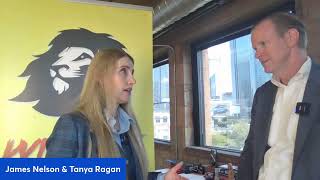
Tanya Ragan, president of Wildcat Management, talks about her path from fashion to real estate, adaptive reuse projects like the Purse Building, raising capital, and scaling to mixed-use developments. She shares advice for new investors, especially women entering the field.
But yes. Okay. So we. Okay. Okay. We're live.
Do you need it bigger?
No, I think this is great. Welcome, everyone, for a special edition of the Insider's Edge to real estate investing. I'm here with Tanya Reagan.
Hello.
Management. Yes, we're here in Dallas.
We just came running in.
So apologies. I know for the those of you, we're scheduled 15 minutes early, but we've been busy.
So real life here. Real life.
So Tanya and I had the pleasure of meeting at the CREI Summit. So. And this is a special edition that we're doing in collaboration with them. But we had the chance to meet there. We're going to talk a little bit about what that was about, but we spent the afternoon touring one of your most recent projects, development opportunities, showing around town. So a lot to talk about. So, Tania, why don't, for our audience, maybe just give them a little background on yourself and Wildcat Management.
Okay. My name is Tanya Reagan. We're here in beautiful, I don't know if you can see behind us, beautiful downtown Dallas in this beautiful skyline behind us. And I am president, owner of a company called Wildcat Management. We are a real estate investment and development firm. For about the last decade, we have specialized in some adaptive reuse. I know you're in town to talk about adaptive reuse. We did a blitz today, did a tour of a adaptive reuse project called the Purse Building, just a few blocks from this. My background, I started out in fashion, then transitioned to oil and gas, where I learned title, learned working with cities, learned working and putting together parcels, and from there transitioned into real estate. And for about the last 15 years have been working in real estate. And the last decade, adaptive reuse and now kind of transitioning into more of mixed use and some larger scale projects.
So amazing.
That's my background.
Wonderful. Perfect. And maybe for the audience, too, maybe give a little background on CREI and as far as how you've been connected, because this was. It was my first year attending in Desert Springs. No, excuse me, is it Palm Desert? Right next to Palm Spring. But this was your second year. Maybe talk a little bit about the community because it might be something that the audience might want to join for next year as well.
Yeah. So this is my second year attending the CREI Summit and how the two of us met, as you mentioned, and you know, how I got involved was in around 2019, just prior to the pandemic, I was sort of going through a transition in my company where I had had some success, downtown Dallas, been very involved in Some highly public transitional type projects. Those were very social media driven locally. But I was becoming a little frustrated or trying to figure out who, how to get some more exposure on some of the things I was involved with. And you know, sort of started leaning in a little bit more with my personal story, my personal narrative, you know, the business side of Tanya versus maybe more of the personality side of Tanya. And as a result of leaning in more into that, coming out of the Pandemic, I started becoming more engaged and getting more involved with the RETWIT and some of the digital community within the commercial real estate space. And ultimately that is how I got connected with CREI Summit. I was on a couple of their lists from the social media activity and attended their summit last year, so saw a lot of value in it and returned again this year. And that's how the two of us met and here we are.
That's what it's all about is taking some of these interactions off social media and in person. So obviously we're at a conference there and this prompted the visit. And as you mentioned, I was speaking at the BizNow conference this morning. Adaptive reuse, but brand and the way that you position your assets is definitely not typical, I would say from kind of maybe certain owners who might fly a little bit more below the radar. So maybe talk a little bit about your brand and how you look to position your assets to get exposure out in the market.
Well, I would say that my brand and a lot of our digital content tends to have a little bit more of a fashion type style. And that leads over even into my personal style. Whether it's how I dress, I wear a lot of suits, I wear a lot of bright colors. I have a big personality. You know, our branding colors are red and yellow. If you walk into my projects, a lot of them are very bold. You know, when we toured the Purse Building, you saw a lot of red and yellow. You saw a mixture of, you know, historic floors, bricks and beams. But you also saw abstract red and yellow, kind of a combination of modern new meets old. And you know, I think for myself personally, you know, back when I was sort of going through a evolution, if you will, of Wildcat Management and myself personally, you know, I recognized for myself being a relatively small business owner, you know, I consider myself a local developer. You know, coming out of the Pandemic, there's not many of us. I'm the only woman in my space. There's very few, if any of us small local style developers still in downtown Dallas. You know, even the mid sized really are being replaced by a lot of institutional and international national investment coming into our space. And when I really started to evaluate trying to compete with that style of marketing just isn't feasible because one, you know from a financial. But two, it really doesn't represent who we are.
Right.
So when we sort of took it a new direction, more in line with my personal development philosophy, whether it's community, whether it's local, whether it's the fashion, and sort of embraced that side of it, even though it is very different than maybe the typical real estate, it allowed me to stand out more. And whether you like it, whether you don't like it, it's still professional, but it stands out because it's different.
Yeah, no, for sure. It definitely. You notice the building, the marketing pieces, it's bright, the approach. You're getting the word out there. But at the same time I think you are also. I know you take the history of the first building and kind of researching the ownership and here's an opportunity for a building that has sat vacant for many decades to really do the work to position it for the future. Whether that's going to be a conversion to a boutique hotel or we've been talked about how spectacular the views are and ceiling heights and maybe it could be a residential conversion. So I think it's that mix of thinking about a property for the future and doing it in a way that stands out, but also at the same time embracing the history. What I'd love for the audience to hear a little bit about is, I mean, we spent a lot of time talking about the transition from fashion to real estate. So. But you know, as you toured me through your various projects here throughout the city, to me it really seems that you're a visionary in the sense that you knew where the city and where especially certain neighborhoods were going. So the fact that we were on the West End, which you told me, James, 10 years ago, this is not what it looked like, but you knew that it was changing. We also just toured one of your sites next to the farmers market. So talk a little bit about kind of that vision and I'm sure when you made that transition from oil and gas to real estate, I mean, that alone was a leap. So not only to do that, but then to go into some of these more pioneering areas. What gave you the courage to do that?
God, what gave me the courage? I will say that I love the creativity. I love feeling inspired. I love this idea of having this connection with community, with history, with this experience that you are able to bring people together. And initially, when I came downtown, it was a ghost town. After 5pm and my first investment in the farmers market area, I literally went door to door to the business owners and called them and organized what became the largest business organization, nonprofit. It still exists today downtown. And we, as an organization lobby of business owners at the state and local level to create what is now the farmers market district. And what that experience taught me was it taught me organizing, it taught me working with government. It taught me how to bring people together and what an impact it can make on real estate, on the type of tenants you can bring in, on the support of your neighbors, on your community, on whether you're a huge developer or whether you're a wholesale fruit producer. Right. Of what that group in numbers can do. And that experience brought me over to the West End. Then it got me involved in all of downtown. And now I'm able to take that experience and do it in other cities and do it other places. So that piece of it is really exciting for me. And for me, how I learn is I have to touch it, I have to live it, I have to breathe it, you know, I know give a shout out to strip mall guy. But he posted something how, you know, 10 years ago or 15 years ago, he would go sit at a strip mall and he would spend days there just watching and observing. And I related to that because for me, when I was downtown and I first got here and I had more time, I would put on my running shoes and I would run, I would walk, I would go to the restaurants. I would just throw myself into it to understand. And even today, I have a policy that I will not invest in an area or in something I don't understand. So if I don't live there, I need to spend time there. I've got a. I can't just visit. I have to really be in the space and feel it, to understand it, to know whether I can make that work.
Yeah. Now, we were having the conversation on the way over here that actually being out there and seeing and experiencing it, you wouldn't get this from the desktop. I mean, you don't know the farmer's market unless you've spent time there. And for those of you who have not been, I mean, the weekend's bananas, right? I mean, you can't park anywhere. That has become the spot. So how are you knew that that was gonna become the next thing again? You clearly were watching the trends and what was happening. But I'm still, you know, maybe the question's more about the conviction. I mean, again, the Purse Building, to buy a building that has sat vacant for decades. Right. And all the things that come with that. Right. And then to figure out how to reposition it for the future. I mean, and again, not coming with the traditional real estate background.
Right.
What gave you, you know, the conviction, again, that you could actually not only take on this building, but figure out how to unlock the value and position it for redevelopment?
Well, I can tell you about the time that I purchased the Purse Building was when I was sort of phasing out of the farmer's Market. I had sort of built that to the point that the market was privatized. I owned real estate over there. The organization was continuing on differently and I was bored and I was looking for a new opportunity that I could have the same type of impact. And I learned of this opportunity of this building that had been sitting there for 30 plus years. It was boarded up. I came to the neighborhood, I walked around. The stuff around me kind of looked also a little depressed. But then I'm looking around, I'm looking at the bones, and I'm taking a look at some of the businesses that are still in the area that have been here a long time, like Wyoa that we went to. His business is actually the best amazing steakhouse. Yes. The best it's been in 30 some years. His business is doing well. And, you know, I started looking around, I thought, there's a lot of local people here. It's right on the edge of our downtown. It's near the interstate. I started looking, oh, this is planned for the county. Oh, this is planned, you know, here. Oh, look, there's 4 million visitors that come right across the street from us. And I started looking at what was planned on Elm street. And I thought, this is such a diamond and such a hidden opportunity. And I think what's really held people back is the unknown. Look, you don't know what you're going to find. Nobody wants to stick two and a half million dollars in a building to go in and find out that there's all these issues, you know, they don't. There's. There's uncertainty in the, you know, in the unknown. So, you know, ultimately I felt that there was so much upside potential and I could create this sort of similar type of experience that I was able to be a part of in the farmer's market, which was why I took the leap over in the West End. Now we had the pandemic. The whole world shut down. There was a Lot of unknown surprises. And you flash forward today, and for so many reasons, that property is better today than it was then.
Right?
It's getting it off the finish line today. And, you know, today, whether it's a boutique hotel, whether it is, you know, multifamily, whether it's creative office, I mean, really, I think it'd be a great hotel. Especially with the new convention center. The timing of where that played out with everything that's happening in our city is just fantastic. It's just taken a little while to get here.
Having the right patience and being able to pivot and think about different uses and really trying to figure out how to unlock the value. Kenya, talk a little bit about building Wildcat and, you know, the company and not just the people, but also raising the money to go out and do these projects. I mean, we talked about having the right kind of investors. And a lot of this is also your own, you know, personal network that you're putting in these investments. And these are not just, you know, in, you know, a year or two, turnaround, reposition. I mean, some of these investments require kind of a longer term horizon. So how did you build the company to basically manage and position these assets and then maybe talk about some of the investors who you've worked with along the way?
Well, I will tell you, everyone likes to talk about their home run deal or the great deal that just knocked it out of the park. Real estate, it really is a long game. And, you know, we found that earlier when we were having a conversation about the pandemic of, you know, sort of the slate being wiped clean and what a wonderful opportunity it is for new people in this industry. But in the same respect, you know, you had to have the capital to be able to get to this point. That was, that was important because otherwise you could lose your rear end. You know, for me, you know, in the early days, you know, I went out and I raised capital. When I was raising money for the oil and for the gas, I went to family, I went to friends, and I said, hey, I want to go out, I want to put together some oil leases, I want to acquire some, you know, some interest. I want to start packaging this. I think there's an opportunity in this natural gas play. So early on I went to family, to friends, I had some folks that I had worked with in a prior role and more of a startup capacity that were used to investing in ideas and investing in sort of more risky type venture type projects. And from there I started putting together some of these, these oil and gas deals. And from there we just kind of kept moving it over to the next deal, to the next deal and then eventually started rolling over and doing some of that in real estate. And a lot of those early investors, I mean, they stuck with me, you know, up until really up until some of them, up until even recently the last few years. And I think for me I had to really evaluate where I was at in my, my life. Wanting to scale, wanting to do bigger projects, my age, my capacity of where I wanted to be in the next 10, 15 years and how that cycle looked different than 15 years ago and recognizing that I had outgrown some of those partners and we were just in different places and I think we all kind of recognize that. So just prior to the pandemic and then even in the last probably 24 months, I started taking out a lot of those partners.
Right. But initially, and I know for a lot of our audience who, you know, maybe they see that opportunity in their neighborhood and they, or they see this new frontier.
Yeah.
But if it's their first investment. Right. So because clearly you made the transition, you had a track record, it sounds like with your investors in oil and gas, but now you're going into real estate again, giving them the confidence that you could actually execute on this, not having. Because you didn't have a real estate background, Is that correct? You were saying you're investing in me? I have, you know, I see value, this is why. But you don't have a track record. You haven't done it before. So how were you able to kind of get over that?
Well, I would say for me personally, you know, I came from a, you know, finance background. Even though I was working on the fashion and the retail side, I was working on a more in a startup type capacity where I worked with Fortune 500 retailers and it was a very strong finance side. So when I went and worked with raising the capital, you know, it was showing a proforma, showing what I was going to be going after. Very transparent, you know, this is what I need. This is where it's going to be allocated. This is my timeline. This is what I see as a return. This is, this is the exit plan and what we're going to do after we exit. And very, very conservative. You know, I have the philosophy I'd rather, you know, under promise and over deliver. Also early on I always put some of my own money in the deals, even if it was small amount. So let's say I started out and I was putting, let's say I put 15,000, or maybe you can put 20,000, or maybe you could put 5,000. I don't know. Even within your own brokerage firm, you know, I know for women in particular, you know, if you go to a brokerage firm and you start asking around the firm, you'll see. See, a lot of the men will tell you, hey, we're investing here or we're investing here. We're a part of this in some capacity. But when you start asking the women, you'll find that majority of the women are not involved and are not participating. And what's so important in participation, whatever level it is, is it gets you a seat at the table to listen, to learn to ask questions, whatever amount it is. So worry less about the amount, worry more about getting in the deal, if nothing else to learn, because you will learn so much. So for me, being able to graduate right, to a point where, you know, now I own stuff 100% or I'm in a place where I'm the majority owner or buying stuff 100%, or I'm graduating to a point where I'm raising capital in a different way because I'm scaling. The type of capital that I'm looking to raise is structured in a totally different way. But you have to start somewhere.
I'm so glad that you brought that up. And also speaking to the women listening to this, and our friend Beth Azure, and I've had her on the show, but one of her huge goals is getting women to invest in real estate. And I don't know where she got the staff, but it was. She thought that it was only in the single percent range of women owning real estate. And so that's one of her passions and coaching women to go and invest. I think it's fantastic that you are.
The time or even, oh, gosh, I saw that property and I wanted to buy it. I saw the opportunity. But, you know, my husband or this or that, I was so fearful, and I didn't do it. I hear it all the time.
Yeah.
And I think, look, I get it. And you don't want to, certainly, you don't want to overextend. Right. But you, in order to grow, in order to. I mean, real estate in this country is the number one opportunity for wealth. It is.
Yeah.
If you see it and you want to be it and you want to get there, you've got to get a seat at the table. And that means you got to start, and the sooner you can start. And even for myself, you know, looking back, I was so loyal to my partners, which is a good thing. But in retrospect, I wish I would have started a little sooner.
Yeah. Well, Tanya, let's talk about how you're now scaling your business. So you're now assembling land as well. And now, you know, not just working with individual buildings to reposition. You're now looking at master planning communities. But it's interesting, your take, and not surprising, was not your take. Typical cookie cutter type multifamily development. So talk about the types of communities that you're looking to build in the future. And we were talking a little bit over lunch about how you're looking to grow your platform and do larger scale development.
So I've been very reflective the last, I would say year to 18 months in taking everything that I've learned from the last 15 years and sort of combining it. And if you look at the fashion, if you look at the community building, if you look at the historic, if you look at this authentic experience, urban creating, this neighborhood type of atmosphere and combining it all, and that can look a few different ways. One of those ways is the project that I mentioned in Mansfield, which is creating this district that is attached to a trail, it's attached to a park, it's got a adjacent dog park, it connects to the old historic downtown. And it really has this community feel where a higher density allows neighbors to exercise, take their dog, move within the community, but still have all the conveniences of being right downtown with a high level of amenities. So it sort of takes everything and combines it. So, you know, I'm taking sort of everything I've learned and bringing it together. There's another component of it from there's a lot of opportunities in some of these low hanging areas around Texas where they have a tremendous amount of historic buildings. And I'm not talking a single building or two building, I'm talking blocks. Same thing. You know, you come in and you're able to create a bigger experience, whether that's through the retail, whether that's through the living. You know, that's hard to do in a downtown environment like Dallas because we've gotten so big. It's another playing field. It's not the same as it was, you know, 15 years ago, but going into some of these other areas that fit very specific criteria. They're 25 miles from a major, relatively large city. They have easy access to interstate, they have a growing housing population, they have schools or a certain level of income. And that could be a town of 2,500 people. It could be a town of 20,000 people. But that growth is there, and you see that data to support it. There's an opportunity to go in those areas and really make a mark and create something bigger that you can't do with a single large building. How wonderful that is. You cannot have that same type of impact at the scale that I would like to do.
No. I love the idea of every project you do. You're building on your experience, and now you're just taking it on a larger stage. So, Tanya, I'd love to talk about a topic that we were discussing earlier about the idea that sometimes local investors, maybe you've been investing in a market for a long time, you're kind of looking at that market with blinders on. And I think what's refreshing to hear is you're always kind of looking. Taking that outside perspective. Why is this building underutilized? What's missing? This area, we were talking about the idea of local investors versus investors who are from out of town, even foreign investors. And I've got to say, just even selling properties in New York and thinking back to 2020, like late 2020, early 21, we're saying, is this the death of the city? What's happening? And we had foreign investors just pour into New York, and he said, new York is on sale. It's not going anywhere. So sometimes, like that outsider's perspective, you know, when you don't have. You're not. Maybe if you're there every single day, you're not really seeing the big picture. So maybe talk about that, because I think also, you know, what you're doing from a marketing standpoint is you're not just focused on the local investors here. I mean, you really want to take your projects and you want to put them on a national, if not a global stage.
Yes. Well, and I recognize with where I'm going and the projects that I'm doing, that capital, and quite frankly, the. The groups involved with those projects entering our market, they are not local. You know, even with Mansfield, you know, some of the preliminary conversations I've had, even over there, they're groups that are wanting to enter that market with that supply. So I had to really retrain myself. And I will say, you know, I have this philosophy in my head that I consider myself the ultimate underdog.
Okay.
And I've always considered myself an outsider, and I don't know why that is. I went to a small Christian school. I graduated with six people. I went off to college, and I felt like I was a duck surrounded by swans. Then I Went to New York. Now I'm in Dallas for 15 years. You know, I don't know if it's like, doesn't belong syndrome. I'm very confident. So it's not insecurity, you know, so I'm just wired of. You know, I really tried to program my brain of, okay, sort of isolate. How do I look at this from my user perspective? How do I look at this from the consumer? If I'm walking to the purse building or to this property or to this project, what is my. What is my experience? What do I see? What do I feel? You know, in the case of, you know, how we're currently marketing, I recognized that organically there was beyond what you read in the newspaper. You know, whether it's y' all street with the financial groups moving to Dallas and to Texas, the growth of our city, the jobs, the economy, the convention center. I mean, we could be here for an hour talking about it. Beyond all that, organically, I recognize that 90% of our inquiries or interest within Wildcat management was coming from outside Dallas. And when I felt that and I saw that, I thought to myself, that's a problem, because that means that we need to get ahead of it. We're behind. So we shifted and we started marketing, even changing our language, our verbiage. I've tried to retrain even my staff. It's hard because when you are here and you're from Dallas and all the vocabulary we use locally, even trying to teach everybody to talk and use words and get more kindergarten, if you will, in a way that is easier to understand, because who we are marketing to is different. And, you know, that's been a big education for me and for all of us, you know, especially the last several months. And, you know, recognizing that we have to adapt with it or I'll get left behind because, look, who am I competing with? I'm just a little fish in a big pond. And I survived to this point, last woman standing. I plan to survive a lot longer and continue to grow and scale. So I have to adapt with what I feel and what I see.
Yeah, whether you call it the underdog or the outsider's perspective, there's definitely always a status quo of how things are typically done or the way a building is meant to be. And so the first building that was office. I mean, that was what kind of the. The easiest path. And things really changed. Right. You know, post Covid. But to your point, I mean, yes, the hotel. There's clearly demand for hotel and for F and B there, but you know, coming from New York and taking a look at this, I said, you know, what about luxury condos? Right. And it was so interesting that you had another developer tour the property said the exact same thing. And that product does not exist here. Right. But when you walk in and you see, I mean, I think at least 12 foot high, probably 14 foot high ceilings and 15 on the six potentially windows on all sides overlooking a park, you know, historic park.
Yeah.
You know, that's the kind of product I said, if you took this building and dropped it in the West Village, I mean, this building is worth, you know, probably close to $100 million. I mean, so it's. Those are the kind of things. But maybe that's not proven out yet. Yet is the operative word. So I think I know this conversation is going to be super inspiring for those out there who have a vision, you know, because again, you didn't come from a real estate background. You kind of had to figure this out along the way. But maybe that was also some of your strength is to come to these situations with a fresh perspective and then have to figure it out. Right.
And look, I mean, it's not easy because, you know, I moved a building brick by brick a mile that had not done been done before. You know, we're marketing in an unconventional way now. We're trying to sell a building that was previous office. And even in how we're trying to, whether it's market or shift the focus, the systems are so archaic with real estate that the systems are not set up in a way to adapt with a new direction. So we are having to work within our limitations all around. That's not easy. So, you know, one thing that I encourage for, whether it's, you know, brokers, developers, real estate folks, whatever capacity you're in, is really to encourage to, you know, push yourself to get out of your environment and out of that comfort zone. You know, we talked earlier whether it's, you know, we went to the Crow summit, I've been to some other conferences still staying within my real estate, commercial real estate space. But just being in another environment and being exposed to other things in that space really helps open up those ideas. Because when you're continue to be in your own environment, it's almost like you get, it's almost like you get group think.
Yeah, no, it's, you know, to me that's Stephen Cove Covey's, you know, second quadrant thinking. So I think a lot of people, the way they run their business, it's just, you know, they have A certain way of doing things and it's just, okay, the answer is just work harder. Right. Whereas kind of taking a little step back and say, hey, how can I approach the situation differently? And that can apply to how you're going to reposition a building. It could be on how you're going to market a building. And so we talk about how we go out and market a property today. Yes. I mean, certainly there's always the first five or ten phone calls that most people could think of. But you know, anyone can do that. Right. So the key is, you know, we have all this technology. You know, social media is just one piece of it, It's a delivery method. But there's so many ways to get the word out there. And it truly is. I mean, certainly, maybe not in every market, but certainly a market like Dallas, which, by the way, last year, sorry, first half of this year was the number one market in the country. $13.5 billion of sales here. I mean, this is a big market. There's a lot going on here. And again, opening it up to the whole world.
Well, even we were driving around today, I mean, you were like, wow, everywhere you look there's people moving on the street, there's cranes, there's construction. I mean, I feel so fortunate because wherever I go in the country that whether I'm there for real estate or even if I'm just there on vacation, when you say you are from Dallas, Texas, people are like, wow. I mean that place is on fire. Oh, that place is great. Oh, there's so much opportunity there. And really, I mean it is so welcoming, it is so business friendly. We have a city that is highly incentivized. They want development, they want hotels. We've got this big expensive convention center. I mean, they really are pro business. And I feel so fortunate. I mean, I saw that 15 plus years ago when I moved here and I still feel that today.
So, Tanya, with that all in mind, thinking about what the next five or ten years hold, I mean, is it just doing larger scale projects here? I mean, I think you said the importance of being able to see what you're doing. And not that you couldn't hop on a plane and go out of the markets, but is that really the goal? I mean, what does Wildcat look like five, ten years down the road?
Well, I mean, I do see myself in Texas. I see myself expanding throughout north Texas. Some of the areas that I already mentioned to you, not necessarily Dallas, I see myself expanding in some of these low hanging fruit and some of these Maybe smaller areas that have big growth potential. And I'm in a unique position in my life where now, today I have the capacity that I can lean all in. Whether it is owning the real estate, whether it is owning the equipment, whether it's owning the, you know, the concept, whether it's being involved in the entire, you know, the entire development from start to finish. That is something that I'm really excited about and really ready to embrace, which is another reason why I made the decision to, you know, to market the purse, to market the other property that we visited today, because I'm super excited about this next chapter and I'm ready to lean into it.
Wow. Amazing. This has been such a spectacular day. And to see that tour, I mean, this is really a typical New York day.
I know. I love it. I live for this. I live for this.
So for someone. We've got some of our livestream listeners right now. People are going to be hearing this on their favorite podcast networks. But what advice would you give to the person out there who, you know, either they're in a different industry or maybe they're in real estate, but they've never made their first purchase, but they have that vision, they see that opportunity. You know, again, taking that initial leap, what would you. Because I think you did say, all right, let's not be, you know, financially reckless, but there is kind of this middle ground where, yeah, it is a risk, but at some point you have to take a leap. So what would you say to the audience? When is the right time, when you see that opportunity to say, I'm ready, I'm jumping in?
Well, I will tell you, I do believe fear is sort of like a muscle. And as you get more comfortable with fear, you're able to have more and more tolerance and be able to push further and further and further and be able to navigate more. Which I'm not saying that you should, like, go off the cliff or anything, but I think that is a very positive thing to have an appetite for fear. So for myself, my advice would be not to wait too long. Whatever capacity you are able to, if you have the opportunity, do it. And most importantly for women, ask. You know, men especially, they tend to be more likely to step forward and ask, and women hesitate or don't ask. You have to ask. You know, I am pretty hard to offend, and I don't ever, you know, for me, no is just sort of not right now, not today, maybe tomorrow. So you have to ask. If not right now, think of me in the future. Hey, you Know, if this is an opportunity, I want you to know that I would be interested, if not right now, at some point in the future, keep me in mind, whatever capacity that is, I would like the opportunity you have to ask. And don't wait. Do it as soon as possible because it'll get you at the table. You'll get more familiar, you'll build more of a tolerance for it. You know, I think that that is, you know, that's a super. That's a super big piece of it. You know, I think for myself, I almost worry sometimes that I don't have enough fear.
I think part of it is, to me, it sounds like it's kind of getting outside your comfort zone.
Yeah.
Like there's definitely that track where, hey, either I'm working for a bigger shop or I'm getting, you know, a salary and, you know, it is a little bit of a risk and it is going outside your comfort zone. So, yes, I mean, fear is part of that, but I think it is, you know, kind of embracing that challenge and really having, you know, belief in your conviction. So this has been an incredible conversation. Thank you so much for sharing. Now for our audience, I'm sure you're going to get a lot of outreach. What's the best way to get a hold of you and see all the incredible things that Wildcat Management is doing?
Thank you. The best way to get a hold of me, of course, is social media. You can follow me on Instagram, you can follow me on LinkedIn. On Instagram, it's Tanya A Reagan. T A N Y A A R A G A N. Of course, Instagram. It's more of day in the life. I post a lot more fashion. I have a high female following, so they're very interested in what I wear, how I navigate, going to meetings, dressing professional. That seems to be a big conversation about how to be authentic, how to still be creative, how to still have style while being in a construction conservative space. You can follow me on LinkedIn. Much more real estate heavy, of course, Twitter. Also active on Twitter, Tanya A. Reagan. Wildcat Management. Wildcat Mgmt is on all of the social channels. We also have the historic Purse Building. If you're interested in the Purse Building. Purse Building, Dallas has a website. Historic Purse Building is Also on Instagram, LinkedIn, the various social channels.
There are a lot of ways to find you. This is fantastic.
Not hard to find me.
You know, @James Nelson.com this site, I built it for you. It's not about me. It not only will have this podcast in the show notes, but it has a lot of helpful white papers out there, obviously, ways to get the book. We're also going to be coming out with an instructional course pretty soon, so stay tuned for that. But as always, the best thing I think you could do is if you found value from the show, and I don't know how you couldn't forward it on to someone who you think would find of interest, that's the best thing that you can do. So, as always, we want to thank you for joining. Until next week, I'm your host, James Nelson. Thank you.
Thank you, everybody.
And that's a wrap. We'll go ahead and hopefully, let's see if we can turn this off here. No one, no.









