Catherine Bell Renting Dirt Q&A
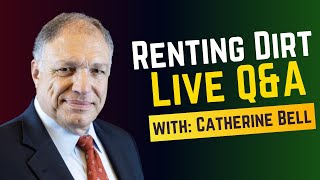
YouTube Q&A (host James Blakemore; guest Catherine Bell) about Catherine’s investing philosophy—"renting dirt"—emphasizing mobile home parks as scalable, cash-generating, and lower-headache real-estate investments. Catherine explains why mobile home parks work (tenant-owned homes, owner responsibility limited to utilities/infrastructure), operator vetting, conditions of satisfaction (including a requirement to leave communities better than found), and diversification across asset classes (mobile home parks, triple-net medical leases, self-storage, debt instruments). Practical investor facts: mobile home park minimum investment ~$50,000 (accredited investors), deals can be 401(k)/self-directed IRA eligible, target IRR ranges ~18–22.2%, lease lengths for triple-net medical properties ~15–20 years, operator team experience claimed >30 years. Catherine frames passive income as critical financial resilience (she had 13 passive income streams when widowed).
Questions this video answers
$50,000
Accredited investors
Approximately 18% to 22.2% IRR
15 to 20 years
Well over 30 years
Chapters
So, ladies and gentlemen, I want to thank you so much for your time today. We are so fortunate to be with Catherine Bell, the owner of Titan Impact Group, a very diverse real estate investment and development company. She has such an amazing history and such an amazing level of experience in all of her endeavors, somebody who overcame some of the worst possible youth experiences to become an extraordinary success. And as a result, she is giving back and helping other kids that are in the system become successful, too. So I'm going to turn it over to Catherine Bell and let. Let Kathryn tell us a little bit about renting dirt, how she makes money and how she helps other people. Over to you, Kathryn James, you're amazing.
So I love working with you and, you know, getting to do all these amazing things and make the impact that we're here to make. And, you know, that's what, at the end of the day, what this is all about. Like, I love that you pointed that out, that, you know, I mean, this is it. This is everything. And I assert that everybody that works with you, the reason they're here, literally, is because they feel the same, which is really amazing because at the end of the day, money is like oxygen. The more you have, the easier it is to breathe. And the more you have, the easier you can breathe, the bigger the difference in the world you can make. And so that's what it's all about. And inside of understanding my favorite philosophy about investing, which is renting dirt. So we talked on Tuesday about the different investment philosophies and, you know, how I came to rent dirt, you know, going through all the things and trying all the different things. And what I love about what you're doing is that just the same as you, you've been a part of multiple different types of investments and come down to, like, you know, loving to rent the dirt, be the bank, you know, oil and gas and all the fun things. So I'm excited to dig into all of this and to be partnering with you on all the things on, you know, renting dirt, being the bank, making an impact, you know, and I love that your investors get to do that with you by, you know, through the finding the who knows how to do the thing and then plug into it and get all the benefits from it. So I wanted to answer all the questions that people may have around mobile home parks, triple net lease, how to apply renting dirt to their strategy and getting started with you, Iron Mountain Capital Group, which is ultimately what we're working towards. So just to reiterate, what is renting Dirt. So for me, renting dirt comes in multiple forms, which I really love. My favorite happens to be mobile home parks because at the end of the day, like, the reality is, is that they're cash machines. You know, again, it's like it gives us exactly what we're here for with, to me, the least amount of headache, meaning that we're only responsible for what's under, below the dirt, meaning like the utilities. So the water, the sewer, the electricity, that's what we're responsible for. We're not responsible for the actual buildings themselves. And what I love about this is that the. It allows for. It's the affordable housing. So it's people who no longer want to live in apartments or anything, but don't have quite enough to have a house. This is their opportunity to have pride of ownership and literally own their own home. You know, we're not responsible for it, they're responsible for it. So having that pride of ownership has them, in my experience, actually be taking care of them in a very real way, which is really great. Um, so that's, that's one of my favorite things that, why I love this so much. And then we build communities like this. We have a park that has had 0% vacancy for the last 10 years. Again, because when we build in that it's their responsibility, it's their community. All of a sudden that pride of ownership really makes a huge difference and, you know, they take care of all of it again, except for the parts that we have to take care of. So I really love that. So why this matters, here's why this matters, is that for all the people that you're working with, James, it's, you know, network marketers, doctors, it's really people who are very, very busy people and they have, you know, the extra income that they're looking to actually diversify and invest in. But when are they going to find time to be able to do that? Well, that's where you come in and I come in again, it goes off of the book that I love, which is who, not how. When you, when your job, James, is. You've gone and you found really amazing operators with really amazing deals that people get to plug into and get the benefits of. And I call it sra. Same rules apply. You know, it's the, you know, just like when we're parents, for the most part, most parents will go and find the best schools to have to. With the best teachers. They'll plug their kids into it to get the actual, you know, outcome that they're looking for or if our family members get sick, we'll take them to the best doctor who specializes in that thing to get them better or of our vehicle. Like it's the same thing. So investing is the same. And what I love about that is Tony Robbins wrote a book on the holy grail of investing, and he talks about private equity deals. And that's what all these are, is it allows for people to plug in. This is what the wealthy do. And, you know, everybody has access to this who's accredited investors. And if you don't know an accredited investor, you know, again, they get an opportunity to work with you so that they can become an accredited investor to be able to invest in these and plug into these. So again, earned income is meant to buy assets that provide passive income. And that passive income is the thing that is meant to pay for your lifestyle. And why does this matter? Because at the end of the day, the five Ds, you know, death, divorce, diagnosis, downsized, are being dumped. Most families will experience two to three of these within their lifetime. And if they don't have the seven streams of passive income in place, they're going to be literally obliterated. So this is the making sure that, you know you're working smarter, not harder, and that your money is working for you. So, you know, I talk about this in my philosophy is that I had created 13 streams of passive income when my husband had passed away. And, you know, that literally gave me the breathing room that I, that I absolutely desperately needed so that, you know, my kids, my twins, who are 14 at the time, were able to take a year off and grieve, you know, and figure out what we were going to do next. So this was, you know, again, just a really important. What's the word? Like, it's not something that I had planned on. It's not why I had created the 13 streams of passive income.
And.
But having that breathing room for me and my kids, it literally was everything. And so I'm not saying this beginner because, you know, people need to plan for their spouses to pass unexpectedly. But life is going to happen whether we like it or not. And if we do not have our financial house in order when it happens, like, literally, again, this is the responsible thing to do. So we really want to make sure that you have positioned your portfolio to be in multiple different asset classes. So that brings diversity and stability to your portfolio. And what I love, James, what you're doing for all your investors literally, is exactly that. All the time that they don't have to go find these, to go find the operators, to manage all of it. You've done it all for them and they get to benefit from your network and, you know, all the work that you've done. So I really want people to pay attention to that. I think it's really, really important. What is the next one? So if you have questions, you can put them in the chat and I know people are going to be watching this after. So if you have questions, I want you to reach out to James. And James, you've got an AI clone, right? It's James AI. So people can actually talk to your clone and ask questions of your clone and your clone will be able to answer the questions for them and then of course, you know, be able to set up calls with you to get more questions answered and take a deeper dive. So the minimum investment typically in a mobile home park is $50,000. Again, it's for accredited investors. Is it truly passive? The answer is yes, absolutely it is, because our teams are doing all the work for you and then you just get the benefit of it. The risk mitigation is that we only go into areas where we look at the rents of the apartments and then how much it is to actually own a home in the area. And if that gap is a significant gap, that makes it a sweet spot for us for these mobile home parks. And then of course, being able to add value, we buy a lot of mobile home parks that haven't been automated and brought in those systems and stuff. And then again, how else can we create community around them? And to be able to create that, when we create that community, what that does is if anybody moves out immediately, one of their friends or family want to move in. So that's how we have the zero vacancy in our parks, which is really amazing. And then the operator vetting is really, really important piece. And James and I have talked about this. You know, it's doing deep dive background checks on the operators themselves. What is their experience of doing this? And then, you know, how do they, how do they operate? How do they deal with, you know, any of the things that come up that are going to come up because, you know, it's a part of being a real estate investor. And then, and again, so what I love about this is your, you can talk to James's clone about all of this and what he's done to actually do the vetting on all of this and help give you ideas. And then is it 401k eligible? So if you have a self directed IRA, yes, you can invest in all of these, which gives you generally a higher return than your typical 401k and all the same tax benefits. And depending on how that's structured. And we can get you connected to people if you don't know what that is. But there's a way to convert your 401k into a self directed IRA and be able to invest in deals like this, which is really cool. So the deal evaluation process is that it's a very, very rigorous process that we go through inside of. I always say, do the numbers, numbers tell you what to do? Again, it's based on a whole bunch of work that we've done in sending out different ads and things in the area before we even buy the park to see what the interest is in that area. And then of course, we pay attention to the local economy or what's happening with job creation, with unemployment. Like we look at all the things in the entire area, not just the park itself, because what's going on in the community and the surrounding area, what's going on at the municipal level, like with laws, all of that, we're looking at all of that because all of that is going to impact this community and this investment. So we have a really, really deep, deep, deep dive check that we do when we evaluate any of these deals. Doing that and then red flags. We have walked away from more deals than we've actually ever done. And I think that that's really important to understand. So we have something that called conditions of satisfaction. And our conditions of satisfaction must be met before we're going to proceed forward with the park. And so you as an investor, it's really important to have your own conditions of satisfaction. You can talk to my clone about that. It's Katherine Bell AI. She'll walk you through the process of coming up with your conditions of satisfaction based on your values and what's important to you. This is a really important thing as an investor to understand. Like mine is. So my, not my number one thing for investing in my number one checkbox. Conditions of satisfaction is that we must leave every person, property and community better than we found them. If we can't check that box, I'm just not going to participate. Then I look at the background checks of the entire team and what are their, you know, what is their success rate, what is their failure rate? But more importantly, here's what I want people to understand. I actually want to know when somebody failed and what do they actually do with it, because that will tell you more about a person's character than anything. And if a person hasn't failed, I won't actually work with them because statistically you're in this business long enough, you're going to fail. And, and I don't care that you failed. I want to know how you actually navigated through the failure. Like that's the most important piece to find. So these are conditions of satisfaction that I've worked with also. I, I also ask for three references of people that they've worked with in the last six to 12 months that they can actually talk to and I'll actually pick up the phone and talk to the people and find out what the whole experience has been and all of that. So again, these are just a few conditions of satisfaction that I have along with all of the data driven information, all of that, because again, it comes down to a huge part of it, which is the team. And then of course, James, I love what you do, which really is the white glove investor support. You've done all this work for your investors and that's what people need to be present to and really lean into is that you are the who that knows how to find these deals and find operators and you know, all the different things. So that's the beautiful thing about who you are and you know, the gift that you bring to the table for all your investors. So I really love that. I think that's really important, you know, to empower people. Nobody's going to care more about their money than them. And so, so making sure that they have people on their team that care just as much as they do is really, really powerful. And what I love was you also invest in the deals at the same time. So absolutely you care. Triple net lease is powerful. Again, questions that people sometimes have is the, the tenants are paying all the expenses which, that's the piece that makes it the triple net lease. I love it because it's long term leases. So there are anywhere from 15 to 20 year leases, which is pretty awesome. And the medical, the medical professionals that are in there, they're not going to vacate because all the medical equipment, everything, their medical practice, all their patients like are in that local area, which is why it's so successful. And the beautiful thing is that practice, the medical business itself is actually paying for that lease ongoingly. So it's just, it's a beautiful. Another example of being the bank and renting the dirt at the same time. Like it's two things I love the most. So we have several mobile home parks and we, I mean the numbers are the Numbers vary, but the numbers are always anywhere between 18 to 22.2percent IRR. And again, we've had parks we've been involved in. Our team overall has been involved in this particular business for well over 30 years. So we really know this business in this industry, again, you know, we stay in our lane, which is really amazing. So we have several investors. And here's the thing I want everybody to understand is that it comes down to diversifying your portfolio into different asset classes. So rather than thinking you need to stay in one asset class, what you need to do is you need to be diversified. Because just like we did in 2000, 2008, 2009, we sold our company in 2008, 2009, the economy crashed. We had several investments, but it was all the same asset class. We lost everything. It was single family homes. So that's when I had the biggest aha moment. So learn from my mistake and understand to diversify. So when you have investment in mobile home parks and then some in triple net lease, commercial medical office space, some in self storage, like in, in other trusted investments that James has been able to vet and put together. By doing that and having your portfolio be diversified now, you're bringing stability to exactly what it is that you're looking to do for your family. Again, seven streams of passive income. But make sure they're all diversified into different asset classes. This is really, really important for people to really like wrap their heads around and understand, and that's why you're here, is that you have done this work for them and can walk through all of this like you've done all the hard work. And so that's why people should be working with you to understand each one of these asset classes and then to be able to get into all of them. And because at the end of the day, it comes down to your relationships. So I think the thing to do is to have them schedule a call with you. I mean, at the end of the day, that's what it comes down to, is that they just need to have a call with you so that you can find out more about them and what their goals are and you know, get them taken care of. Like that's really, really important and get all their questions answered. But the other piece is again, and I want, and I get that this is new for people to be talking to AI clones, but it's a super cool experience in that James, I know your clone has gotten enormous amount of information and knowledge inside of being able to answer questions about these different asset classes. So that they can get those questions answered. And then the last questions your clone may not be able to answer, they can schedule a call or whatever with you. So, so it comes down to like hanging out with you. And I think you talked about possibly having some barbecues where people could come hang out with you.
I like to cook barbecue.
All right. So I think I know I'm going to come out and have some barbecue or even going on cruises and stuff, right? Like it's the, you know, I would reach out to James and, you know, spend some time with him so that you can understand what he's done to find all of us and the vetting process that he's gone through so that you don't have to go through that vetting process. He's done all the heavy lifting. So I know there's lots more questions I'm sure people will have. But again, that's why reach out to James, send him a message, talk to his clone, and he can pretty much get all those questions answered around all the different types of renting dirt. So I know that was a lot and I hope that it was helpful for people. Again, I'm a raving fan of renting dirt. It's why I do what I do. It's my core philosophy in investing. And again, you know, for me, like, why is it so important? Again, as when my husband passed away, I was looking for investments that were predictable and that were recession resistant and had the lowest amount of risk and gave me the, the greatest protection. And so again, being the bank and renting dirt did all checked all those boxes for me. And so that's why I lean into these particular assets. So, James, do we have any other questions you wanted to answer?
I don't see any other questions in the box. Question that I'd like to know, Kathryn, is, you know, you have been involved in a number of different investments. I know that you spent a lot of time and energy flipping houses. You had your flicking, flipping females group. I know you also were in the, in the vacation rental space for a long time. How did you, how did you come across mobile home parks?
So I've always been fascinated with mobile home parks and it came down to scalability. So I, when I got started, it was doing single family homes and learned that you can only have 10 mortgages in your name and that was it. So I couldn't scale it from there. It was a lot of work and, but I couldn't scale it. So I was like, well, what else can I do to actually scale? How can I get more doors and you know, there's multifamily. But again, that's owning an actual building, which I was like, I don't like tenants and toilets. And that's what I learned for the buying hold. I didn't like tenants and toilets. I did the vacation rentals, trims that I don't like guests and toilets either. Flipped 500 properties, which was a lot of fun, enormous amount of work, but it wasn't truly passive. So I just kept asking and I kept asking and going to a lot of networking meetings and asked what people did and eventually found people who were doing mobile home parks and then started, just asked an insane amount of questions and then eventually became a partner and now I'm partnering several of them and run them myself and just really love the whole model and, and the thing that it, that I want people to understand is that like I gave myself permission to try all the different asset classes because I did residential ground up developments, commercial ground up developments. So I really was digging in to understand. But the best way to understand is to go do it. And so that's what I did. And so after, you know, 30 years of investing, that's how I, how I landed on that. I love mobile home parks and the triple net lease and of course we have our debt validation like anyways, being the bank, renting dirt, those are the things that ultimately it boiled down to for me.
Perfect. Thank you so much for your time, Catherine. I know you're extraordinarily busy, so taking this time with us was wonderfully generous of you. I appreciate you so much. You've been such a wonderful resource for me, my company and my investors. I look forward to seeing you again soon. You have a marvelous day, have a marvelous week and have a marvelous weekend. Take care and bye bye for now.
You're amazing. Thank you.
More from James



AI for Real Estate Investors: What Smart Capital Builders Know That Others Don't - Live Q&A