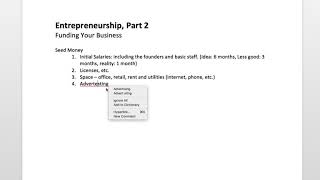
J. Anthony Allen breaks down seed money into two parts: salaries (with three to six months of runway) and operating expenses like rent, licenses, software, and advertising. He recommends separating each cost into essential versus ideal columns so you fund what matters most first.
Chapters
Okay, so first let's talk about seed money. So seed money is if you imagine, you know, when you plant a seed and you need it to grow into something, right? So what do we need to plant in order for it to grow? Which is essentially, you know, an analogy for how much money do we need to get off the ground. So when you think about how much seed money you need, here's things to think about. What seed money typically is used for is initial salaries, including the founders and basic staff. So what that means is the founders and the staff should be paid. I mean, you definitely have to pay your staff. You're going to find that paying your staff becomes more important than paying yourself. But if you're thinking of an ideal situation, which is kind of what we are right now, in the amount of seed money you want, you want to include money for yourself. Not lavishly, don't give yourself a lot of money because that will end up being kind of silly. But pay yourself enough not to be super poor in order to be focused enough. Enough money to be focused on the business. That's what we care about. So enough so that you're not starving, your family's not starving and all that stuff. So you know what you need? If you have a partner or something like that, you need to factor that in two. They need the most minimal amount of money to keep them focused on the business. Okay. And how, how much of it do you need? Depends on what you do and how long it's going to take you to turn a profit. You think? In an ideal world, I would put this at six months. So you want six months worth of staff salaries in the bank. In the real world, let's say ideal world or ideal less good, three months reality, one month. So ideally you'd have six months of salary in the bank. You'd be fine with three months of salary in the bank. And most companies actually start up with one month of salary in the bank. It's a little riskier, but that's how most people do it. So another cost for seed money or another thing that seed money usually goes towards things like licenses, etc. Depends on what you do. You might need special licenses, like let's say you're a bar, you're going to need a liquor license, that's expensive and all these things. So that number three, let's say space, office space, retail space, rent and. Say rent and utilities, Internet, phone, etc. Okay. I was blown away when we started slam that I needed a phone line. I thought, no one gonna call Me, they're gonna email me, anything like that. But now people want to call still. I don't get it. But you know, they want to text us even more. So we have a phone line that you can text. It's a very easy way to do that. We'll talk about that in a future class. Number four things that we use seed money for. Advertising startup. In other words, leads. Depending on how you plan on advertising, if you're going to go direct to customers, you need leads. There's ways of getting leads, there are other advertising things, but you need a plan to advertise your business right away because you could get all the money in the world and set up your shop and everything's going to be great, but no one's going to know about it. So some kind of advertising launch. Let's call this launch rather than startup, just so it's not confusing, which to me means leads. Another thing we use seed money for is any travel expenses related to getting the company off the ground. Another thing is events. So going to trade shows, let's say, etc. Things you need to do like that, software licenses, that kind of falls into utilities, but any other kinds of subscriptions that you're going to need to keep the business going. Any consulting fees, if you hire a consultant for anything to get your company started, something like this class would probably count for that in my opinion. And then last I'll say. Insurance, accounting, banking, etc. So any kind of fees you establish or you get from setting up, you know, from buying initial insurance, an accountant, setting up your bank accounts, all that stuff. All of this stuff is good things to categorize as seed money. Don't forget about these things. You're going to encounter them, so keep an eye out for those. So put those together in your budget for initial seed money. And remember, separated into two columns, essential and ideal. Okay, let's go on to talk about. Once the business is up and running, our one time costs.