J. Anthony Allen explains how to shift keys abruptly without pivot chords, using secondary dominants to move to a new key mid-phrase. He walks through a Bach excerpt to show how to spot these sudden modulations in real music.
Chapters
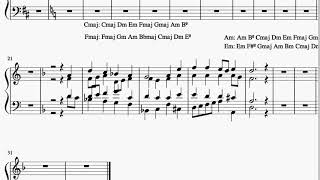
All right. So not all modulations that happen use a pivot chord. There are other ways you can modulate, and one of the biggest other ways is what we call direct modulation. Now, the term direct modulation is kind of a general term for a few different ways of modulating, all of which don't involve a pivot chord. So we sometimes call direct modulations abrupt modulation. Same thing, just a different word. And we also. We have a third word yet for it, or third phrase, I guess, and that's phrase modulations. And what that basically means, like in phrase modulations, they all kind of mean the same thing. But when I think about a phrase modulation, what I'm thinking of is a piece of music in which one phrase ends and then another phrase starts. But it starts in a new key, right? So it's just something comes to an end, something else starts, and the start is in a new key. So it's a much more abrupt form of modulation, which is why we also call it an abrupt modulation. It's also a much more direct modulation, which is why we call it a direct modulation. And there are other modulation things. There are other ways we can modulate other than direct or other than pivot chords that fall into direct modulations as well. Like using a secondary dominant. Right? That's a great way to do a modulation. We looked at using secondary dominance to do a tonicization. But if you can do a tonicization with it, why couldn't you do a modulation with it? Right? You totally can. We're gonna look at that in this section. So first, let's look at one of these phrase modulations by analyzing a short Bach piece and finding how he did a modulation. And I'm not going to tell you where it is. We're just going to analyze this and find it as we go. Okay, so let's go to a new video, and let's do some analysis.