J. Anthony Allen explains why the dominant seventh chord has such a strong pull toward the tonic, using Mozart and Beethoven examples. He shows how leaving V7 unresolved creates anticipation, and why knowing the expected resolution matters even when composers break the rule.
Chapters
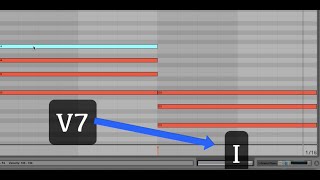
So let's talk about this dominant seventh chord a little bit, the one that we abbreviate by just using the number seven. This is another one of those tendency chords, and this is kind of the same one, I believe. Earlier I talked about a tendency chord really quick and in passing being this V chord having a push back to the I chord. And it's one of those cases where a chord progression wants to feel a certain way. It wants to go home in a way. And that V7 chord wants to go home more than anything else we've got. So let me show you an example. Let's get rid of these. Let's just use a tonic chord and a V7 chord and let's reverse them, actually. Okay, so now I've got V. I just want you to hear this and feel how when we hear this V7 chord, and then we go to a tonic triad, it just feels like this chord wants to go to that chord. So. So just listen. So this is a very important concept. The V7 chord wants to go to the tonic chord because we like these relationships of fifths. That's a sound we like. And that seventh chord, adding the seventh to that five chord makes it even stronger. Without it, it still has a feeling of wanting to go to the I chord. But when we add that seventh, it really wants to go back to the I chord because that's its resolution. So more on this later. But basically what a resolution is, is it is where a chord wants to go. So this chord wants to go to I. No other chords in our diatonic progression have such a strong resolution as this. There's an old story that Mozart's dad used to wake him up in the morning by doing this. By doing this. He would just play a whole bunch of V7 chords and then he would not resolve them. He would not play the next tonic chord, right? Which feel. And then Mozart would run downstairs and play the tonic chord so that this is how. This is what he would do. And then Mozart would run downstairs and go. Because it just feels like that has to be done, right? That is a resolution. It's a feeling of that's got to come next. Now, that doesn't mean you always have to do that by any means. That means that that's what's expected. If you're working completely in a key, that's what's expected. But you don't have to do that. You can change things up. You can throw a curveball in there. That's what makes interesting music. But you should know that's what is expected. That chord, that V7 chord wants to go to that I chord like nobody's business. Now, we have a very strong history of this. You've probably heard a million different well, maybe not a million, but you've probably heard some kind of orchestra thing before where the ending felt really drawn out where it was just going like bum bum bum bum bum bum bum forever. And it just felt like, okay, when are they going to end it? What they were doing there was alternating between V7 chords and I chords just going V I, V I, V I, V I, V. They do that forever. That's how you end a big hour long symphony is you just alternate between V I over and over and over and over and that gives you that sound. Let me show you an example here. I didn't want to play any classical music in this class, but I just can't resist right here. So let me show you some Beethoven here and I'm going to write on the screen all the five ones. Sam.