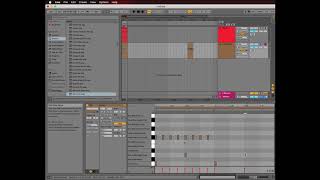
J. Anthony Allen builds a dubstep drum pattern at 140 BPM, starting with kick, snare, and hi-hat. He stretches two bars into one to create dubstep's half-time feel, adjusts hi-hat velocities for groove, and adds a double-kick punch before the second beat.
Chapters
Okay, let's make a dubstep beat. There's a lot of different ways to make a dubstep beat. So if you're a big fan of dubstep, the beat I'm about to make, you might say that doesn't sound like dubstep, but just remember there's a lot of different ways to do it. So we're gonna make, like, a really basic dubstep beat, like super basic. And then we'll pick apart some tracks and we'll build up on it a little bit. Okay, so I'm going to start with my basic beat. Okay, so let's go here. Let's make some sound. So I have a kick. Let's do that. Kick, snare. And let's go to our hi hat. And let's do that eighth notes in our hi hat. Okay. Okay, so let's hear what we've got here. And I've got my metronome on. Let's turn that off. Okay, back to our basic, basic B. Right? This is definitely not dubstep. Okay, first thing we need to do is let's get in the ballpark of the tempo that we want to be at, which is about 140bpm. A little higher, a little lower. So let's go up to 140bpm. Let's hear our basic beat at 140. Okay. Still not too phenomenal. Okay. Now dubstep has a half time feel to it. Now what that means is that we're gonna take this. We're gonna basically zoom in so that these first two beats take up the whole bar. Okay. So that means I'm gonna stretch everything out. So I'm gonna put this over here and this all the way onto the next beat or the next bar. Okay, so that goes there, and that goes there. Let me zoom out. Okay. And then I need to continue these. Okay. So we really just stretched out what we were doing, right? We had our kick on 1 and 3, and then 2 and 2.3 is where it would have been, but instead we just pulled it apart. So that beat. So the kick is now on 1 and then on 1 of the second bar. And our snare, instead of being on 2 and 4 is on 3 and 3. Right? So we really pulled it out, stretched it apart so that two bars will feel like one big bar. Right? That's kind of how dubstep works. Now the next thing we're going to do is we're going to do the opposite with our hi hats. We're going to, like, just really crank these up to be like cooking. Okay. And now we're going to add a little bit of flavor to these. So I'm going to take some of these. I'm going to really kind of finesse the velocities here. Because in dubstep, we pay a lot of attention to our velocities or to our hi hats, I should say. So let's see. Let's do that. I basically want most of them to be quieter. I'm gonna let some be a little louder to make those louder ones have kind of a cool accent. Okay. Just shift clicking these to select them and pulling those velocities down. Okay. That's basically it. Okay, so let's hear what we've got. Okay, now there's one more thing I want to do, and that's double up this kick that right there. Okay. So I'm going to add another kick right before 2, 2 on the last 16th note. Okay. And feel how those hi hats have, like, kind of their own little groove going. Let's hear just those hi hats. Subtle, right? But there's a feel to it. Pull the rest of the beat back in. Okay, so that's our most basic, basic, basic pattern that we use in dubstep. So let's. Now, the one other thing that comes in here is typically a lot of extra little percussion sounds. Okay. So let's dive into a track and see if we can make something cool.