In this instructional video, J. Anthony Allen systematically reviews every rule governing first‑species (note‑against‑note) counterpoint. He begins with the permissible opening intervals (unison, octave, or a fifth when the cantus firmus is in the lower voice) and the required closing intervals (a sixth to an octave, or a third to a unison). He explains the handling of minor‑key alterations, specifically raising the flat seventh (leading tone) and, when necessary, also raising the flat sixth to avoid augmented seconds, while warning against creating cross‑relations. Allen emphasizes predominantly contrary motion, the avoidance of parallel perfect intervals, and the proper approach to perfect intervals—either by contrary motion or similar motion with a stepwise voice. He limits consecutive imperfect consonances to three, mandates a greater proportion of imperfect (thirds, sixths) than perfect consonances, and bans dissonant harmonic and melodic intervals. Leaps must be used sparingly, approached and left by step, preferably in contrary motion, and never paired with a leap in the other voice. Voice crossing and overlapping ranges are prohibited, and melodic lines should have interesting contour with primarily stepwise motion, allowing no more than two successive skips or leaps. The video concludes with a practice worksheet recommendation, a suggested textbook, and a teaser for further videos on the topic.
Chapters
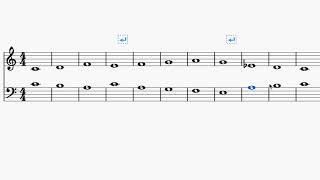
Okay, let's go through our list of rules for First Species Counterpoint one more time. I'm just gonna kind of wrap them all up here for us. Okay. And yes, I'm reading this. So I'm not just doing this off the top of my head. I am reading the rules. I know I like to give the impression that I'm always just kind of shooting from the hip and just talking, but I am gonna read through the rules. Okay, so there's a whole bunch of rules here, and I'm going to read them and then we'll maybe chat about each one as I go. Okay, number one, for the opening harmonic interval, write an octave or a unison or a fifth. The latter only with the cantus in the lower voice. So what they're saying here, I guess that's something we didn't really talk about, is that this. Whoa. Is that this first interval could be a fifth. Okay, so this opening interval can be a fifth as long as the tonic is in the lower voice still. You wouldn't do this opposite of this so that the G was in the bass. That would be a. No, no. But you could open with a fifth if the tonic is in the bottom voice. Lower voice, I should say. Let's go back. Okay. Okay, number two, for the closing harmonic interval, write a 6, 8 or 3U10.8. So what they're saying here is, on the closing harmonic interval, make this either an interval of a sixth and then an eight. So a sixth and then an octave, or alternatively a third and then a unison, which is what we have here. So we have a third between these two notes and then down to a unison. So they want that third to kind of collapse inward to a unison. Or you could do a six. Opening out to an octave in minor is still part of rule number two. In minor, raise the flat seven and raise the flat six if it precedes the flat seven to avoid an augmented second. But don't use raised six if it creates a cross relation. Okay, let me explain that one. So they're saying is if we're in a minor key, you're gonna have the flat 7 is always in the minor key. They want you to raise that so that it's a leading tone. For example, if we were in a minor key here, this would be B flat. If we were in C minor. And so what they're saying is they want this to be a leading tone, and it's not if we do that. So they want you to raise it if you're in a minor key also. If we were in a minor key, and let's say we had an A here, this would be A flat, right? So let's assume we're in C minor for these last three notes here. These last three chords, I should say what they're saying is raise the leading tone. So we would do that. That makes an augmented second right here between these two, right. A flat to B is. Would be enharmonically would be a minor third. Right? But we have it written as a second A to B. And the flat makes it an augmented second. We don't like those. So what they're saying is if an augmented second happens, raise that A also in a minor key so that you avoid the augmented second. That's what they're saying there. So that's rule number two. Rule number three, Write mostly contrary motion between the parts. I think we've covered that one sufficiently. Always use contrary motion if you can. But there are other things you can do sometimes as well. Number four, avoid parallel octaves or fifths by parallel or contrary motion. So avoid parallel octaves and fifths. We've talked about that one. Number five, approach perfect intervals by contrary motion or in similar motion with a stepwise upward voice. Okay, so here's a perfect interval. What they're saying is if you're going to do a perfect interval, a fifth or an octave, approach it with contrary motion, like we've done here. Okay, so we open out and we get there. That helps it work. Or you can do similar motion if one of them is going by a step. In other words, Something like this might work between these two notes. It's similar motion, meaning they're moving in the same direction but by two different intervals. But one of them is going by a step. So that can help it to work. Okay, alright. The next one. Don't write more than three parallel imperfect consonances in a row. So imperfect consonances are like threes, thirds and sixes. So don't write more than three of those in a row. And that means like three thirds in a row or three sixes in a row. I think you can go back and forth between thirds and sixes and get up to, you know, four if you have to. Which is kind of what we've done here in our piece. But in general we avoid that. We need something different than 3rds and sixes all the time. Okay, next one. Include a mix of perfect and imperfect consonances with more imperfect consonances than perfect. Okay, so what they're saying is do. Do some perfect consonances octaves and fifths in unisons, but do mostly imperfect consonances like thirds and sixes. So another kind of arbitrary rule, they're saying, do some of those, but not too many. Do some perfect consonances, but don't go nuts is kind of my translation of that. Okay, up next, avoid dissonant harmonic intervals, including perfect force and accidentals other than at the cadence. So the cadence, which is, I think, a term we haven't really talked about, the cadence means the end or the approach to the end more accurately. So the cadence is from here to here. Okay, so the five one that's kind of happening here, what they're saying is avoid accidentals. Don't do anything out of key unless you have to to get the best cadence right. That would be a case of like raising this if we were in a minor key. Next one, avoid dissonant melodic intervals. Examples, leaps of a minor seventh, major seventh, diminished fifth, augmented fourth, or augmented second in minor. So don't use those intervals. Next one, write leaps sparingly. Approach and leave by step, in contrary motion if possible, and set with a step in the other part, preferably in contrary motion, to leap. Don't set a leap in one voice against a leap in the other, so use leaps sparingly. We don't like to see more than one leap per part in a piece like this. Next one, give your melodic line an interesting contour. Should not be static repeating notes or circling around one note. Keep the ranges of the lines distinct. Don't overlap or cross voices. So a crossed voice would be something like, That's a crossed voice. Or this note in the upper voice is actually lower than this note, right? Because this note, if I put it on this staff, would be this B underneath this note. It's a crossed voice. We don't like that. There are other things called voice crossings that we'll talk more about later. And the other thing they're saying here is melodic line, interesting contour. So don't circle around one note too much. So if, like this E, we wouldn't want to go above the E and then below the E and then back to the E and just hover around the E. We kind of want to move around and not give too much emphasis to a particular note for too long. Okay, last one. Aim for primarily stepwise motion with no more than two melodic skips or leaps in a row. So we like stepwise motion. Don't do more than two skips or leaps in a row. Pretty easy one. Okay, so that's a summary of our main rules of First Species Counterpoint. And that is where we're gonna leave it. So you know the rules of First Species Counterpoint. Now, what's gonna come next is I'm gonna give you a worksheet to work on, and then that's it for this class, actually. So please practice this. It takes a lot of practice. Get that Riemann Steiner book. That's a good way to practice and have some fun with it. Okay? But I do have a handful more. I do have a couple more videos for you on this topic before the end, so stick around. We're not done yet.