In this instructional video J. Anthony Allen reviews the complete set of rules governing fourth‑species (suspension) counterpoint before moving on to fifth‑species (free) counterpoint. He emphasizes that fourth‑species writing should employ dissonant suspensions as frequently as possible, enumerating the acceptable dissonant intervals: 7, 6, 4, 3, 9, and 8 when the counterpoint voice is above the cantus firmus, and 2 and 3 when the counterpoint voice is below. A special case is highlighted where a 2‑3 suspension is permissible only when the counterpoint is the lower part and the cantus firmus is the upper part. Allen then outlines six strategic reasons to insert consonant suspensions or to break the suspension chain: (1) to accommodate passages with skips, leaps, or ascending steps where dissonant suspensions are unavailable; (2) to keep the melodic line interesting and avoid monotony; (3) to re‑establish proper voice spacing and prevent voice crossing; (4) to conclude a suspension chain after no more than three consecutive statements, typically resolving to a unison, octave, or other consonant interval; (5) to avoid counterpoint errors such as parallel fifths or octaves; and (6) to handle difficult cantus‑firmus situations where a suspension would create forbidden intervals. The video concludes with a brief segue to fifth‑species (free) counterpoint and an announcement of a worksheet for practicing fourth‑species writing.
Chapters
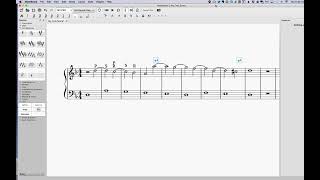
Okay, let's do a quick review on the rules of fourth species counterpoint before we move on and talk about the elusive fifth species counterpoint, which is kind of a thing and kind of not a thing. It's complicated. We'll get there. So I want to go over the rules here and then I'm going to give you a worksheet where you can practice writing some four species counterpoint. Okay, let's go through the rules. I'm just going to read you this quick little thing and then dissect it. In four species, we use dissonant suspensions as much as possible. The acceptable dissonant suspensions are 7, 6, 4, 3 and 9, 8 when the counterpoint is in the upper part and 2, 3 when the counterpoint is in the lower part. Include consonant suspensions or break species as necessary for the following reasons. Okay, then we've got some bullet points which we haven't talked about that 2, 3, 1 yet. So what they're saying there is that a 2, 3 suspension is possible, but only when the counterpoint is the lower part and the contus firmus is the upper part. So watch out for a 2, 3 suspension. It's possible when the rules are flipped when we have contus firmis in the top. Okay. Include constant suspensions or break species as necessary for the following reasons. Number one, to set passages in the contus with skips, leaps or ascending steps where dissonant suspensions are not possible. So to break a chain of suspensions, for example, do skips and leaps, is what it's saying there. Number two, to make a more interesting line, remember we talked about that. We can do all of these suspensions and tricks, but it's still gotta be interesting. It's still gotta be a nice sounding line that doesn't just go down, down, down, down, down, down, down. We need to make it interesting. Number three, to re establish a proper distance between the parts if they are about to cross. We've talked about that. If you're in danger of making a voice crossing, do a big old leap and get out of there. Like this one we're seeing on the screen right now. We've got that a to a leap right in the middle just to get us away from the bass line a little bit or from the cantus firmus a little bit in order to avoid a voice crossing. Number four, to conclude a suspension chain after three statements. So remember, in chains we want to do no more than three in a row or else it starts to get boring. And then we kind of tie it up with a unison or octave or another consonant interval on the nearest downbeat number five, to prevent counterpoint errors. So we would avoid a suspension if it's going to accidentally create a parallel fifth or an octave, some kind of major counterpoint error like that. And then the last one to solve difficult places in the contus where a dissonant suspension or even any type of tie over the bar is not available. So in other words, sometimes you can't just do a suspension. If the contus firmis is set up in such a way that it's going to create two dissonant intervals or a perfect octave or something like that. You just can't get away with them. So what this is saying is try to do these suspensions in four species counterpoint as much as possible, and then. Except in those cases are when you would want to break the suspension. Cool. So those are our rules of fourth species counterpoint. We are just flying right through here. Let's go to fifth species counterpoint, also sometimes called free counterpoint. But first, let's do a worksheet.