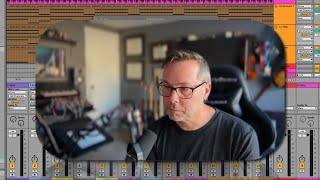
In this segment, J. Anthony Allen explains the circumstances under which an audio interface is required for home and studio music production. He separates the discussion into two parts: recording and playback. For recording, he notes that a single USB microphone for vocals may not need an interface, but recording guitars, amps, or multiple instruments typically does, though a small, inexpensive interface can suffice. He also describes his own workflow of recording larger ensembles in a university studio and editing at home. For playback, he states that headphones can be plugged directly into a computer without an interface, and speakers can be connected via a simple adapter cable, though the sound quality may be marginally lower than with an interface. Overall, he emphasizes that many home producers can operate without an interface, especially when using USB microphones and basic monitoring, while more complex recording setups benefit from even a modest interface.
Chapters
Okay, do you need an interface? Maybe not. There's a possibility that you don't need one. If you're planning on running a recording studio where you're going to record a whole bunch of instruments, yes, you definitely need an interface. But if you are in a home studio, if you're in a home setting where you're on a laptop, you're on a desktop, whatever, and you don't plan on recording a whole bunch of instruments, then you might not need one. Okay, so let's separate this into two different issues. The first is for recording. Do we need an audio interface? And the second is for playback. Do we need an audio interface? Okay, because an audio interface handles both. So let's talk about recording. If you're going to record a microphone, a single microphone, one at a time, like you're a singer and you want to just be able to lay down some vocals, you might not need an audio interface. You could get a good USB microphone and you might be fine with that. That's actually kind of fine. Let's say you're a guitar player and you want to record some guitars from time to time. You probably do need an audio interface because you need to be able to plug your guitar into it or mic up and guitar amp or something like that. And that's really going to require an interface of some sort. However, you could get a really small and cheap one and be just fine. Let's say you are a producer and you have no desire to record anything. In that case, you don't. You could be just fine without one. You might still want one for playback. We'll get to that in a minute. But when it comes to recording, I probably, other than the guitar stuff that I do, I probably almost don't even need one because I have a studio. So if I'm really going to record like a string quartet, I'm going to go to my university studio, do it, bring the files back here, and primarily edit in my home studio. Here I'm primarily editing. I. I might lay down a guitar track or a violin track. There's my violin on occasion. But most of my recording I'm going to do at the studio and then just edit. But okay, let's talk about for playback. So you can probably plug headphones into your computer, and if you're only working, going to be working on headphones and you just want to plug right into your computer, then that's pretty fine. There's really nothing wrong with that. You can get by without an audio interface just fine. Let's say maybe you have a nicer pair of speakers and you want to plug your computer into those nice speakers. You could get one of those funny cables. That is a little headphone jack. We call it an 8th inch jack on, or we call it a mini jack, or there's a couple different names for it. But little headphone jack on one end and on the other end it splits and is either a quarter inch XLR or whatever you need to plug into your speakers. You could do that. The quality of sound you're going to get is going to be lower than if you had an audio interface. But how much lower? Like. Like a really small amount. Let's be like super honest here. A really small amount.