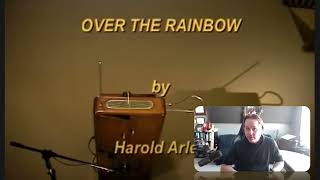
In this educational YouTube segment, J. Anthony Allen traces the origins of the theremin, beginning with its inventor Leon Theremin and the disputed story that it started as an alarm system using human-body‑generated electromagnetic fields. Allen explains that the device evolved into the first electronic musical instrument, describing its two antenna design—one controlling pitch, the other volume—where the performer never touches the instrument, instead shaping sound by hand proximity. He notes the instrument’s rise in the 1930s, the contemporary hype that it might replace the piano, and why that never materialized. The video also mentions modern manufacturers such as Moog, the availability of vintage instruments, and DIY kits that Allen has built himself. A short audio excerpt of “Over the Rainbow” performed on a theremin is played, followed by a brief reflection on the instrument’s niche appeal.
Chapters
As the story goes, Leon Theremin was a Russian inventor who moved to the US around 1920 or so, and he had an idea to develop alarm systems. And I think I've heard this told in different ways and I've read different accounts of this. Maybe he was trying to develop an alarm system and maybe he wasn't, but he had developed this kind of circuit that basically used electromagnetism given off by the human body and adjusted volume as you got closer to it. That's what it did. So as an alarm system, when someone got close to it, it could go woo and make some sound, right? That would make sense. But eventually people started saying, I can, like, control this thing and actually make it do some interesting stuff. And then we get a musical instrument. So his instrument was called the theremin. It is really widely considered the first electronic music instrument. You can still get them. Some companies, like Moog, who we'll talk more about in just a minute, make them still. There are some modern ones. There are the old school kind, which are very valuable. You can even get a kit to make one yourself, which I've done once, and it was actually really fun, so worth doing. So the way a theremin works is you can kind of see this image of one on the screen here. It's a box and it's got two antennae coming out of it, one going straight up and one kind of curved this way. The way it works is you don't actually touch the thing. You never touch it. You just get close to it with your hands. So one hand controls the volume of the note and the other hand controls the pitch. Okay? So with the antenna that's going straight up and down, the closer you get to it, the higher the pitch goes. With the antenna that's horizontal, the closer you get to it, the quieter the note gets, okay? So you have to find your pitch in midair, which is actually really tricky to do. It's really hard. But there are some tricks you can do to get good at it. And then you control your dynamics with your left hand. So this instrument became kind of popular around the 1930s or so. It was rumored that, you know, this was going to replace the piano, is what people were saying at the time, meaning that, you know, if you were an upstanding citizen, you had a piano in your house and somebody learned how to play it. And the idea was that this was going to be the new thing. People were going to replace, get. People were going to get rid of their pianos and buy Theremins instead. That never happened, thank God. I love the theremin, but it's an acquired taste. Let's listen to a little bit of it. Then I want to tell you about kind of what happened to the guy, Leon Theremin. So here's a little excerpt. Here's someone playing over the Rainbow on a theremin. Sa. Sam ra.