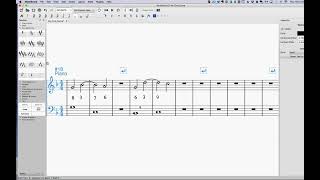
J. Anthony Allen shows how to build a 9-8 suspension in counterpoint, the most common type. The upper voice leaps to create a ninth interval with the bass, then resolves down by step to an octave. He explains why it's called a 9 rather than a 2, and compares it to 4-3 and 7-6 suspensions.
Chapters
Okay, the last of our most common types of suspensions is a 9, 8 suspension. So let's make one of those. For this one, I need my bass line to be doing something quite a bit different. So I'm going to go from a B to a C. And then in my counterpoint, I'm going to start on a consonant, start on a six in this case, go up to a third. So G or, sorry, B to D is a third. Let's carry that over, and then let's resolve it by a step and let's see what we have. Let's create that tie first. Okay? So here we have a sixth. And let's just put these in here. So we have a consonant. Then we have another consonant. So consonant leap, we could call that. And now we have a dissonance. We have C to D. Now we can call this a ninth. Now, why wouldn't we call that a two? I'll tell you exactly why we wouldn't call that a two. You know, I said in other places, I said if it's bigger than an octave, we reduce it down. So a 9 is C to D, which is the same as a 2 right? Octaves we call 8 to show that it's not a unison. When it's bigger than an octave, typically we would just say it's a 2 in this case, or a 3 if it was a 10th or something like that, which is what this one is, right? This is a tenth, but we call it a three. Right? We reduce it to its smallest interval. But this one I'm going to call a ninth in this case, and I'll show you why. Let's put our next one down. Now we're resolving to an octave. Okay? So if I call this a ninth, then I can easily call this a nine, eight suspension. Right? Let's add. Oops. So this we would write like so, 9, 8 suspension. That's why I'm calling it a 9, because check it out. If I call it a 2, it's a 2, 8 suspension. That doesn't make as much sense because we know that it has to go down by a step here in order for the suspension to resolve correctly. So just to make that really clear, I'm in this case going to call it a 9 so that I don't have a 2, 8 suspension. And I have to think about it a whole bunch to figure out that, oh, it is resolving by a step, right? So a nine, eight suspension. Nine eights are going to resolve down to an octave, right? So we're going to have. In this case we have a third to a ninth or think of that as a second and then to an octave. Let's hear it. Right. So this one doesn't feel the need to resolve very much at all. So the three of these, let's look at all three of them once. Let's put a label on our five, six here. Oops. 7, 6. I mean so we have a 4, 3, a 7, 6 and a 9, 8. They all have different qualities. They all have a different sense of resolution at the end of them. Slightly different. Let's hear all three in order with like a one bar rest in between. Why not? So all slightly different kinds of suspensions. Now there's other suspensions you can do but those are the three most popular kinds. The kind the ones that you come across like 99% of the time in four species counterpoint the 4, 3, the 7, 6 and the 9, 8 suspensions.