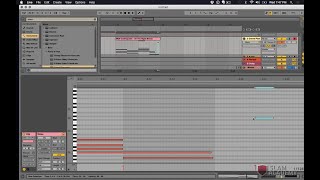
J. Anthony Allen refines chord voicings in C major, questioning whether a D note in a C chord adds useful color or should be cut. He reorganizes the progression into root position, removes floating notes, and stretches the chords to hear clean triads like C-E-G and F-A-C.
Chapters
Move that up an octave. Gives me a big space here. So let's maybe take that down. No, that's not right. Let's put this E down there. Now, this D doesn't make a lot of sense to me. I'm just seeing because I have an E, a G, and a C. So we know we've seen that chord, like, a hundred times, right? In the key of C. C, E, G is our triad. So let's kind of assume that this D note is wrong. Or we could leave it in there. Let's leave it in there. So a D would be a two in the key of C. This is a C chord, and that's not a note that we use to build chords with, but it might add a little bit of color. So to get this into root position, we're going to sit right there. So I'm still skeptical about that D, but we'll leave it in for a minute. We'll see if it sounds good once we play it. So I'm going to stretch this out to be the whole length. Okay. And our last chord. So we have an F. Another F. Let's get rid of the low one. Another F. Let's get rid of the low one. An A and a C. And that's it. A randomly floating G. Let's get rid of that. Doesn't look right. Okay, so an F, an A, and a C. Let's try to get that into root position, which I think it's in, actually. So let's stretch that out. All right, and let's. It looks like we've got something floating around up here. Yeah, these couple random Cs. Let's get rid of that. Okay, let's hear what we've got. Now that it looks like some normal triads.