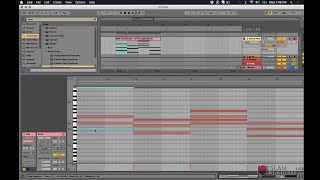
J. Anthony Allen analyzes a chord progression with an ambiguous tonal center, weighing whether it's A minor or C major with an added D. He settles on C major as the home key for further analysis, noting the chord contains A, C, E, and G and feels stable enough to anchor the progression.
Chapters
All right, that sounds just about right. That's here at the same time as the original. Turn the original down a little bit. Cool. So this D that I was skeptical of, it sounded pretty good, actually. Okay, cool. So that sounds right. So let's figure out what chords we've got. Let's zoom out just a touch here so we can look at it all. So first of all, we need to figure out what key we're in. And this can be a little tricky. Remember, we could go to that idea of what sounds like home. We could listen to this chord progression and say, what sounds like the natural order of things? Let's hear it again and think of that. The easy answer would be the first chord, because usually the first chord is what it is. And the first chord is probably right. But it gets us into a little sticky situation here because this is a minor chord. And we haven't talked about minor keys yet, but we're going to in the next class. There's a version two of this class that focuses on minor keys. So we could pick this apart as though it were A minor, because this is an A minor chord. Here's our root A. But we could also pick it apart as though it were in C major, because this is a C major chord, minus that weird D that's sitting there. But here we have A, C, E, and G. And that chord feels pretty comfortable to me. Like, we could kind of stop on that chord. Right? Bum. That's like. That could be the kind of home chord. So let's roll with that idea and see how it works out.