J. Anthony Allen explains interval classes, a music theory concept that groups intervals and their inversions into six numbered categories. He demonstrates each on piano, from minor seconds to tritones, but admits he rarely uses them himself, calling them an unnecessary abstraction.
Chapters
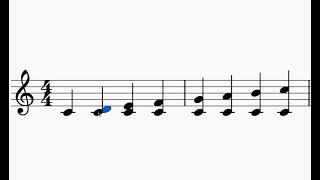
Okay. Sometimes we come across these terms called interval classes. This is not something I use a lot, but if you're reading a theory textbook or taking a theory class, you may come across these. So I just want to kind of acknowledge their existence and point out what they are. This is just kind of a way of talking about the different intervals and their consonants or dissonance properties by categorize the categorizing them as six different types of qualities. So here they are. So we have a numbers 1 through 6, interval class 1 through 6. So interval class 1 we consider to be dissonance. And that refers to. That is our most dissonant. Well, I shouldn't say our most dissonant because that's kind of subjective. But interval classes are. One is minor seconds and minor sevenths and major sevenths. Sorry. So minor seconds and major seventh. So I'm not showing a minor second here, but I am showing a major seventh. So this would be our only interval class 1. That's diatonic right here. If I inverted this, it would be a B and a C, which would be a minor second. So interval class 2 is major seconds and minor sevenths. So here's a major second. So that falls into this kind of interval class 2. And if I inverted this, it would be a minor seventh, which would also be interval class two. So those are both considered dissonances. One and two are dissonances. Interval class three is our thirds, is a minor third and a major sixth. So not that, because that's a major third, but here's a minor. Sorry, a major sixth, which would invert to a minor third. So this is interval class 3. This is considered an imperfect consonance. Interval class 3, interval class 4, major thirds and minor sixes. So here's a major third, and if we inverted it, it's minor sixth. This would be interval class four. And it is also an imperfect consonance. Then interval class 5 is our perfect fourths and fifths. Those are considered perfect consonances with an asterisk, because we're talking about that fourth again, which is sometimes a consonance, sometimes a dissonance. So usually in terms of this interval class concept, we think of the fourth as falling into this interval class five, which makes it a consonance. And then our last one, interval class six, is our tritones, augmented fourth or diminished fifth, which we don't have here on the screen. But they are dissonance. So those are the four interval classes. I don't use them a lot. I think they're kind of an unnecessary abstraction of the idea, kind of making things more complicated than it needs to be. But just in case you run across them, that's what those mean.