Intervals and Resolution
J. Anthony Allen explains musical resolution: how dissonant intervals naturally move to stable ones. He demonstrates on piano how the major second, minor second, major seventh, minor seventh, and tritone each resolve, showing that resolution isn't just placing consonance after dissonance but the specific directional movement that feels inevitable.
Chapters
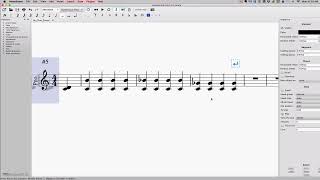
Okay, let's get rid of my consonant stuff here or my scale there. And let's just look at these dissonant intervals that we talked about. Now, how can we resolve these? It's a couple different ways now. Well, actually, let me rewind a step. Let's talk about what resolution means. Resolution means that we get it to its consonant state. In other words, we take this dissonant interval and we let it go to where it feels like it needs to go. Right. It's not just that we put a consonant interval after a dissonant interval. It's certain dissonances want to go certain places. So it's their natural resolution. I think we've talked a little bit about this when we talked about, like, the five chord to the one chord that has a dissonance in it. The V chord has a dissonance in it. Well, actually, you could say it doesn't. It's just a chord that wants to resolve down to the I chord. That's how some chords work. Intervals work the same way. They have places they want to go. The dissonant ones have places they want to go. Some of them have multiple places they want to go. You've got some choices. So let's start with our major second here. I'm just gonna go out here, and let's do a whole note, since our tempo is kind of fast. And let's do. Okay, so a major second. Where does that want to go? There's two ways you could resolve this. You could resolve it to a unison just like that, where essentially the D falls down. You always think about directions of notes here. So in this case, the C stays the same, and the D essentially falls down and becomes a unison. Another way we could resolve this is to a major third. So in that case, the C stays the same and. And the D climbs up to an E. We think about these as multiple voices. Like, each note is going to go its own path, and we're going to talk about that more when we talk about counterpoint. But imagine singing this, though. Imagine you have two people singing this. One person is going to sing this and then this. So they're going to stay the same. One is going to go D up to E, and that's going to sound like it resolves. Right? So this is not a good spot to end a piece of music on, but this is. Right, so it's a resolution. This is a resolution to this dissonance. Okay, let's look at the next one we had here, which I think was A minor second. Okay. A minor second really has only one easy place it can go, and that is down to a unison. A minor second resolving up to a third doesn't really work all that well. Sometimes you could make it work if you were crafty. But typically a minor second wants to resolve down to a unison. All right, so this note really wants to fall down to here. That's really the best place for that to go. What else do we have here? A major seventh. Let's look at where that goes. So major seventh. Could go two places. The most obvious one would be for it to go to an octave where this note stays the same and the top note climbs up to an octave to resolve it. Right. That feels like a resolution. But if we wanted to get crafty, another thing we could do. Here's our seventh again. Let's resolve it down to a sixth. Now, this sixth is not an extremely consonant interval, Right? But if we did a little magic, we could make this sound more consonant. Let's hear it without some magic and just hear a seventh resolving to a sixth. Right. It sounds pretty good that way. But if I reinforce. This is getting kind of a little bit more advanced. But what I could do is reinforce this chord. Let me throw an A on the bottom also. So what this is going to now feel like is not like this note is the root, the C is the root. It's going to feel like it's an A minor chord, in which case it will be more pleasurable. So just by emphasizing that A at the bottom, I made it feel like an A minor chord and not a C major chord. So more on that when we talk about counterpoint, let's look at a minor seventh. A minor seventh could do kind of the same two things. It can go up to an octave or down to a sixth. I'd probably lean towards going down to a sixth, which means let's try to resolve this to a sixth without doing this trick here. And one way we can do it is we can add another chord. So check this out. Let's hear it without a third chord. So minor seventh resolving to a sixth. Okay, now this isn't completely resolved. To me, it's not bad. It's not a really sharp distance, but what if I added a third chord and went down to a fifth? Now, the seventh, the minor seventh resolves to a sixth, which resolves to a fifth. Right. So the resolution here takes two chords to get there. It's kind of an oddity of the minor seventh. It's a non diatonic interval. So it's a little trickier sometimes. Okay. And then our tritone. Our tritone is another non diatonic interval. So it can be a little tricky. Well, let's look at what we can do. This one can really go either direction by half step. And it'll be okay if we go up to a perfect fifth. This is a natural. That's what I meant to do. Okay, that works. We can also take it down to a fourth if we wanted. And in this case, because that fourth is kind of that special case, it's not totally resolved to me. You might add another chord and go down to a third. Right. And this has kind of a conclusion feel to it. So there's a lot of different ways we can resolve dissonant intervals. But the thing to remember is what makes a dissonant interval is a need to resolve. It sounds like it wants to resolve, which means it wants to go somewhere else to a consonant interval. And there are a number of different ways we can get there. Now, for now, what I've walked you through here is kind of a free form. We can go here, we can go there. If we get into the strict rules, the really strict rules of this, then those rules kind of dictate what exactly can go where. Depending on the context, all the music around it is going to say, this note has to go to that note, this note has to go to that note. And there are a lot of rules about that with intervals. And that is called counterpoint. And that's what we're going to talk about next. It's a bunch of rules that say this note has to go there, this note has to go there, and all this other stuff. So that's going to be the next big section of this class. So hang on for that. I'll do a couple more things first and then we'll get to that.










