J. Anthony Allen introduces counterpoint as the simultaneous consideration of melodic and harmonic motion, comparing it to chess: there are rules, strategies, and creative possibilities. Mastery of the rules lets composers break them intentionally. Good voice leading minimizes large leaps and promotes smooth, stepwise motion.
Chapters
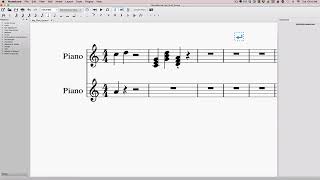
Okay, it's time to talk about counterpoint. Counterpoint is often taught as a whole separate class. It's a big topic. It gets a lot more into composition than I think, really than anything else we've done yet before. There are a lot of rules to counterpoint, but there's also room for creativity in counterpoint. In a way, counterpoint is a lot like the musical equivalent of playing chess. There are rules, there are ways to do it well, and there are ways to do it poorly. There's no winning or losing in counterpoint, but I think just kind of the gymnastics that your brain has to do to really wrap your head around counterpoint is a lot like chess to me. So what is it? One way to think about counterpoint is we've been looking lately in this class at harmonies that are vertical. Let's change that. Something different. There we go. So this is a vertical harmony, right? Two notes on top of each other. And we've also looked at melodic harmonies, meaning notes that are like that. So this is a harmonic A to C, which is a minor third. Okay. This is a melodic C to D, which is a major second. Now, what counterpoint is, or one way to look at counterpoint, is to say that it's thinking both melodically and harmonically at the same time. We have to create an interesting line melodically and another interesting line melodically, and make sure that they make sense harmonically at the same time. So in order to do counterpoint, you need at least two lines, because what we're talking about is the intersections of those lines and how it works. So what we're talking about, in a way, is having two melodic lines that create harmony as they go according to certain rules. You can write two lines that work that don't follow any of the rules of counterpoint, and that's okay. The reason that we pay attention to counterpoint is that first and foremost, it tells all the rules put together. Tell us what's going to sound good. Good in a very traditional sense. Now, like all rules of music theory, and you've heard me say this a hundred times, that if we follow all the rules exactly, then we end up with kind of boring sounding music. But it's really good to know all these rules so that when we're writing our own music, we can choose which ones to ignore and break in order to make something stunning, Right? So knowing the rules is important. If you go back to the 18th and 19th century composers like Mozart, Brahms, Beethoven, they all considered the study of counterpoint to be as important. If not more important than the study of harmony. Counterpoint was to them something completely fundamental to their music. They thought all composers should spend a great deal of time studying counterpoint. So let's talk about a couple vocabulary words we're going to encounter as we look at the basics of counterpoint. The first one I want to talk about is called voice leading. Voice leading we've kind of looked at before when we talked about inversions. Let me just go to some good old fashioned triads because this will make kind of more sense. So here's that. Here's a five chord, and here's. II chord. Okay? Now these are all in root position, right? Because the root of the chord is at the bottom. So remember when I did this, I took some notes down an octave. Let's take this D down an octave. And let's take this B down an octave. Now what we have here is better voice leading, meaning imagine all three of these notes are sung by individual people. So you've got three people, one person singing that note, one that note, and one that note. Now, before we changed this, let's actually go back. Okay? Now what each of these people have to do to sing this line is a little tricky. This person has to sing a G and then jump all the way up to a D and then jump all the way down to an A. This person has to sing an E and then jump all the way up to a B and then all the way down to an F. This person sings a C, jumps all the way up to a G and all the way down to a D. That seems unnecessary, right? Because this person is on a G and they could just stay on a G, right? Why not? But if they did that, this person would have to jump all the way up to a B, even higher. So what we do is we rearrange the notes. And now look at our voice leading. This person sings a G and then they sing another G. They don't have to move at all. It's a very smooth transition. And then they have to go up a major second to an A. Nice and smooth. Good voice leading is what we would call that. This person now is on an E. They just have to go down a major second and then up a minor third, right? Not that bad. This person is on a C. They go down a half step and they go up a minor third as well. So not that bad either. So good voice leading is what that is. Now we're going to talk about that more in terms of counterpoint. But voice leading is really simply put if you think about each note being sung by an individual person, the amount of jumping around that they have to do, the more jumping around they have to do, the less good it is. The more. The more streamlined their part, the better. So we like them to not have to jump around. Now, there's other things we like too. There's other things we like that makes for good voice leading, things like contrary motion and other things like that that we'll talk about soon. So when we talk about those, just it's not all about the smoothness of the line. There are other things that are important too in voice leading, but we're going to talk more about those shortly. Okay. Another term that I want you to know is this term of species, because species comes into account with counterpoint a lot. There are multiple kinds of species of counterpoint. I know that's kind of a weird term to use. So let me explain this in more detail by jumping to a new video. And then we're going to talk about the different species of counterpoint.