3:44
Chord inversions smooth out blocky progressions by reordering notes so the root isn't lowest. Shifting a high note down an octave reduces jumps between chords and transforms a clunky progression into something musical and flowing.
Chord inversions smooth out blocky progressions by reordering notes so the root isn't lowest. Shifting a high note down an octave reduces jumps between chords and transforms a clunky progression into something musical and flowing.
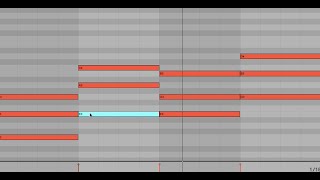
Okay, let's get back to talking about inversions. So what inversions are is it's a way to make something. It's a way to make a chord progression sound a lot more musical. And what I mean by that is if we just play these chords as is in a different order, it sounds very blocky, right? Like we play a chord and then we play another chord, and then we play another chord. It doesn't flow like music flows. It's not until we start to incorporate inversions that it starts to flow a little bit better. And when I hear tracks by people, especially people doing, like, dance music with, like, heavy synth lines and stuff like that, I hear block chords all the time. And I think this could sound so much better if they understood how inversions work. It would just make your track go from like a C minus track to like an A plus track just by incorporating inversions. It's really simple. It's a simple idea, but it's something that you need to know about. And I'm doing it. I'm trying to do a favor to the electronic music world by like, telling you about this, about how inversions work. So let's. Let's start by. Let's just build a chord progression here. Okay, so let's take my. My I chord, leave out my II chord. We'll use three. We'll get rid of the four chord, and we'll use five and six. So we'll get rid of those. Let's rearrange these a little bit. Okay, let's take our six chord, put it right there. And then maybe our V chord and put it right there. Just because, remember, I said we don't like chord progressions typically. That'll just kind of go in order. We like it to move around a bit. So let's now take this, and I'm gonna just arrange these to get a little more time each. Just gonna stretch. Okay, now we have a chord progression. Let's call this our chord progression of our song. Let's hear it. Slow it down a little bit. Okay, now what we're hearing is that thing that I call that really blocky sound, right? And it's because everything. All the chords we're hearing are in root position. So what root position means is that the root of the chord is at the bottom. All of these, we know this is a C major chord because C is at the bottom. This is an A minor chord. A is at the bottom. This is an E minor chord. E's at the bottom. What we want to do here is find the path of least resistance is the way I like to think about it. So, for example, let's. Between these two chords, our first and second chord here, we have a big leap. So let's make that leap not so big, by just using octaves. So let's take this high note and shift it down an octave. Now, this is an inversion, right? Because the root is not at the bottom. There's fancy terms for this, but for what kind of inversion? But I don't really care about that right now. What I care about is that this is inverted now, because the root of the chord is not at the bottom. This is still an A chord. This is still an A minor chord, but we have E at the bottom.










