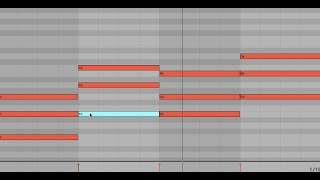
Chord inversions smooth out voice-leading by reordering notes without changing the harmony. Moving bass notes down an octave creates connected motion between chords, and the same progression sounds richer on a synth pad than piano. Root position isn't wrong, but the jumps feel clunky.
Chapters
Root is not at the bottom. There's fancy terms for this, but for what kind of inversion. But I don't really care about that right now. What I care about is that this is inverted now because the root of the chord is not at the bottom. This is still an A chord. This is still an A minor chord, but we have E at the bottom. But you see, what that did is it made this E flow nicely between all three chords. And that's going to sound better. I can actually make this even better. Watch this. Let's take the C down an octave. Ooh, and look at that. Now we see that the difference between these two chords is actually only one note. And that's going to make this just flow so much better. Let's see what we can do with this third chord. Let's take this B down an octave. Okay, now this C just moves down a half step. The E stays the same. The G goes back to where it was. Right? Goes back to a G. That's nice. So very minimal motion between here. Right? Now, remember, I'm not changing any notes. I still have the exact same chords. The only thing I've changed is the organization of the notes. I haven't added or taken away any notes. I've just moved them around a little bit. Let's try taking this D down. Okay, that's pretty nice. I think I can get this B down also. Look at that. So now these don't require any motion, nor do these. So let's hear what that sounds like now. Okay, so now the whole thing is more flowing. It's less blocky. If I wanted to make it even more flowing, let's do this. Let's change our piano. Let's go out of a piano and let's put some kind of synthesizer on it. Let's just do some kind of pad. That's not very interesting. Now let's try that. Okay, so let's listen to what this sounds like on this pad. Slow it down. Okay, that's a fairly nice chord progression. Now let me play it for you without the inversions. Okay, here we are back in root position. So this is what it sounds like in root position. Okay. And inverted. It's just so much sweet, smoother that way and so much more held together and elegant that way than the big block way of root position. Now, keep in mind that I still have one chord, this one, in root position. This is still in root position. So there's nothing wrong with root position. It's the jumping around that makes the kind of not elegant, clunky sound. So what I did is I just took this one and then I just rearrange the octaves of all the other chords to line up to fit really nicely into that first chord. And that's what inversions are. It's just jumping around the octaves of the notes. We're not changing any notes, we're just reordering the notes so that they flow nicely between each other. That is inversions.