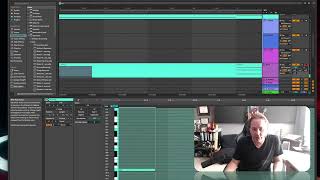
J. Anthony Allen builds a bassline in a DAW by picking a punchy Operator patch, aligning MIDI notes to the kick pattern, and trimming unnecessary notes. He shifts octaves and transposes the whole line to find the right fit, saving detailed sound design for later.
Chapters
Okay, I'm gonna step out a little bit and close my folders, and I'm going to realize that I have two drum groups. The reason is this was designed to be just samples, and I renamed it Drums. I should have put everything up there for drums, but it doesn't really matter. This is just a template that I like to use. Let's go into bass. So this is not a group. This is just a single track, and I don't think I have anything on it. So let's find a simple bass. I could just use piano again, But one thing I like to use for bass that's similar to just using piano is an analog right out of the box. Just the default settings for analog. If I go down. Okay, that's not really the sound I'm looking for right now. Let's do an operator. That's not bad. See, this is why I don't like to do sound design stuff. Give me something basic with a little punch. There. That's fine. Okay, again, we're gonna go through the sound design later after we do the track. Right. So we're just looking for something that can fill some space. So when I'm starting a bass line, basically what I'm looking for is a combination of my harmony and my kick. Okay? So I'm going to put my harmony there. This is not what I'm going to use as a bass line. I'm going to look at where my kick is. So I'm going to get rid of that top note, shorten this down to a quick little note. So we've got a kick there, and then we've got a kick on 1, 2, 3. Right there and there, I think. Nope. Yes. No, shorter than that. Yeah, there and there. Yeah. And then there's one more way out here. Now, you don't have to have your kick line up with your bass. This is just a good place to start for this kind of sound that I like. Gonna get rid of my top two notes, and I'm going to do the same thing here. Gee, let's tighten that up there. Oops. Let's leave it that long. What is going on? Okay. Okay, let's do the same thing here. Get rid of those two. That was out of key. I didn't even notice that. But that's okay. So I'm visually lining up here to here is what I'm doing right now, by the way. Okay, so let's hear what we got. Okay. Not bad. Super dark. Sometimes adding octaves like this is kind of fun. So I'M just gonna flip a couple notes up an octave. Let's try that. Actually, I can already hear. You know, one thing that might sound kind of cool is shift this whole thing up. That'll make a cool little melody, kind of a baseline melody. Watch what happens right here. And then if we want to go over the top, do that. It's going to clash with the piano, but I don't care. I guess I do care. That doesn't sound as good as I thought it would. Fine. Stick to the harmony. Okay, so now I've got a good bass line going.