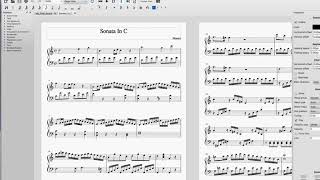
J. Anthony Allen breaks down Mozart's Sonata in C major to show how layering rhythm, harmony, and tempo creates tension. A meandering rhythmic pattern, the harmonic progression I–IV–I–V–D7/G7–G7, and a subtle tempo retard work together to build anticipation before resolution, with a hidden modulation toward G major disguising the true destination.
Chapters
Okay, for this last section, let's talk about getting the most bang for our buck by combining multiple techniques. And this is kind of what it's really kind of all about. Like we've looked at how to create this sense of tension and release by using different techniques. But in most cases we're going to use more than one to do it. So I have here an example that uses kind of two techniques and we could kind of sneak a third in there if we really wanted to also. And these are all things we've already looked at, but kind of putting it all together. So this is Mozart, good old fashioned Mozart. I shouldn't say old because he was never particularly old, but I guess historically it's old to us. But I meant like he didn't become an old man really. He died fairly young. But Sonata and C, a nice pretty piece. I want to look at short little excerpt here from the beginning down to here. So we're starting in C major. This is a C major chord here. So we're going from C to C. Now he's going to meander to the five and through these three bars kind of give us that sense of floating suspended animation before we resolve down to here. This is going to go by pretty quick. This is a quick example. But I think you'll get the sense that throughout these three bars we are somewhere different. And we're waiting to go back to here. Okay, so let's just hear it and then I'll talk about it for a sec. Okay, that's it. So let's listen to what we actually heard there. So here we heard a bunch of C major. We could analyze this and say, okay, that was a one chord, there's a five chord, there's, you know, everything else. But let's not get bogged down in that right away. Let's jump to what happens right here. So here we start to see rhythmic, kind of meandering rhythmic thing here, right? We're just going up and down and up and down and up and down. So that's not unlike what we saw with this kind of pattern obfuscation thing. So the rhythm is starting to run around and go all over the place. So that's thing one, thing two, let's look at what the chords are doing here. So we're in C. Here we have an F and an A. So we're going to a four chord. Then here we reiterate the four chord. And now we go to another chord. We go to A, C, E and G. So we go back to I chord, actually another I chord, but we're still running around. And because we start this on a G, it gives us a sense that we're in a V area, like a dominant area. So this really kind of feels like a five chord here. Now we're going to go to a C, a D and an F. If we needed to put that into a triad, how could we do it? Probably be D, F, a C. It's got a missing A. That would make it a D7 chord, which is a minor 7 chord. That would be a minor 2 chord. That's weird, but it's suspending. We could also see how it moves down at the end of the bar here we have a D, a B and another B. So that. I know this sounds weird, but I could actually call that a G chord, possibly even a G7 chord. Here's a G and here's our seventh right there in that last beat. So while the G isn't in this moment, I'm happy to call that a G7 chord. That F really pushes us down to that E and then we're back to a C. So in other words, all of this is kind of suspending a. Let's call it a non tonic, right? Like we are away from tonic, something other than tonic, and we're just kind of moving around and running through these sequences, waiting to resolve, to see. So it's a harmonic sequence. So we've got the chords that are creating the tension and the rhythm that's creating the tension all heading down to this release right down here. Now, there could be a third thing that we could squeak in there where if we were really playing this, we might sneak in a little retard right here. We might slow down just a hair to really kind of emphasize that downbeat maybe, or maybe not. In this particular case, we might wait for that to happen all the way down to here. But I didn't want to go all the way down here because from here to here is actually a modulation which we talk about somewhere in a different class. In one of the theory classes, a modulation means he's kind of shifting keys temporarily. So we'll talk about that or look at the theory class to get more info on that. It works actually the same. If we go all the way down to here, we'll hear a stronger resolution. But because he starts sneaking in these F sharps, it starts to push us towards G and we resolve to G. Here, let me just play that so you can hear it. So what we're doing here is we're creating a sense of tension and release. Where there's tension here in these three bars, release here to C major. And then from here we're creating, say, a sense of tension. And then with this F sharp, we're going to push that to resolve to G as our release. It's kind of like a sleight of hand trick, like a little magic trick sort of where the release is actually going to be in a different key. Mozart was really good at this. Let's hear it. Sa. So it felt like a release down here, but it was in the wrong key. It was. This is G. This is a release in G. So how he did that was more rhythm, more harmony. Nothing in this particular case with meter changes or form changes. It would be hard to say something was happening with form in this short of an example, but you could add that in. The point I'm trying to make here is that we want to combine multiple things to really give us that sense of tension and release. So consider that when you're writing.