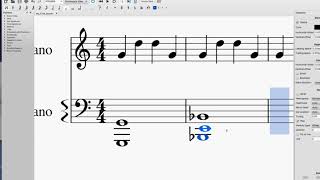
J. Anthony Allen shows how to build tension in film scores using rhythm. He demonstrates stopping and restarting a simple two-note pattern to create suspense, then adds bass notes in a dark minor key. By shifting from a one-low-two-high sequence to two-low-two-high, he creates ambiguity that slowly resolves, a technique called Pattern Obfuscation.
Chapters
Okay, up next, let's move from the discussion on meter into just a discussion on rhythm. So I'm going to leave meter out of this, although it's kind of related to meter a little bit. So what we're going to look at here is how we can use rhythm to create a sense of tension and release. For example, look at this pattern that I've made here. So I have just two notes alternating in quarter notes. Two notes alternating quarter notes. The alteration stops here, and then we have a silence, and then it starts up again. Let's hear that. Okay, now, there's a couple interesting things that this example points out. Three things, actually. Hopefully, I remember all of them. So first, let's look at what this does. So we changed the pattern here, right? The pattern stopped going from 2 notes, G, 2 notes D. The pattern now went 4 notes, D. That left us a bit of tension because we're expecting this G. So just by changing the pattern slightly, we've created a sense of expectation. Now, this thing number two is that this rest now really built up some tension because we're expecting the G again. So in this rest, we had a break in the pattern, and we expected to hear both the pattern and the sequence of notes from two GS, two Ds, and back and forth. So this created quite a bit of tension leading into this. This next G. Now, thing number three that happened in this example is when it started back up, we shifted our downbeat. Right? I just started on the downbeat, which over here, I did 1 and then 2 and then 2, 2, 2, 2. Right? So it was too low, too high all the way through. But I started on one. So that means over here, when this started up again, our downbeat felt like it was here. It felt like four. 1, 2, 3, 4, 1. So we shifted the beat. Now, this could be interesting if I was doing something where I had an accompaniment to this, and I wanted it to feel like the beat shifted here. This is exactly how I would do it. Put a little rest, let there be some tension, and then reintroduce the pattern on a different beat while the accompaniment stays on the previous beat pattern. That would be a way to create some new material just from this simple pattern. In fact, maybe let's do that. Okay, I'm going to create a bass clef staff here. Now, let's just add really simple, some bass notes on our downbeat. So we have G and D. So let's do like a big old G. Let's do it as whole notes. Okay? And then let's go to. I want this to sound kind of dark and creepy. Relative minor would be good. So that would be a B flat. So let's throw a B flat in there next. Okay, now let's do. I don't want this to be a two note pattern. I want this to feel like it's got a longer sense of motion to it. So let's go up to an A. That might be kind of fun. Be a tad dissonant. Oops, I went to a C. Let's go down to an A. A. Now let's go. Let's go to a C. Now that sounds fun. And then back to a B flat. How about. I'm just kind of walking around inside the scale. Okay, now let's hold on to this B flat here. Because I don't want a new note here. Okay, so we're going to tie that over while this D just keeps ringing. And now this is where the pattern changes. So what was happening over here is we had our bass note and then one low note and then two high notes and one low note. That's what kept happening. One low note, two high notes, one low note. Over here, we're going to shift it. We're going to use this rest to do a little shift. So let's just start my same pattern over. How about that? I'm going to copy this and put it there. Now my pattern has shifted. Two low notes, two high notes. That's going to feel kind of jarring. That's going to give us a sense of huh for at least a bar, maybe two. We're still going to kind of feel a little question mark and it's going to create a little bit of tension. All right, let's hear it. Let me zoom out a hair here. Blink. Let's see what we did. Right, so that shift created a whole new sense of something here. It was a little bit of tension throughout this rest and then the release happened here. But because of the shift in rhythm, the release was a little confusing. And then it kind of slowly resolves as you get used to it. So that is like a slow resolution using rhythm. Kind of interesting. There's a lot of really cool rhythmic things you can do like that to create tension and release. Now one of the most obvious ways of doing this is to take a pattern and add or take away notes. Kind of like what we saw with the changing meter. This is really popular in the minimalists of the 80s and still popular in a lot of modern music today. So this is something that I just call Pattern Obfuscation. Let's look at it in the next video.