In this instructional segment, J. Anthony Allen reviews basic music theory concepts before focusing on the notoriously difficult task of writing melodies. He admits his own struggle with composing melodies on a blank page and explains his personal workflow: start with a chord progression, loop it, and let a melody emerge organically. Allen demonstrates this process by constructing a short melody over a simple progression, highlighting how chord tones anchor the line while non‑chord tones create tension and emotional nuance (e.g., a “tearful, sad” quality). He notes that the shared B note between two chords provides cohesion, and that resolving non‑chord tones to chord tones shapes the melodic contour. Allen emphasizes that his approach is a preference, not a rule, and that other composers may start with melody first. He then introduces the concept of antecedent‑consequent phrasing as a structural tool for shaping melodies, promising a deeper dive in the next video. The segment blends practical demonstration with theoretical insight, aiming to give students a concrete method for generating melodic ideas tied to harmonic context.
Chapters
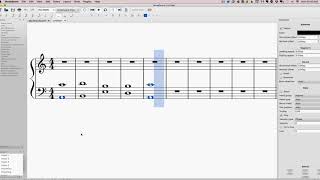
Okay, now we have some music theory under our belt. Not everything there is to know about music theory. That was just kind of a running through a whole bunch of basics. Remember, like I said before, I have a whole litany of huge comprehensive music theory classes. And if you really want to get into the theory side, I suggest that you take some of those. However, throughout these composition classes, I will be kind of sprinkling in the theory as we need it. So hopefully that got you up to speed with chord progressions, picking apart songs, doing some analysis and things like that. Now let's talk about writing melodies. This is something that's always really tricky to teach, probably because I firmly believe that I kind of suck at it. Like, I don't think I'm very good at just writing melodies. I've come up with some good ones. And let me tell you how I've done it. Writing melodies alone, just being like, here's a blank page. I'm gonna write some melodies. That's really hard for me to do. I find that I just kind of. I don't know, I just never really latch on to what I'm doing. It never sounds great, but if I start with a chord progression and then I just listen to that chord progression over and over and over and over, then I can feel like a melody kind of emerge out of the chord progression. I can find a melody in it much easier than I can just write a melody and then write chords to go with it. Right, because we want both. We want a melody and a chord progression that fits with it. For me, the chord progression comes first. But that's just me. That's totally a preference thing. That's just how I do it. I know many, many, many composers, probably I would maybe even say most that do it the other way around. So I have a little chord progression here. Let's just try this little experiment. So here is a chord progression. Okay, now what can I get to come out of that? Let me just see if I can feel something here. Oops. So this C kind of sticks out. I have these little two note chords going. So I'm going to try and keep a C going here. Now that C goes up to a D. I have a B and a D here. Remember this is bass clef. I have a B and a D. So I have kind of a two chord. I could also call that a V chord if we filled in a G there. I'm gonna use a non chord tone here and then I'm gonna resolve it down to that B. So this B There, that's my chord tone. Sit on that for a minute. And then let's maybe see what we have here. E and a B. So I could stay on that B. Or I could go back up. Well, let's stay on the B. And then I want a new note here, but. Let's jump all the way down. Let's do that. Now we have this. There's a B in common with these two chords, which could be a nice touch, actually. Let's do that again. But let's go to an A this time. Now the A is going to be the non chord tone. I don't know how well that's going to work. That might not be great. And then let's keep going on that non chord tone. And then we'll resolve A. This is an A minor chord, so we'll put an A there. So let's see. Let's see what happens. Let's see how we like it. I kind of like that. If this went up to a C at the end, I'd like it more. And if it was a little slower, Those non chord tones really kind of give it a kind of a tearful, sad sound right there. Nice. So I like that. Now, I probably would have never come up with a melody like this had I not done it against a chord progression. So for me, I really prefer to work with chords and then let the melody kind of come out of that. But other people do it other ways. So I just wanted to point that out. That's a good trick to do. I hear a lot of students come to me and say what comes first, the melody or the chords? And the answer is everyone does it different, but for me, chords. So there you go. Okay, next let's talk about kind of the two main components of a melody that aren't in all melodies. But typically when we think about melody, we think about them in kind of these two phrased ideas of an antecedent consequent. So let's jump into a new video and talk about that.