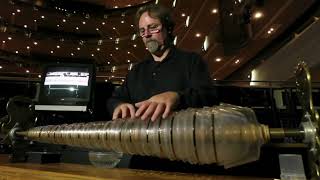
In this narrated segment, J. Anthony Allen introduces the glass harmonica, an instrument invented by Benjamin Franklin that uses a series of spinning glass bowls tuned to specific pitches. He explains its rapid rise to popularity in the 18th century, noting that composers such as Mozart wrote for it. Allen then discusses the persistent rumors that the instrument drove both players and listeners to madness, citing German musicologist Johann Friedrich Rochlitz’s description of its nerve‑stimulating, depressive effects. The segment offers a brief visual demonstration of the instrument being played. Finally, Allen provides a scientific hypothesis for the performers’ ill health: the glass bowls contained lead, leading to chronic lead poisoning for frequent players, while the unsettling, ethereal sound likely contributed to the audience’s uneasy reaction.
Chapters
Foreign. What you're hearing here is an instrument called the glass arbonica. And it was well known for driving both the people who played it and audiences listening to it mad. Maybe you've seen that thing before where you take a wine glass and you put a little bit of water in it to adjust the pitch and you rub your finger around the top of it and it creates this ethereal sound. The glass harmonica was invented by Benjamin Franklin and it does that similar thing, except what we do is we take. It's that same concept and the same sound. But we use glass bowls at the biggest end of it and very small glasses at the smallest end of it. And they are tuned so they don't need to have water put into them. And they're embedded one after the other and they spin so you just have to touch them. And because they're spinning, it lets the sound out. The instrument became quite popular very quickly in the 18th century. Composers like even Mozart wrote music for the glass harmonica and many other composers as well. It was a popular instrument. However, shortly after its rise in popularity, strange rumors started popping up about the instrument causing its performers to go mad. Like these people went literally mad and audiences as well. German musicologist Johann Friedrich Rochlitz wrote that the instrument excessively stimulates the nerves, plunges the player into a nagging depression and hence into a dark and melancholic mood. That is an apt method for slow self annihilation. The instrument was believed to be cursed. And the sounds being so ethereal and so just pervasively getting into your head that it, that it was just dangerous to listen to. And it was definitely dangerous to play. Here's a little video of what it looks like to play it. Sam. Sa. The other mysterious things on our list in this class. We do know a little bit about what might have led to this instrument being considered cursed and dangerous. We at least know why. Probably why the performers of this instrument went mad. We don't know on any scientific level why audiences were reportedly going mad. But the reason we believe that performers were, were getting very ill from playing this was because of the lead in the glass. At the time lead was used in the production of glass. And, and anyone who played this with any degree of proficiency and practiced it very regularly would have suffered from lead poisoning. But why it bothered audiences so much, probably just the ethereal sound of the glass harmonica.