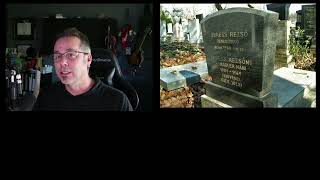
In this video, J. Anthony Allen narrates the unsettling story of the Hungarian song "Gloomy Sunday," composed by Rezső Seress (mispronounced as Rezo Cerise) in 1933. He explains how Seress, a struggling songwriter whose girlfriend left him, wrote the mournful piece that later became infamous for allegedly prompting a wave of suicides, including that of his ex‑girlfriend and Seress himself. The song was banned in Hungary and England due to its perceived lethal melancholy. The narrative then follows the song’s journey to the United States during the Tin Pan Alley era, where lyricist Sam Lewis produced an English translation that retained the original’s bleak tone. Billie Holiday recorded the English version, sparking further controversy as the BBC refused to broadcast it, though instrumental versions were allowed. Allen notes subsequent covers by artists such as Elvis Costello, Sarah McLachlan, Heather Nova, and even a drum‑and‑bass remix, highlighting the song’s enduring legacy despite decades of bans. He concludes by offering viewers a choice to hear Billie Holiday’s haunting rendition, framing the piece as a “cursed” song that continues to fascinate and disturb.
Chapters
Alright, for this one, I'm gonna tell you the story without playing you the song. At the end of the video, I'll play the song, but you're gonna have to really think about whether or not you want to hear it. So, Hungary. This Hungarian composer named Rezo Cerise, he was born in 1933 and the story goes that he was a struggling songwriter. He hadn't had a hit, things were pretty rough for him and eventually his girlfriend left him and she basically said, you're never gonna have a hit. You're not very good at writing songs. So he was sad about the breakup and he wrote a song. He wrote a song about it, one that we would eventually translate as Gloomy Sunday. And there's different reports on where the lyrics came from. They were obviously written in Hungarian. First, some reports say he wrote some lyrics and then his friend rewrote the lyrics to be different. And those are the ones we have now. Others say that he wrote the lyrics and that's what we have now. I'm not really sure about that, but either way, the lyrics were translated. I can't say the. I have the original name here, but I can't read Hungarian. But it was later translated as Gloomy Sunday, so I'm gonna call it Gloomy Sunday. At any rate, the song was released and it didn't really do very much. But after a few years the song caught some traction and was blamed for a rash of suicides in Hungary. Eventually it was banned in Hungary because the thought was that anyone who heard this song, it was so sad that people were dying by suicide after hearing it. In fact, one of them was Cerise's ex girlfriend, who reportedly left a copy of the sheet music next to her after she committed suicide. As did Cerise himself, although several years later he jumped out of a building. So the song was banned in Hungary, supposedly, and England. And it would have fallen into obscurity had the Americans not seen a good opportunity. So this was the same era of what we call Tin Pan Alley. A lot of people writing music and selling songs in the us. I'll do another video on Tin Pan Alley some other day. So the song comes across, comes overseas, comes over to the us. Sam Lewis gets put in charge of the translation. Supposedly the translation is really close to the original. Here are the lyrics for the second. Gloomy is Sunday with shadows I spend in all my heart and I have decided to end it all Soon There'll be candles and prayers that are sad I know Let them not weep Let them know that I'm glad to go Death is no dream for in depth death I'm caressing you with the last breath of my soul I'll be blessing you dark so in the us, none other than one of the most famous singers in the world at the time, Billie Holiday, picks it up and records it. Very controversial recording because the song is still banned in Hungary and England and even the BBC wouldn't play it. The song was too upsetting for the public. They did air instrumental versions on the radio, but not the version with Billie Holiday singing. Now, the song has been recorded by tons of people. You've maybe even heard it before. Elvis Costello has a version, Sarah McLaughlin has a version, Heather Nova has a version. There's even like kind of an aggressive drum and bass version that I rather like. So the song is around, but it was banned for many years around the world for being so sad that it inspired many people, including the writer of it, to unalive themselves. And therefore the song was considered to be cursed. So if you dare, I'm now going to play it for you. This is the Billie Holiday version in English. If you don't want to hear it, jump to the next video now. But here we go.
Sunday is gloomy. Dearest the shadow I live with Unnumberless little white flowers Will never wait for you not where the black coach of sorrow has taken you Angels have no thought of ever returning you Would they be angry if I thought of joining you? Gloomy, Gloomy Sunday with shadows I spend it all my heart and I have decided to end it all soon there'll be candles and prayers that are said I know Let them not weep Let them know that I'm glad to go Death is no dream for in death I'm caressing you with the last breath of my soul I'll be blessed and you blew me Sunday. Dreaming I was only dreaming. Darling, I hope that my dream never haunted you My heart is telling you how much I wanted you Gloomy Sunday.