Music Theory Comprehensive: Dynamics & Repeats
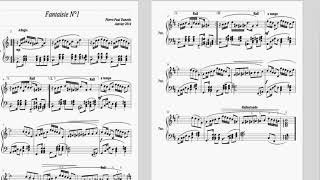
J. Anthony Allen demonstrates how to read repeat signs, tempo markings like rallentando and a-tempo, dynamic symbols from piano to fortissimo, hairpin crescendos, accents, and slurs using a MuseScore file. He shows how each symbol changes how you play the music and ties them to audible examples.
Chapters
Okay, so let's talk about putting this all together. Now, what I want to do in this section is just give you. I want to walk through a couple pieces, and we're just going to look at the pieces of music and walk through what we're seeing, okay? And then I want to give you some tools to practice. So here is this first piece. I think we looked at this at the very start of the class. Let's just hear it again. So I'm in Musescore. This is one of the just the publicly available ones that somebody wrote, probably this person, and posted. So let's have a listen. I'm going to hit play, and then here we go. Okay, there are a number of cymbals in here that we haven't seen yet. So I want to talk about those. Primarily, up till now, we've talked about notes and rhythms. But let's talk about a couple other things that we see in here. First of all, probably the most obvious thing you may have noticed is that when we started playing this music, it started here and it went to here, and then it jumped back, right? This is why. See these two little dots right here? These two dots and this nice thick double line, right? That is called a repeat. And what that means is it means repeat back to basically the opposite of this symbol, which is right there. We have the thick double line and then the two dots facing the other way. So these two things kind of encapsulate this piece of music. So what that means is play from here to here and then jump back to here, okay? That's a repeat symbol. We just call it a repeat. Now, there's a slightly more complicated repeat on this because we see this one and two. What that means is that we're gonna start the piece. So here's the very beginning, right? We start here. We play all the way to here. We hit this repeat, right? Then we jump back, then we play all the way to here. And instead of playing this bar on the second time, we play this bar, and then we keep going, right? So this means first ending, second ending. So we play from beginning to here, and then we play the first ending. Then we go back, then we play to here, skip this bar, play the second ending, and then we continue on through the rest of the piece. That's a repeat with two different endings, right? We also see here this ral. And we see that a couple times, actually, throughout this piece. That's short for rallentando, which is a fancy way, actually, back over here, they give us the whole word Means the same thing. Rallentando kind of means, like, it means slow down. Basically, it means slow down leading into the original tempo. Kind of it's like a dramatic slowdown, which is. And then we have that here. A tempo is the way we pronounce that. A tempo means the tempo of the beginning, the tempo where you were before the rallentando. So that's the speed. And the speed here is adagio. So nice and slow. So we have. Here we have a rallen tando. And we're going to slow down and then jump back to here to the adagio, the original tempo. Here we have a rallen tondo. On those last couple beats, we're going to slow down and then back to the original tempo. Right here we have a dynamic marking. Now, I don't think we've talked about dynamic markings yet. That means volume, that means how loud we should play this. So there are. Let me see if I can pull those up here. Here we go. Here's a list of common dynamic markings. Pay attention to these first two lines. This is quiet. It's getting louder as we go to the right. Louder yet. And loudest. These are kind of specialized ones. These first two lines are what we really pay attention to. So P means piano. P means quiet. Two Ps means really quiet. Three P means really, really, really quiet. Right. MP means mezzo piano. Mezzo means kind of. Right. It means. It means kinda so quiet, kind of quiet. A little louder than quiet. Mezzo forte. So F means forte, which means loud. Mezzo forte means kinda loud. So this mezzo business here is a little confusing. It can be backwards. Mezzo piano is louder than piano, but mezzo forte is quieter than forte. That's just weird. It's weird. That's why I like to use the word kind of so quiet, kind of quiet, kind of loud. And then loud. That's just the way it works. So Forte is loud. Two Fs, fortissimo is the way we pronounce. That means really loud. Three Fs, fortissimo means really, really loud. Means as loud as you can play. So we're marked here at mezzo piano. So, you know, kind of quiet, not really quiet, but kind of quiet. Down here we have a mezzo forte. So they want you to get louder. Now, all of these terms, these dynamic terms for volume, you can think of them as kind of relative. So we start off, you know, kind of quiet, and then we get louder. That's kind of the easiest way to think about it here. If you go down Here we get to a forte. So we get louder yet. Do we get any louder? Mezzo forte? So we get a little quieter, then up to forte, louder again. And that goes all the way to the end. So we end kind of loud. Other symbols. Do we have another rallentando? A tempo? Mezzo piano, rollentando. Okay, another repeat. So let's look at this repeat. So remember, this is gonna mean go back to the one that's kind of encapsulating it. So we have to go backwards in our piece. And it takes us to here, right? It does not mean go all the way back to the beginning. There's going to be another one. So again we have a first ending and then a repeat down to here. And then we're going to go back the second time. We're going to skip the first ending. And now we play the second ending and we continue forward, right? And then we get to the tempo again, forte, another rollen tondo. And the end. A couple more things we've seen in here. What about this thing? See that? There's a couple of them. Here's one that's backwards of that. Here's another one. Here's another backwards one. That is a crescendo. This particular one is a crescendo. A crescendo means get louder. So we're at mezzo forte here. So what this thing, we sometimes call this a hairpin because it kind of looks like a hairpin. What this is telling us to do is gradually, over the course of this one bar, get louder up to forte, right? So play louder and louder and louder until you get to forte. This one down here is the opposite. We call this a decrescendo. Decrescendo means get quieter. So here we're at forte because the forte hangs around until we get another dynamic marking. And it's going to say, get quieter and quieter and quieter over these measures. Now, we technically should have a dynamic marking here to tell us how quiet we're getting. But they left it off. That's okay. So down here we have another one. We have a decrescendo down to mezzo piano, crescendo up to forte, right? So that's what those mean. Now, we also have kind of smaller versions of that in these little things around here. You see these all over the place. These are accented notes. They mean just play those a little louder than all the other notes around it, right? That's all those mean. So just kind of put a little extra emphasis on those notes. The last symbol that I see that we haven't really talked about is a slur. That's these long, beautiful lines here. Here's a shorter one. There's an in between one. They kind of connect notes together. And what that means is we call that a slur. And what that means is we. We play those notes. We kind of try to string those notes together as if they were not individual notes. Like here. We might not want this to be da da, da da, but instead we want it to be da da da da. Right? We want those to kind of be played expressively, smush together. That doesn't mean playing faster or slower. It just means make them feel like one phrase rather than individual notes. So it's an expressive marking, is what we call that. It means. It outlines the expressiveness of the line. We use them to show lines like here. The composer wants this to sound like one line from this G up to this E. And it goes up and down throughout it. But what they want you to hear is this. Da da da da da da da da da da as one kind of phrase. It's very hard to interpret these, but. Or to explain, you know, how to interpret them. But it means they're slurred together and strung together as one thing. Okay, so a lot of new symbols in this. In this piece. So review those. I know that was a lot to take in, but let's check out another one and see what we find in that.










