J. Anthony Allen explains three ways to name scale degrees: absolute note names like C and D, numeric degrees marked with a caret, and functional names like tonic and dominant. Solfège varies by region, but numeric and functional systems stay consistent and show each note's role in the key.
Chapters
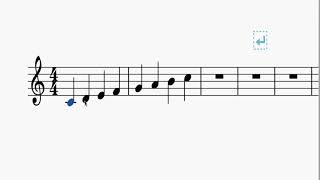
In one of the earlier music theory classes I made, we talked about solfege. Solfege was a way to have a name for every scale degree. But there's another way to do that same thing, and it is important to know. So let's just go back to our friendly C major scale here. Okay? Here I have a good old C major scale. Now, if you remember the solfege, those were words that we used to help us sing the notes in a way where. So the. The words were do, re, mi, fa, sol, la, ti, do. Now, we don't always use solfegen for that. The main difference between solfege and the names of the scale degrees, which is the thing I'm about to tell you about, is that solfege can get confusing because in different parts of the world, solfege is used as the names of the notes themselves. So instead of si, this is called do. So depending on where you are in the world, this might be called do, and this might be called re. Where I am, which is in the United States, we call this C, and we call this D. So solfege can get a little confusing that way. When we're working in music theory, we talk about notes of a scale in three possible ways. One is the names of the notes. C, D, e, f, g, etc. Another is the scale degree. So, 1, 2, 3, 4, etc. And we just use numbers for that. We use numbers with a little like a. Like a carrot over the top. So if you see a number with a little carrot over the top, remember that that means the scale degree number. And then the third way is the names of the scale degrees themselves. And the reason this is important to you is that. Well, for one, if you're looking at a music theory textbook, you're going to encounter these words, and I want you to know what they mean. Number two is that the names are not arbitrary. They actually tell us some important qualities of each note of the scale. So they're important to at least be familiar with and consider why they're called what they're called. So these are just like words that some of them we've seen before. For example, tonic is one, right? So in solfege, this is do. But in the naming of the scale degrees, this is called tonic. And tonic means kind of a lot of things. It means home. It means the grounding of the scale of the key. It means the root. It can mean a lot of different things. So that's why we care about this scale degree names issue. I didn't go into it earlier because I didn't want to confuse you with more stuff in the previous classes. But now it's time we get to know these scale degree names so that we can use them as they come up. Let's break to a new video and then we'll go into what they actually are.