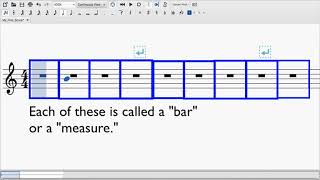
J. Anthony Allen explains the five-line staff that musicians read from. Notes placed higher on the staff sound higher in pitch, while bars divide music into measures and rests show where to stay silent.
Chapters
Okay, up next, we need to talk about the staff. So this is how we notate music. It's on this system of five lines that we call a staff. Now, the staff shows us a lot of different things, and it's laid out in a way that'll show us higher notes and lower notes. Rhythms, pitches, volume, everything. Everything gets included in there. Everything we need to know to play a piece of music. You can think of this notation system as essentially a very specific list of instructions hidden in this kind of weird language of symbols. That's exactly what this kind of notation is, is it gives the performer, someone who's reading this music, all kinds of different instructions on what to do. Right now, what I'm seeing on the staff is telling me a whole bunch of nothing. Actually, it's telling me a lot of things. It's telling me the range that we're in. That's what this symbol is telling me. It's telling me how to count the rhythms, which is what this symbol is telling me. And we'll go over these symbols in just a minute. And it's telling me to do nothing for each one of these groups of time. This little bar here means rest. It means just be quiet. So this is telling me to do nothing in a very specific way. But let's put some stuff on the staff. So I'm going to grab a note here, and let's go to this bar right here. So each of these little blocks is called a bar. Where you see these vertical lines, These are called a bar. So let's just go right here. So I can put a note on a space in between. We've kind of looked at this already, but a little review is okay. I can put it on a line, and I can go up high. If I start going up really high, we get these extra things called ledger lines, right? And they go up really high. They go down really low, too. This is for the low notes, right? So things can be on lines or spaces or lines or spaces above the staff. And on the ledger lines is what those are called. Now, the thing to remember, some obvious stuff about the staff. As we go up, that's a higher pitch. As we go down, that's a lower pitch. Now, you might be thinking, once we go really low or really high up here, those notes get hard to read a little bit. So we have some tricks for that. And it has to do with. With this symbol right here. Let me get off of this note symbol. This symbol, this little curly thing here tells us what range we're in. And it's a very important little symbol. So let's jump to a new video and let's talk about clefs. That's what this is called. And let's go over clefs in a new video.