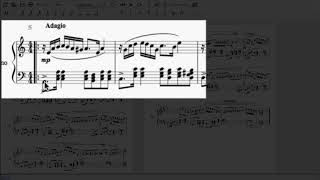
In this introductory tutorial, the presenter selects a random piano piece from MuseScore to demonstrate how to read and interpret sheet music. He explains that a score functions like a script, conveying precise instructions to a performer through various visual symbols. The video outlines the major categories of notation—pitch (note heads), rhythm (bar lines and tempo markings), dynamics (loudness symbols), and articulations (slurs, accents, crescendos/decrescendos). Emphasizing an incremental learning strategy, he proposes to focus on each element separately, starting with pitch, because understanding the placement of notes (the "dots") is foundational to music theory. He briefly demonstrates playback in MuseScore to connect the visual score with the audible result, and promises a follow‑up video that will name the notes and delve deeper into pitch identification.
Chapters
All right, let's get started. So what I have here is I have pulled up just a piece of music. This is kind of a random piece of music. I don't know this person or this piece of music. I was actually just on. I was just looking for something to pull up in Musescore. I was on. Oh, I guess I closed it. But I was on the Musescore website and they have like a. You can share files there. So these are pieces of music that, you know, people have written and posted. So I downloaded this one, I listened to it. It's a nice little piano piece and I just want to use it to show a couple things. The first thing that we're going to focus on is pitch. But before we do that, I just want us to get a feel for what we're looking at when we look at a piece of music. There's a lot of information here. Really what this is, is sheet music in this way is a script in a way. What we're doing when we write sheet music is we're telling the performer what to do, right? And we're telling them in a lot of different ways what to do. It's actually very accurate. We're being like hyper specific about what we want them to do. We're telling them what notes to play. That's the first thing we're going to look at. That's where these dots are. That's what tell us what note to play. But then these bars at the top, these tell us the speed at which to play those notes. So the rhythm, how fast or how slow each note gets played, that's what the top tells us. The bottom dot tells us what note to play. This symbol here tells us how loud to play it. This long symbol here tells us kind of what style to play it in. This is telling us to play it as though it were one kind of thought this doo doo doo doo doo doo doo doo dah. Like instead of so more strung together like we. The word is slurred, you know, we want it slurred together. And you can kind of imagine what that would sound like. This symbol here tells us we want an accent on it. So this one note gets an extra large loud moment. And here, this is telling us different speed things to do. This symbol here is telling us to get louder over time. This symbol here is telling us to get quieter over time. So there's a lot of different information contained in a score. So the first thing we need to do is learn how to, how to read this stuff. And the way I want to do that is to focus on each element separately. So we're going to focus on the pitch first. That's the dots. What are the dots telling us, and how do we determine those dots? Because when it comes to music theory, the dots are the most obvious thing that we need. Because music theory is really about understanding the dots, what dots work best together. That's really what music theory is all about. And in what context. But the rhythm is also very important, and the dynamics and our general how to read what's on this page is all very important. So we're going to start here looking at the notes and what we can tell about the notes. So let's dive into that. So first thing we're going to do is talk about what we call these things, how we name each note. Yeah. So let's do that in the next video. And I'll leave you on this video. We can't just stare at this music and not hear it. Right? So let's hear it now. You can follow along. You'll see in Musescore, when I hit play, you'll see a little, like, Playhead thing moving across. And where it is shows you what it's playing, so you can kind of see what it's doing. So let's look at it and see if you can determine some things about what's happening. Here we go. Sa.