In this tutorial, the presenter introduces the perfect fifth interval, explaining that it spans five scale degrees (e.g., C to G) and is considered one of the safest intervals after the octave for electronic music composition. He describes the interval’s acoustic basis: a 2:3 frequency ratio, meaning a note at 1000 Hz pairs with its fifth at 1500 Hz, producing a consonant sound that blends well. The lesson then moves to practical synthesis in Ableton Live, showing how to set one oscillator to 1 kHz (the root) and a second to 1.5 kHz (the fifth) using fixed‑mode oscillators, demonstrating the audible result of adding a fifth. Finally, he notes that perfect fifths are essential building blocks for chords, requiring only one additional interval to form full harmonies. Throughout, the tutorial balances music‑theory concepts with hands‑on electronic‑music techniques.
Chapters
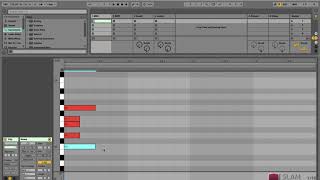
First, let's focus on our new interval, the perfect fifth. Now, we looked at our first interval in the previous unit, and that was the octave, right? That was eight white notes up. Eight in key, notes up. As we'll soon learn, the perfect fifth is five notes up. Now, don't let that word perfect throw you. That's kind of a. Just a terminology thing that'll make more sense later when we talk about major and minor chords. But for now, let's just think of it as the fifth. Okay, so to find it, let's start on a C. So here's a C, and I'm going to count five white notes up. So, 1, 2, 3, 4, 5. It's a G. So the interval of a perfect fifth starting on C gets us to a G. So in other words, G is a fifth higher than C. So why do we care about the perfect fifth? When it comes to what I used, the lingo I used in the previous lesson was, you know, kind of like safe and dangerous things you can do. The octave is super safe. If you're just working with octaves, it's going to be pretty tricky to make something sound bad. The fifth is the second most safe interval you can make. The fifth. If you just throw fifths on everything, it's not guaranteed that it's going to sound great, it's going to have a particular sound, but the fifth itself is pretty safe to use. So if you want to add a note to a melody that's going to kind of beef it up and make it sound a little thicker, the fifth is a good note to use. So count up five notes of the key and you'll get there. Now, there's a reason that we like the perfect fifth. Remember, we talked last time about when we were talking about octaves, we talked about the one to two ratio. You know, looking at the waveforms, the fifth has a two to three ratio. So for every two of our root note, we're going to call this a root note. We have three of the fifth above it, waveforms. So all that really means, if you're not following this stuff about waveforms, all that really means is that the waveforms fit together relatively nicely. And when that happens, we generate a sound that we tend to like. That tends to be a consonant sound, we would say, as opposed to a dissonant sound. But let's take. Let's take this analogy of, or not analogy, this idea of the waveforms one step further to really understand it, because I want to look at how the fifth works when we're dialing in a synthesizer. Right. This is something that in a traditional music theory class, you would never, ever do. Talk about, like, you know, the specific frequencies of pitches. But when it comes to synthesis, we need to know this stuff. So the perfect fifth is a two to three ratio. What that means is that, for example, if we played our. If this note, our lower note, let's call that the fundamental or the root, both those words can apply. The fundamental tends to mean is more of a synthesis term. Root is more of a music theory term, but essentially meaning the same thing in this context. If that is 1000 Hz, then the fifth is going to be 1000 times 2/3 or 1.5, so it's going to be 1500 Hertz. That's going to get us to a fifth above the root. So let's look at how that works in a synthesizer. Okay, so I've loaded up an operator here. This is just a synthesizer in Ableton Live, and I've made a MIDI clip that's just going to play a note over and over and over. Right. Kind of sounds like your alarm going off. Okay, so here's what I've done here is I've set this first oscillator. I've turned all the other oscillators off. So I just have one oscillator here, and I've set it to fixed mode, which means it's ignoring this pitch and it's just kind of using that rhythm. And. And I've set it to 1 kilohertz, 1000 hertz. Okay, so I'm going to add a fifth on top of that, I'm going to add another oscillator and turn it up and I'm going to add. Set this one to 1500 or 1.5 kilohertz. There we go. So here's the note without the fifth, And let's add the fifth in. That is the sound of a fifth. And another reason we care about fifths is that we need them to make chords. So fifths become very important once we start assembling chords, which we really only need one more interval to start putting together chords.