In this instructional video, J. Anthony Allen introduces electronic musicians to diatonic chord progressions and inversions. He explains that a diatonic progression consists of the seven chords that naturally occur within a given key, providing a quick way to determine chord options for verses, choruses, or live jam sessions (e.g., knowing the seven chords in E major). He contrasts diatonic (in‑key) with chromatic (out‑of‑key) material, illustrating how chromatic lines can sound dissonant. The video also previews inversions, describing them as a technique to make chord progressions sound smoother and more musical rather than a disconnected series of chords. Throughout, the tone is conversational and instructional, aimed at giving practical, immediately usable knowledge for composing and performing electronic music.
Chapters
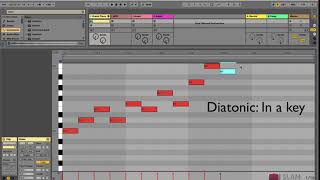
Okay, welcome to the next unit here in Music Theory for Electronic Musicians. In this unit, we're going to be talking about diatonic chord progressions and inversions. Now, what that means is diatonic chord progressions. Basically what that means is that is a solution to this exact problem. So you. You're writing a song and you say, okay, like, I'm here. I've written this song. I've got a verse, right? Like, what should I do for the chorus? Once you know what diatonic chord progressions are, what you can do is you can say, oh, okay, I know seven chords that work in this key just. Just like that. And that's because that's what a diatomic chord progression tells you. It tells you all the available chords in the key that you're working. So that's what we're going to learn here. We're going to learn how to just know what are all your options for that key. Let's say you walk into a gig and there's people on stage jamming, and they say, hey, we're in the key of E major. Then you can say, okay, I know seven chords just off the top of my head that are going to be. That are going to work well in E major, right? That's what diatonic chord progressions tell us. And inversions. The other thing we're going to cover in this section, inversions tell us. Essentially, it's a trick to make your chord progressions sound less dumb, kind of. To be blunt, once we start incorporating inversions, that's when we really start making music and the chords start coming together and really feel like a song and not just a series of chords. So hold on, we'll get to that shortly. For now, let's talk about diatonic chord progressions. And let's start with picking apart that term diatonic chord progression. We just saw in the. In either the last or two videos ago, I think just the last video, what a chord progression was, right? A chord progression is a series of chords. What diatonic means. Diatonic is a fancy word that. That means in key. So when something is in key, it is diatonic. If I put in here a bunch of notes. There we go. All of these keys or all of these notes are in the key of C major. They are diatonic. They are diatonic in the key of C major. So diatonic just means that it's in a key. The opposite of diatonic is chromatic. Chromatic means it's not in a key. It's all over the place. Here's I'll give you an example of chromatic here. I'm just trying to put notes, like, really close together. So here's what. Here's a chromatic line, okay? It's not really in any key. It's going between a whole bunch of keys or it's basically chromatic. It's. Any note goes. Any note is fine to use. It's going to be ugly and kind of dissonant. And what we want music to do is stay relatively diatonic, meaning locked into a key. So when we talk about a diatonic chord progression, what we're talking about is a series of chords that are locked into a key, all the available chords in a key.