J. Anthony Allen shows how key changes shape musical form beyond just A and B sections. Using Mozart's Sonata in D major, he demonstrates how sections repeat in new keys and how modulation creates the big-picture structure of a piece.
Chapters
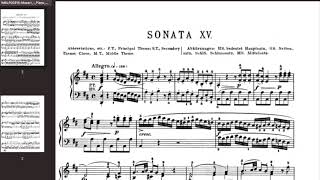
Okay, so some time ago, way back in an earlier class, we talked a little bit about form. And when we talked about it, we talked about there's A sections and there's B sections. And then later, probably in class 11, I think we talked about the concept of a period, a sentence, and things like that. And those relate to form as well. So what we need to do now is put all those together, and we're going to add one more new thing to our discussion of form, and that is key centers and keys. Because we know that pieces can modulate, and we know how pieces can modulate. So what we need to do now is look at the large picture of what modulations do to a piece of music. So we say something is in. Maybe there's an A section and a B section, but then the B section repeats in a new key. Right. So when we talk about form, and the reason we talk about form is to look at large ideas about the piece. Not the granular, just focus in on each individual note, but taking a step back and looking at the big picture and really understanding the piece on a bigger level. So let's talk about form as it relates to multiple sections and how their keys relate to each other. Okay, so we're going to go back to this first Mozart piece that we used that was all the way back here, this one, the Sonata in D major. But I have the whole entire piece for us now. Okay, so let's dive in and take a look at how this works.