J. Anthony Allen explains why parallel fifths and octaves are forbidden in counterpoint. He shows how they flatten the acoustic sound, demonstrates hidden parallels that sneak in through contrary motion and leaps, and provides visual examples to help you spot them.
Chapters
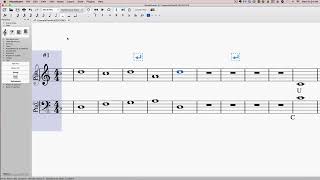
Okay, let's talk about bad things. Bad things are parallel fifths and parallel octaves. Now, one of the most common things people do wrong in first species counterpoint is write parallel octaves and parallel fifths. So you got to keep an eye out for them. And there's a couple different ways you can do it. So let me just walk through a couple things that are just wrong. First of all, parallel octaves, let's say. Let's say archontus firmus says that. And you write this. That's big. No, no, because these are octaves, right? There's actually two octaves here because there's a note in between. There's an octave in between. But remember, we reduce it and we would just call this an octave and we would call that an octave. So the number we would put here is eight. And the number we would put here is eight. And that's parallel octaves. That's a major. No, no, we don't like that. It just sounds very crude to do it. I don't know what it is. It's. It's. Well, for one, it's a rule of this kind of counterpoint. So that's why we don't do it. But number two is. It does have like a really kind of flattening sound. It doesn't. It really. Everything kind of hollows out if you do that. Okay, next thing, let's look at parallel fifths, right? So if I was to write. If the Cantu's firmness was to say that. And you wrote that. So we have an F and a C. That's a fifth. So we'd write a five here. And this is a G and a D. So we'd write a five here and we would have parallel octaves. Major. No, no, we don't like. Or sorry, parallel fifths. Still major. No, no, we don't like parallel fifths. Now, there's a couple other ways we can create these parallel octaves and fifths. You actually can end up with parallel octaves and parallel fifths by using contrary motion. It's a little goofy, but it can happen. So you kind of need to keep an eye out for it if you're trying to really strictly obey the rules. Let's do something like that. And then let's do something like this. Okay, so let's look at that closely. What do we have here? An A and an A. So that's an. That would get an 8 here. That's an octave. A D and a D. So that would also get an eight. That's Parallel octaves. It's parallel octaves by contrary motion is what we would call it. But it's still bad. Two eights would show up here, and that is no good. So kind of a hidden parallel octaves. We can do the same thing with fifths in ways that we don't like to do. So let's say we had something like this in the cantus firmus, and we harmonized it by going like that. Okay? Here we have a D and an A. That's a fifth. Here we have a G and a D. That's a fifth. So we're using contrary motion here because we're going in opposite directions. But we ended up on a perfect fifth or on a parallel fifth. No good, right? We don't like. We don't like those. Let's look at a couple other things we can do that are bad. There's a thing called a hidden octave. Hidden parallels. Let's make some. So let's say Arcantus Firmus had something like this, something like that. And we harmonized it this way. Okay, what did we do wrong here? Okay, this is a confusing one. This is called a hidden octave because this is gonna blow your mind in this leap right between these two notes. So we're all stepwise down here, so that's fine. But this one has a leap, and in that leap, there's an implication that we skipped over two notes. The missing two notes here are B and C, because we leaped over B and C. But there's still kind of a C there. The idea is that because you leaped over them doesn't mean that they don't exist. That's why they're hidden. This is a weird concept, but it exists. So if this is the case, if those notes were actually there, we have a parallel octave between here and here, right? That's called a hidden octave. So you have to watch out for leaps going into octaves, because you can imply with a hidden note that there's a parallel octave, okay? So just watch out for leaps going into octaves by the same direction of movement. Here's one more example where we have a hidden fifth, right? So here we have a sixth. Here we have a fifth. So we land on a fifth here. So we land on a fifth here. But what's the missing note? The missing note between this skip is an E and A to E is a fifth. And that would result in a perfect or a parallel fifth. So that's a. No, no, two. Those hidden ones are really hard to see, and they're hard to get used to, but just know that they exist. Keep an eye out for them. We'll see more of them once we start writing with First Species Counterpoint, which we're going to do shortly. So, up next, another worksheet for you, and then we'll talk about writing some stuff in First Species Counterpoint.