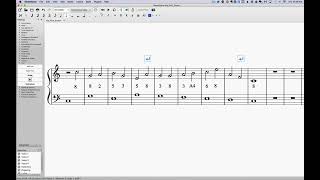
In this instructional video, the presenter systematically reviews all the rules governing Second Species counterpoint. The content covers nine key areas: (1) the permissible rhythmic start—half rest or half note on the downbeat followed by a half note on the off‑beat—and the allowed opening intervals (unison, octave, or fifth when the counterpoint is in the upper voice; (2) the required ending, which must be a whole note with specific interval combinations such as 5‑6‑8, 5‑3‑8, or unison, mirroring first‑species cadential options; (3) the rule that the cantus firmus uses whole notes while the counterpoint uses half notes, and that immediate pitch repetition is forbidden across bar lines; (4) the necessity of consonant intervals on every downbeat, with off‑beat consonances permitted when approached by step, skip, or leap; (5) the limited use of dissonant intervals (2, 4, 7, 9, diminished fifth, augmented fourth) on off‑beats, provided they function as correctly resolved passing or neighbor tones; (6) the checking for parallel perfect intervals, allowing at most two consecutive perfect fifths or octaves between successive downbeats or off‑beats; (7) the preferred melodic approach to downbeat intervals—step or skip—and the avoidance of similar motion into perfect intervals across bar lines unless the upper voice moves by step; (8) the restriction on accidentals, permitting only the raising of flat 6 and flat 7 in minor keys at the cadence; and (9) the reminder that all First Species counterpoint principles (overall motion, contrary, similar, oblique, and good melodic writing) continue to apply. The presenter concludes by indicating a transition to Third Species counterpoint.
Chapters
Okay, let's do a wrap up of the rules of Second Species counterpoint. This is all of them. Okay, so what I'm gonna do here is I'm cheat a little bit and I'm gonna read through the list of all the rules. And after I read each one, we'll talk and make sure that I explained it thoroughly, I think. Okay, rule number one. Start with either a half rest or a half note on the downbeat of the first measure, followed by a half note on the offbeat. The first harmonic interval should be an octave or unison, or a fifth if the counterpoint is in the upper part. Okay, I think we've talked about that in the last few videos, how we need to start it and our options for starting it. Good. Number two, end with a whole note in the last measure and the harmonic intervals 5, 6, 8 or 5, 3, 8 or unison. Or set the last two notes with whole notes 6, 8 or 3, 8, unison or unison, as in first species. So what those numbers mean is 5, 6, 8 means the interval. So 6, 8 is going to be our leading tone to an octave from something else. So six, eight, so what? So remember, this is bad. This is parallel. So what they really want is 5, 6, 8 would be that. So 5, 6, 8 is a good way to end other options. 5, 3, 8. So that would be. So if that's 5 and I want to make this a 3D F and then we went down to C. That doesn't work very well. This context, that would be five, three, eight. But those are our options for ending. Okay, number three, other than other than the beginning and close, use whole notes throughout for the contus and half notes for the counterpoint. An immediate repetition of the same pitch is not allowed within the bar or over the bar line. I'm not sure if we addressed that last one. You can't repeat pitches. So, for example, this would not be allowed the same pitch twice. And what they're saying is whether or not it's the two notes within a bar or two notes over a bar. So that would not be allowed either. You cannot repeat pitches back to back. Number four, Write consonant harmonic intervals on the beat. They also may appear on the offbeats approached as consonant skips, steps or leaps. Okay, I think we've talked about that one. All the beats have to have consonant intervals on it. The off beats can have consonant intervals as long as they're set up through a consonant. Step, skip or leap. Number five include dissonant harmonic intervals 2, 4, 7, 9 and diminished fifth and augmented fourth, if resolved correctly, on the offbeats as passing or more rarely, neighbor tones. Okay, I think we've covered that. We know what passing tones are. We know what neighbor tones are. We know how to get in and out of those intervals. Number six, check from one downbeat to the next and from an offbeat to the next note. For parallel fifths or octaves, perfect consonances from one offbeat to the next offbeat are allowed, but no more than two in a row. Okay, so that's what we just did in the previous video. So they're saying, check one downbeat to the next. So here's a downbeat, here's another downbeat. Make sure you don't have parallel octaves or fifths between the two downbeats, like here. That's parallel fifth, right? Parallels from offbeat to offbeat, like what we had here. Actually, eight to eight, that is allowed. But no more than two in a row. So if this was an octave, that would be bad. Okay. Number seven. Intervals on the downbeat are normally approached melodically by step preferred. Or skip. Avoid similar motion into an octave or a fifth over a bar line unless the upper voice moves by step. So this is what I was talking about when I said avoid similar motion kind of in general, if you can, because that's when you get in the danger zone for creating parallels. Number eight, use no accidentals except to raise flat seven and flat six if necessary at the close in minor settings. So everything should stay in key unless we're in a minor key. And at the end of it, you need to raise the six and seven to get us that leading tone. Number nine, last one. Continue to follow the guidelines for First Species Counterpoint with respect to the overall motion between the parts, contrary parallels, similar and oblique, and principles of good melodic writing. So all the rules of First Species counterpoint still apply. Great. So that's it for Second Species Counterpoint. Kinda. We're gonna move on next to Third Species Counterpoint. But just like First Species Counterpoint going into second, all the rules of first apply to second, and all the rules of second are going to apply in third. Right now, if you're thinking the difference between first and second was that first species was one to one note for every note. Second species was two voice for notes for every note. Third species ought to be three notes for every note. You're wrong. It's a little different than that. So let's move on and let's get to third Species Counterpoint.